Okra: a time-honoured vegetable with great beneficial effects
Healthy and versatile in the kitchen: okra is becoming increasingly popular thanks to its beneficial effects. The green capsule fruit, which has tropical roots, is visually appealing and also scores well thanks to its valuable ingredients. In this article, you will learn all about the preparation, beneficial effects and storage of this special fruit.
Storage time*
| EasyFresh safe 7 °C with air regulation plate | 7 days |
| Refrigerator compartment 7 °C | 6 days |
| Freezer compartment -18 °C | 6 months |
The key points
- Okras are very versatile – they can be eaten raw in salads, boiled, steamed, grilled or fried.
- The mucilage inside okra is ideal for thickening soups and sauces.
- Okras are rich in vitamins and minerals such as vitamin C, A, K, calcium and magnesium.
- It is low in calories and fat-free, making it ideal for a health-conscious diet.
Preparation and beneficial effects of okra
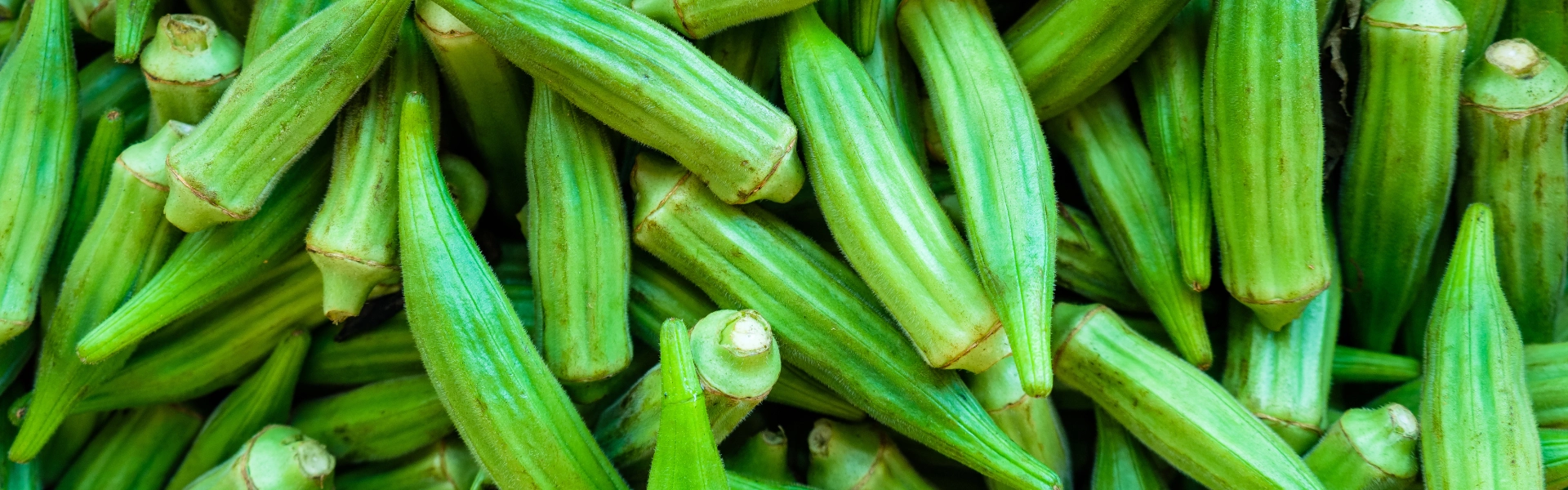
The capsule fruits of the okra which are up to 15 cm in length are green on the outside – more rarely brownish, hairy and are also referred to as Lady’s Finger due to their finger-width tapering shape. The plant has its origins in the tropics and subtropics of Asia and Africa. This is also where it is primarily cultivated. It is no surprise then that the vegetable is widely used in African and Asian cuisine.
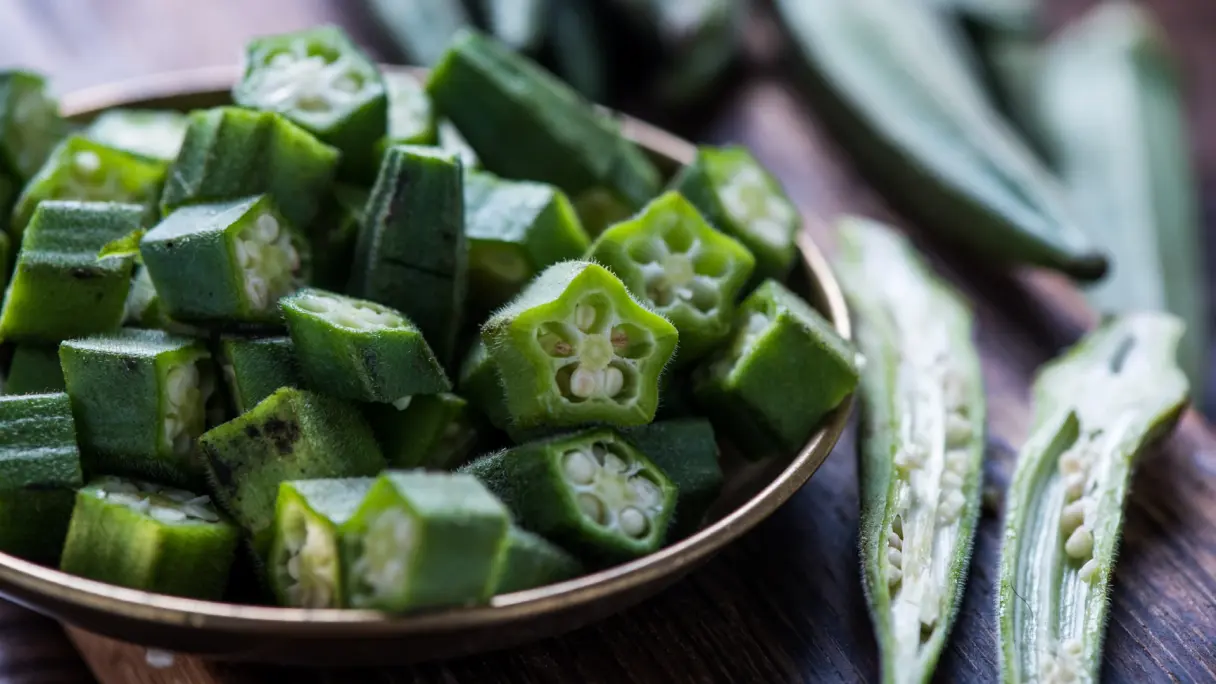
Given their unusual appearance, you may well be wondering how to properly prepare okra. Preparation is simple and leaves you with plenty of options. Wash the okras first and dry them thoroughly. Next, remove the stem base and the front tip. You can use the fruit whole or chopped. They can be used raw, for example, by slicing them up and eating them in salads. Cooking or blanching okra produces a mild, bean-like aroma. Okra can also be steamed or grilled.
Inside the capsules there are pale round seeds and a milky slime. Both are edible and delicious. The seeds taste best roasted or can be used as a coffee substitute. The slime escapes during cooking. This results in a thickening effect which can be used to thicken soups or sauces. However, the okra does become less firm as a result. If this is not desired, the slime can be prevented from escaping by deep-frying or briefly sautéing the whole fruit.
Okra: how to keep its nutrients fresh
Okras are not only fun to experiment with in the kitchen, they are also good for your health. The okras are full of vitamins and minerals such as vitamins C, A and K as well as calcium, magnesium and iron. This makes them good for our skin, eyes, immune system and bones. Okras do not contain saturated fatty acids or cholesterol, making them ideal for a health-conscious diet. The low calorie content means that the okras are a valuable addition to a low-calorie way of life.
Have you bought or harvested too many? If the healthy okra cannot be consumed immediately, the question of storing and freezing arises. In this case, freezing is no problem at all! In your Liebherr freezer, okra will keep for up to six months at -18 °C without any problems. However, the fruit should be fresh when frozen. Generally speaking, wrinkled okras should no longer be eaten. An EasyFresh safe with air regulation plate or a normal refrigerator compartment are suitable for storage over a few days. At approx. 7 °C, okra retains its nutritional value for up to seven days.
*All specifications given are to be considered as guideline values, and depend in each case on the type of food and on the proper storage without interruption of the cold chain from harvest/production through to the Liebherr appliance. Should food products have information about minimum shelf life, the date on the packaging always applies.