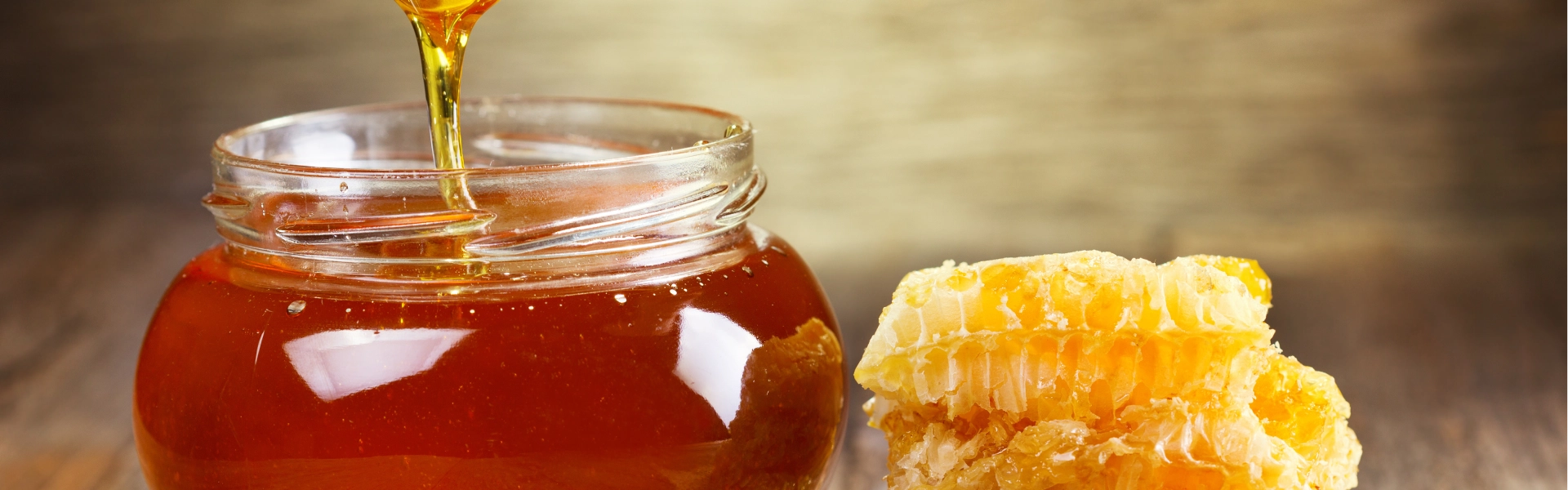
Honey – a sugary product from industrious workers with good nutritional values
Whether on a roll for breakfast or as a sweetener for tea, honey is full of good nutritional values and incredibly versatile. However, the kitchen is not the only place where this natural product is hugely popular. Read on to find out how else you can use honey, whether it’s healthier than refined sugar and what other benefits it has.
The key points
- Honey contains mainly fructose and glucose as well as small amounts of vitamins, minerals and secondary plant substances.
- Compared to refined sugar, honey has a higher sweetening power and can therefore be used more sparingly.
- Due to its nutritional values, honey is also suitable as a home remedy for colds or for skin care – however, it should not be heated above 40 °C.
- Stored correctly (in a cool, dry, dark and airtight container), honey has a practically unlimited shelf life.
Honey and its effect on health
Due to its nutritional values, antioxidant properties are also attributed to honey; these are said to reduce the risk of cardiovascular disease and cancer. The content of substances beneficial to health is so low however that no notable contribution is made in terms of health benefits or towards covering our requirements. Instead, it's a diet rich in fruit and vegetables which makes a significant contribution to this.
The high sugar content also means that unwanted effects detrimental to health are possible due to the pyrrolizidine alkaloides honey contains. The pyrrolizidine alkaloides are however not necessarily contained. At average levels of consumption, adults have no need to be concerned due to the minimal amounts of these in honey. Regularly changing honey varieties also cuts down the risk of absorption. For this reason however, among others, honey consumption for babies and children should be kept to an absolute minimum.
Honey is totally unsuitable for children under the age of 1 in any case as there is the risk of triggering infant botulism due to the bacteria clostridium botulinum. The bacteria can multiply in the gut of small children and form harmful substances which then trigger botulism. So great care needs to be taken!
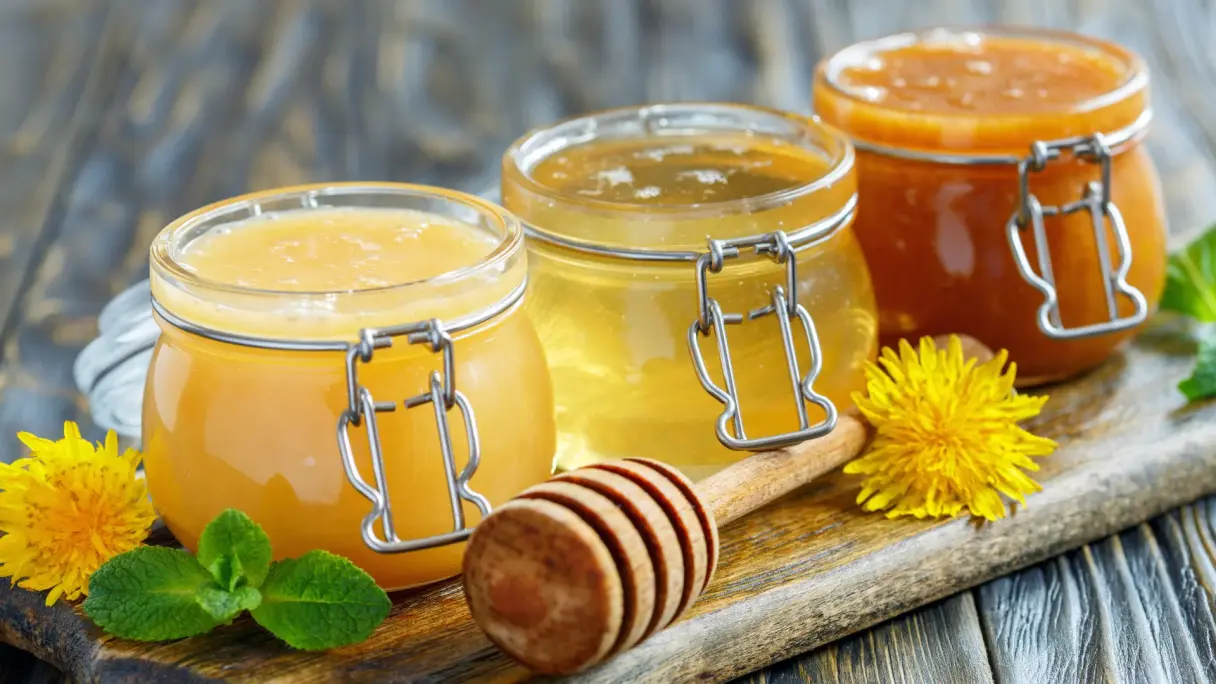
Is honey with its nutritional values healthier than refined sugar?
Refined sugar is nothing more than pure sucrose, in other words the disaccharide comprised in equal proportions of the monosaccharides glucose and fructose. The composition of honey is slightly more complex.
In honey, fructose and glucose are already present in their individual forms as a result of the conversion which takes place during the honey maturing process. However, the content of fructose in the final honey is greater than the glucose content. For example, fructose makes up approximately 39 % and glucose 34 %. The remainder consists of water and other types of sugars. Honey also contains very small amounts of other nutrients such as vitamins, minerals and health-promoting substances.
For the most part however, honey is still made up of sugar and the old adage “the dose makes the poison” also applies in this case. However, the increased proportion of fructose does deliver a slight advantage. This is the reason why honey has a greater sweetness compared to refined sugar. You can therefore use slightly less for the same amount of sweetness and in turn reduce the number of calories. The water content also means that one gram of the healthy honey contains only around three kilocalories in contrast to pure refined sugar which contains four kilocalories.
Alternative use – honey as a household remedy
Honey with its nutritional values was highly prized even among the ancient Greeks and was used as a medicinal substance and a beauty treatment. Its use was popular when caring for lips and skin for example. Its curative and wound healing properties are also well known. However, this has only been scientifically proven for very specific varieties such as manuka honey.
We've all been there: you have a sore throat, a runny nose and you’ll be coughing any time soon. When you're suffering from colds and flu, any and all household remedies are very welcome. When combined with a hot drink, honey is also thought to provide a remedy. While this effect is not proven, it's worth giving a try. In order to preserve potential beneficial nutritional values and substances, however, the honey should not be heated beyond 40 °C.
Honey is known for its very long shelf life. If kept in a dark, dry, cool place in an airtight container, it basically will not go off. However, consumption within two years is recommended. If not properly sealed, the honey absorbs moisture from the air and ferments. The acidic alcoholic odor and the formation of bubbles, however, make this easy to notice.