Effects and nutrients in flaxseed
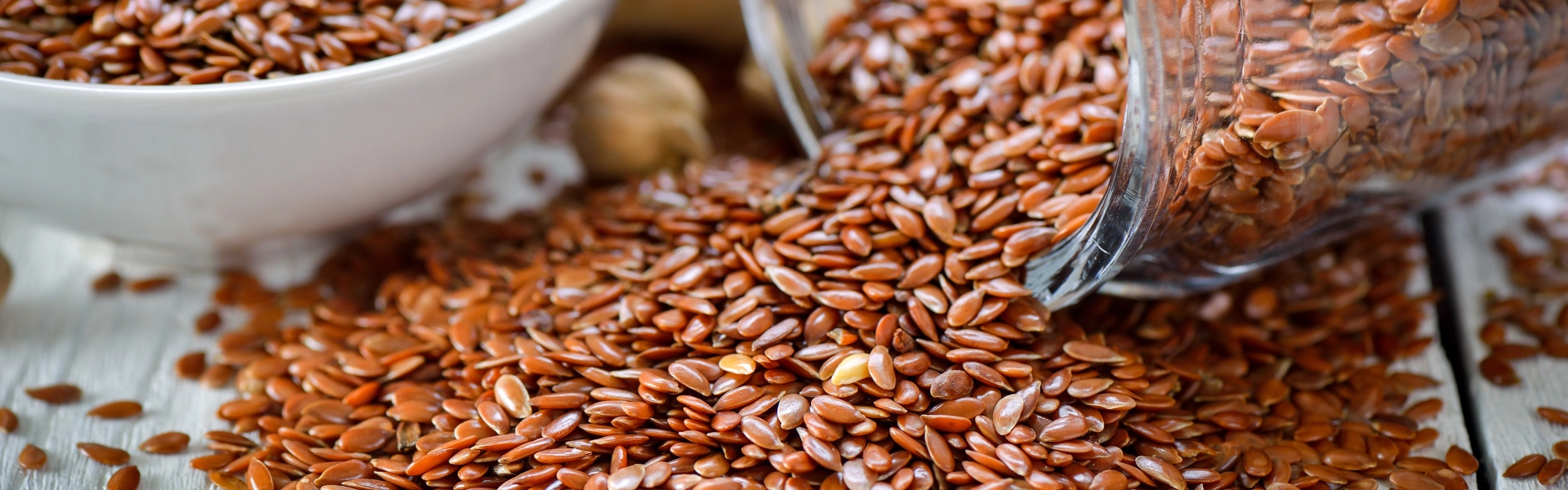
Whether in your yoghurt, as a salad topping or in your bread: these brown seeds are small but they pack a powerful punch! Beside their many uses in the kitchen, these nutty little powerhouses contain a ton of healthy substances. Read on to find out why flaxseed is a true superfood thanks to its effect, which health benefits it has to offer, as well as many more exciting facts about these little dynamos.
Storage time*
| Refrigerator compartment 7 °C | 180 days |
| Room temperature 20 °C | 90 days |
The key points
- Flaxseed is rich in fiber, protein and valuable omega-3 fatty acids – good for the heart, immune system and digestion.
- Satiating and digestive: fiber and mucilage ensure long-lasting satiety and stimulate digestion.
- A maximum of 45 g per day – otherwise there is a risk of flatulence, constipation or unwanted interactions with medication.
- Better crushed and cooled: ground flaxseed is easier to digest – it is best to buy it in small quantities and store it optimally.
Nutritional values of flaxseed and its effects
Every flaxseed consists of around one quarter fiber, one quarter protein and about half unsaturated Omega-3 fatty acids like oleic acid, linoleic acid and linolenic acid. Many of these fatty acids are essential for humans. That means, the body cannot produce them itself and humans need to consume them through foods. Omega-3 fatty acids have a positive effect on our heart health, they have anti-inflammatory properties, and they help the immune system to stay strong.
These shiny seeds are also ideal for those who wish to shed excess pounds. It is believed that this effect is due to the high fiber content as well as mucilage contained in their shell. The fiber helps our blood sugar levels to rise more slowly and helps us to feel full longer. The mucilage in the shells bonds with water in the intestines, swelling up inside us and stimulating digestion. However, with just under 500 calories per 100 grammes, flaxseed is not exactly a lightweight when it comes to calorie content.
In addition to its good composition, flaxseed also has a lot to offer in terms of vitamins and minerals. It is a great source of, among other things, magnesium, zinc, iron, potassium, the important B vitamins B1 and B6, as well as vitamin E. Also secondary plant compounds such as lignans are present in flaxseed and their content may even far surpass that found in grains and pulses. Because of their structure lignans are considered plant hormones (phytoestrogens) and are believed to help prevent different types of cancer, in particular breast and prostate cancer.

Flaxseed and its effects: a lot doesn’t help a lot!
Despite all these wonderful characteristics, you shouldn’t overdo it with flaxseed. That’s because consuming more than 45 grammes of flaxseed per day has the opposite effect, namely gas and constipation. It is also absolutely essential to drink enough liquids: at least 1.5 litres per day. Flaxseed is also thought to contain cyanogenic glycosides, which release poisonous hydrogen cyanide. However, according the independent German Federal Institute for Risk Assessment (BfR), flaxseed isn’t dangerous as long as one does not take more than the recommended daily intake. One should also keep in mind that flaxseed can affect the absorption of medicines in the intestine. After consuming flaxseed, wait an hour before taking any medicine.
Tips on buying and storing flaxseed
When it comes to healthy flaxseed, you have a choice between whole and coarsely ground seeds. Whole seeds are often simply excreted unprocessed after consumption. We therefore recommend using ground seeds. The substances they contain can be more easily absorbed by your intestine. It is best to take a smaller package and keep the seeds in a cool place after opening.
In the refrigerator compartment of your appliance at 7 °C, flaxseeds stay fresh for 180 days – whereas at 20 °C room temperature, they only stay fresh for 90 days. The cold prevents the valuable omega-3 fatty acids in the crushed seeds from oxidising, which could lead to a salty taste and the loss of important nutrients. Cool storage slows down the oxidation process significantly and ensures that flaxseed – even in ground form – stays fresh, flavorful and nutritious for longer. This means that you not only benefit from the flavor of flaxseed, but also from its health benefits.
*All specifications given are to be considered as guideline values, and depend in each case on the type of food and on the proper storage without interruption of the cold chain from harvest/production through to the Liebherr appliance. Should food products have information about minimum shelf life, the date on the packaging always applies.