Chicory: nutritional values, vitamins and calories of the vegetable
Chicory has particularly valuable nutritional values. This tart to bitter-tasting vegetable offers a vitamin-rich change of pace. Most of us know that chicory can be enjoyed raw, steamed, cooked, or sautéed. However, very few people know what nutritional values chicory has to offer. We reveal what this bitter vegetable is all about.
Storage time*
| BioFresh Fruit & Vegetable safe just above 0 °C with high humidity | 27 days |
| EasyFresh safe 7 °C with air regulation plate | 18 days |
| Refrigerator compartment 7 °C | 14 days |
| Freezer compartment -18 °C | 9 months |
The key points
- Low calories: with 13 kcal per 100 g, chicory is ideal for a light diet.
- Valuable nutrients: chicory contains a lot of carotene, potassium, vitamin C and folic acid (vitamin B9).
- Healthy bitter substances: intybin stimulates digestion and can have a positive effect on the metabolism.
- Versatile in the kitchen: whether raw, fried, baked or in a smoothie – chicory goes well in many recipes.
Chicory: nutritional values and origin
There are many different stories about the origins of chicory, but they all date back to 19th century Belgium. This is because edible chicory, as we know it today, has a complex growth process that first had to be discovered. It originally comes from the common chicory or blue daisy, a blue flower that grows at the edge of fields. When deprived of light, its roots sprout, which is ultimately what we know as chicory with its positive nutritional values.
Chicory has only 13 calories per 100 grams, making it ideal for a calorie-conscious diet. But despite its low calorie content, chicory has a lot to offer: it is particularly rich in carotene, which our body converts into vitamin A – important for eyesight, skin health and the immune system. Its potassium content is also considerable. Potassium contributes to normal muscle and nerve function and regulates fluid balance. Chicory also provides vitamin C, folic acid (vitamin B9) and small amounts of vitamins B1 and B2 – nutrients that help to support the immune system and produce energy, especially in cold weather. The bitter substances that it contains, particularly intybin, are also highly noteworthy with regard to the nutritional values of chicory. These stimulate the production of bile and thus promote digestion, which can have a positive effect on the metabolism. Chicory is therefore a real vitamin and mineral booster and very healthy for us.

Integrating chicory and its vitamins into your diet
Chicory is an underestimated vegetable that is an excellent source of vitamins and can be incorporated into a wide variety of dishes. It is particularly impressive in cooked dishes thanks to its delicate consistency and mild bitterness when lightly fried or baked, for example in vegetable bakes, quiches or as a filling for pancakes. It can also be an exciting ingredient in smoothies when combined with apples or carrots. If balanced nutrition is important to you, chicory is a natural way to add valuable micronutrients to your diet. Nice bonus: Its slightly bitter flavor curbs the appetite for sweets, which also makes it attractive for a calorie-conscious diet.
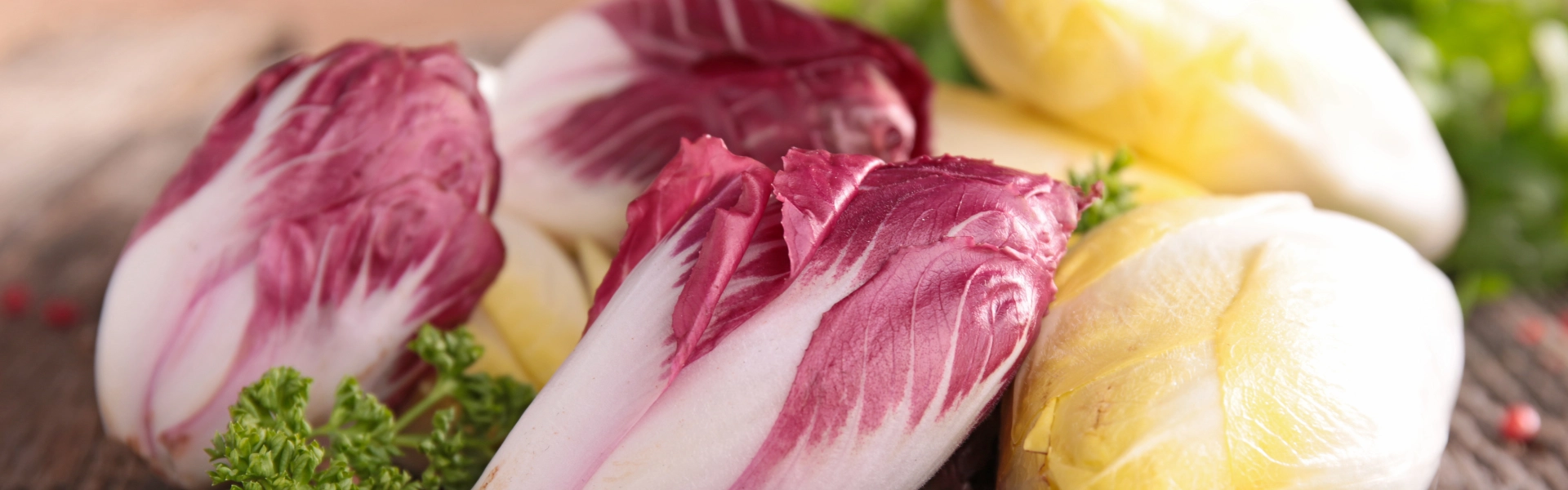
The key factor in determining the quality of the vegetables is their color. Chicory should be white with yellow leaf tips – if the end of the leaf is green, it tastes even more bitter. The reason for this is exposure to light during the growing process, as chicory prefers to grow in the dark. Store chicory in the refrigerator after purchase. In the normal refrigerator compartment, it stays fresh for up to 14 days – in the BioFresh Fruit & Vegetable safe, it can keep for up to 27 days. This special fresh food compartment in your Liebherr refrigerator has a particularly high level of humidity and temperatures just above 0 °C, which means you can enjoy chicory and its valuable nutritional values for longer.
*All specifications given are to be considered as guideline values, and depend in each case on the type of food and on the proper storage without interruption of the cold chain from harvest/production through to the Liebherr appliance. Should food products have information about minimum shelf life, the date on the packaging always applies.