Champagne: we’ll show you how it’s produced
Champagne is regarded as king of the sparkling wines and, as a beverage, ranks as one of the most exclusive. Behind its refined taste lies a complex production process. Learn more about its production in the following article.
The key points
- Origin: champagne originates from the Champagne region in north-eastern France
- Grape varieties: mainly Chardonnay, Pinot Noir and Pinot Meunier.
- Harvest: grapes are harvested by hand and gently pressed.
- Fermentation: the first fermentation is followed by the second fermentation with yeast and sugar.
- Maturation: at least 15 months of maturing on the lees.
Champagne – list of contents
Where does champagne come from and what are the rules for cultivation?
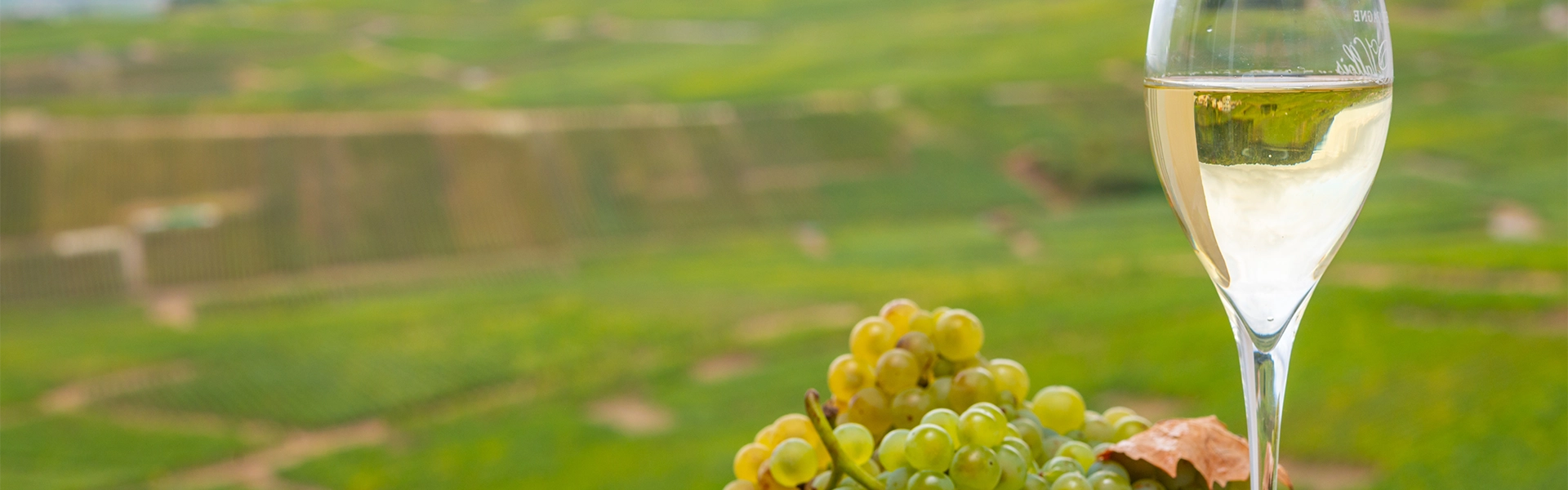
Champagne begins its life in the famous vineyards in the eponymous region located north-east of Paris which has characteristically chalky soils.
In the Champagne wine producing region, strict rules apply. These range from expansion, to the type of viticulture and the quantities harvested, right through to the traditional forms of vine training, i.e. how the vines are grown Even the number of shoots on each vine, defined by pruning at the beginning of the year, is closely monitored.
From the vine to the exclusive sparkling wine: how is champagne produced?
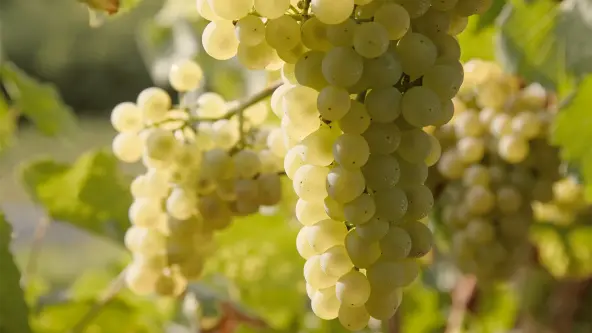
Three main types of grape are cultivated in Champagne:
The white Chardonnay,...
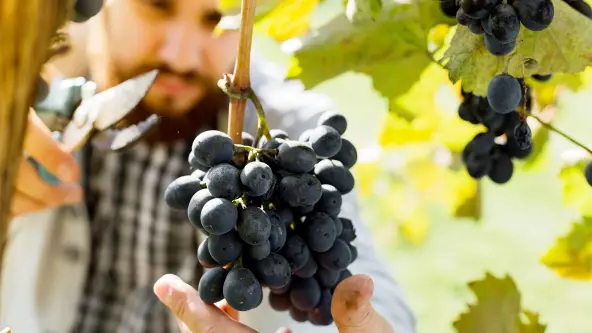
...as well as the blue Pinot Noir and Pinot Meunier varieties. These are harvested very carefully by hand in small buckets and boxes so that the grapes are not damaged. This is particularly important for the blue grapes.
Transporting them to the wine press must also be as gentle and speedy as possible.
One of the secrets of Champagne is that a clear juice is also pressed out of the blue grapes as it is for a white wine. This only works however with undamaged skins, as the skins contain the red wine colouring which should not be released.
The grapes are either pressed in traditional basket presses or alternatively in modern, pneumatic presses.
No matter which method of pressing is chosen, a careful approach is again needed and pressing should only be slow and with low pressure, so that no colourings are released, and so that a light-coloured must can be extracted from the dark grapes A maximum of only 2,550 litres may be pressed from 4,000 kilograms of grapes.
Next, the must is usually fermented in large, hygienic and temperature-controlled stainless-steel tanks. However, special wine qualities are also vinified in small wooden barrels.
What happens after the first fermentation?
After fermentation, the young wines are tasted by the cellar master and combined to produce harmonious blends. This “assemblage” of champagne base wines is considered a high art that requires great experience, and was perfected long ago by the Benedictine monk Dom Pérignon in the 17th century.
The transformation of still wine into sparkling champagne now begins. The young wine is filled into bottles with some yeast, and sugar for it to feed on, and sealed tightly. A second fermentation process begins, the so-called bottle fermentation. The yeast converts the sugar into alcohol, producing carbon dioxide which now cannot escape from the bottle, but is dissolved in the wine.
For how long does champagne need to rest on the lees?
The champagne must mature for at least 15 months with the yeast in the bottle, but for special qualities it may take several years. The chalk cellars of Reims and Epernay, which stretch for miles, provide ideal conditions for this process.
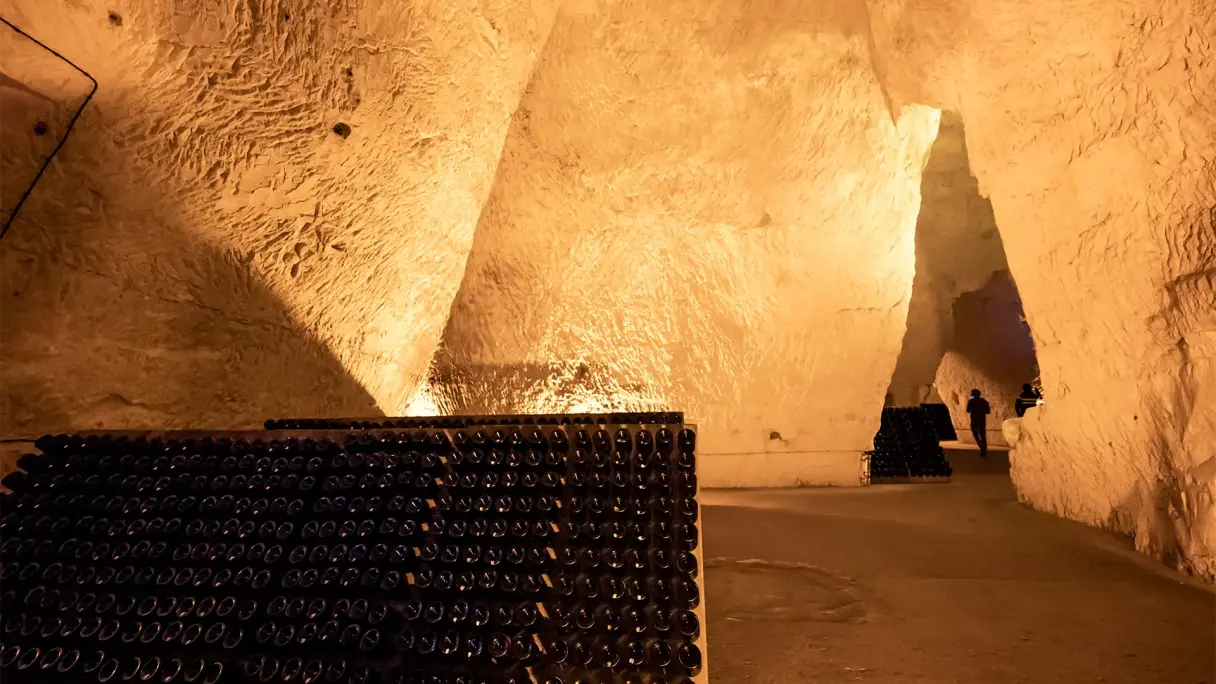
Many of these cellars date back to former Crayères – chalk quarries from Gallo-Roman times which are in fact recognised and protected as a world heritage site by UNSECO.
After the end of the maturing period, however, the yeast which has settled at the bottom, now needs to be removed from the bottles.
For this purpose, the bottles are placed upside down in wooden racks, the so-called riddling rack.
Every day, the cellar masters slightly rotate each bottle slowly tilting it more and more so that the yeast can collect in the bottle neck.
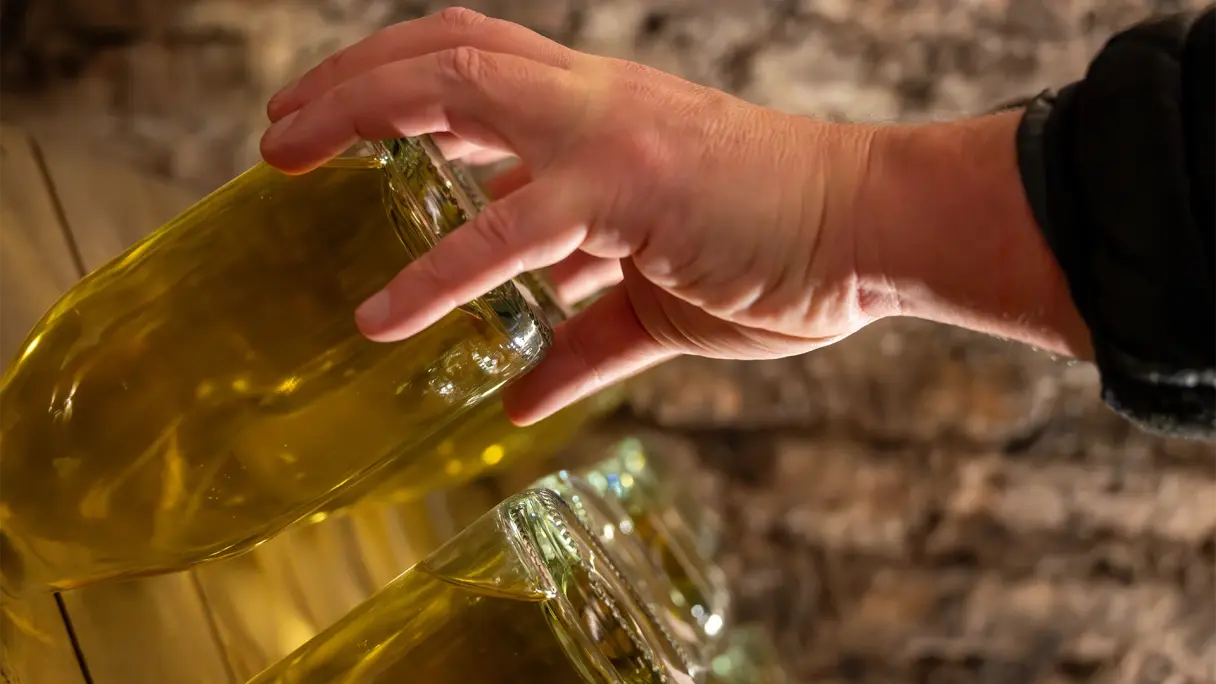
However, this procedure known as “remuage” is certainly not completed by hand alone. This process is also carried out automatically in so-called gyropalettes which are also computer-controlled.
When all the yeast has gathered at the cork, the bottles are dipped upside down at the neck into a cold brine at -24 °C so that the yeast plug freezes at the cork.
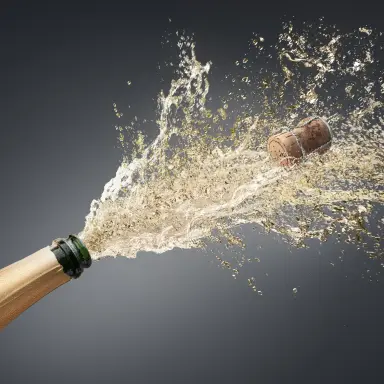
The bottles are now opened and the CO2 pressure causes the yeast to shoot out together with the cork.
How is champagne bottled?
The bottles are filled with a “Liqueur d'Expédition”, which also determines the degree of sweetness of the champagne.
Only now is the cork put into the bottle which then forms into the well-known mushroom shape in the bottle neck, and which is secured with a small wire basket – the agraffe.
The bottles are finally washed and labelled, and a capsule is added over the cork.
Finally, it is shipped to champagne lovers all over the world, where a long and elaborate production process culminates in stylish moment of indulgence.

The author
Frank Kämmer
I have worked for many years in high-end restaurants and in this time became one of the top sommeliers in Europe. In 1996, I achieved the title of Master Sommelier, the highest international qualification in my profession. Today, I work primarily as a consultant in the international wine and gastronomy sector. I have also published numerous books on wines and spirits and was the first German to be accepted into the British Circle of Wine Writers.