
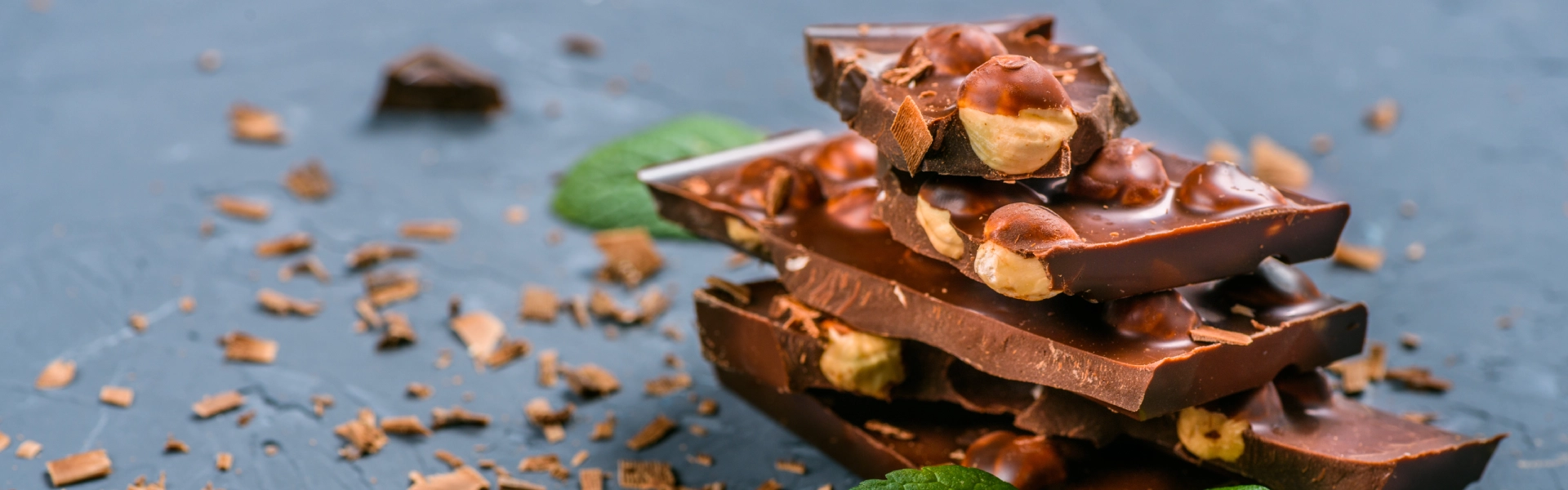
Shelf life of chocolate: correct storage and freezing
Find out how to extend the shelf life of your favourite chocolate here! We give you practical tips on how to store chocolate correctly and explain whether freezing is an option.
The key points
- Shelf life beyond best before date: chocolate is often edible for up to two years after the specified date.
- Dark vs. white chocolate: dark chocolate, with a higher cocoa content, has a longer shelf life.
- White/grey coating: can be caused by incorrect storage, for example by high temperatures (fat bloom) or temperature fluctuations (sugar bloom), but is harmless.
- Quality inspection: Chocolate is usually still good if it smells and tastes normal.
- The optimum temperature for storing chocolate is between 12 and 20 °C.
- We generally do not recommend freezing chocolate.
Shelf life of chocolate:
how long does chocolate keep? And how does correct storage affect the shelf life? Read on to find out at what temperature chocolate tastes best and how you can tell whether it is still edible.
For many people, the first indication of this is the best-before date. However, this is usually not very helpful for chocolate, as it can often be consumed up to two years after the specified date without any problems. In general, dark chocolate has a longer shelf life than white chocolate due to its higher cocoa content.
But how can you tell if the chocolate is still good? Incorrect storage can result in a white or grey coating. This coating may be caused by too high a temperature, for instance. The cocoa butter it contains starts to flake and becomes visible on the outside. This is known as “fat bloom”.
Another reason for the discolouration is a change from a cold to a warm environment. This causes water to condense and the sugar it contains to be dissolved. The result is known as “sugar bloom”. However, neither of these prevents you from eating your chocolate.
The coating is harmless. Rather than relying on appearance, this is how you tell with chocolate: if the chocolate still smells and tastes normal, you can enjoy it without hesitation.
Mould is rare in chocolate due to its low moisture content, even when stored for long periods. Nevertheless, there are various things you can bear in mind when storing chocolate to preserve its flavour and quality for as long as possible. You can find out which temperature and location are best for this in the following sections.
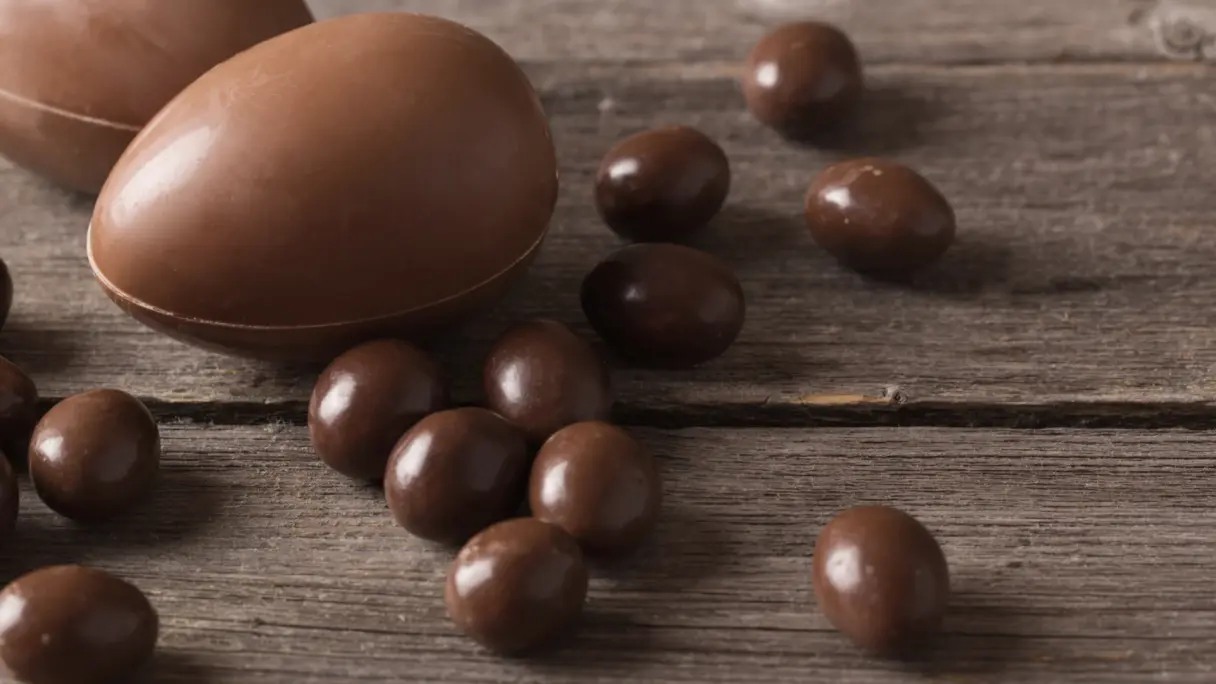
Storing chocolate in the fridge
For many people, chocolate from the fridge is a pleasantly sweet refreshment, especially in summer. However, the fridge is not the best place to store it.
Due to the low temperatures, chocolate quickly loses its flavour. The doesn’t melt on the tongue and that creamy feeling in your mouth is also lost. The chocolate also loses its visual appeal due to the cold. It is less shiny and crumbles quickly.
However, cold storage does not affect the shelf life of the chocolate if it is kept there consistently and is not exposed to temperature fluctuations.
If you still want to keep the chocolate in the fridge, you should store it in an airtight container. Chocolate in open packaging is particularly susceptible to absorbing other odours, which can change the taste.
The compartment in the door is the warmest place in the fridge, which is why it’s the best place to store chocolate.
But if, for example, the room temperature is so high in summer that the chocolate melts, it is better to store it in the fridge. However, thermoboxes can also offer an alternative, as they keep their interior cool even at high temperatures.
Storing chocolate
In which environment does your chocolate feel most at home? The optimum temperature for storing chocolate is between 12 and 20 °C. Choose a place where the temperature is as constant as possible, as temperature fluctuations can lead to fat bloom. You should also avoid moisture, as this can lead to sugar bloom.
It is also important to store chocolate in a dark place to preserve its quality. Light can lead to oxidation, which results in fat bloom and changes the flavour and aroma of the chocolate.
An opened bar of chocolate should be stored in a dry and airtight container. You can use an airtight container for this, for example. Open packaging increases the risk of moisture forming or the chocolate absorbing odours from the surrounding food.
Dark, cool rooms such as cellars or pantries are therefore particularly suitable for storing chocolate.
Freezing chocolate
Perhaps after next Christmas, when you have too many chocolate Santas left over, you might ask yourself whether you can simply freeze them. We generally do not recommend freezing chocolate.
The low temperature and defrosting before eating may result in fat or sugar bloom. In addition, the structure and consistency of the chocolate changes, which can have a negative effect on the flavour.
However, you can still freeze the chocolate before it goes bad. There are a few things to bear in mind.
You should use an airtight container and freeze the chocolate in its original packaging so that as little air as possible can get to it and you avoid freezer burn. If you no longer have the packaging, you can wrap the chocolate in a towel as an alternative.
Before use, chocolate should be defrosted gently in the fridge in its original packaging or in a towel. If you no longer wish to enjoy the flavour on its own, you can melt the chocolate and use it as cake icing, for instance.
You might find this interesting…
How to store coffee beans and ground coffee correctly
Store coffee beans and coffee correctly so that they stay fresh, tasty and keep for as long as possible. Find out now.
Storing bananas correctly – in the fridge?
How should bananas be stored and kept? Does it make sense to store bananas in the fridge? Read on to find out.
Tanghulu – a Chinese sweet speciality
Tanghulu is a traditional Chinese sweet that is becoming increasingly popular around the world. Read this article to discover everything you need to know about tanghulu.