
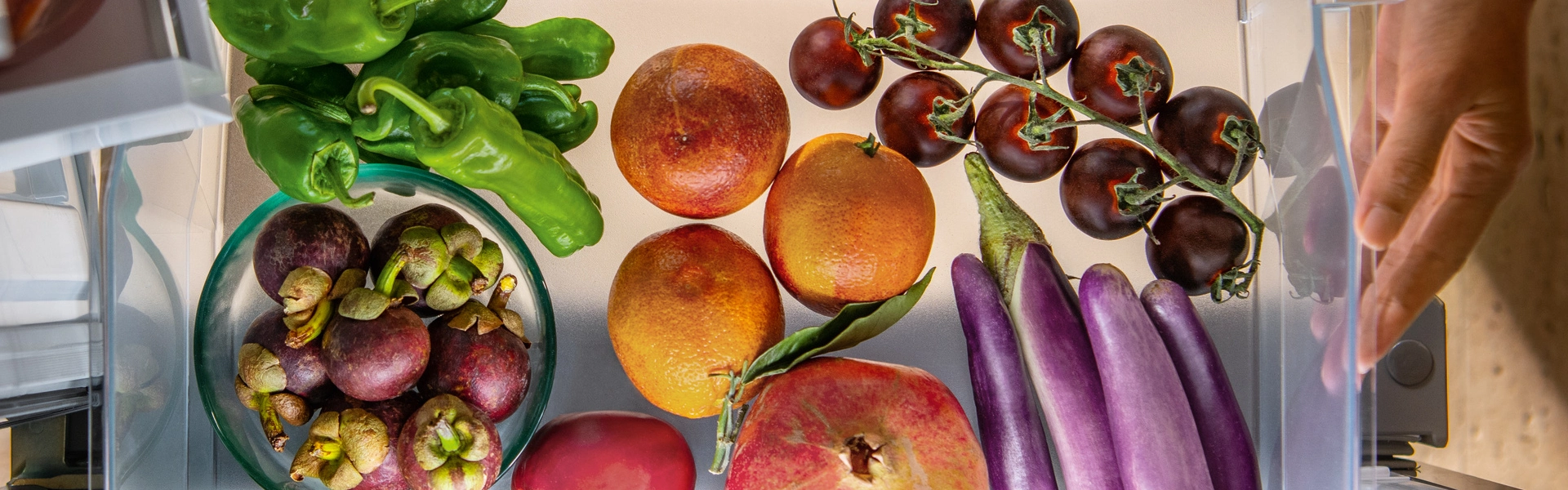
Preserving food for longer in the fridge
Have you ever stopped and thought about why we put our food in the fridge to extend its shelf life? Why does food last longer when it is cooled? We’ll explain the reasons and show you the other methods you can use to preserve your food.
The key points
- Food spoils due to microorganisms and biochemical processes – cooling slows down this process considerably.
- In addition to cooling, there are other conservation methods such as heating, pickling, drying, canning, curing and sugaring.
- Keeping your fridge at a temperature of max. 5 °C reduces the growth of harmful germs and improves the shelf life of your food.
- Sensitive foods should be stored in special cooling zones adjusted to the optimum humidity and temperature conditions.
Preserving food for longer – table of contents
Preserving food: the possibilities
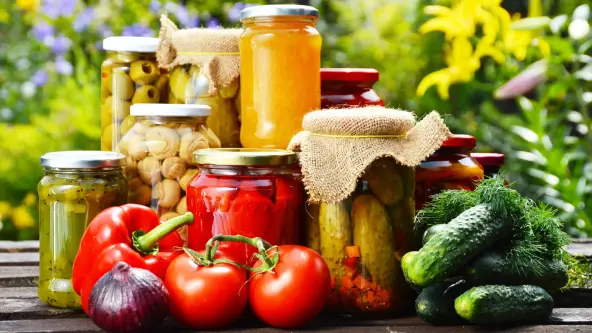
Heating: high temperatures kill microorganisms and deactivate enzymes, making food last longer.
Pickling: food is placed in vinegar, oil, alcohol or brine, which inhibits the growth of bacteria and prolongs its shelf life.
Drying: microorganisms need water to survive, so removing the water from your food allows you to preserve perishable goods such as fruit, meat and herbs for long periods.
Canning: food is heated in glass containers and sealed airtight, killing germs and creating a vacuum that prevents the any new germs from entering.
Curing: the meat or fish is coated in salt and/or nitrates to remove water and inhibit the growth of bacteria. This means that you can enjoy your products for longer.
Sugaring: a high sugar concentration, such as in jams or candied fruit, removes water from microorganisms and prevents their growth.
Refrigeration and freezing: low temperatures slow or stop the growth of microorganisms and enzymatic processes, meaning you can store your food for longer.
Why refrigerating your food can extend its shelf life
One of the key reasons that food spoils is the presence of microorganisms, i.e. bacteria, yeasts and mould. The quality of food can also be reduced as a result of biochemical processes. For example, fat becomes rancid, carbohydrates and proteins are broken down or the colour of foods can change. These microorganisms usually reach the food from the outside, where they then multiply. They can be particularly prolific on the surface of leftovers, sausages and cheese, for example. In a cool environment, on the other hand, the metabolism and therefore the growth of the microorganisms that sit on the food is stopped or at least slowed down.
A large number of these microorganisms are classed as mesophiles. Mesophilic organisms thrive in temperatures between 20 °C and 40 °C. It is therefore recommended to set the temperature of your fridge to 5 °C or colder. Salmonella, for example, is unable to grow below 5 °C. For this reason, fridges with an electronic display offer a huge advantage, as it is possible to see the actual temperature, unlike on appliances with a thermostat.
Food stays fresh for longer when…
- It is stored immediately after purchase.
- It is stored while fresh.
- It is stored in suitable packaging.
- It is stored at an optimal temperature.
- Sensitive foods are stored in special cooling zones.
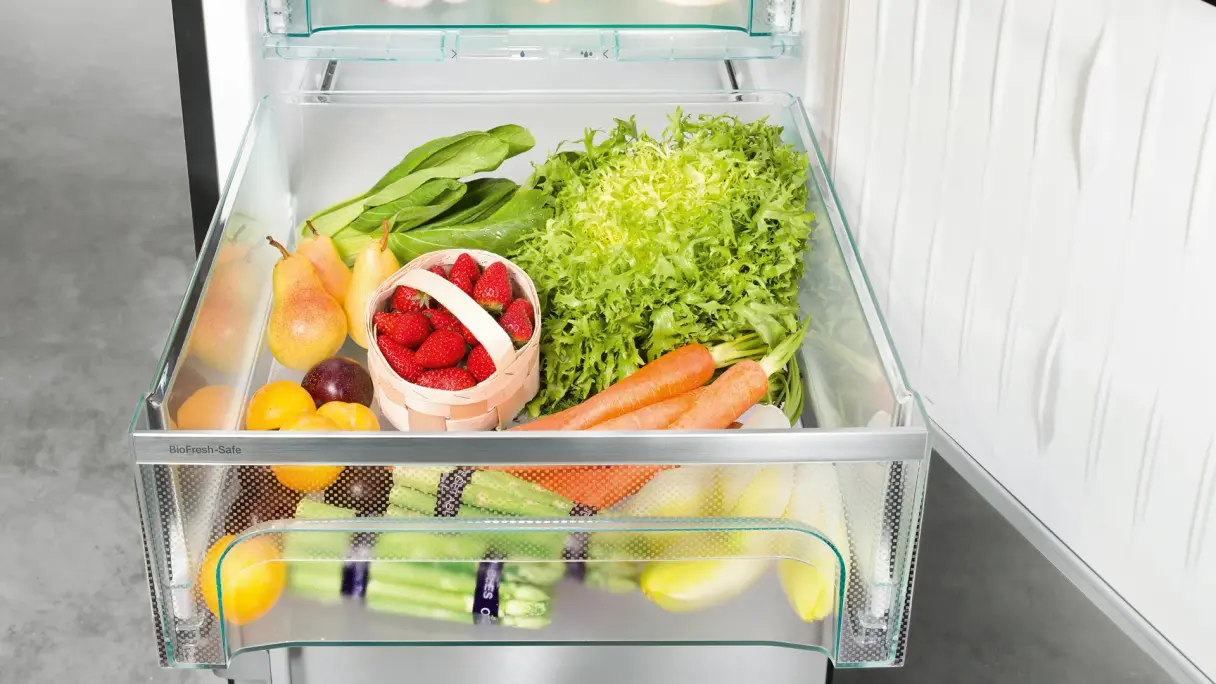
Suitable packaging options include glass and porcelain containers, plastic food bags, boxes or coverings, cling film, aluminium foil, paper bags or perforated film bags for fruit and vegetables. However, thanks to innovative technologies from Liebherr, many foods can be stored unpackaged and still remain fresh for a long time. Thanks to BioFresh, the temperature and humidity conditions are precisely controlled. Fruits and vegetables remain crisp and nutritious when stored at a high humidity, while fish, meat and dairy products can be stored for longer when kept at just over 0 °C. By producing a fine cool mist, HydroBreeze ensures that sensitive foods do not dry out and retain their fresh, crisp structure – ideal for fruit and vegetables. With these technologies, the food remains fresher for longer, so you can enjoy the natural taste.
This might also interest you
Freezing food – how to do it correctly!
Freezing food made easy: find out the correct way to freeze your food, preserve it and save money and resources in the process!
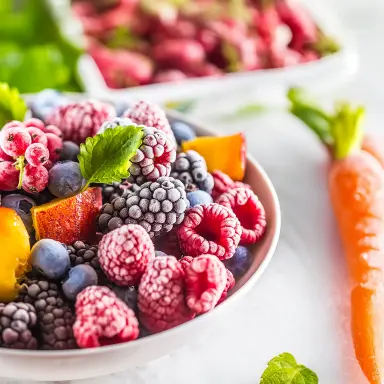
Fresh or frozen fruit and vegetables?
Fruit and vegetables are important for a healthy lifestyle. But what is actually better: fresh or frozen vegetables and fruit? We reveal all!
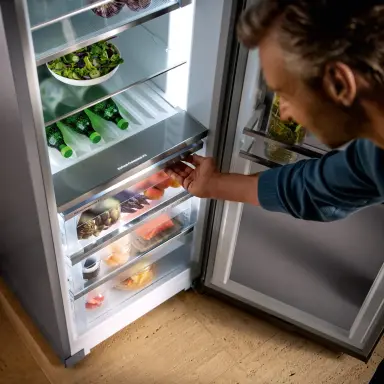
Organising the fridge: clear, efficient and smart
From reusable containers to temperature zones: Organising the fridge, saving space and keeping food fresh for longer.