
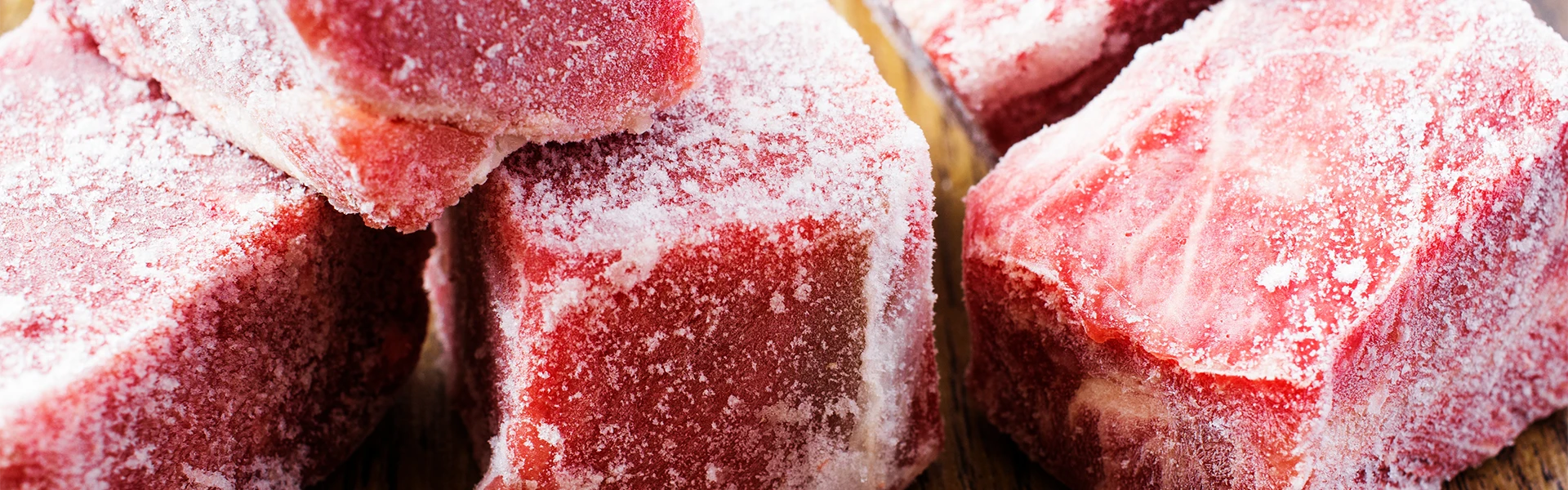
Freezer burn: what is it and how can you avoid it?
Have you got far too much meat left over from your last barbecue? What could be better than freezing the unused leftover food that hasn’t yet been barbecued? But what’s the best way to wrap it up to make sure there’s no freezer burn? And what exactly is freezer burn and is it bad for you to eat the “burned” products?
The key points
- Freezer burn creates dried-out spots on frozen food that are caused by inadequate packaging.
- Although it may not look that appetising, freezer burn is harmless.
- To freeze food safely, you should package it in freezer bags, vacuum bags or air-tight containers.
- The space that the frozen food takes up should be restricted by tight-fitting and water-vapour-tight packaging.
Freezer burn – list of contents
What is freezer burn?
Freezer burn is where you get dried-out spots on frozen food. It’s caused when food is frozen in leaky packaging. This allows air to get inside the packaging and dry out the frozen food. Unsightly blackish-grey discolouration will then be produced at the spots that have been exposed to the fresh air. Temperature fluctuations, which often occur during transport, can also lead to freezer burn if the packaging is inadequate.
The good news: the blackish-grey discolouration is just a dried-out spot, similar to what you find on a sausage that’s been left in the air for too long. Foods that contain water release moisture at room temperature, which causes this unsightly discolouration. Although freezer burn may not look that appetising, it’s harmless.
It’s all about the packaging – how to avoid freezer burn
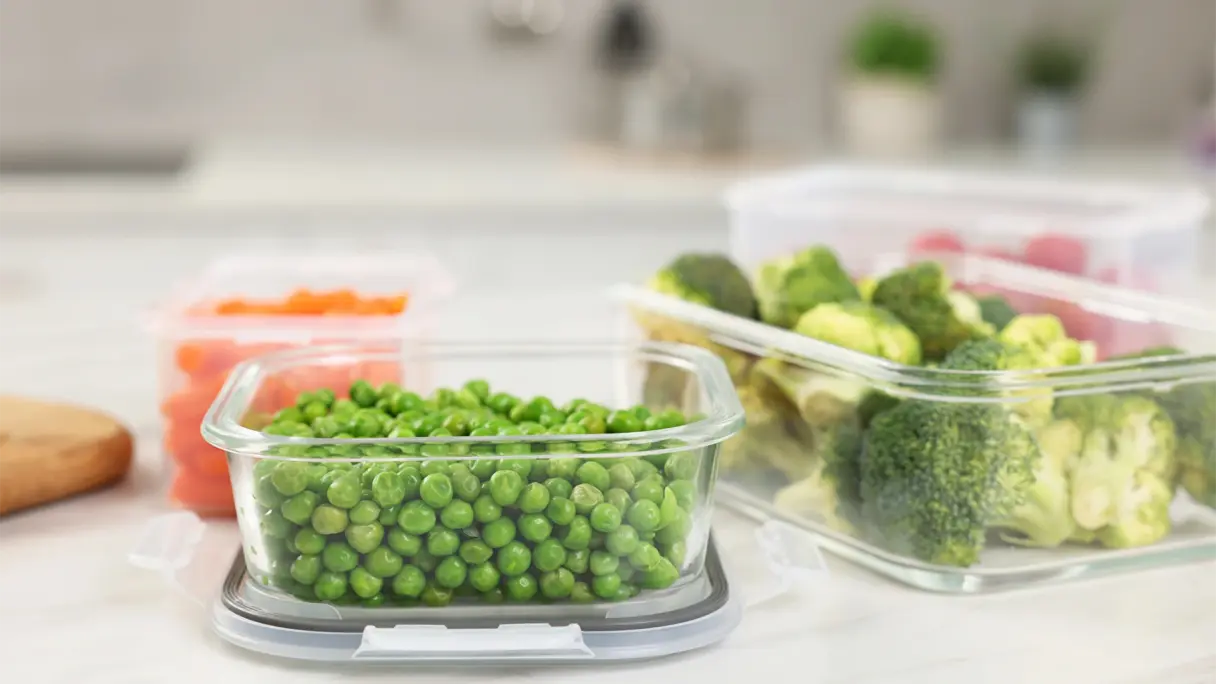
To freeze food safely, you should package it in freezer bags, vacuum bags or air-tight containers.
To stop any foods that contain water from drying out, it’s a good idea to freeze them. This will freeze the water in the food and trap it safely as a solid material. Despite this, food can also dry out in the freezer. At the temperature of -18 °C usually found in a freezer, the ice can’t melt but it can still disappear.
This is similar to what happens when iodine crystals are heated. Iodine transitions directly from a solid to a gaseous state, without melting. The same thing happens in the chest freezer.
The solution: restrict the space that the frozen food takes up with water-vapour-tight packaging that is as tight a fit as possible (e.g. a freezer bag). This will ensure that your frozen food loses hardly any liquid.
So make sure your frozen food has appropriate packaging. That’s because it’s the only way you can enjoy the quality of freshness to the full even after months of storage.
This might also interest you
Freezing food – how to do it correctly!
Freezing food made easy: find out the correct way to freeze your food, preserve it and save money and resources in the process!

Freezing without plastic using these alternatives
Freezing without plastic: discover sustainable alternatives such as glass, stainless steel and wax wraps to keep food fresh in an environmentally friendly way!
Freezing meat correctly
Freezing meat made easy: prepare it correctly, seal it airtight and store it properly. This way, flavour and quality are preserved.