Pistachio: origin and ideas for processing
Whether in ice cream or sausage: we can find pistachios in all kinds of foods we may not necessarily expect them to be. Wherever they are, they always add a special touch of class to a wide range of foods. Read on to find out about the origin of pistachios, what kind of food they are and how you can use them.
The key points
- The origin of pistachios is in the Middle East.
- Their green colour is due to the pigment chlorophyll, while the violet skin is caused by anthocyanins.
- Pistachios are rich in fat (approx. 60%) as well as protein, potassium, calcium and iron.
- Due to their high fat content, they can quickly become rancid – so that airtight storage is essential.
The origin of pistachios – list of contents
The origin of pistachios
The Middle East is the pistachio tree’s homeland. This tree from the sumac family thrives best here, because it is hot and dry. Almost two thousand years ago, the Romans helped the pistachio gain international recognition. This is how it reached Italy via Syria, and it still grows in Italy today. The pistachio tree is also cultivated in Africa, Asia, some other European countries and the USA. Turkey is the leading grower among these producers.
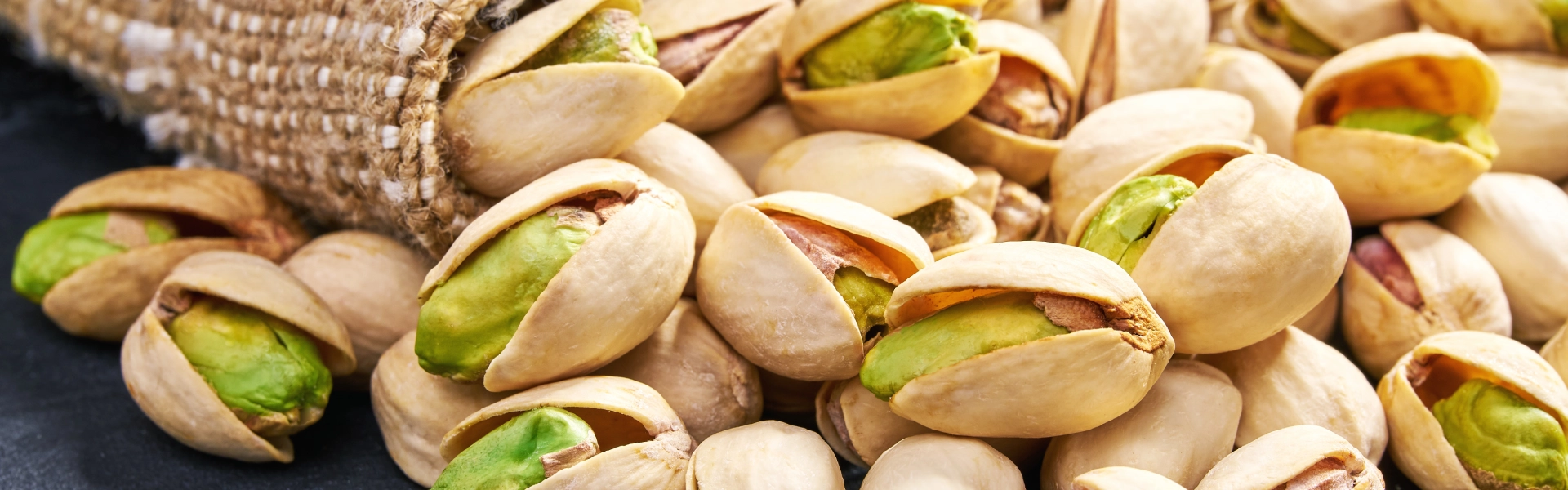
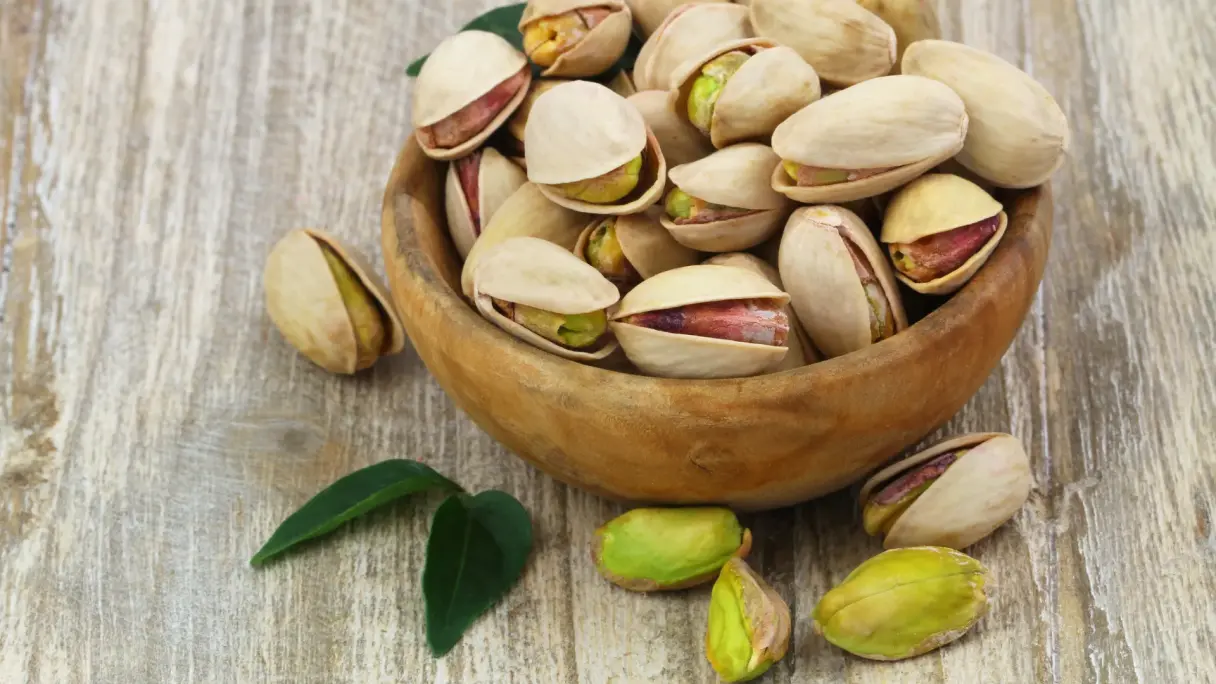
The pistachio tree grows up to ten metres high and bears fruits that are of particular interest to us. These are stone fruits: a seed enclosed by a hard, woody core. And the seed is what we generally call a pistachio: triangular, mostly green and covered by a thin purple skin. The pistachio is therefore not a nut – as one might mistakenly believe – but rather the seed of a stone fruit.
Why are pistachios green?
The small pistachio seeds contain a very specific ingredient in relatively large quantities: chlorophyll. Up to three milligrams per hundred grams of this green pigment can be found in the pistachio seeds. The violet skin gets its colour from another natural pigment, namely a type of anthocyanin. Incidentally, blackberries, the skin of aubergines, cherries and many other purple fruits are also coloured by anthocyanins.
One ingredient of the pistachio stands out in particular: fat. Up to 60 grams of fat can be found in 100 grams of pistachio seeds. In addition to the 60 percent fat, a pistachio seed contains about 20 percent protein. As far as minerals are concerned, calcium, potassium and iron stand out in particular. Pistachios contain considerable quantities of these.
The large amount of fat is also the reason why pistachios quickly become rancid. This is immediately noticeable in the smell and taste and the seeds are then no longer edible. How can this process be prevented? Oxygen contact should be avoided as much as possible. Pistachios stay fresh for a very long time in a fridge if they are stored unpeeled in an airtight container. The controlled humidity and low temperature there protect their flavour and crunchiness perfectly.
Recipes for using pistachios
There is a good reason why pistachio sales figures continue to rise – they simply taste delicious. Their flavour is reminiscent of almonds and the green seed can be used in sweet and savoury treats. Mostly we enjoy them roasted, because the taste only really unfurls by roasting. Roasted and salted pistachios are the perfect snack. Opening the shell is a ritual that belongs with it. But the little green pistachios can do so much more. Have you ever prepared your own pistachio brittle? Simply melt a few tablespoons of sugar in a pot or pan and add the same amount of pistachio seeds.
Meat pâté refined with pistachios is delicious and easy to prepare. For the simple version you only have to mix minced meat with a handful of pistachio seeds, an egg and some breadcrumbs. Add onions and garlic as well as salt and pepper to taste. Then spread the mixture onto rolled out puff pastry and cover the filling with the dough. Put it in the oven and you’ll soon have a fine pâté that tastes particularly delicious with a cream sauce.
This might also interest you
Egg and sugar: substitute for a health-conscious diet
Eggs, flour and sugar are important in many recipes. But there is another way. Find out here which egg and sugar substitutes make baking a success!
Eat healthily: could food replace medicine?
Find out how eating healthily can boost your well-being. Valuable tips, nutrients and inspiration for a health-conscious lifestyle!