Kohlrabi: nutritional values, vitamins and calories of the vegetable
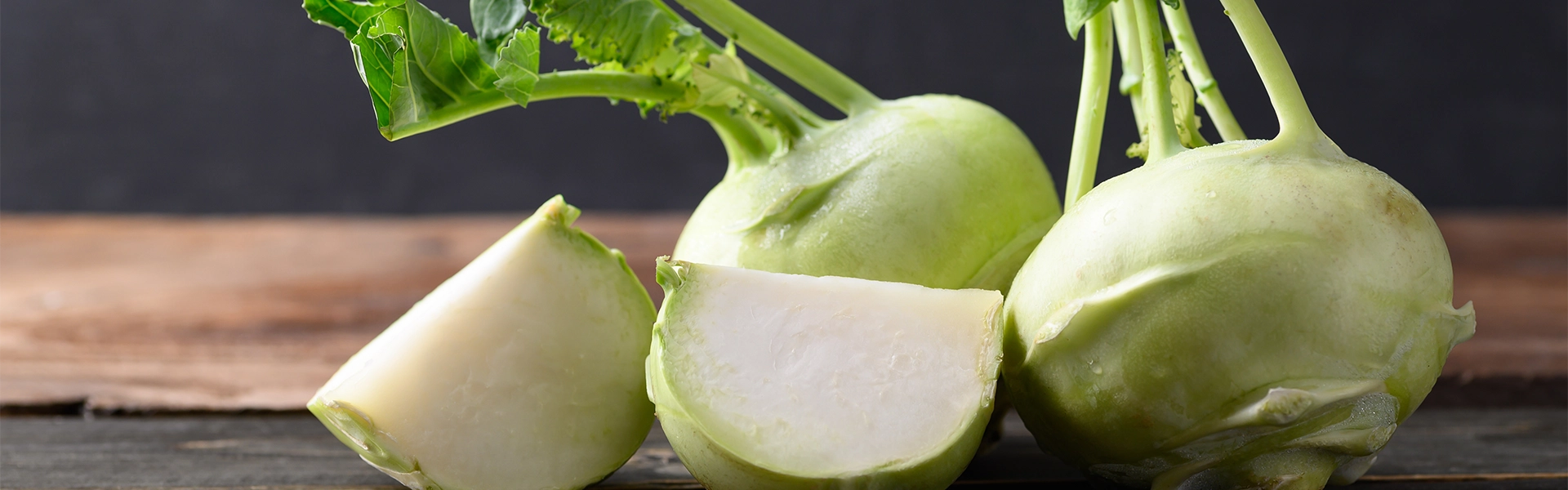
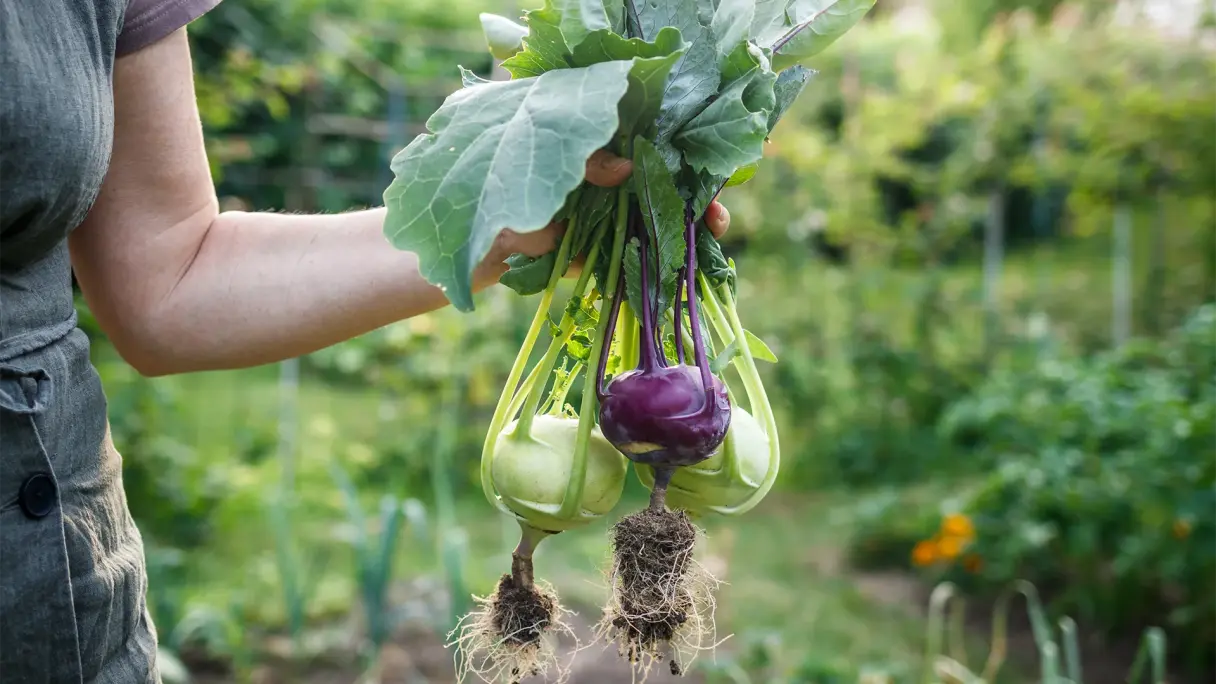
Slightly sweet with a mild cabbage flavour, kohlrabi enriches our diet with its nutritional values. The crunchy tuber is available in greenish-white and blue-violet and tastes particularly delicious raw, steamed or boiled. Kohlrabi is often not recognised as a valuable vegetable. We reveal why kohlrabi, with its nutritional values, is a valuable addition to your diet.
Storage time*
| BioFresh Fruit & Vegetable safe just above 0 °C with high humidity | 14 days |
| EasyFresh safe 7 °C with air regulation plate | 7 days |
| Fridge compartment 7 °C | 6 days |
| Freezer compartment -18 °C | 9 months |
The key points
- Low in calories and rich in nutrients: only approx. 25 kcal per 100 g, rich in fibre, protein, vitamin C, B vitamins, potassium, calcium and magnesium.
- Strengthens the immune system and digestion: supports the immune system, aids digestion and satisfies hunger without weighing you down.
- Versatile and compatible: whether raw, steamed or boiled – easily digestible and ideal for an alkaline-rich diet.
Kohlrabi – list of contents
What vitamins and nutrients does kohlrabi contain?
Kohlrabi is a low-calorie vegetable with a remarkable nutritional profile. Kohlrabi contains only about 25 calories per 100 g, making it ideal for a light diet. The water content is around 90 %, which makes kohlrabi very refreshing. It provides around 4–5 g of carbohydrates, of which around 2 g is sugar, as well as 3 g of fibre, which helps you feel full. With around 1.5 g of protein, it also contains plant-based protein. The fat content is negligible. Kohlrabi also scores highly with a variety of micronutrients such as vitamin C, B vitamins, potassium, calcium, magnesium and a little iron – a versatile basis for many dishes.
Kohlrabi is a stem tuber that grows with its lower part in the ground and is therefore also known as German turnip or turnip cabbage. The tuber is mainly cultivated in northern and western Europe. Even the Romans were enthusiastic about the “stalk turnip”. However, its country of origin remains unknown to this day.
How healthy is kohlrabi?
Kohlrabi is considered an extremely healthy vegetable and has many benefits for the human body. Its high vitamin C content is particularly noteworthy – just one serving covers a large part of the daily requirement and can therefore strengthen the immune system. It also provides important B vitamins, which can support energy metabolism and the nervous system, among other things. Thanks to its high fibre content, kohlrabi can aid digestion and keep you feeling full for longer without feeling heavy in the stomach. The potassium it contains can help regulate blood pressure and have a diuretic effect, while calcium and magnesium can be good for bones and muscles. Kohlrabi is particularly suitable for an alkaline-rich diet as it has a positive effect on the acid-alkaline balance. People with sensitive stomachs also tend to tolerate this vegetable well, especially when cooked. Since kohlrabi is also very low in calories, it fits perfectly into a balanced diet – whether raw, steamed or in soup.
Kohlrabi can be stored in the fridge for up to six days. In the BioFresh Fruit & Vegetable safe in Liebherr appliances, vegetables stay fresh for up to 14 days. This means you can enjoy kohlrabi and its valuable nutrients for longer.
*All specifications given are to be considered as guideline values, and depend in each case on the type of food and on the proper storage without interruption of the cold chain from harvest/production through to the Liebherr appliance. Should food products have information about minimum shelf life, the date on the packaging always applies.