Elderberry
Elderberry is much more than just a beautiful plant that grows in many gardens – it is a true natural wonder with a number of health benefits. In this article, you will learn why elderberry has been valued in folk medicine for centuries and what effects its flowers and berries are said to have on the body and the mind. You will learn about the effect of elderberry on cold symptoms and on supporting the immune system. We also explain what you should look out for when eating elderberries in order to enjoy their benefits safely.
Storage time*
| BioFresh Fruit & Vegetable safe just above 0 °C with high humidity | 14 days |
| EasyFresh safe 7 °C with air regulation plate | 6 days |
| Fridge compartment 7 °C | 4 days |
| Freezer compartment -18 °C | 24 months |
The key points
- Nutrient profile of the berries per 100 g: 55 kcal, 7 g carbohydrates, 2 g fat, 2.5 g protein, 6.5 g fibre
- Vitamins and minerals: rich in vitamin C, B vitamins (B6, B1, B2), vitamin A, E, folic acid, potassium, magnesium and iron
- Strengthens the immune system: antioxidant effect thanks to vitamin C
- Effect on the common cold: reduces fever, antiviral, shortens the duration of a cold
- Mental well-being: elderberry is said to be mood-enhancing and emotionally fortifying
- Caution when eating raw: raw berries and plant parts are poisonous and must be heated to over 80 °C before consumption
Elderberry and its health benefits: support during the cold season
Elderberry is a true all-rounder for health – and has been since ancient times. Both its delicate flowers and the deep purple fruits contain a remarkable spectrum of active ingredients.
In folk medicine, elderberry was often regarded as a protective plant that is said to strengthen body and soul in equal measure. Its use in rituals and customs emphasises the deep cultural significance that has been attributed to it for centuries.
The elderflowers are usually harvested in early summer. They contain essential oils, flavonoids and mucilage, which have diaphoretic, anti-inflammatory and expectorant effects. Elderflower tea is said to have healing powers, especially for colds, coughs, and fevers. The European Medicines Agency (EMA) recognises the flowers as a traditional medicine for the relief of early cold symptoms.
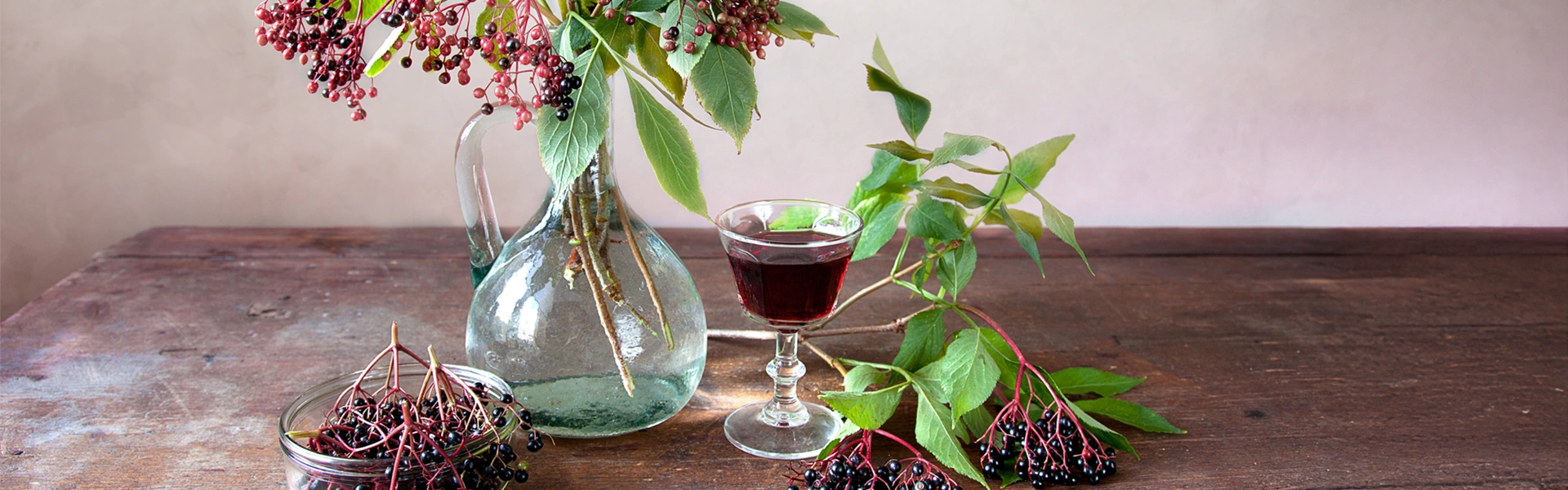
They are followed in late summer by elderberries, which are rich in anthocyanins, vitamin C and other polyphenols such as flavonoids. These can have an antioxidant effect, protect against cell damage, promote digestion and support the immune system. Elderberry juice has established itself as a tried and tested household remedy for flu-like infections, as it is said to have an antiviral and fever-reducing effect. Studies have even shown that elderberry extracts shorten the duration of colds.
However, its effect is not limited to physical complaints. Elderflowers in particular are said to soothe the soul as well. They are reputed to lighten the mood, awaken the spirit and provide emotional support in times of transition.
Whether as tea, syrup, juice or puree – elderberry not only enriches the medicine cabinet, but also the kitchen. Properly processed, elderberry strengthens the immune system, promotes inner balance and provides a comforting feeling of being equipped with the power of nature.
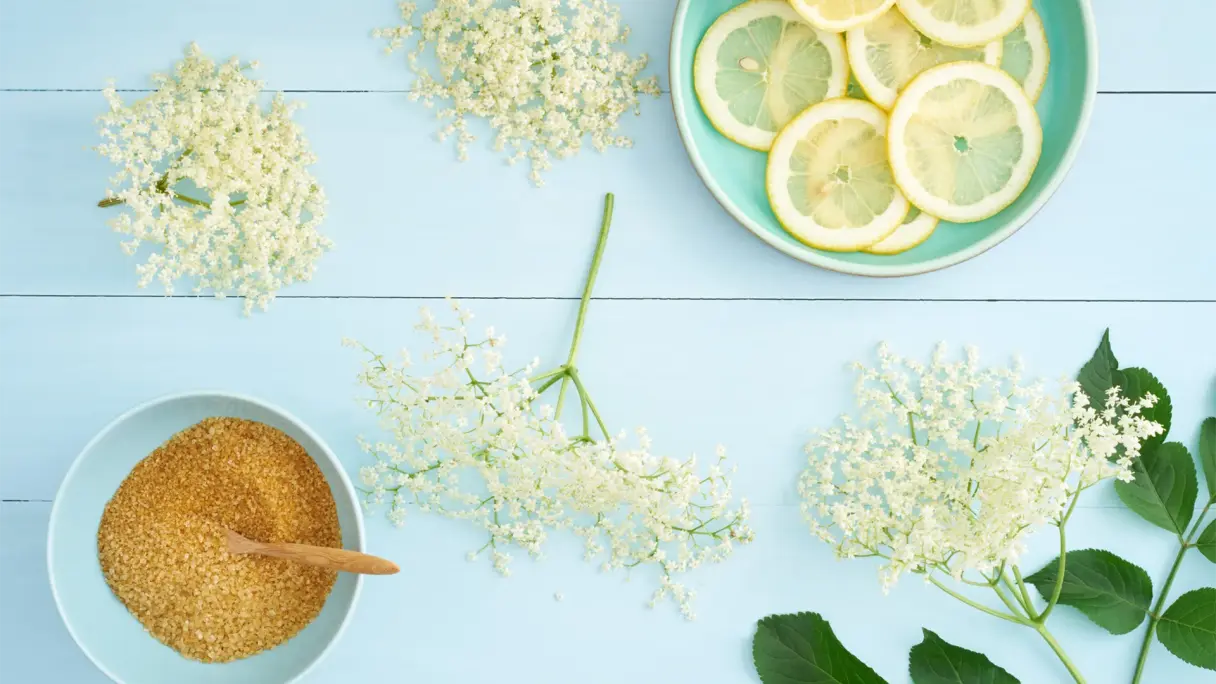
Elderberries are an immune booster: rich in vitamin C and other nutrients
Elderberries are not only flavourful and healthy, but also nutritional powerhouses. They are particularly rich in vitamin C – a strong supporter of the immune system – but also in vitamins of the B-complex, including vitamin B6, which is essential for numerous metabolic processes.
The berries also provide provitamin A (ß-carotene), vitamin E, folic acid and minerals such as potassium, magnesium, phosphorus and iron. In combination with secondary plant substances, such as flavonoids and anthocyanins, the result is a powerful elixir for your health.
| Vitamin | 100 g contains | Mineral | 100 g contains |
|---|---|---|---|
| Vitamin C | 18 mg | Potassium | 305 mg |
| Provitamin A (ß-carotene) | 350 μg | Calcium | 35 mg |
| Vitamin B1 | 65 μg | Magnesium | 30 mg |
| Vitamin B2 | 78 μg | Sodium | 1 mg |
| Niacin | 1.5 mg | Phosphorus | 57 mg |
| Vitamin B5 | 180 μg | Iron | 1.6 mg |
| Vitamin B6 | 250 μg | ||
| Biotin | 2 μg | ||
| Folic acid | 17 μg | ||
| Vitamin E | 1 mg |
With just 55 kcal per 100 g and a low sugar content of around 7 g, elderberries are one of the low-calorie fruits. At the same time, they provide fibre and some protein.
| Energy | Carbohydrates | Fat | Protein | Fibre |
|---|---|---|---|---|
| 55 kcal / 100 g | 7 g / 100 g | 2 g / 100 g | 2.5 g / 100 g | 6.5 g / 100 g |
Elderflowers differ significantly from the berries in their composition: they contain mainly flavonoids, essential oils, tannins and mucilage, which are known for their beneficial effects on the respiratory tract.
Despite their valuable contents, elderberries are sensitive. To preserve their nutrients as well as possible, they should be stored away from light, in a cool place and not for too long. Picked fresh, they keep for around four days in a fridge, and even up to fourteen days in the BioFresh safe from Liebherr at just above 0 °C.
Elderflowers differ significantly from the berries in their composition: they contain mainly flavonoids, essential oils, tannins and mucilage, which are known for their beneficial effects on the respiratory tract.
Despite their valuable contents, elderberries are sensitive. To preserve their nutrients as well as possible, they should be stored away from light, in a cool place and not for too long. Picked fresh, they keep for around four days in a fridge, and even up to fourteen days in the BioFresh safe from Liebherr at just above 0 °C.
Is elderberry poisonous? What to look out for when eating elderberry
Not all elderberries are the same – and they should be eaten with caution. While the delicate flowers of the black elderberry can be used raw without any problems, the berries, as well as the leaves, stems and unripe fruit, contain poisonous glycosides such as sambunigrin. This can be converted to hydrocyanic acid in the body and lead to nausea, vomiting and diarrhoea.
Even though ripe berries contain significantly less sambunigrin than unripe ones, they should never be eaten raw. The poison is only completely broken down by heating to at least 80 °C, making it safe to eat.
The dwarf elderberry is generally highly poisonous and should not be used in the kitchen, while in the case of the red elderberry, care should also be taken to remove the poisonous seeds after cooking. If you collect elderberries yourself, you need to be able to distinguish between the plant species to avoid health risks.
FAQ – elderberry in bloom
Elderberry typically blooms in late spring, usually between May and June. During this season, the plant’s white flowers, which are known for their healing properties, come into full bloom. The elderflowers that are harvested during this time can be used in teas or as part of elderberry juice. They fortify health, especially in the case of colds.
The best time to pick elderflowers is when they are fully bloomed but still fresh and not wilted. It is during this time that they develop their strongest healing effect. Fresh elderflowers are a valuable ingredient for flower tea, which is said to both support health and have a calming effect on the psyche. They can also be processed into elderberry juice, which can be particularly helpful during the colds and flu season.
Elderflowers can be easily removed from the stems by carefully cutting off the umbels (flower clusters) and stripping off the individual flowers. If you want to use the flowers for teas or to make elderberry juice, you should make sure to use them fresh, immediately after removing them, to preserve their healing properties.
Elderflowers are harvested by carefully cutting off the umbels (flower clusters). This should be done during the flowering period in late spring or early summer. They contain valuable ingredients such as vitamin C, which supports the immune system. Elderflowers can be used fresh or dried for flower tea.
*All specifications given are to be considered as guideline values, and depend in each case on the type of food and on the proper storage without interruption of the cold chain from harvest/production through to the Liebherr appliance. Should food products have information about minimum shelf life, the date on the packaging always applies.