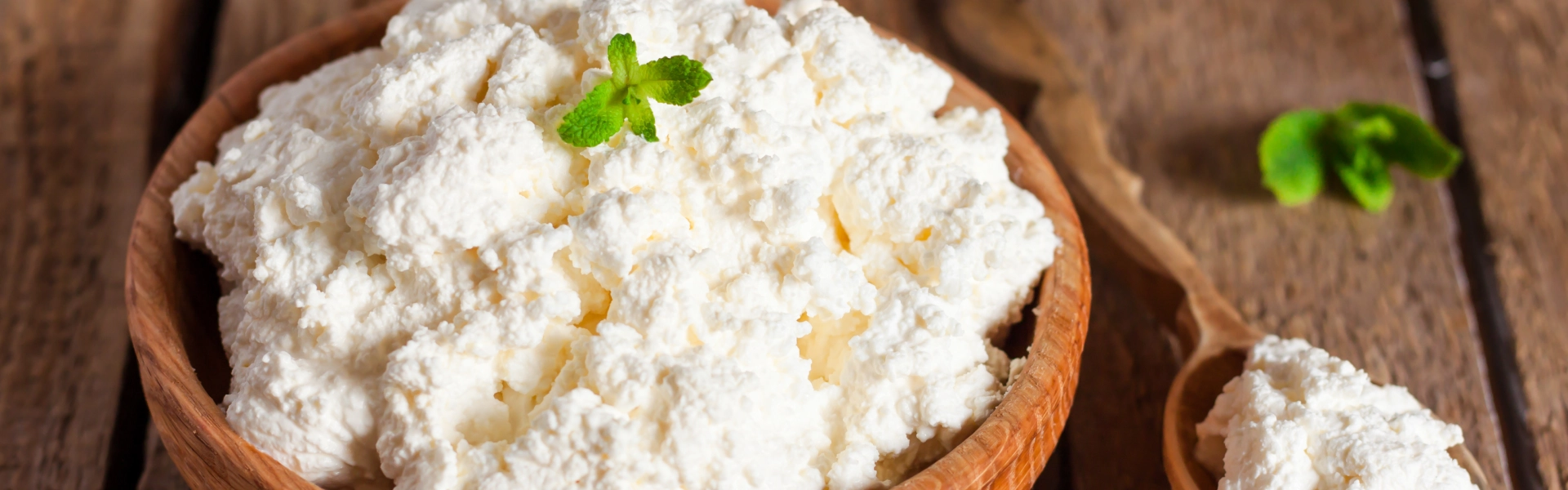
Cottage cheese: nutritional values, calories and protein content
Cottage cheese has long been a favourite among the fitness community due to its nutritional values. It is reputed to have a particularly high protein content with a low calorie level. Do you like eating cottage cheese and wonder what the high protein content of cottage cheese is all about? We reveal the nutritional values of cottage cheese.
Storage time*
| BioFresh Meat & Dairy safe just above 0 °C with low humidity | 20 days |
| Fridge compartment 7 °C | 7 days |
| Freezer compartment -18 °C | 10 months |
The key points
- Protein-rich foods: cottage cheese provides 11-13 g of high-quality protein per 100 g, which promotes muscle growth and a feeling of fullness.
- Low in calories and rich in nutrients: with only 98 kcal per 100 g, it is ideal for a calorie-conscious diet – rich in vitamin B12, calcium, potassium, and phosphorus.
- Healthy and versatile: cottage cheese is easy to digest, well tolerated and can be incorporated into your diet in a variety of sweet or savoury dishes.
- Freshness and storage: due to its high water content, it is highly perishable – it will keep for approx. 1 week in the fridge compartment and almost 3 weeks in the BioFresh Meat & Dairy safe.
The real nutritional values and calories of cottage cheese
The name cottage cheese is probably derived from the fact that in the past the grainy cream cheese was produced in cottages – from the skimmed milk leftover from butter production. It was therefore a sensible use of this valuable animal product.
The pasteurised and skimmed milk is mixed with acidification cultures in the form of lactic acid bacteria. These ensure that the protein coagulates. This coagulation of the milk creates the curd. The acid whey (the aqueous phase of the milk) separates from the thick cheese mass. This is now processed further. With the help of a cheese harp, the curd is cut and usually heated again to give it its grainy consistency.
Cottage cheese has impressive nutritional values. It contains a particularly high amount of high-quality protein – around 11 to 13 grams per 100 grams – and is therefore an ideal choice for anyone who wants to build or maintain muscle. At the same time, it is quite low in fat, especially in the pure version without cream, which makes it a popular food in calorie-conscious nutrition plans. In addition to protein, cottage cheese also provides important vitamins and minerals, including vitamin B12, which is important for blood formation and the nervous system, as well as calcium and phosphorus, which help to maintain normal bones and teeth. Potassium also supports muscle function and fluid balance in the body. Despite its high nutrient density, cottage cheese only has 98 calories per 100 grams. So with all of its nutritional values, cottage cheese is the ideal protein-rich snack for a calorie-conscious diet.

Cottage cheese as a healthy snack between meals?
Cottage cheese is considered extremely healthy and is a true nutritional multitalent. It is ideal for people with a slight hunger in between meals, as its protein structure makes it a quickly satisfying and long-lasting snack. At the same time, cottage cheese is well tolerated and easily digestible – even for sensitive stomachs. Cottage cheese is delicious and a valuable component of a healthy, nutrient-rich diet.
Cream cheese – whether cottage cheese, paneer or other cream cheese – is more perishable than other types of cheese once it has been opened. This is primarily due to the fact that, in contrast to cheese ripened over a long period, fresh cheese has a high water content (more than 70 %). It should be kept in the fridge at all times. While it will keep for around a week in a normal fridge compartment at 7 °C, it will stay fresh for up to 20 days in the BioFresh Meat & Dairy safe compartment of a Liebherr fridge. This fresh food compartment has low humidity and temperatures just above 0 °C. This allows you to benefit from cottage cheese and its nutritional values for as long as possible.
*All specifications given are to be considered as guideline values, and depend in each case on the type of food and on the proper storage without interruption of the cold chain from harvest/production through to the Liebherr appliance. Should food products have information about minimum shelf life, the date on the packaging always applies.