Cooking oils: nutrients of the different types of oil
Cooking oil can be found in every well-equipped kitchen. But the selection of cooking oils on offer and their nutrients is huge. Whether it’s sunflower, rapeseed, walnut or tried and tested olive oil, each oil has its own special properties and its suitability depends on the temperature it is used at and the dishes it is used in. Perhaps you are wondering which oil has what effect and which is best suited for which style of cooking? We’ll reveal some exciting facts about the diverse range of cooking oils right here.
The key points
- Production determines quality: cold-pressed oils contain more vitamins and aromatic substances, but are less heat-resistant. Refined oils are tasteless, have a longer shelf life and are heat-stable.
- Different types of oil – different purposes: sunflower, rapeseed, walnut or olive oil – each type is suitable for certain dishes and temperatures.
- Fatty acid profile influences health: oils containing monounsaturated fatty acids can support a healthy cholesterol profile; polyunsaturated fatty acids provide essential nutrients.
- Ensure the right storage: sensitive oils should be stored in a cool, dark place to preserve nutrients and flavour.
Cooking oils – list of contents
Cooking oils: how to preserve vitamins and nutrients
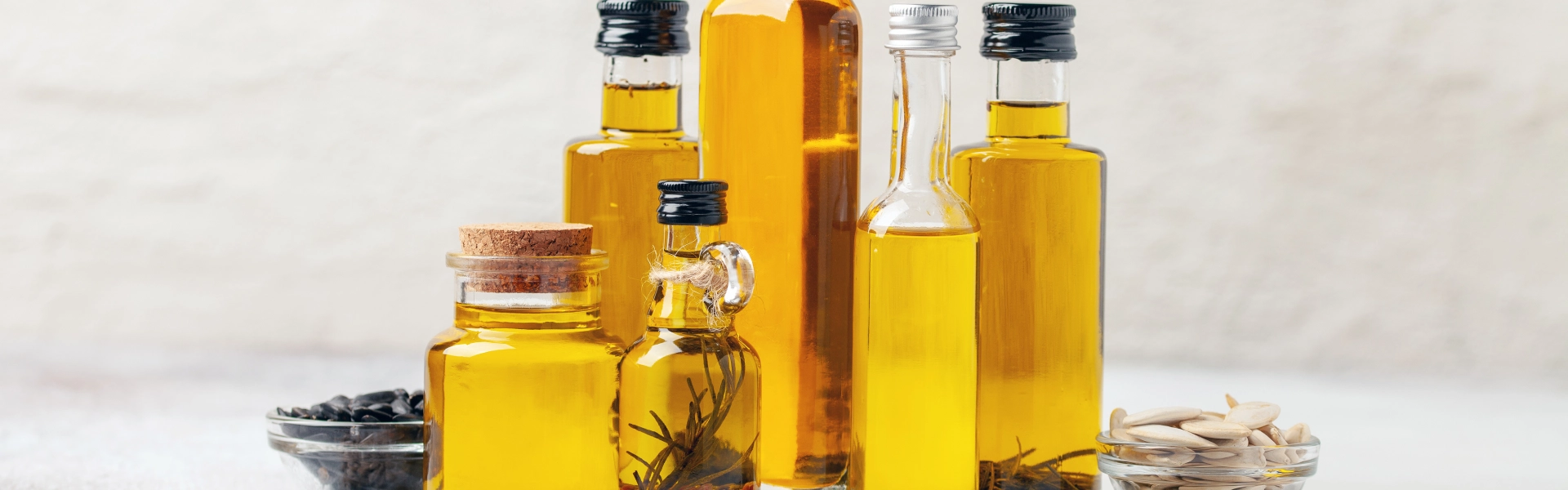
Oil can generally be extracted from all plants that contain fat. The fat-rich seeds or kernels of the plant are especially suitable for this. This is where the name seed or kernel oil comes from. However, there are also fruit oils, including the classic olive oil, as well as avocado and coconut oil. Depending on the production process, cooking oils have different nutrients and properties that are crucial for the taste profile and how they are used in cooking.
When it comes to cooking oils, there are two different production methods for extracting the oil from the plant. One option is industrial extraction and refining, which uses solvents and added heat to extract the oil from the plant. During subsequent ‘purification’, unwanted substances are removed, but so too are valuable secondary plant compounds and vitamins. Refined oil has the advantage that it is largely odourless and taste-neutral. This makes it ideal for dishes where the oil should not introduce any additional flavours into the cooking. Examples of such oils are refined rapeseed and sunflower oil. An additional advantage: The production process ensures an extended shelf life and stability when high temperatures are used in cooking. In addition, the oil yield is particularly high – this allows the oils to be sold at a lower price.
In addition to refined oils, there are also cold-pressed oils. These are extracted at temperatures below 40 °C without adding any heat, solely by mechanical processes. The production process is gentler and enables the preservation of vitamins and nutrients in the cooking oil. In addition, the typical smell and taste of the oil fruit is preserved. Cold-pressed oil, such as walnut or flaxseed oil, is perfect for adding flavour to salads and can be stored in the fridge to keep it fresh. However, most cold-pressed oils are more suitable for cold dishes and not for sautéing at high temperatures.
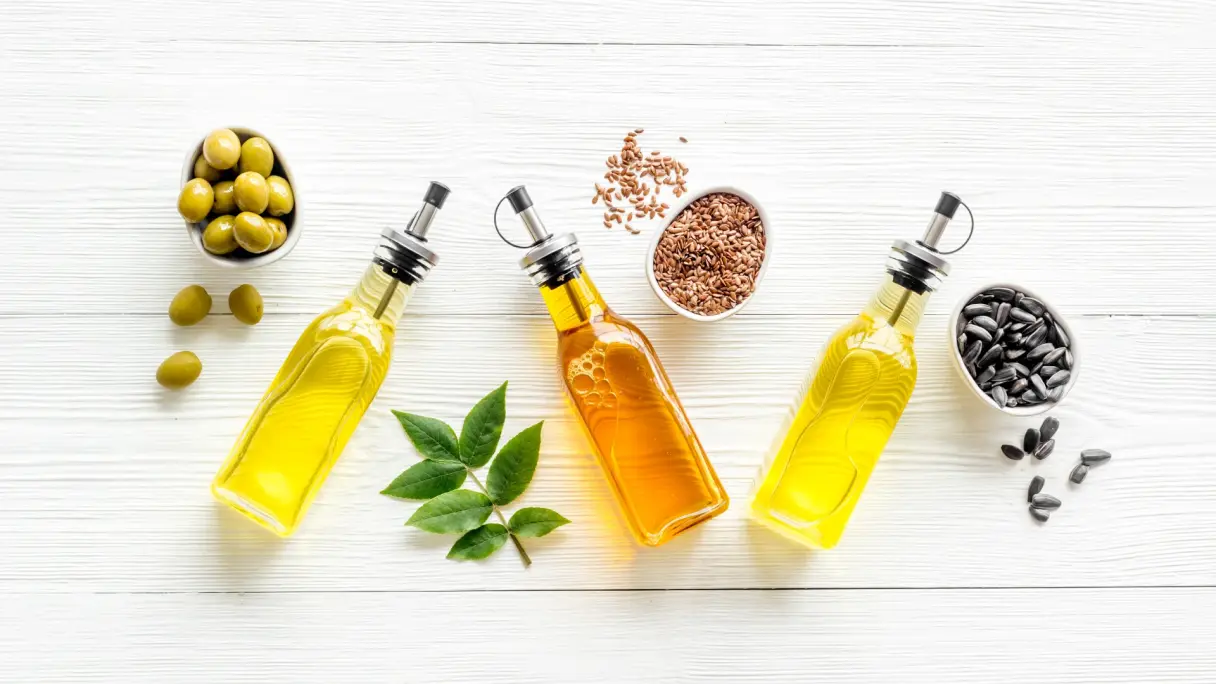
How healthy are which cooking oils?
In addition to the production process, the composition of the fatty acids is a decisive factor in distinguishing between the different nutrients contained in cooking oils. Fatty acids can basically be divided into saturated, mono-unsaturated and poly-unsaturated fatty acids. If the cooking oil has a high amount of saturated fatty acids, such as coconut oil, it is particularly stable and ideally suited for frying and deep-frying at high temperatures. However, since excessive consumption of saturated fatty acids can have a detrimental effect on health, they should only be consumed in moderation. Cooking oils also differ in their calorie content. If you’re aiming for a low-calorie diet, find out exactly which oil fits into your diet.
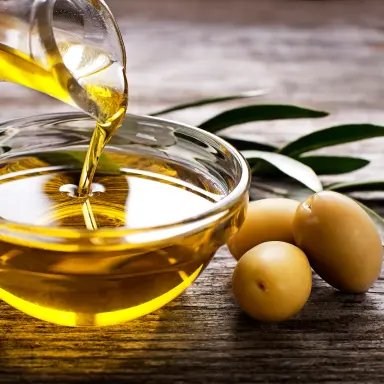
Oils containing many monounsaturated fatty acids, such as rapeseed or olive oil, can also be heated very well at high temperatures. They also have a high proportion of oleic acid, which, for example, can lower the concentration of the undesirable LDL cholesterol in the blood. In contrast, oils containing plenty of polyunsaturated fatty acids, such as flaxseed, walnut or pumpkin seed oil, cannot be heated at all or only to low temperatures. However, these cooking oils contain important nutrients such as omega-3 and omega-6 fatty acids. Once opened, flaxseed oil should always be stored in the fridge. Try to find suitable cooking oils with valuable nutrients for your diet and purposes and enjoy the variety.