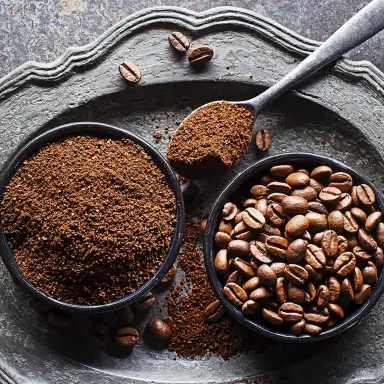
Coffee – nutritional values of the notorious pick-me-up
For many people, enjoying a cup of coffee every day is part of their daily routine – to start the day, as a pick-me-up in the afternoon or as the perfect finishing touch to a delicious dessert. We have collected together some fascinating information for you on all things coffee bean related. Find out here what nutritional valuescoffee contains and how it is produced.
Storage time*
| Room temperature 20 °C | Opened: 5 days (Aromas continuously diminish in contact with oxygen and light) |
| Fridge compartment 7 °C | not recommended |
| Freezer compartment -18 °C | 12 months |
The key points
- The beans undergo several processing steps from green coffee to roasting.
- Key aromas and bioactive substances such as antioxidants are produced during roasting.
- Vitamins and minerals are only present in trace amounts.
- Additives such as milk, sugar or syrup significantly alter the nutritional value of coffee.
Coffee and its nutritional values: from green coffee beans to an aromatic cup
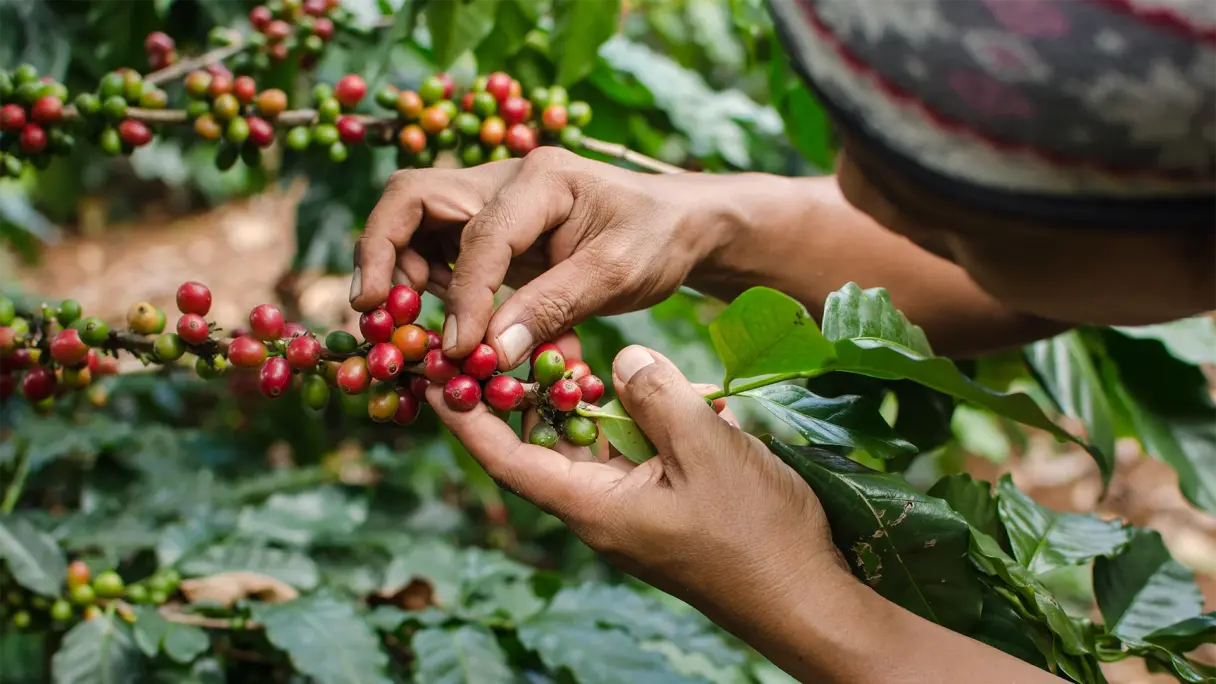
What exactly do we mean when we refer to coffee? Coffee is the drink we produce from roasted coffee beans. The coffee beans are the seeds of the coffee fruit which grows on the coffee bush. The fruit develops on the coffee bush. As soon as the coffee cherries are ripe, they are harvested and quickly processed into green coffee. Green coffee is the name given to coffee beans that have already had the flesh of the coffee cherry and other components removed. Next, the green coffee undergoes a fermentation process which helps to develop the typical coffee flavour. The beans are then dried until they contain only about twelve percent water. After a further cleaning stage, the beans are then ready.
The green coffee can be stored for up to three years before being roasted in coffee roasteries. Once roasted, the coffee should be consumed quite quickly. This is because the roasting process plays an important role in creating the flavour - and the longer the roasted coffee is stored, the more of the flavour it loses. In addition, this coffee spoils more quickly than green coffee, along with its nutritional values – it becomes rancid more easily and is then unpalatable.
Once you have found out the best coarseness of the grind for you, or have purchased pre-ground coffee powder, you can start preparing a delicious coffee speciality. However, besides the classic coffee from the filter coffee machine, there are plenty of other variants. All variants are based on the fact that the flavours and nutritional values of the coffee are extracted from the powder using hot water. The aromatic flavours released are then filtered off from the insoluble components (the remaining coffee powder) – either using filter paper or through the sieve of the cafetière.
Another brewing method is espresso. For espresso, use heavily roasted, finely ground coffee powder. This is then extracted under very high pressure using water – this is the key difference compared to the other preparation methods.
Coffee and nutritional values: What’s really in your cup of coffee?

Even though coffee is valued for its aroma and stimulating effect, it is worth taking a look at its nutritional values. Black coffee – i.e. without milk or sugar – is virtually calorie-free. One cup (about 200 millilitres) contains on average only 2 to 5 calories. This makes healthy coffee ideal for a calorie-conscious diet.
However, coffee contains hardly any significant amounts of minerals or vitamins. Traces of B vitamins such as niacin (vitamin B3) and small amounts of potassium, magnesium and manganese are detectable, but in the usual amounts consumed, they only contribute marginally to the daily requirement. Nevertheless, some of the bioactive substances contained in coffee, such as antioxidants, can have health benefits. These are partly produced during roasting and are part of the typical coffee aroma.
The key point: It is only when additives such as sugar, milk, syrup or cream are added that the nutritional value of coffee changes significantly. A simple espresso, on the other hand, remains virtually calorie-free despite its intense flavour.
*All specifications given are to be considered as guideline values, and depend in each case on the type of food and on the proper storage without interruption of the cold chain from harvest/production through to the Liebherr appliance. Should food products have information about minimum shelf life, the date on the packaging always applies.