Asparagus: nutritional values and vitamins of this stem vegetable
Asparagus has been cultivated for thousands of years and its nutritional values and taste have made it popular in many cuisines around the world. Are you also an asparagus fan and would like to learn more about this vegetable? We reveal the nutritional values, calories and vitamins found in asparagus.
Storage time*
| BioFresh Fruit & Vegetable safe just above 0 °C with high humidity | 18 days |
| EasyFresh safe 7 °C with air regulation plate | 10 days |
| Fridge compartment 7 °C | 8 days |
| Freezer compartment -18 °C | 12 months |
The key points
- Green asparagus scores highly for its nutrients: it contains more potassium, protein and vitamins B1, B2 and C than white asparagus.
- Source of folic acid with slimming effect: particularly rich in folic acid and low in calories.
- Not suitable for everyone: people with gout, elevated uric acid levels or a tendency to develop kidney stones should avoid asparagus.
- Freshness is crucial: ideally, use freshly harvested, non-woody asparagus with a fresh aroma.
Asparagus – list of contents
Asparagus contains the following nutrients and vitamins
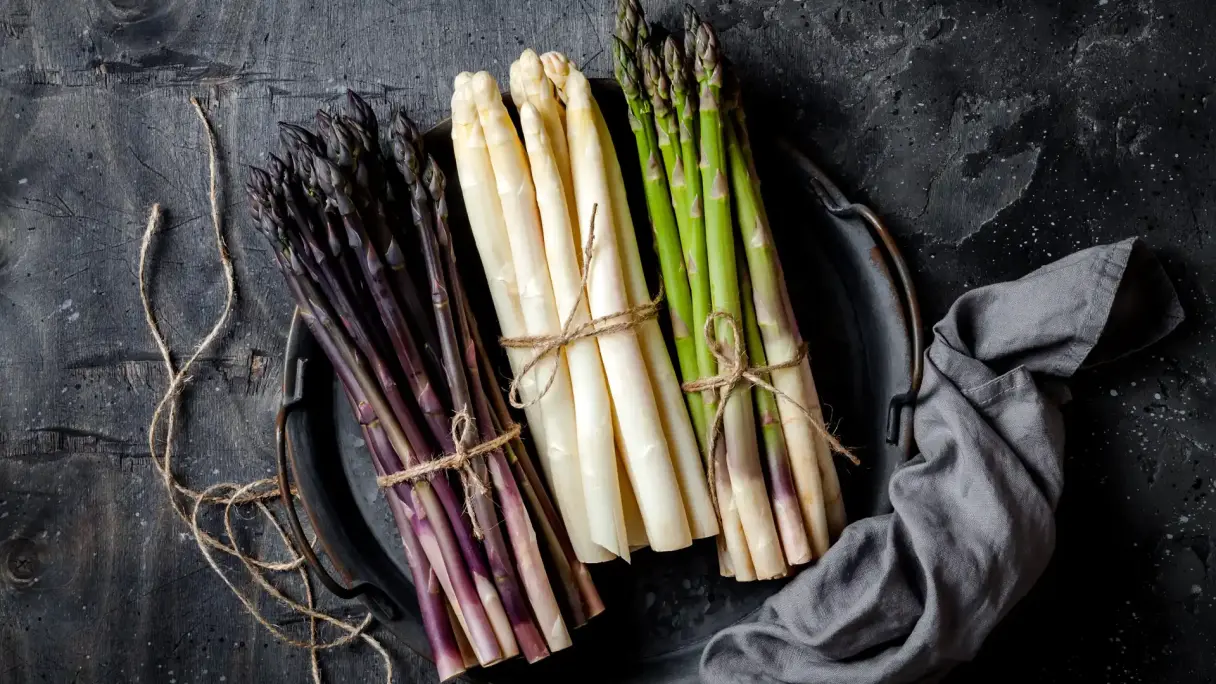
Asparagus comes in green and white varieties, but what’s the difference between them? White asparagus grows below the ground and green asparagus grows above the ground. The stems of this white stem vegetable are chlorophyll-free because they’re not exposed to sunlight. As soon as the head breaks through the soil, the tip first turns bluish (due to anthocyanin formation) and then green (due to chlorophyll formation).
Green asparagus has several advantages over its white counterpart. The green colour comes from the high chlorophyll content, which also means the asparagus contains more vitamin C. Green asparagus also contains significantly more nutrients and mineralsthan white asparagus – for example, green asparagus contains 312 mg of potassium per 100 g, while white asparagus contains only 207 mg. Furthermore, the green variety has a higher protein content and a higher content of vitamins B1 and B2 compared to white asparagus. This means that, based on nutritional values, green asparagus is preferable to white asparagus. However, when it comes to vegetables, taste is ultimately what matters.
Good white asparagus is thick but not woody, has a uniform white colour without green tips and has been harvested fresh on the day. You can tell how fresh it is by its fresh, unblemished stem and juicy smell.
How healthy is asparagus?
Many people say that asparagus is a superfood. However, this is not necessarily true. Although the spears have many health benefits, there are certain people who should avoid this vegetable. These include people with gout or high uric acid levels, as well as those who are prone to kidney stones. This is because this stem vegetable has high purine content, which can increase uric acid levels. However, if you’re not affected by these problems, asparagus can actually be a healthy treat. The nutritional values of asparagus are particularly noteworthy for their high folic acid content, which is especially important for women at the beginning of pregnancy. As folic acid is very sensitive to heat, you should take care not to cook asparagus for too long.
Asparagus also has a high content of provitamin A, which is responsible for many important processes in the body, such as a healthy immune system and eye health. Eating and digesting asparagus burns more calories than the asparagus itself provides. For this reason, asparagus is often referred to as a slimming food.
Asparagus is best eaten fresh. You can store the vegetable in the fridge for around eight days. If you want your asparagus to stay fresh for longer, Liebherr’s BioFresh technology really comes into its own: Asparagus will keep for up to 18 days in the Fruit & Vegetable safe of your Liebherr fridge. This compartment maintains a temperature just above 0 °C and high humidity – ideal for vegetables such as asparagus and their nutritional values.
*All specifications given are to be considered as guideline values, and depend in each case on the type of foodstuffs and on the proper storage without interruption of the cold chain from harvest/production through to the Liebherr appliance. Should food products have information about minimum shelf life, the date on the packaging always applies.