

Deep foundation

Slurry wall grab

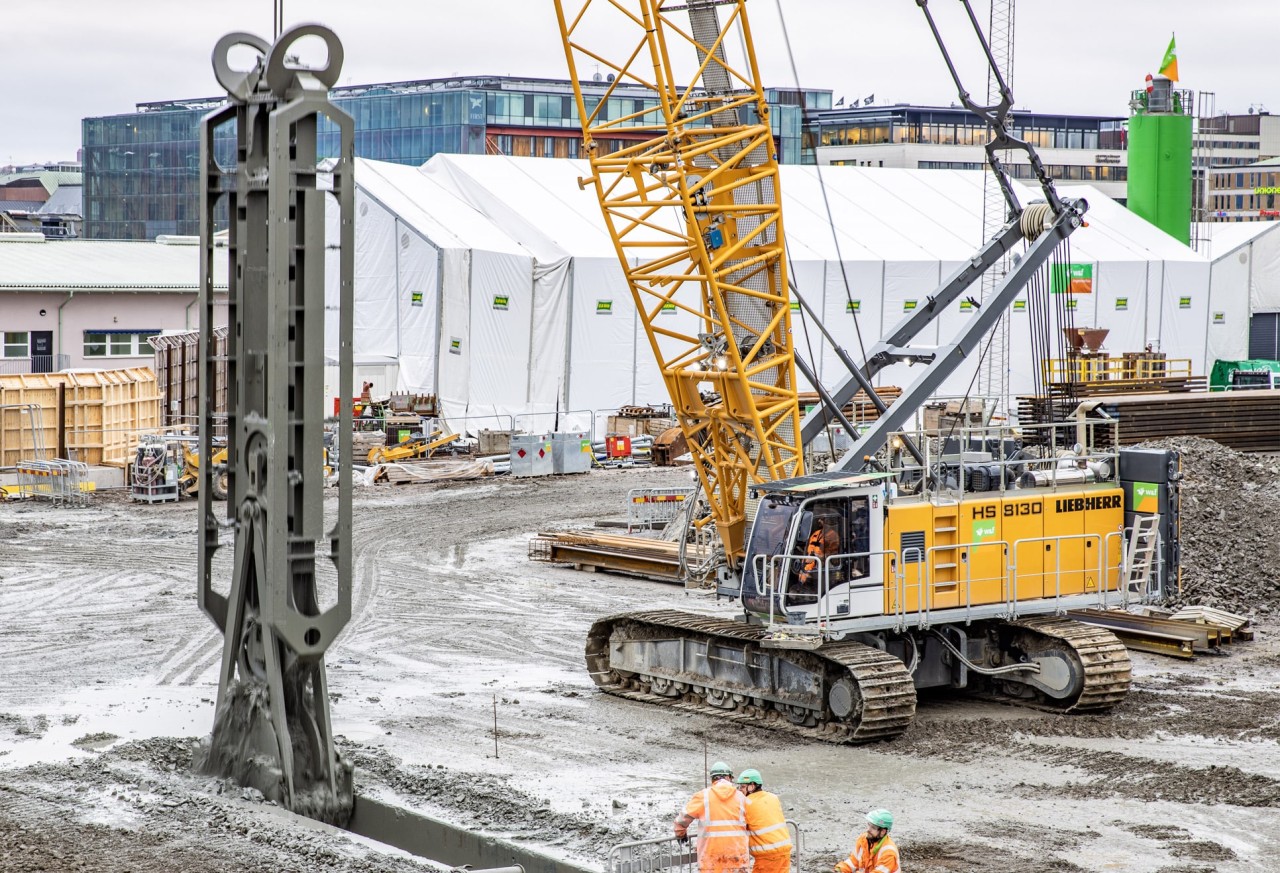
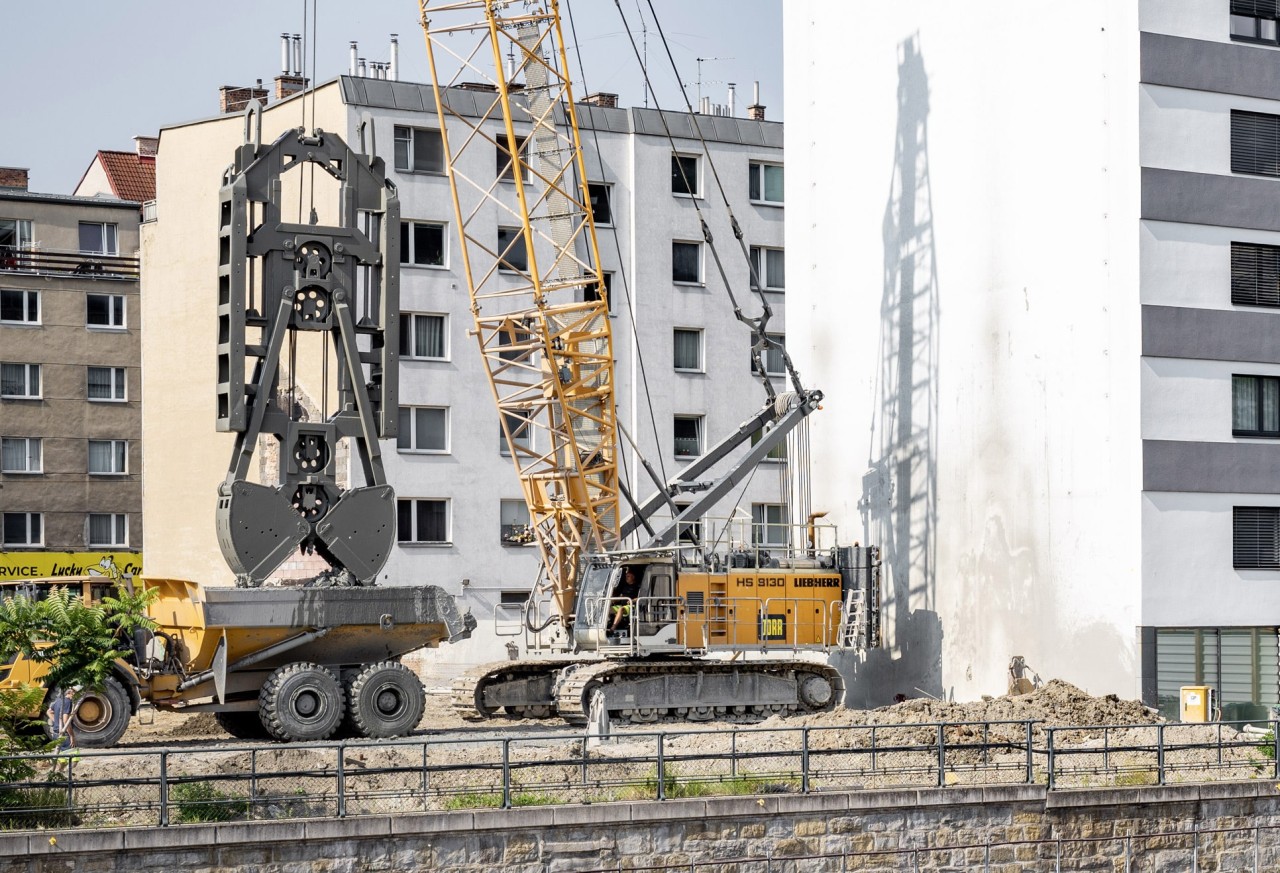
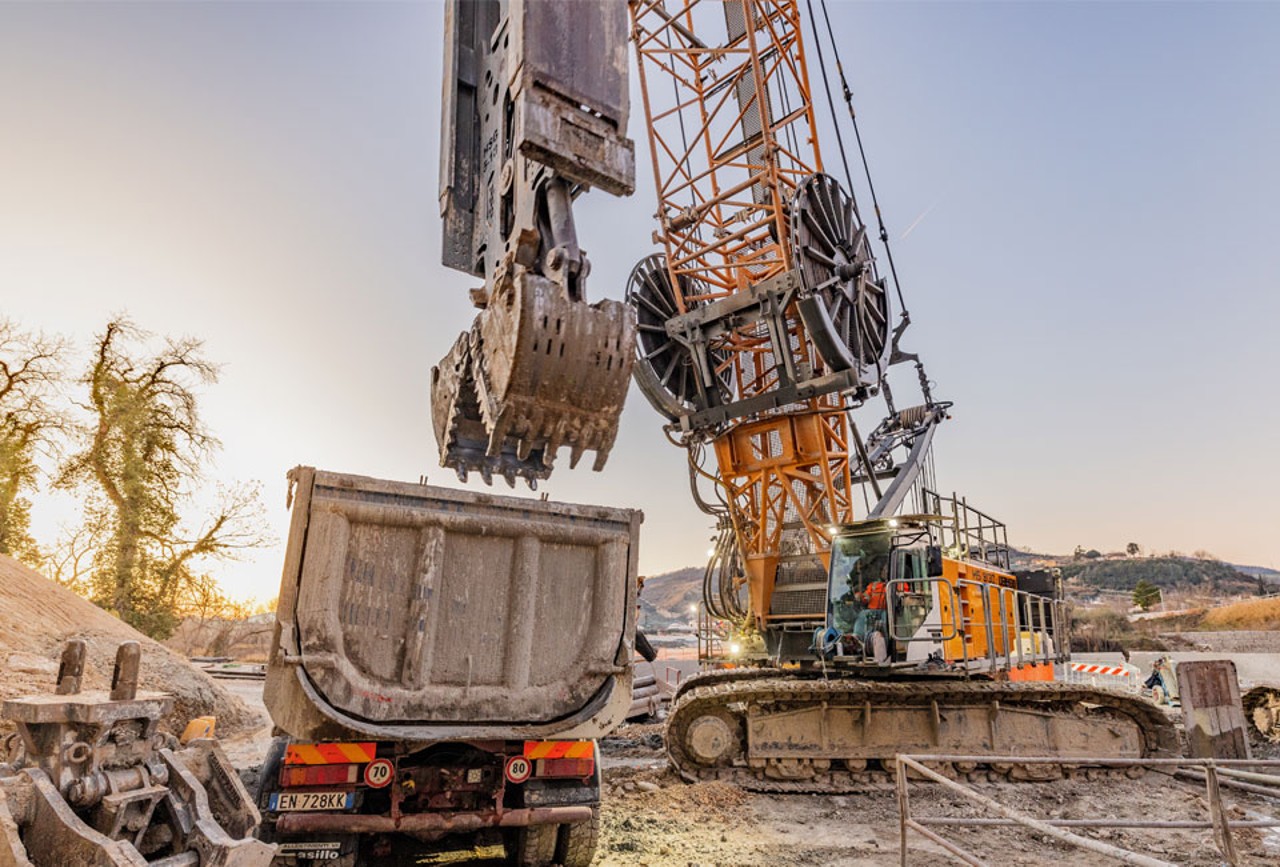
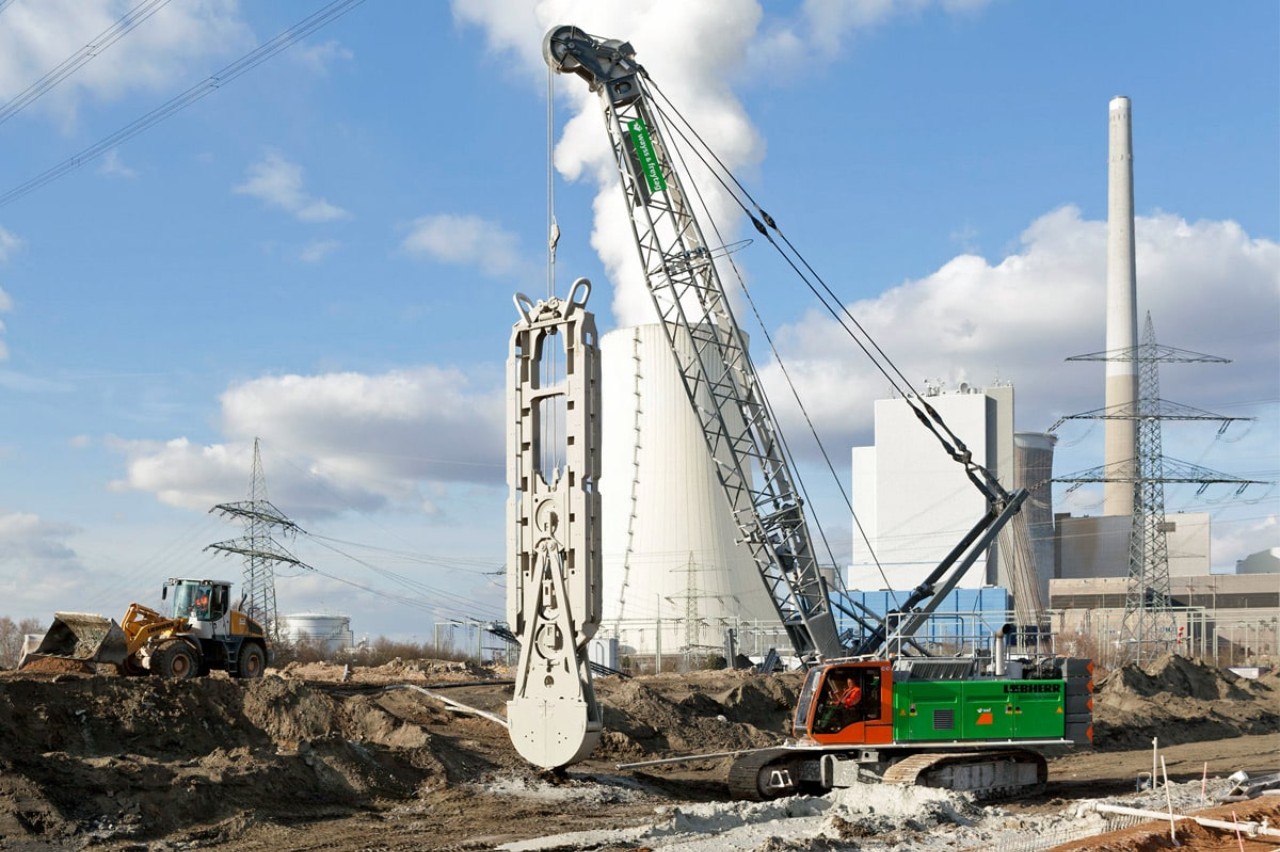
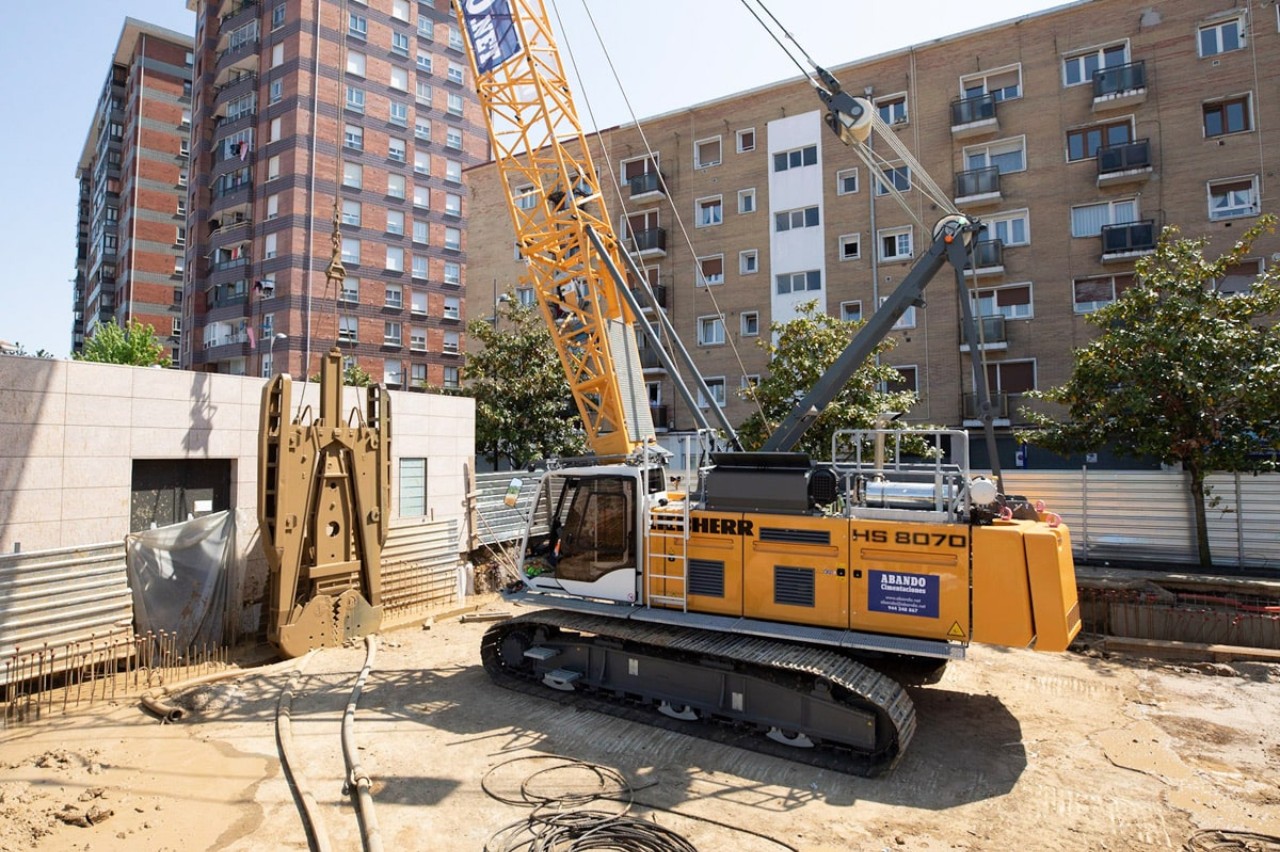
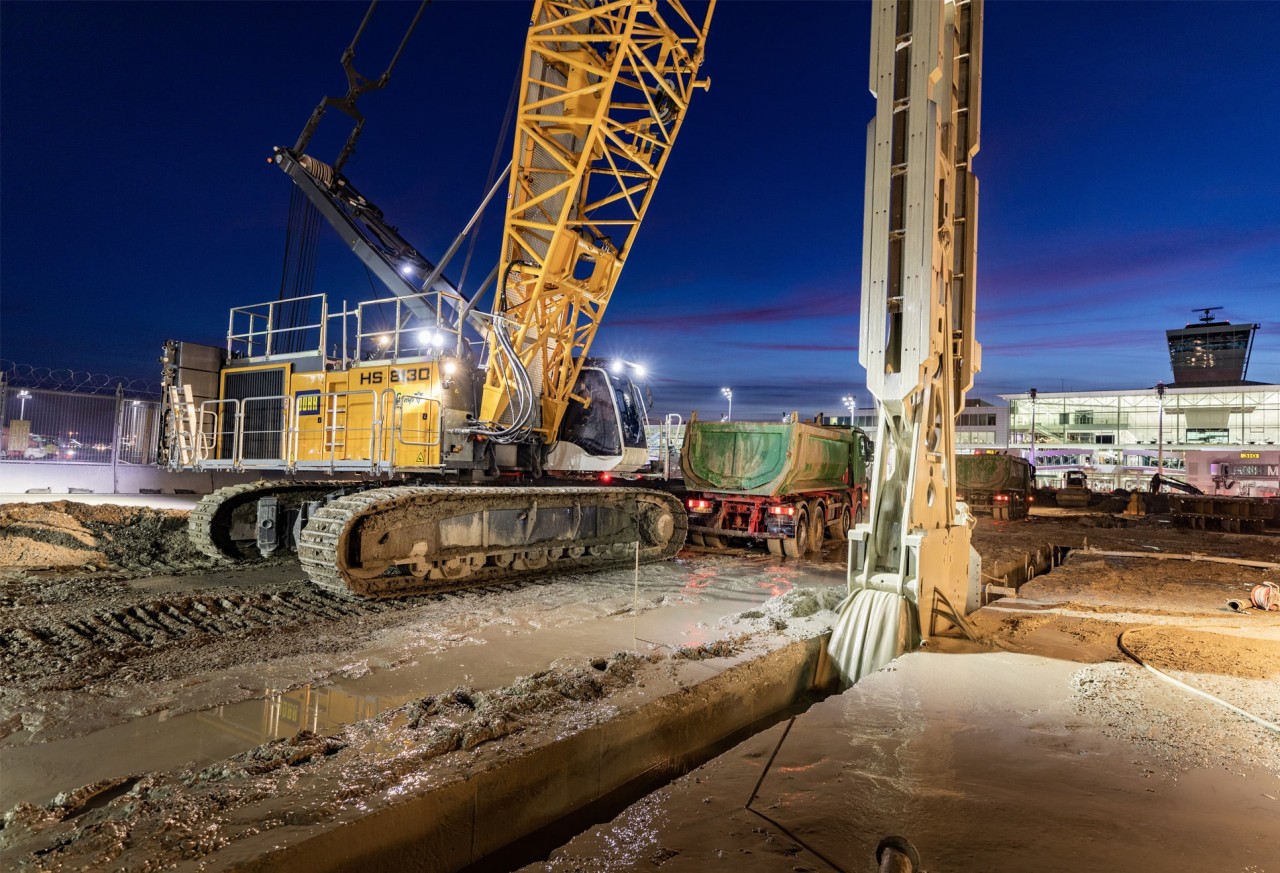
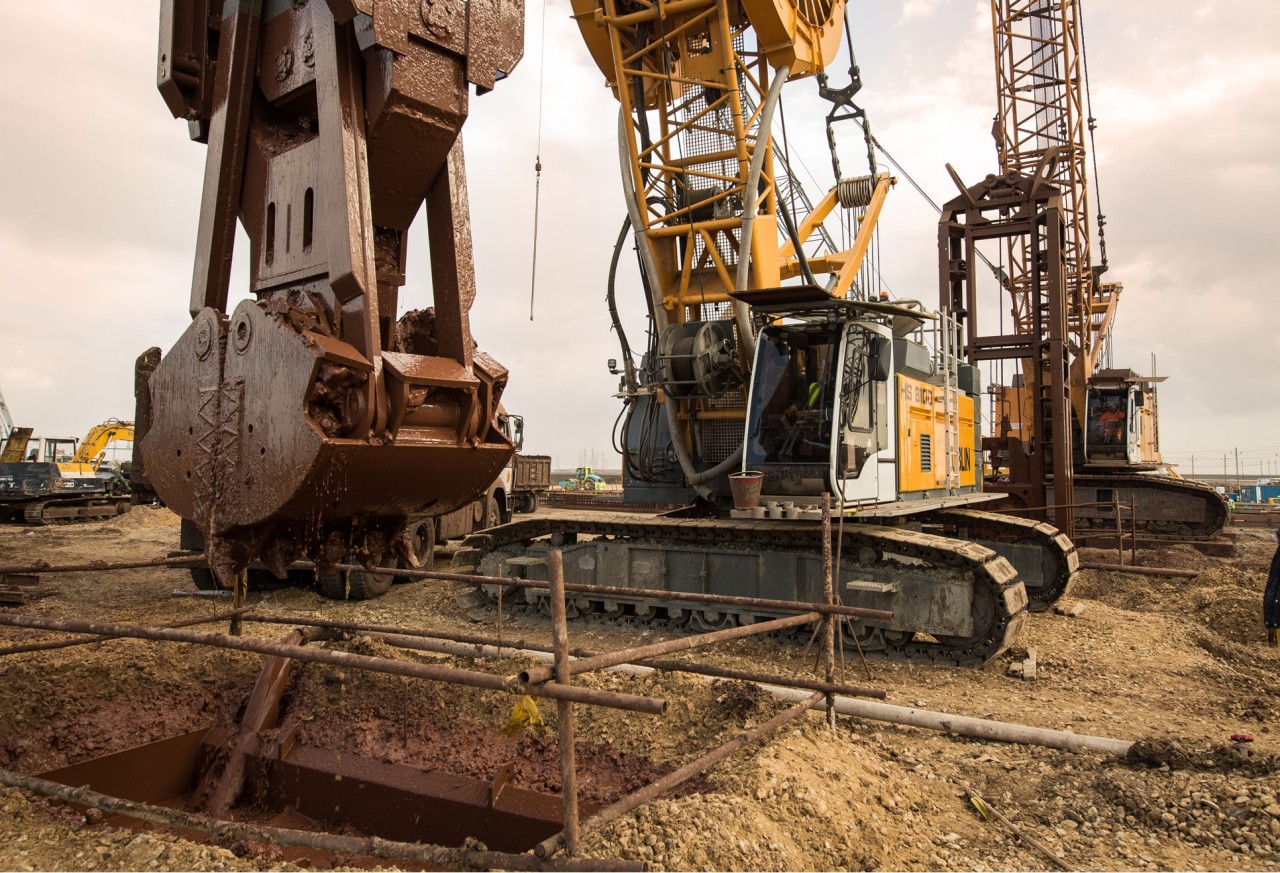
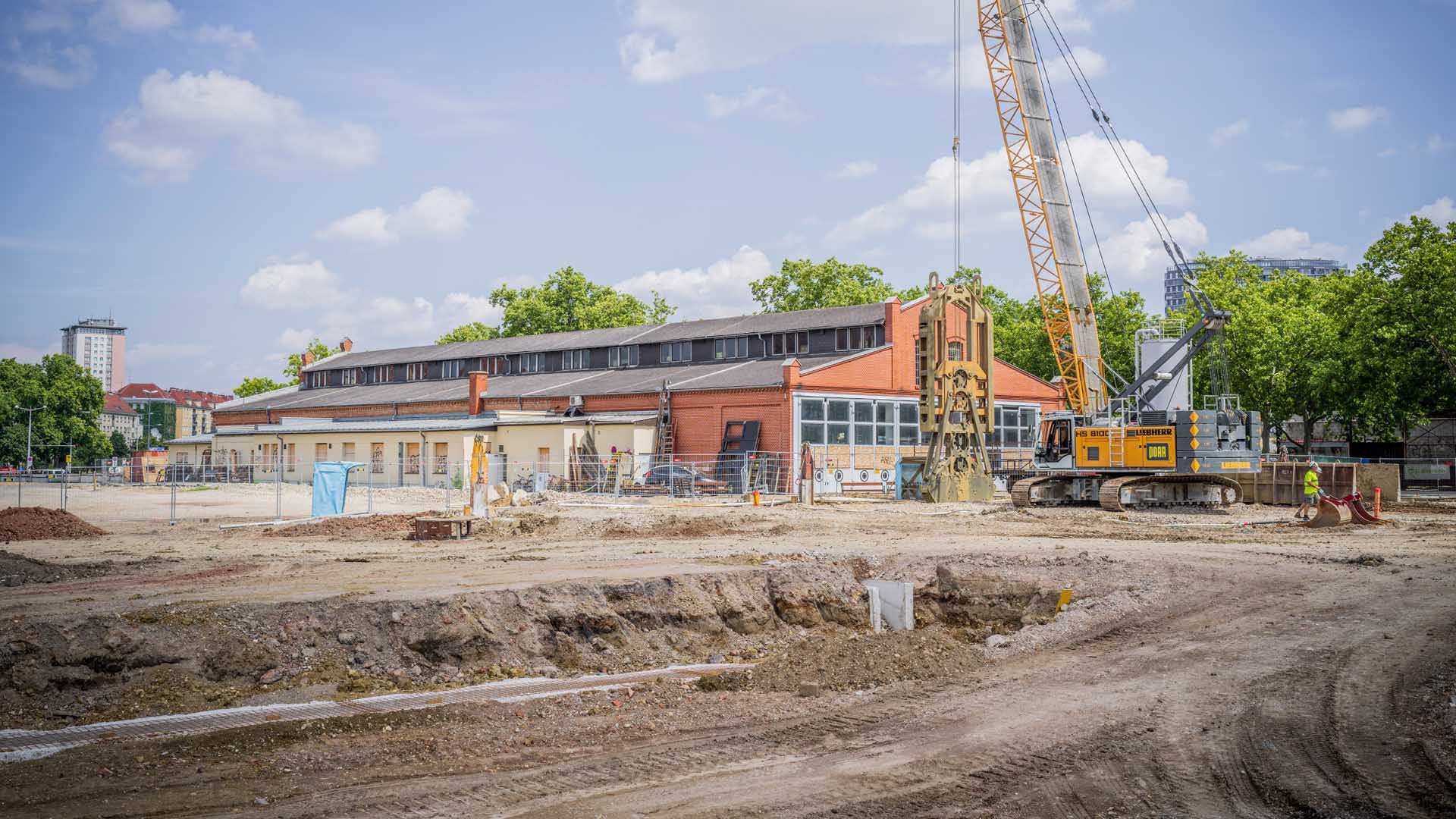
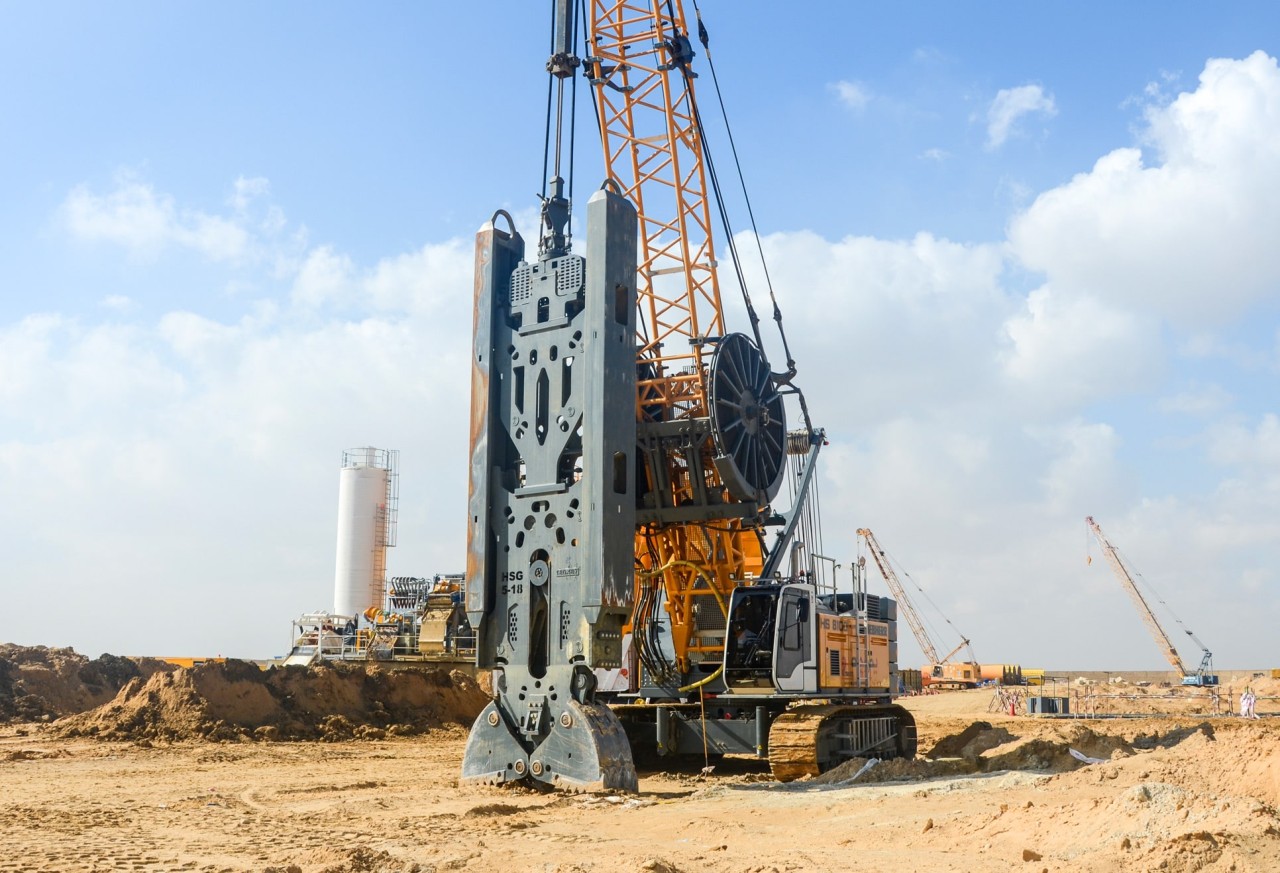
If slurry walls are installed with a grab, a two-jaw slurry wall grab suspended on a duty cycle crawler crane excavates the slurry wall panels. Mechanical grabs are opened and closed via rope, hydraulic grabs via hydraulic cylinders. Hydraulic grabs can additionally be fitted with flexible guiding strips on the grab frame which allow to align the grab within the trench.
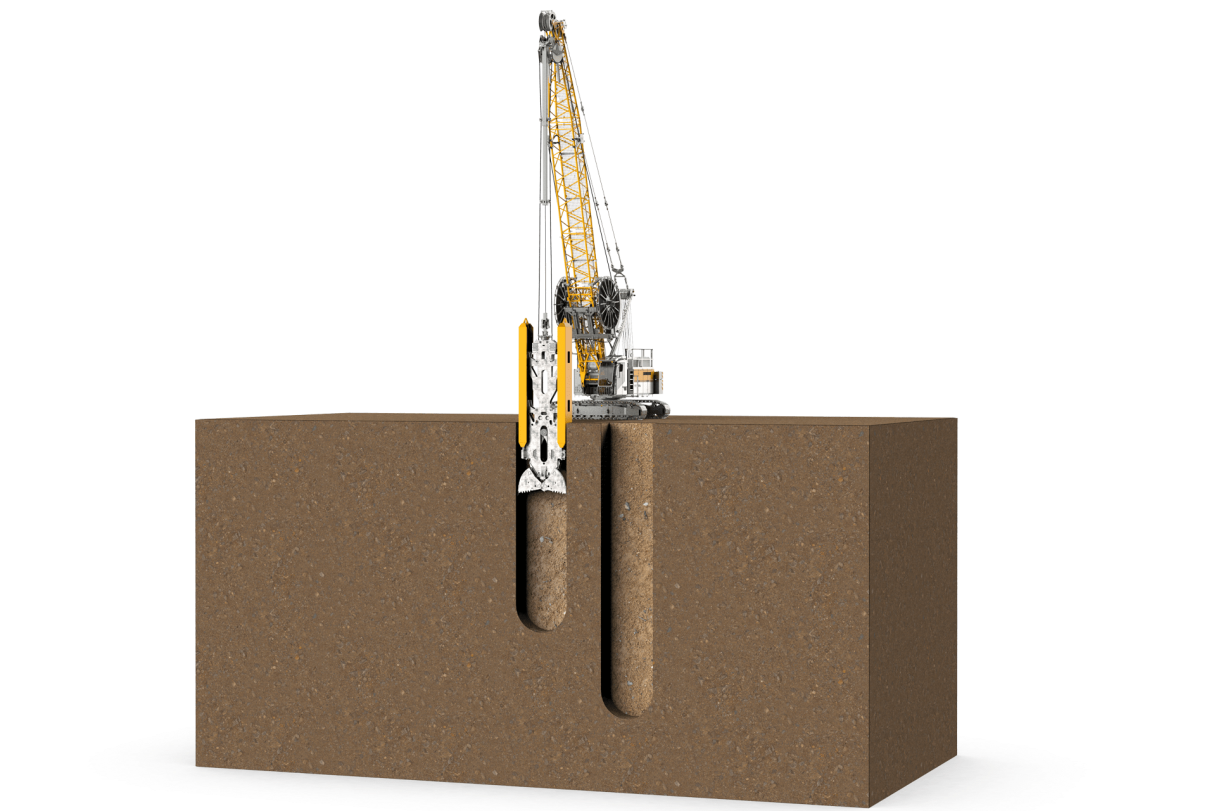
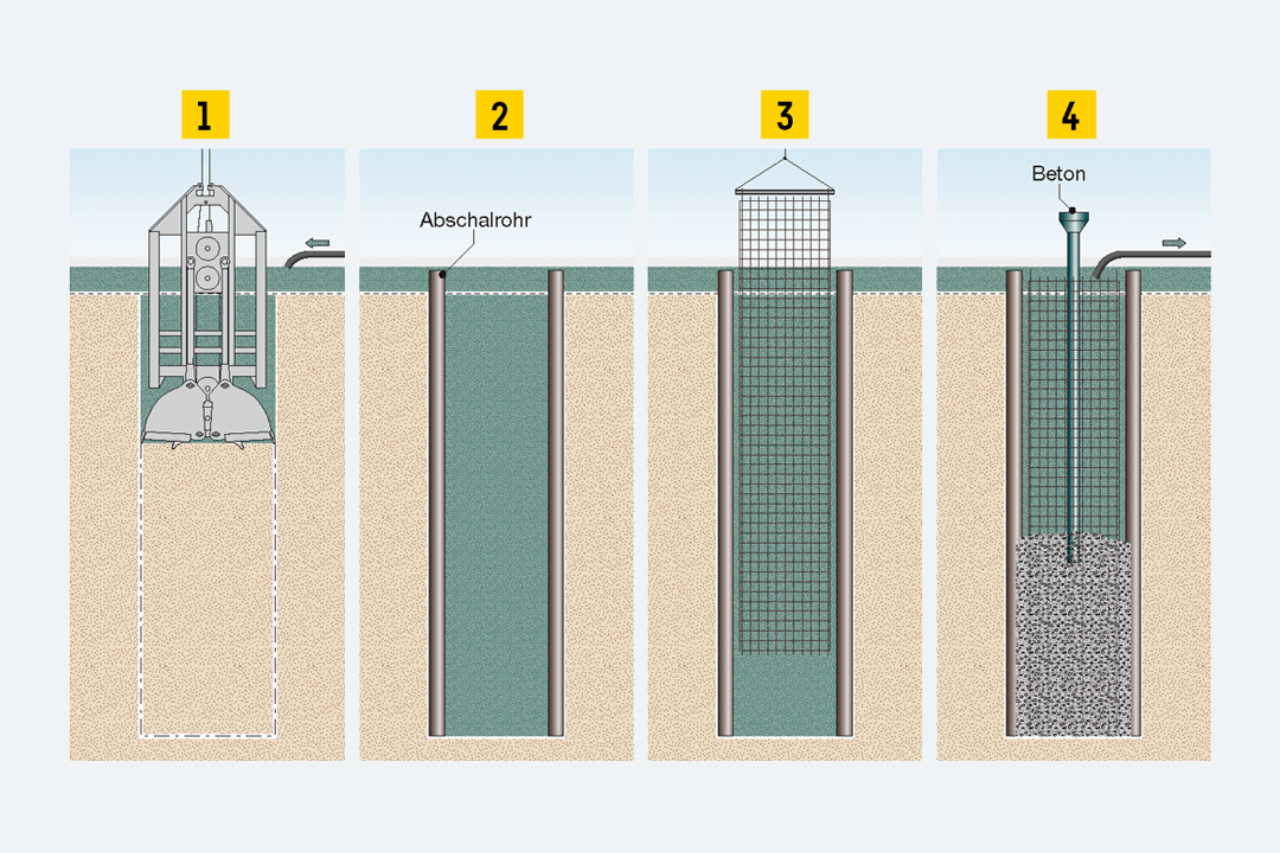
Production steps of a slurry wall panel made of reinforced concrete
1. Excavation using a slurry wall grab with addition of support suspension

2. Installation of the stop-end pipes

3. Insertion of the reinforcement

4. Installation of the concrete applying the tremie method with simultaneous pumping out of the support fluid

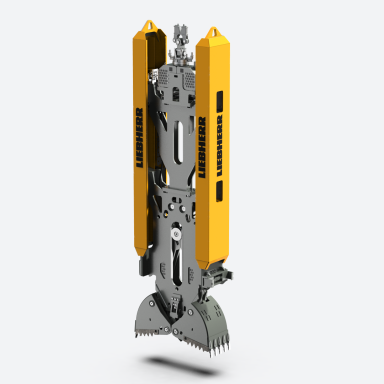
Hydraulic slurry wall grab

A hydraulically driven thrust rod system opens and closes the grab jaws. The grab is hydraulically supplied through hoses from the carrier machine.

Mechanical slurry wall grab

A two-rope grab is mechanically actuated through the hoist and closing rope. With multiple reeving over pulleys the closing forces of the grab can be enhanced.

Grab dimensions

The most common jaw widths are between 0.4 and 1.5 metres. The jaws’ openings range from 2.8 to 3.6 metres.

Grab jaws

The grab jaws are exchangeable if the modification of the basic frame allows it. Thus, different trench widths are possible.

Precast elements

In the freshly produced trench precast concrete elements, steel profiles or sealing panels can additionally be inserted. This is called combination method.

Concreting using the two-phase method

After excavation of the slurry wall panel a reinforcement cage is inserted. Then the trench is filled with fresh concrete from the bottom to the top and the support fluid is pumped off.

Guide wall for the slurry wall grab

The guide wall is installed on both wall sides before the excavation starts. It guides the grab, compensates variations of the suspension level and supports and protects the trench from caving in.

01/07

Video: Slurry wall grab

Duty cycle crawler cranes from Liebherr excavating slurry walls with mechanical or hydraulic slurry wall grabs.

Machines

Results 1–6 of 7
  • Max. lifting capacity - 100 t

  • Engine power - 450 kW

  • Max. winch line pull - 2 x 295 kN

  • Max. main boom - 59.00 m

  • Max. lifting capacity - 100 t

  • Engine power - 450 kW

  • Max. winch line pull - 2 x 295 kN

  • Max. main boom - 59.00 m

  • Max. lifting capacity - 70 t

  • Engine power - 320 kW

  • Max. winch line pull - 2 x 200 kN

  • Max. main boom - 50.00 m

  • Max. lifting capacity - 130 t

  • Engine power - 565 kW

  • Max. winch line pull - 2 x 350 kN

  • Max. main boom - 53.00 m

  • Wall thickness - 500 - 1,800 mm

  • Jaw opening width - 2,500 - 3,600 mm

  • Max. closing force at teeth - 594 kN

  • Max. working depth - 80 m

  • Max. grab weight, full - 30 t

  • Max. pull force in recovery mode (dual-winch operation) - 600 kN

  • Drive - Conventional (diesel engine)

Job reports

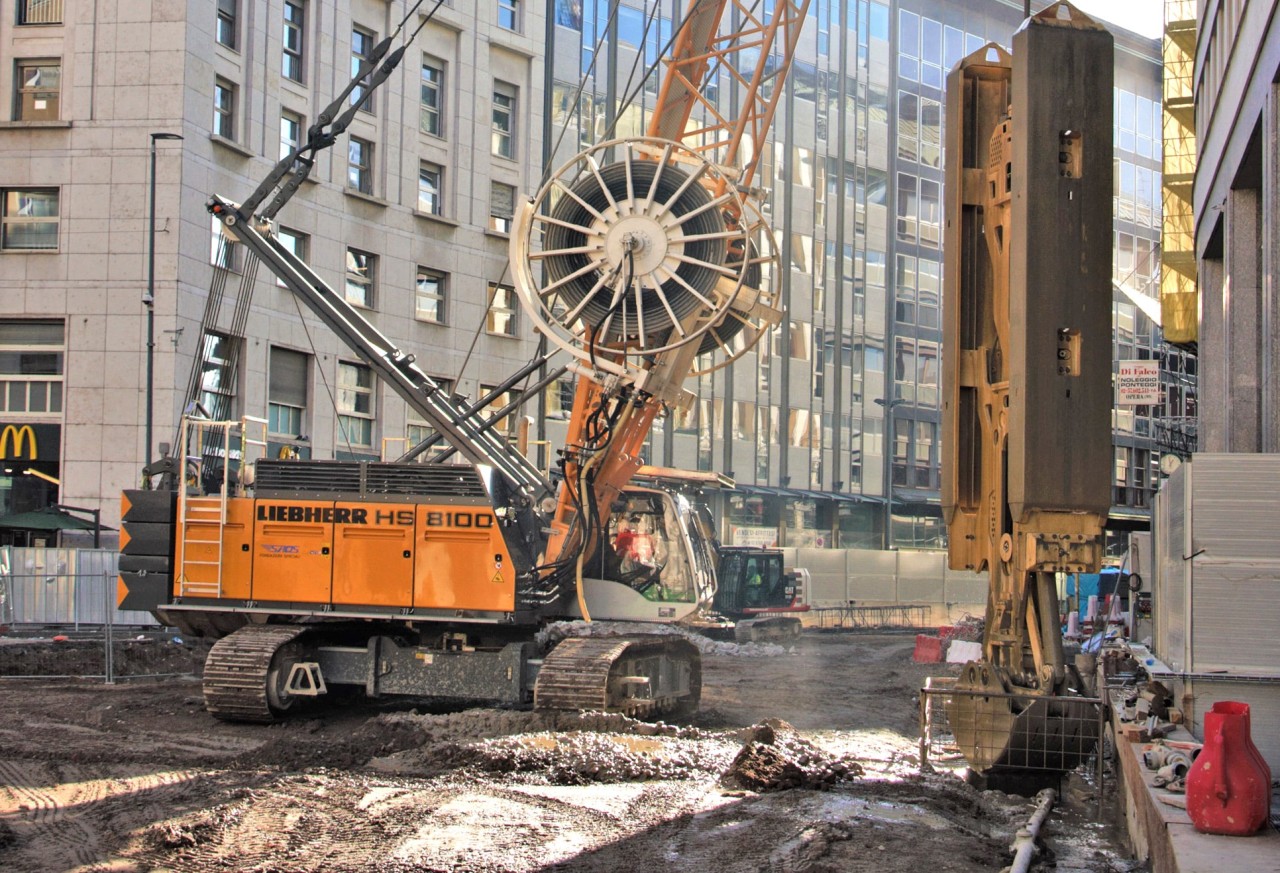
Duty cycle crawler crane HS 8100
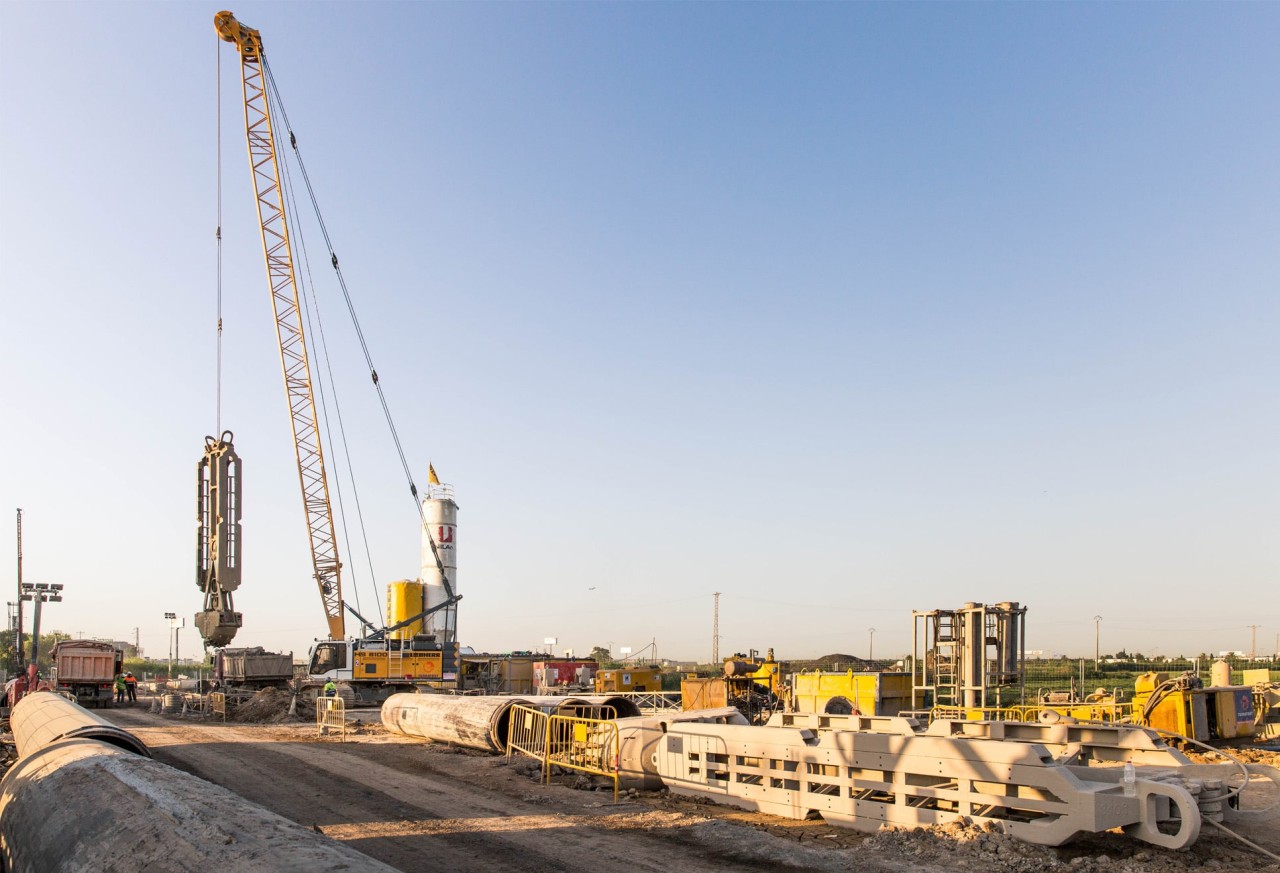
with slurry wall grab HSG 5-18 in Milan.

Two duty cycle crwaler cranes HS 8100 in shift operation

Airport Barcelona-El Prat: Linking of the new airport to the suburban railway.

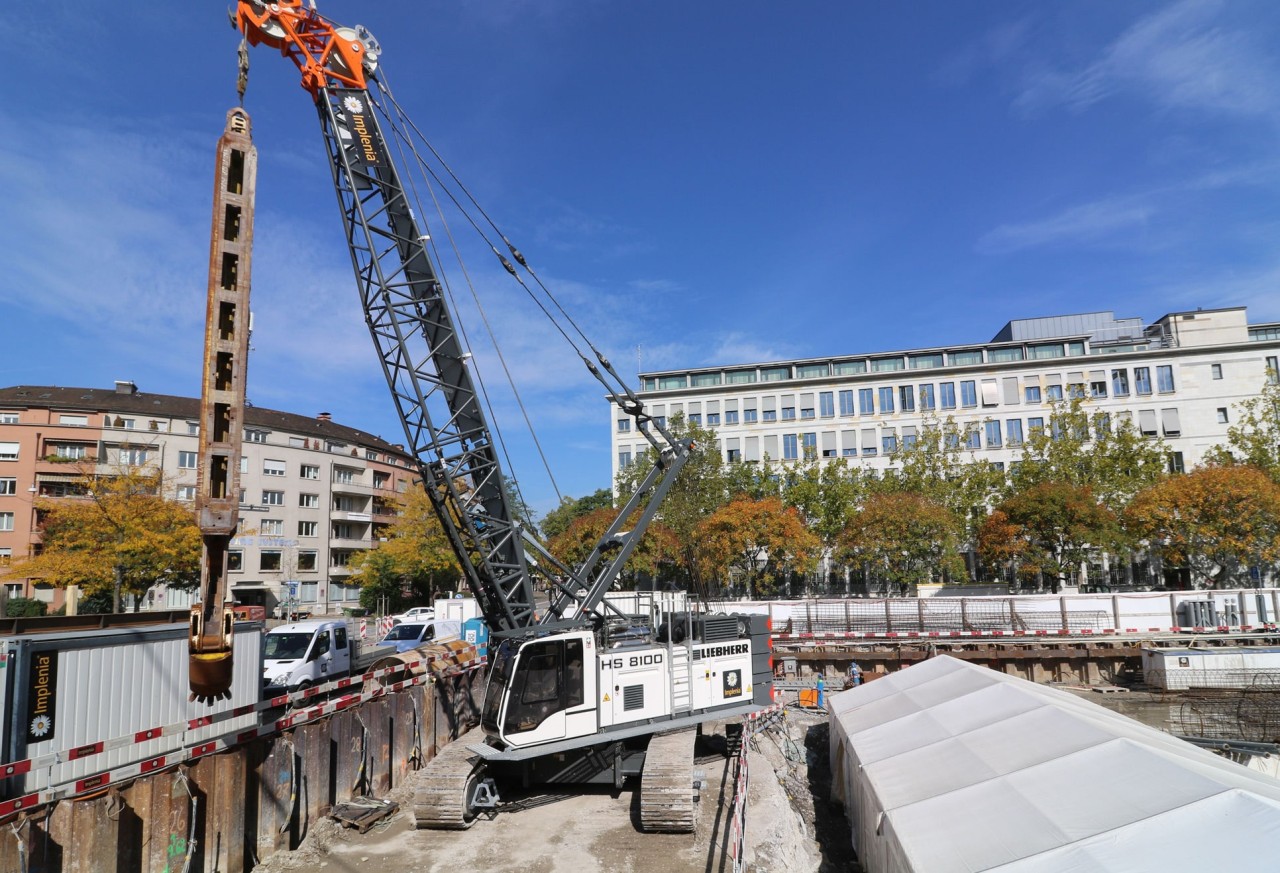
HS 8100 in slurry wall grab operation in Zurich

Highest precision is required.

Foundation work with nine Liebherr duty cycle crawler cranes

Infrastructure measures at the Suez Canal.

01/04

Video: Slurry wall grab HSG 5-18

Get in touch

If you have any further questions, please contact our local sales or service team.