
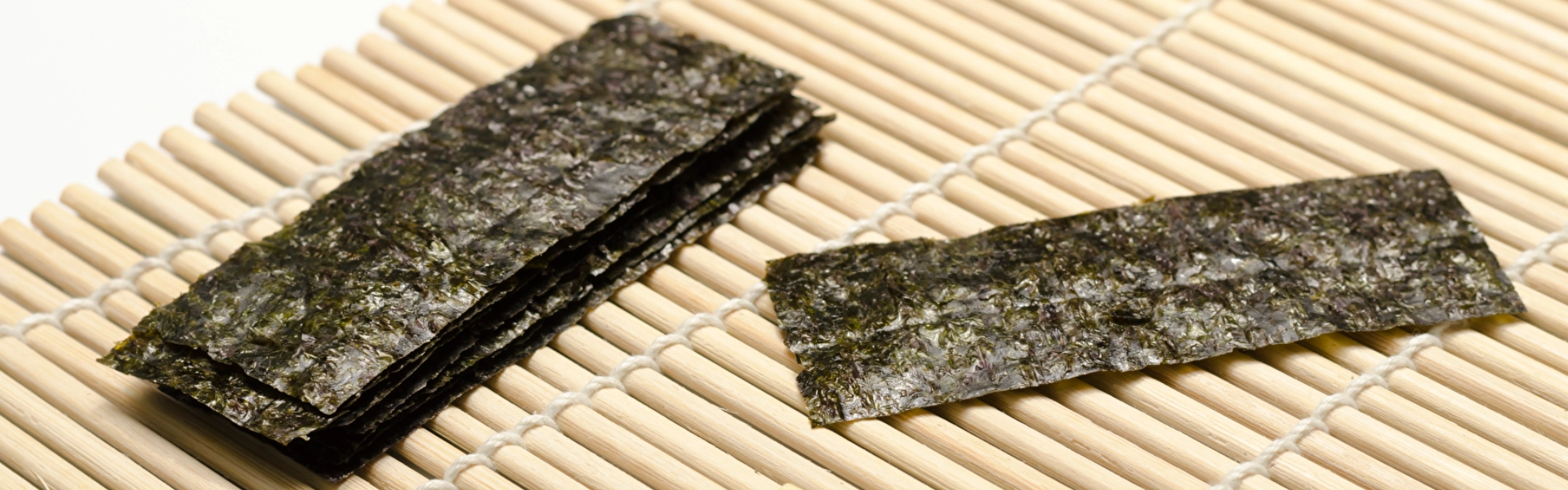
Nori seaweed – delicious to prepare and easy to store
You know the nori seaweed classically from the preparation of sushi. We will show you further examples of how you can use the leafy seaweed in a variety of recipes. We also explain how healthy nori seaweed is and the benefits of eating it.
The key points
- Nori seaweed is just as tasty in sushi as it is in noodle soups or salads.
- Nori leaves are tender but crunchy and can absorb a lot of water.
- You can also cut the leaves into pieces or use dried flakes for flavoring.
- Nori leaves are divided into three quality grades: green, silver and gold. Seaweeds classified as green are the thinnest and have little flavor of their own.
- Nori seaweed is rich in iodine (approx. 8 mg/100 g).
- Store nori seaweed in a dark and dry place in an airtight packaging.
Use and flavor of nori seaweed
You can typically find nori seaweed in the form of square, dried leaves in supermarkets or specialized shops. There are around 30 different green and red seaweeds that can be used in the kitchen.
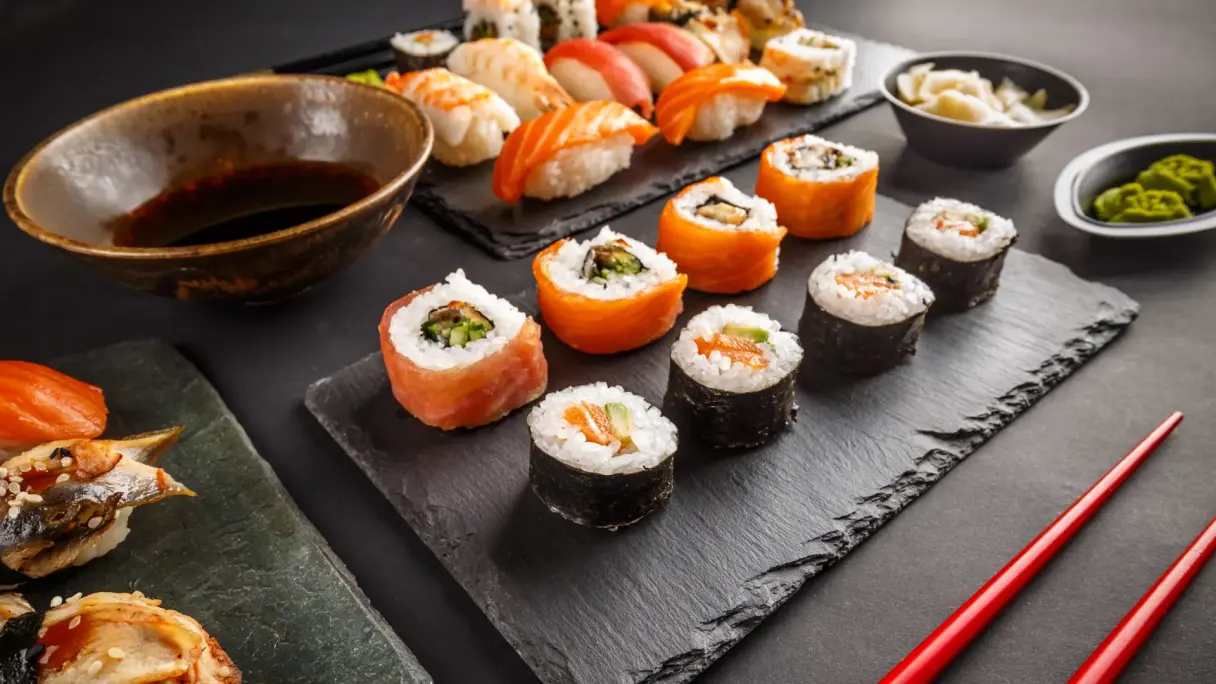
The leafy seaweed is traditionally used in the preparation of sushi, but can also be used as a tasty addition to noodle soups and salads. Nori seaweed is also available as dried flakes, which are used as a seasoning in the kitchen.
Nori leaves are tender, yet crunchy and robust. The flavor of the seaweed is reminiscent of crustaceans. Dried nori seaweed can absorb a lot of water and increase its volume many times over. This makes it very economical.
Nori leaves are divided into three quality grades: green, silver and gold. Seaweeds classified as green are the thinnest and have little flavor of their own. Nori leaves of golden quality, on the other hand, have the most intense flavor and are often darker in color.
Brief overview: nutritional values of nori seaweed
- Nori seaweed is rich in iodine (approx. 8 mg/100 g).
- Nori seaweed contains valuable vitamins. However, due to the low amount typically consumed, the actual intake of nutrients is not above average.
- You can reduce the potential content of heavy metals by soaking the seaweed for several hours before use.
Health benefits of nori seaweed
Nori seaweed is naturally rich in iodine and is therefore a natural source of iodine in a balanced diet. 100 g of nori seaweed contains approx. 8 mg iodine. This is not a problem for healthy people. Even if the usual portion of nori seaweed in a sushi dish is no more than 2-4 g, people with thyroid problems should not eat seaweed regularly. Excessive consumption can be problematic for this population group. If in doubt, you should seek medical advice before consuming the product.
Nori leaves also contain vitamin B12 and vitamins A, C and B2. However, as the typical amount consumed is rather low, the absolute amounts of these vitamins are also manageable.
Seaweed is generally low in calories and is one of the most nutritious algae with a protein content of 30 to 50 %.
However, many seaweeds are also contaminated with heavy metals such as aluminium, arsenic and lead. High exposure to these can be hazardous to health. To reduce the content of possible heavy metals, you can soak the seaweed for a few hours before preparation and then dispose of the water.
Brief overview: optimal storage of nori seaweed
- Ensure that the packaging is airtight.
- Store nori seaweed in a dark and dry place.
- Packaged seaweed stays fresh the longest at room temperature, as it would soon soften in the refrigerator due to the moisture in the air.
Storing nori seaweed correctly
To ensure that dried nori seaweed does not lose its crispy bite, there are a few things to bear in mind when storing it: the seaweed should be packed airtight to preserve its color and aroma. In addition, a dark, dry place is best for storage.
Nori leaves should not be stored in the refrigerator, as they will draw moisture from the air, soon become tough and lose their shape. The leaves already have a long shelf life when dried, which is why freezing is not a better storage alternative.
This might also interest you
Make your own sushi
Is sushi your favorite dish? Make delicious sushi yourself: vegan, vegetarian and classic sushi. Find out more now.
Ramen – a Japanese speciality
Ramen is the perfect meal for leftovers. Find out how to make your own ramen soup here. Read on to find out how.

Store sushi and enjoy it fresh
Storing sushi: practical tips for the optimal storage of prepared sushi and important ingredients. Read on to find out how.