
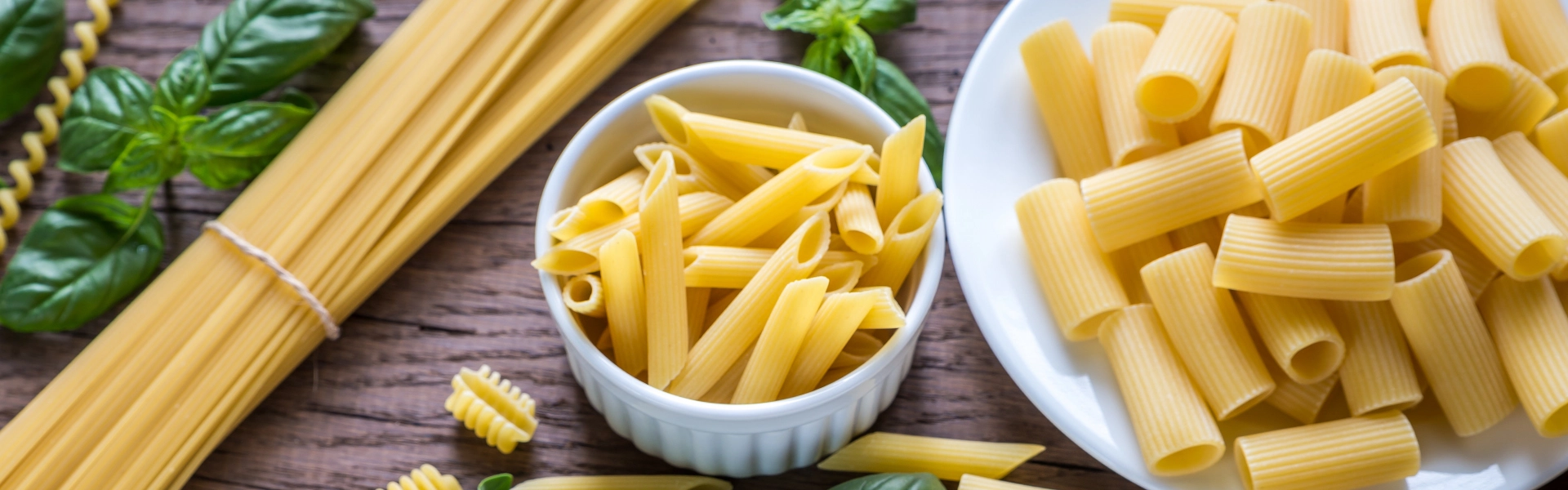
Types of pasta – all Italian classics
Almost everyone enjoys this dish: pasta. Whether with tomato or Bolognese sauce – it’s not only a favourite with children. Pasta is also on the menu several times a week for many adults, and our enthusiasm for pasta is growing. While at the end of the nineties, we already consumed over five kilograms of pasta per capita and year, today it is as much as eight kilograms. Read on to find out about the different types of pasta, how to make your own pasta and how to store it.
The key points
- Pasta is usually made from durum wheat semolina or flour, water and salt – and there are countless varieties.
- Whether made from wheat, spelt, legumes or spinach: it can be used in a variety of ways, depending on the ingredients, shape and colour.
- Homemade pasta is quick to make with a little practice and is cooked in just a few minutes.
- Dried pasta has a long shelf life – stored in an airtight container in a dry place, it remains edible for months.
Types of pasta – list of contents
Variety from simple ingredients: pasta
Ground grain, water, salt – in principle, that’s all we need for the production of our beloved pasta. Nevertheless, the variety of pasta types is almost infinite – and this is due to the different types of grain, milling degrees, additional ingredients, shapes and manufacturing processes. Most pasta is made from durum wheat semolina. Durum wheat is a type of wheat which is processed into semolina in a mill.
Besides durum wheat semolina, Italian type 00 wheat flour is particularly popular to make pasta. Its gluten content is particularly high, which ensures good properties for dough production. But wheat is not the only thing that can be used for pasta production; corn flour, spelt flour or other cereals are also an option. Don’t forget the increasingly popular pasta made from pulses, such as chickpeas or lentils. The addition of special ingredients expands the variety even further: black noodles, for example, are made by dyeing the dough with squid ink, while spinach is added to make green pasta. Depending on the type of pasta, different sauces also go particularly well in combination with it. This is mainly related to the form, but sometimes it is also simply traditional and can be varied.
Pasta made from wholemeal flour is the variant with a nutritional advantage as: Not only is the mineral content higher, but the higher fibre content also impresses with its satiating qualities and positive health effects. If you then add a sauce that contains a lot of vegetables, you no longer really need to worry about your figure.
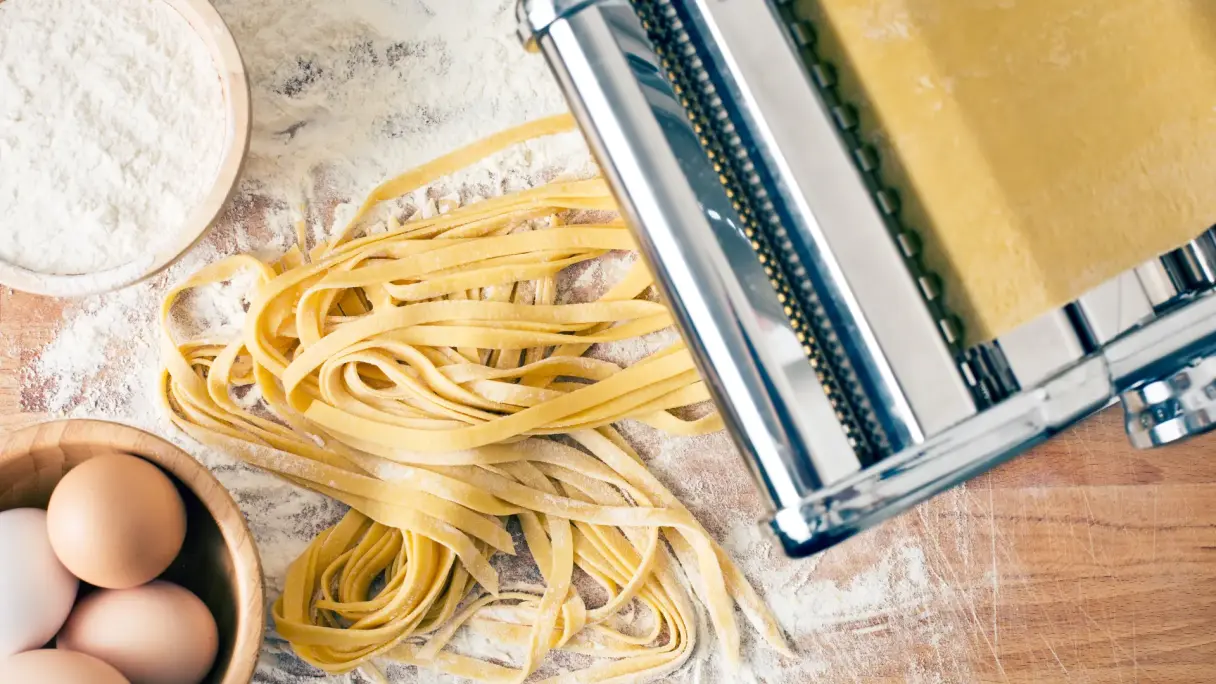
Making your own pasta
Have you ever made different types of pasta yourself? Just mix flour with eggs and salt and knead the dough thoroughly. Feel free to experiment with different flours and the addition of durum wheat semolina and slowly create your personal secret recipe. The dough then has to be rolled out and cut into shape; of course, this is particularly easy with a pasta machine, but this is not essential. Put the pasta into boiling salted water and it will be ready after only two to three minutes.
You can store your homemade pasta in the fridge for several days without any concern. To prevent it from drying out or absorbing too much moisture, our Liebherr fridges with BioFresh drawers provide ideal storage conditions. At temperatures just above 0 °C and with optimally regulated humidity, the dough remains fresh, supple and flavourful. However, it is also a good idea to prepare a larger quantity of dough and then freeze part of it – then it is guaranteed to be worth the effort. Dried pasta types from the supermarket has a virtually endless shelf life: because it contains no freely available water, it offers microorganisms no chance of survival. Simply store your pasta dry in a closed box.
This might also interest you
Flour: nutritional values, calories and its special properties
Storing warm food in the fridge – can it be done?
Do you have leftover food and don’t know what to do with it? Can warm food be kept in the fridge? Read on to find out what you need to keep in mind!
Eat healthily: could food replace medicine?
Find out how eating healthily can boost your well-being. Valuable tips, nutrients and inspiration for a health-conscious lifestyle!