
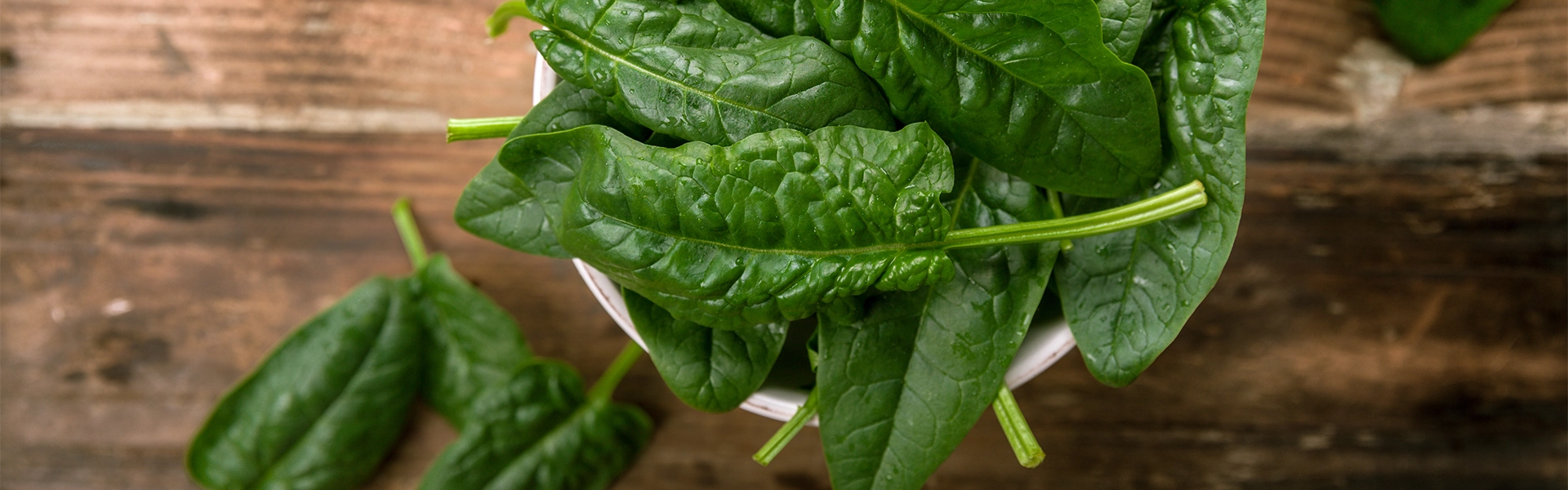
Spinach as a superfood – these are it’s nutritional values
The superfood spinach not only inspires fitness fans, but also packs a tonne of valuable vitamins, minerals, and phytochemicals. This strengthens our body in a natural way. But when can you buy spinach regionally? In this article, you will find out which nutrients stand out in particular, why spinach is a real health miracle, and how to optimally preserve its freshness and nutrients.
Storage time*
| BioFresh Fruit & Vegetable safe just above 0 °C with high humidity | 13 days |
| EasyFresh safe 7 °C with air regulation plate | 5 days |
| Fridge compartment 7 °C | 4 days |
| Freezer compartment -18 °C | 18 months |
The key points
- High content of provitamin A, vitamin C and K – good for the skin, immune system and blood clotting.
- Rich in folic acid and magnesium – important for cell division, nerves and muscle function.
- Low in calories (approx. 20 kcal per 100 g) – ideal for a healthy diet.
- Contains iron – easily utilised, especially in combination with vitamin C.
- Secondary plant substances and antioxidants – support the body’s defences.
Spinach and its micronutrients
Spinach is one of the most nutritious vegetables and provides important vitamins and minerals. Spinach is particularly well known for its iron content. This assumption, however, is based on a myth. Due to a comma error in old studies, the value was overestimated a factor of ten. In reality, spinach contains around 3 to 4 mg of iron per 100 g. Nevertheless, the green leafy vegetable remains a valuable source of iron, especially in combination with foods rich in vitamin C, which promote iron absorption despite the presence of oxalic acid. Spinach contains a high level of oxalic acid. This is suspected of inhibiting the absorption of iron in the intestine.
Recent studies show that spinach can support muscle strength thanks to its iron content. This is especially true for fresh spinach.
In addition to iron, spinach provides large amounts of folic acid, which is essential for cell division and haematopoiesis. Just 100 g cover almost 50 percent of the daily folic acid requirement. It is also rich in provitamin A, other B vitamins, vitamin C, and vitamin K, as well as magnesium, potassium and calcium. At the same time, spinach scores with low calories. Spinach contains around 20 kcal per 100 g and is therefore ideal for a calorie-conscious diet.
Correct storage plays a key role in optimising the preservation of sensitive nutrients. Liebherr offers the perfect solution with its BioFresh technology, with a temperature of just above 0 °C. The spinach stays fresh for much longer and vitamins and minerals are better preserved. Those who wish to freeze spinach can also benefit from NoFrost. Thanks to ice-free storage, the flavour and structure remain unchanged.
The effect of spinach on your body
Digestion in particular benefits from the green leafy vegetables. Thanks to its high fibre content, spinach stimulates intestinal activity and can therefore help naturally against constipation. Spinach also contains many water-soluble vitamins, minerals and secondary plant substances that can support the intestinal flora.
A diet rich in fruits and vegetables, including regular consumption of spinach, can reduce the risk of cardiovascular disease.
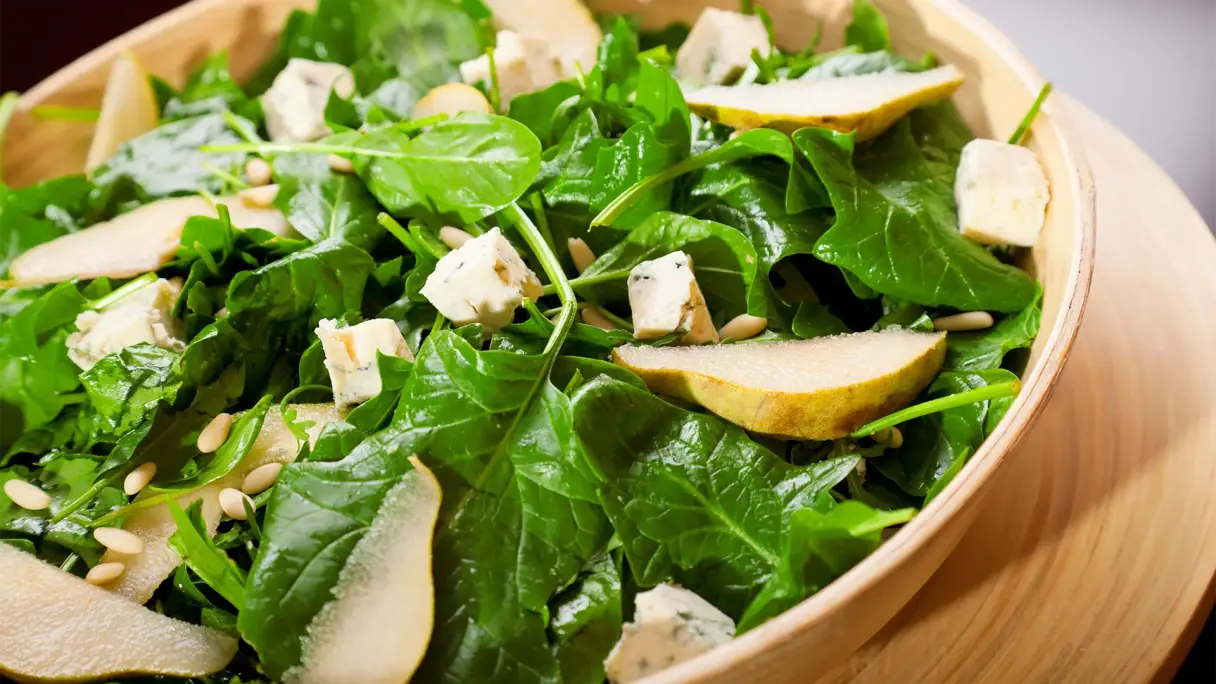
For an extra portion of micronutrients, fresh baby spinach is excellent in a salad. Eating it raw is generally safe as long as the spinach is fresh, well washed and comes from a trustworthy source. Baby spinach in organic quality is a particularly good choice. It is tender and contains less oxalic acid.
This vegetable is low in calories and yet still filling. Spinach is perfect for a healthy diet. Whether cooked, steamed or raw, spinach is a little power plant for good digestion. The antioxidants contained in spinach help to protect your cells.
Is spinach still edible after flowering?
In principle, the answer is yes, but with caveats. As soon as spinach flowers, the plant puts its energy into seed formation. This makes the leafy vegetable more fibrous and bitter in flavour and it loses some of its tender consistency.
Another point is that the content of oxalic acid in spinach increases with flowering. Oxalic acid can inhibit the absorption of minerals. For healthy adults, consumption is still unproblematic if they enjoy it in moderation. Pregnant women, small children and people with kidney problems are advised to avoidflowering spinach. Ideally, you should harvest before the flower stalks appear. The freshly harvested leaves will stay crisp for longer if you put them in a damp cloth. You can also blanch the spinach for one to two minutes and then freeze it. This keeps the blanched spinach fresh and green.
FAQ – spinach
Spinach is very healthy because it is rich in vitamins, minerals and antioxidants. Particularly noteworthy are vitamin C, vitamin K, folic acid and iron, which support important functions in your body, such as the immune system, blood clotting, and cell formation. Spinach also contains secondary plant substances. Thanks to its high fibre content, spinach promotes healthy digestion. The low calorie content makes it ideal for your balanced diet. Fresh spinach provides the most nutrients. Frozen spinach is also a healthy alternative because freezing preserves its micronutrients.
Spinach is particularly good for your eyes, heart, muscles and your brain. Thanks to its high lutein and zeaxanthin content, spinach protects the eyes from age-related damage such as macular degeneration. The magnesium and potassium it contains support heart health by regulating blood pressure. Iron and nitrate promote the supply of oxygen to the muscles and improve their performance. The brain also benefits from the antioxidants and folic acid in spinach, which can support cognitive function.
The stalks of spinach don’t necessarily have to be removed; they are just as edible and contain valuable nutrients. The stems of young spinach, in particular, are tender and can be eaten without any problems. In older or large-leaved spinach, the stems are sometimes firmer and slightly fibrous, so they can be removed for a more tender mouthfeel. When preparing spinach, you can simply remove or leave the stalks depending on your personal taste and the recipe. In any case, it is important that you wash spinach thoroughly to remove sand and dirt.
*All specifications given are to be considered as guideline values, and depend in each case on the type of food and on the proper storage without interruption of the cold chain from harvest/production through to the Liebherr appliance. Should food products have information about minimum shelf life, the date on the packaging always applies.
This might also interest you
Fact or fiction: reheat spinach – just don't do it!
Reheating spinach is said to be poisonous, but what is the truth behind this myth? We clarify whether spinach is poisonous after reheating or whether it is still edible.
Top 10 foods that provide energy!
These ten foods provide us with plenty of energy. Which foods are particularly suitable for breakfast and which for lunch? Find out more!
Fat-soluble vitamins
Read on to learn more about fat-soluble vitamins and why it is important for many vitamins to be ingested together with oil or fat.