
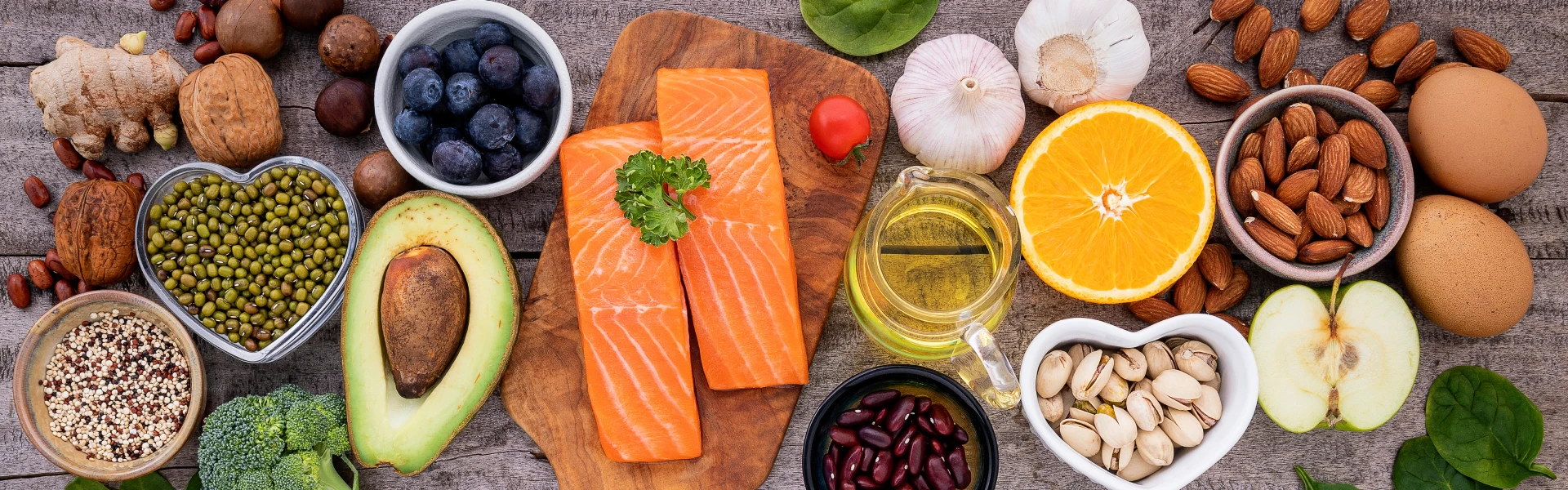
Fat-soluble vitamins
Although many people try to avoid too much fat in their diet, some vitamins are actually most abundant in high fat foods. But it is really the case that these vitamins can only be absorbed by the body when you eat them with fat? In the following article, we clarify the differences between fat-soluble and water-soluble vitamins and explain how you can promote your body’s absorption of important vitamins with the appropriate foods.
The key points
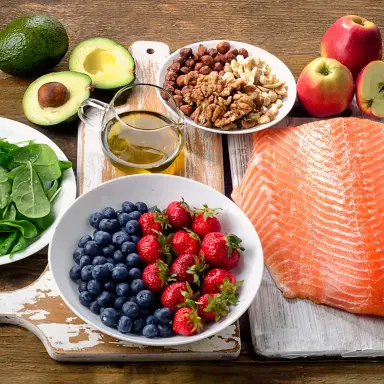
- Fat-soluble vitamins include animal-sourced vitamin A (egg yolk, butter and liver) or plant provitamin A (carrots, sweet potatoes, pumpkin), as well as vitamins D (salmon, mackerel, herring), E (spinach, broccoli, kiwi) and K (kale, broccoli, green beans).
- Fat-soluble vitamins need fats to be absorbed by the body and help to keep it healthy.
- Fat-soluble vitamins can be overconsumed and this can lead to toxicity. If you have any doubts, speak to a doctor or healthcare professional.
- Water-soluble vitamins, such as vitamin C and the B vitamins, cannot be stored in the body for long periods of time and must be consumed regularly through food. They can be found in fruit, vegetables, whole grains, meat, fish, legumes, and dairy products.
- For adequate vitamin D supply, you need to ensure sufficient exposure to sunlight as diet alone is not enough to achieve your recommended daily intake for vitamin D.
Fat-soluble vitamins
Fat-soluble vitamins are a group of vitamins that need fat in order to be properly absorbed and used by the body. These vitamins include vitamin A, vitamin D, vitamin E, and vitamin K. They are essential for various functions in the body, such as maintaining healthy skin, bone formation, immune function, and blood clotting. A balanced diet containing adequate amounts of healthy fats is important so that your body can absorb and use these fat-soluble vitamins.
Vitamin A is only found in animal-sourced foods such as egg yolks, butter, and liver. Vitamin A can additionally be derived from carotenes found in plants such as carrots, spinach and sweet potatoes. These plant carotenoids are a major source of the provitamin A. Vitamin D, on the other hand, is actually produced by your body when your skin is exposed to sunlight (80–90 %) and this is how your body gets the major part of its recommended daily intake. We only absorb about 10–20 % of our daily requirement through food. Vitamin E is found in nuts, seeds and vegetable oils, while vitamin K is found in foods such as green leafy vegetables, broccoli and liver. Adequate intake of these fat-soluble vitamins through a balanced diet is important for maintaining good health.
Please note that it is important to take fat-soluble vitamins in the recommended amount, as an excess of these vitamins can lead to hypervitaminosis – when the storage level of vitamins is very high – and this can be very harmful to your health. For this reason, it is advisable that you eat a varied diet and, if necessary, talk to a doctor or nutritionist to ensure that your vitamin intake meets your individual needs. By following conscious dietary patterns with the foods listed above, you can make sure that you are getting enough fat-soluble vitamins to actively help maintain your health.
Getting fat-soluble vitamins from your diet
Fat-soluble vitamins are present in various foods and a balanced diet can make sure that our body can absorb these nutrients in the best possible way.
- 1. Vitamin A: vitamin A is abundant as provitamin A in foods such as carrots, sweet potatoes, spinach, kale, broccoli, and as vitamin A in animal-sourced foods such as liver and eggs. A combination of animal and plant-based foods can help meet your body’s need for vitamin A.
- 2. Vitamin D: few foods naturally contain vitamin D but fatty fish such as salmon, herring, mackerel, and sardines are good sources. Dairy products, fortified cereals and eggs also contain vitamin D. In addition the body can produce vitamin D when the skin is exposed to sunlight.
- 3. Vitamin E: nuts and seeds such as almonds, sunflower seeds and hazelnuts are rich in vitamin E. Vegetable oils such as olive oil, sunflower oil and wheat germ oil also contain vitamin E. Further food sources include vegetables such as spinach and broccoli.
- 4. Vitamin K: kale, spinach, broccoli, parsley, cabbage, and other green leafy vegetables are excellent sources of vitamin K. Likewise, vitamin K-rich foods are found in fermented products such as sauerkraut and yogurt.
Tip: thanks to its low temperature of just over 0 degrees and its high humidity, Liebherr's BioFresh Fruit & Vegetable safe is the perfect place to store almost all of these foods. Vitamin D-rich fish can be optimally stored below 0 °C in the BioFresh Professional Fish & Seafood safe. The ideal climatic conditions in the various BioFresh safes from Liebherr keep food fresher for longer and preserve a large proportion of the fat-soluble vitamins that the foods contain.
To optimise the absorption of fat-soluble vitamins, it is advisable to combine food with healthy fats, since fat-soluble vitamins are better absorbed when teamed with higher-fat foods. Healthy fats include vegetable oils, and canola oil and olive oil in particular are worth mentioning here. However, only rapeseed oil or olive oil should be used for frying food, due to the fatty acid stability at high temperatures. For cold dishes, you can also use linseed oil or walnut oil to achieve a balanced diet. They team particularly well with vegetable dishes. Another way to incorporate healthy fats is to garnish salads with nuts and seeds. For a varied diet, it is particularly important to store food correctly and hygienically. Use your chest freezer or refrigerate your food for exceptional freshness!
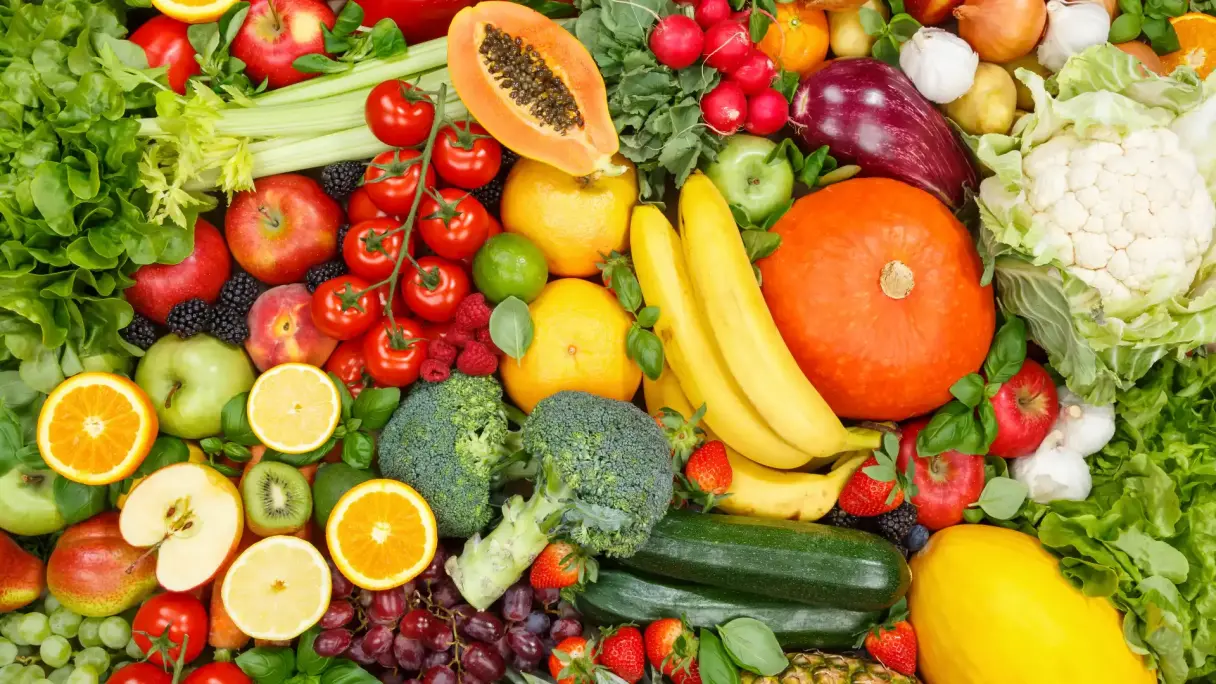
Water-soluble vitamins
Another category of vitamins are those that dissolve in water – water-soluble vitamins. These vitamins cannot be stored by the body for very long and must be taken in regularly from your diet by eating the correct food. Water-soluble vitamins include vitamin C and various B vitamins such as B1 (thiamine), B2 (riboflavin), B3 (niacin), B5 (pantothenic acid), B6 (pyridoxine), B7 (biotin), B9 (folic acid) and B12 (cobalamin).
These vitamins are important for metabolism, energy production, the nervous system, and the formation of red blood cells. They can be found in a wide variety of foods such as fruit, vegetables, whole grains, meat, fish, legumes, and dairy products. If they are stored properly, these foods can stay fresh and rich in vitamins for a long time. As the body is not able to store water-soluble vitamins for long, it is important to try and get them regularly by eating a balanced diet to avoid possible deficiencies.
Fat-soluble vitamin D
Vitamin D, or the sunshine vitamin, is a fat-soluble vitamin that plays an important role in the body. It is produced by the body when your skin comes into contact with sunlight. The main function of vitamin D is to promote the absorption of calcium and phosphate from the intestine, which in turn is crucial for the formation and maintenance of healthy bones and teeth. Vitamin D is also involved in the regulation of the immune system and may play a role in the prevention of diseases such as osteoporosis, certain cancers, cardiovascular disease and autoimmune diseases.
To ensure an adequate supply of vitamin D, it is important to get enough exposure to sunlight. Since this is not possible during the winter months in some European countries, you could consider taking a vitamin D supplement during these months. To do this, have your blood tested so you can know exactly what you are lacking and then add the amount of vitamin D recommended by the doctor.
People who send a lot of time indoors are most at risk of a vitamin D deficiency, as are older people, and the chronically ill. This is because certain metabolic diseases can also negatively affect the metabolism of vitamin D. People with very light skin, on the other hand, have less to worry about in terms of vitamin D deficiencies. This people have skin that contains particularly little melanin, which increases the absorption of vitamin D.
Achieving the recommended daily intake of vitamin D through diet alone is not possible. Nevertheless, the consumption of fish, eggs and dairy products – again, make sure to keep the food nice and cool – can make a contribution, albeit small, to a healthy vitamin D supply. However, individuals on vegetarian or vegan diets are no more likely to be vitamin D deficient than individuals on omnivorous diets because diet provides so little of the nutrient.
This might also interest you
Eat healthily: could food replace medicine?
Find out how eating healthily can boost your well-being. Valuable tips, nutrients and inspiration for a health-conscious lifestyle!
Strengthening your immune system – 10 foods to improve your health
Can you strengthen your immune system by improving your diet? You sure can – and these 10 foods can help you. Read on to find out.
The top 10 foods for healthy skin
From avocados and sweet potatoes to salmon, find out which foods and their nutrients protect and regenerate your skin. Read on to find out.