
Cyber Resilience Act: Security redefined
EU cybersecurity regulations at a glance: CRA, RED-DA & Machinery Regulation
One step ahead – using cybersecurity as a competitive advantage
The risks of cyberattacks are growing with the increased networking of machines, software and digital components. The European Union is responding to this with binding cybersecurity regulations that increase manufacturer responsibility throughout the entire product life cycle. For companies, this means more responsibility and increased documentation requirements – but also the opportunity to stand out clearly from the competition with proactive cybersecurity.

Why you should act now
Whether wheel loader, excavator or industrial control unit: Networked
machines are increasingly the focus of cyber attacks in Europe.
Today, digital control systems are a central gateway for manipulation or the unwanted leakage of sensitive operational and service data. The consequences range from production losses to economic damage and regulatory repercussions.
When products are placed on the market in the EU, cybersecurity becomes a mandatory focus: Cyber threats have long been a reality and must be actively and holistically addressed through a legally compliant cybersecurity concept across the entire product life cycle.
The new EU cybersecurity regulation at a glance
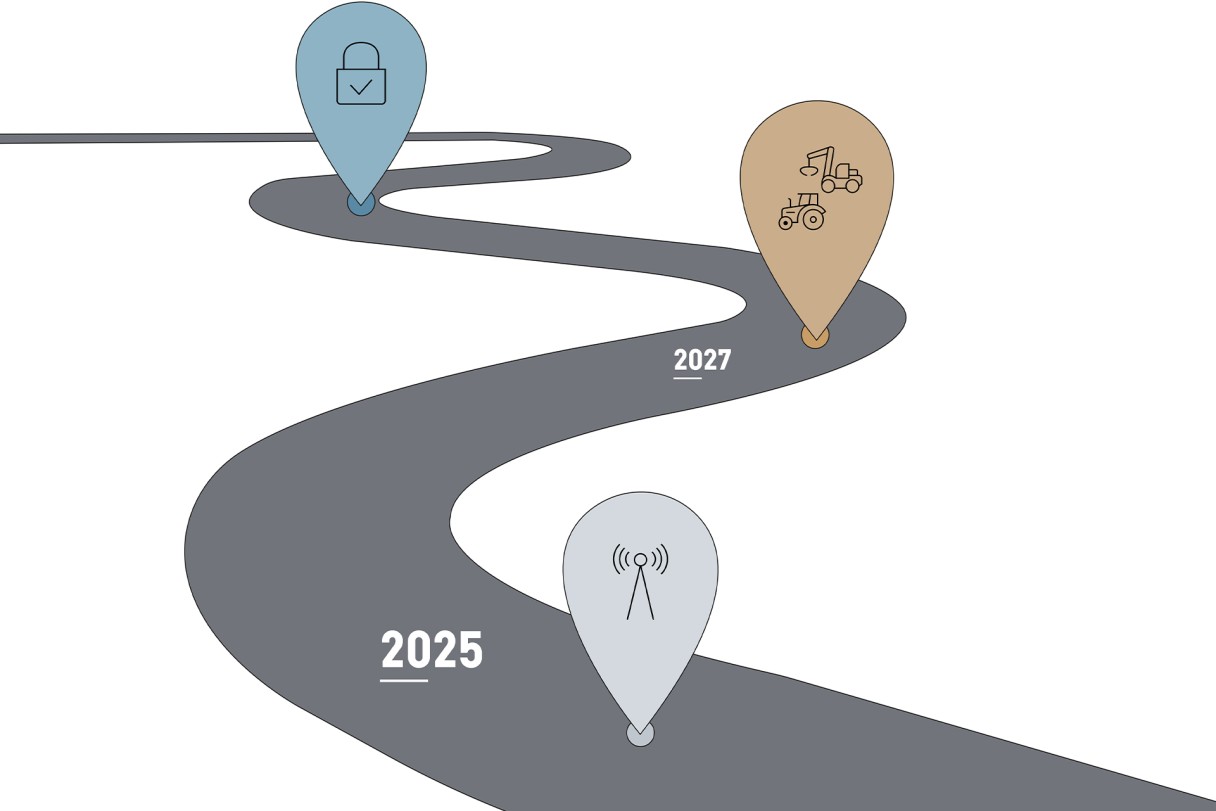
Focus on the Cyber Resilience Act – deciding the future of digital products now
With the Cyber Resilience Act (CRA), the EU is establishing a horizontal set of rules for the cybersecurity of products with digital elements for the first time. It applies across all industries and defines binding requirements across the entire life cycle. Even if other regulations supplement the framework, the CRA provides the central guidelines for manufacturers, dealers and importers of digital products in the EU – today and in the future.
Cybersecurity becomes mandatory: the CRA at a glance
The CRA affects many areas of your value chain
Everything you need to know now
In the majority of cases, yes. As soon as your product (hardware or software) processes data in a machine or communicates with other systems, it is considered a digital product within the meaning of EU legislation – regardless of its complexity or function. If your digital products are made available on the European market, you are affected by the CRA as an economic operator (manufacturer, dealer, importer).
No. The CRA does not only apply to new developments. Existing products must also be considered, provided they continue to be placed on the market and contain digital elements.
The CRA provides for staggered deadlines. Initial obligations, such as the reporting of security incidents, will take effect from 11 September 2026, while full application will become mandatory on 11 December 2027. Early preparation is therefore essential.
Companies benefit in terms of planning security, avoid later adjustment costs and can use cybersecurity as a quality and trust feature.
If the legal requirements are not met or false or incomplete information is provided to the authorities, fines of up to 15 million euros or up to 2.5% of annual revenue may be imposed.
The relevant EU legal texts at a glance
The legal landscape is constantly evolving. This makes it all the more important to recognise relevant updates at an early stage and classify them with regard to your own product portfolio.
Read the relevant legal provisions here:

EU cybersecurity regulations at a glance – to stay one step ahead.
Cybersecurity whitepaper
Would you like to find out more about EU cybersecurity legislation and our recommendations for action? Then request our free whitepaper using the contact form below.
You want to learn more about the upcoming cybersecurity regulations?
Then you can request our whitepaper on cybersecurity here:
Contact us
Do you have any questions about the cybersecurity of our products? We look forward to hearing from you.
The information on this website is based on the situation on 14/04/2026. Subject to technical modifications.