

Kefir: nutritional values, protein and its special effect
Ever tried kefir? You probably already know the name. But what is behind kefir and its nutritional values? Shrouded in legend and healthy, neither yoghurt nor buttermilk: There is a lot to learn about kefir. We show you what kefir can do with its nutritional values and which vitamins it contains.
Storage time*
| BioFresh Fish & Seafood safe -2 °C with low humidity | 18 days |
| BioFresh Meat & Dairy safe just above 0 °C with low humidity | 12 days |
| Fridge compartment 7 °C | 7 days |
| Freezer compartment -18 °C | 1 month |
The key points
- Nutritious and high in protein: kefir provides high-quality protein, B vitamins (especially B12), calcium and magnesium.
- Probiotic effect: the lactic acid bacteria and yeasts it contains can strengthen the intestinal flora and support the immune system.
- Easy to digest: kefir is low in fat and calories, and thanks to fermentation, it is often well tolerated by people with lactose intolerance.
- Naturally fresh: carbon dioxide is produced during fermentation – it extends shelf life and gives the drink its typical taste.
Kefir – list of contents
How much energy and protein does kefir contain?
Kefir contains high-quality protein, lots of B vitamins (especially B12), calcium, magnesium and phosphorus. Particularly noteworthy are the lactic acid bacteria and yeasts it contains, which can have a positive effect on the intestinal flora. In addition, kefir made from skimmed milk is low in calories and relatively low in fat. Depending on how it is prepared, the drink has a low lactose content, making it suitable for many people who are lactose intolerant.
Kefir probably originates in the Caucasus. From there, it initially became known and popular throughout Russia, where it is one of the most sought-after sour milk products. But what exactly is kefir?

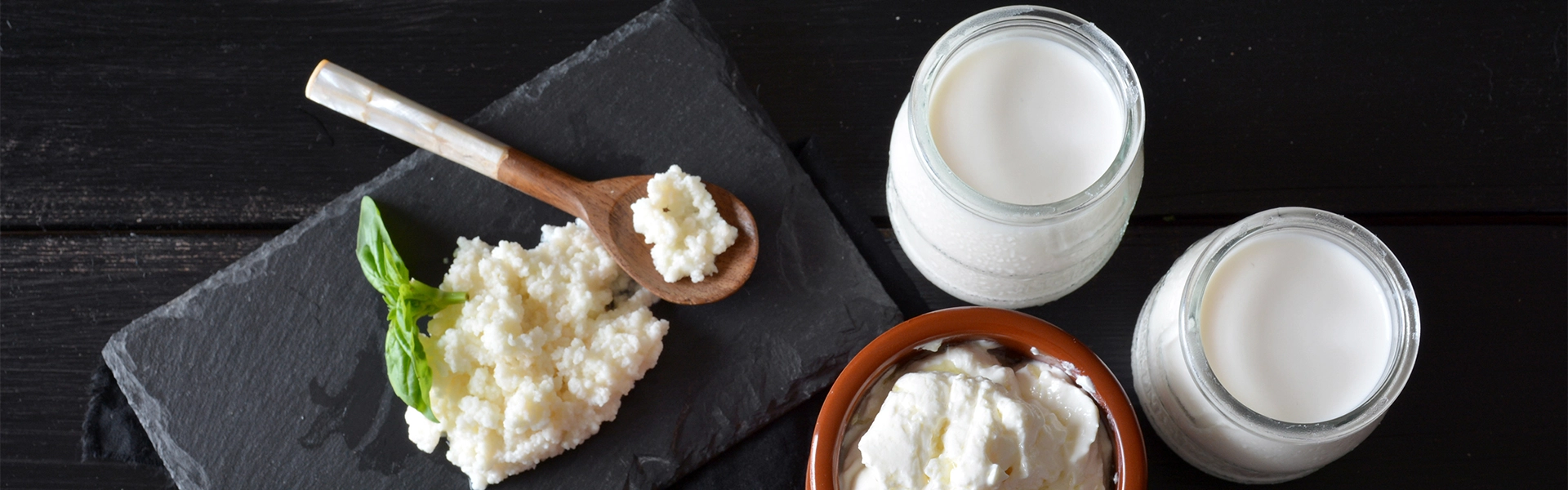
The basic ingredients of kefir are raw milk and the so-called kefir nodules (special microorganisms). The raw milk can come from various animals. In the past, for example, kefir was made initially from mare’s milk, and then goat’s or sheep’s milk. Kefir nodules contain both lactic acid bacteria and yeasts. In the process of lactic acid and alcoholic fermentation, these nodules give kefir its unique nutritional values and properties. Fermentation produces both CO2 and alcohol. However, the alcohol content is low.
Even though kefir nodules mainly develop their effect in milk, there is still an alternative to the classic milk kefir: water kefir. This drink is created from insoluble kefir grains which are mixed with a fruit extract or sugar solution. The flavour is defined by the acids produced and, as with milk kefir, bubbles can also be observed.
How healthy is kefir?
Kefir actually contains a variety of valuable nutrients that can contribute to good health. Raw milk already provides important vitamins, minerals and proteins. However, fermentation with kefir grains produces an even more complex product with potential probiotic effects.
The lactic acid bacteria contained in kefir can have a positive effect on the intestinal flora. A healthy gut is closely linked to the immune system. Kefir is said to have immune-boosting and anti-inflammatory effects.
To benefit from the nutritional value of kefir, you should store it correctly. Generally speaking, fermented milk products have a longer shelf life due to acidification. However, they need to be stored in a cool location, away from direct sunlight. Kefir can be kept in the fridge for about seven days. It will keep for around 18 days in the BioFresh Fish & Seafood safe of Liebherr appliances at -2 °C with low humidity.
Incidentally, an elevated cover does not mean that the product is spoiled. This occurs naturally as a result of carbon dioxide forming in the product. Why not give kefir with its valuable nutritional values a try?
*All specifications given are to be considered as guideline values, and depend in each case on the type of food and on the proper storage without interruption of the cold chain from harvest/production through to the Liebherr appliance. Should food products have information about minimum shelf life, the date on the packaging always applies.