


Skyr – nutritional values with a long tradition
It is not just recently that the Icelandic dairy product “Skyr” has become an integral part of many people’s diets. But what is this product exactly? Is it really as healthy as the trend suggests, and can the nutritional values of skyr compete with other dairy products? We’ll clear things up!
Storage time*
| BioFresh Meat & Dairy safe just above 0 °C with low humidity | 20 days |
| Fridge compartment 7 °C | 7 days |
| Freezer compartment -18 °C | 10 months |
The key points
- Skyr is a traditional Icelandic dairy product with a high protein content (11 g/100 g) and low fat content (0.2 %).
- It contains around 60 kcal per 100 g and, with 150 mg of calcium per serving, makes an important contribution to your daily calcium intake.
- Skyr contains similar amounts of lactose to yoghurt or quark, but is often better tolerated thanks to lactic acid bacteria.
- Skyr is particularly popular among athletes and health-conscious people due to its filling and protein-rich properties.
Skyr – a healthy dairy product with a long tradition
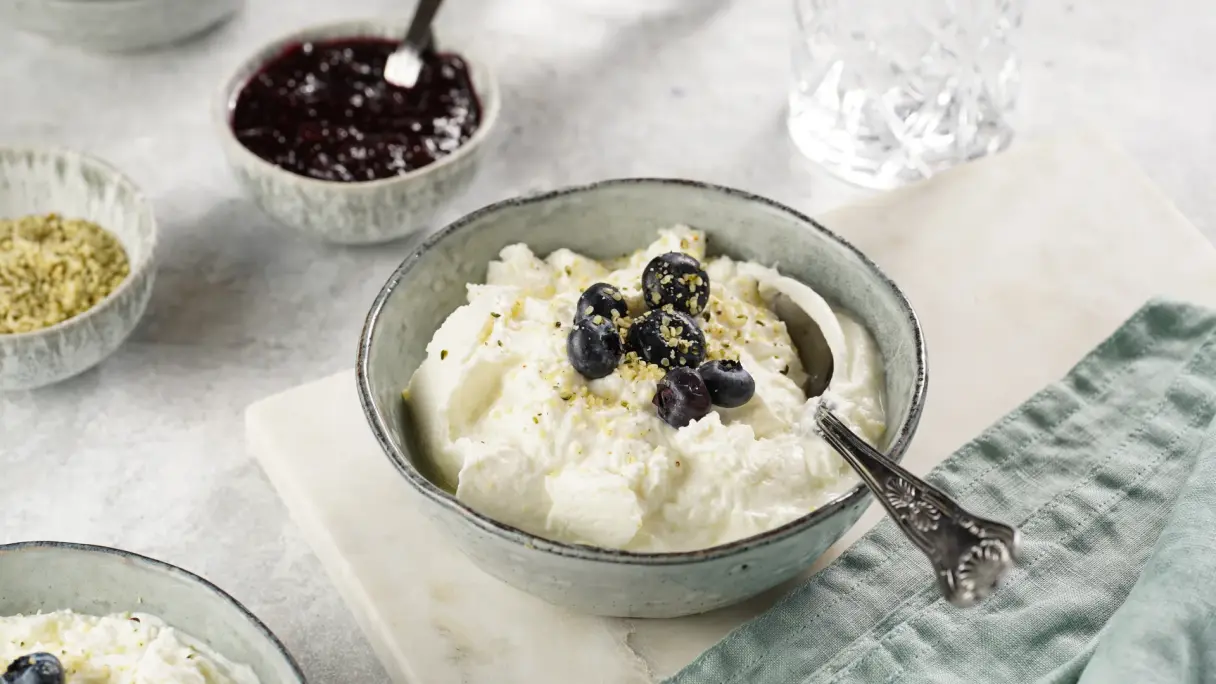
According to legend, the Vikings brought skyr to Iceland more than 1,000 years ago and passed on their knowledge to the country’s inhabitants. The product was originally created to make milk last longer for the winter. At the beginning, sheep’s milk was preferred, in contrast to the dairy milk normally used today. During the production process, live bacterial cultures are added to the skim milk and thickened with rennet, like curd cheese is. Icelanders traditionally eat their skyr with blueberries.
Is skyr an alternative to dairy products containing lactose? Yes and no, as at three to four percent, skyr contains just as much lactose as yoghurt or low-fat quark do. And like yoghurt and quark, some people who suffer from lactose intolerance may still tolerate skyr because lactic acid bacteria are added to it. What’s more, the Icelandic dairy product is traditionally not heat-treated so that the lactic acid bacteria survive. Therefore, everyone should try it for themselves to see whether they can tolerate the Icelandic dairy product.
Skyr should always be stored in the fridge – it will stay fresh for around seven days in the regular fridge compartment at around 7 °C. It keeps even longer in Liebherr’s special BioFresh Meat & Dairy safe: Thanks to low humidity and a temperature just above freezing, skyr retains its nutritional value and remains edible for up to 20 days – perfect for anyone who likes to stock up.
Skyr and its nutritional values
Athletes and health-conscious people in particular are drawn to this new dairy product on the market. With its 11 percent protein, its low fat content of 0.2 percent and its small number of calories (60 kcal/100 g), skyr’s excellent nutritional values really stand out. Thanks to its high protein content, the Icelandic dairy product keeps you feeling full for a long time and is beneficial for muscle growth. The calcium content of 150 mg per 100 g is also noticeably high and makes up 15 percent of the recommended daily intake of calcium.
When you compare the nutritional values of skyr, quark and yoghurt, each product has its advantages and disadvantages. Low-fat yoghurt may have fewer calories than skyr, but with 4 to 10 grams of protein at most, it cannot compete with this protein powerhouse. This is because four times as much milk and therefore more protein is needed to produce skyr. The calcium content of both products is about the same though. If we now compare skyr and low-fat curd cheese, we can see that low-fat quarkeven beats skyr in terms of protein content at 14 g per 100 g. The low fat content of low-fat quark is also comparable to Icelandic skyr and its nutritional values. Only the calorie and calcium values differ. With 65 kcal per 100 g, the calorie content of curd cheese is slightly higher and the calcium content at 40 mg per 100 g in contrast is significantly lower than for skyr.
*All specifications given are to be considered as guideline values, and depend in each case on the type of foodstuffs and on the proper storage without interruption of the cold chain from harvest/production through to the Liebherr appliance. Should food products have information about minimum shelf life, the date on the packaging always applies.