

Mulberries: effects and nutritional values of the small fruits
Even as far back as the Romans, mulberry trees were referred to as the “seat of wisdom” and the ancient Greeks called the berries “food of the gods”. Mulberries have a special effect and are a real all-rounder in the kitchen. Find out what these black, red and white berries are all about here.
Storage time*
| BioFresh Fruit & Vegetable safe just above 0 °C with high humidity | 7 days |
| EasyFresh safe 7 °C with air regulation plate | 3 days |
| Fridge compartment 7 °C | 2 days |
| Freezer compartment -18 °C | 24 months |
The key points
- Nutrient-rich superfood: mulberries contain high levels of vitamins C, K and E, as well as iron, potassium, magnesium and secondary plant substances such as anthocyanins.
- Health effects: they support the immune system, have anti-inflammatory properties and have been used in traditional Chinese medicine to combat cholesterol and colds.
- Versatile: mulberries are an all-rounder in the kitchen – whether fresh, frozen or dried.
Mulberries – list of contents
Origin and vitamins of the mulberry
Until the 17th century, mulberries were extremely popular – not so much for their fruit, but rather for their leaves. These served as food for silkworms. That is why Frederick I introduced the white mulberry to Europe. It was only when China began to dominate the silk market and European trade in silk declined that European mulberry stocks also declined. At that time, the benefits of mulberries as a food were not yet known, and so mulberries initially fell by the wayside.
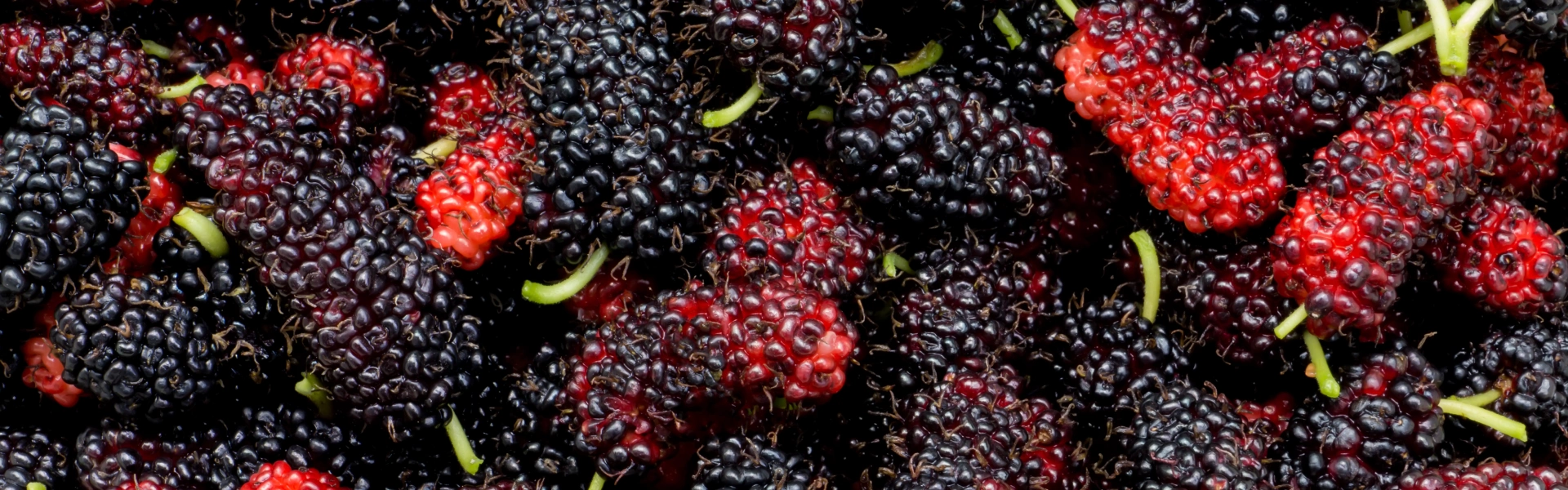
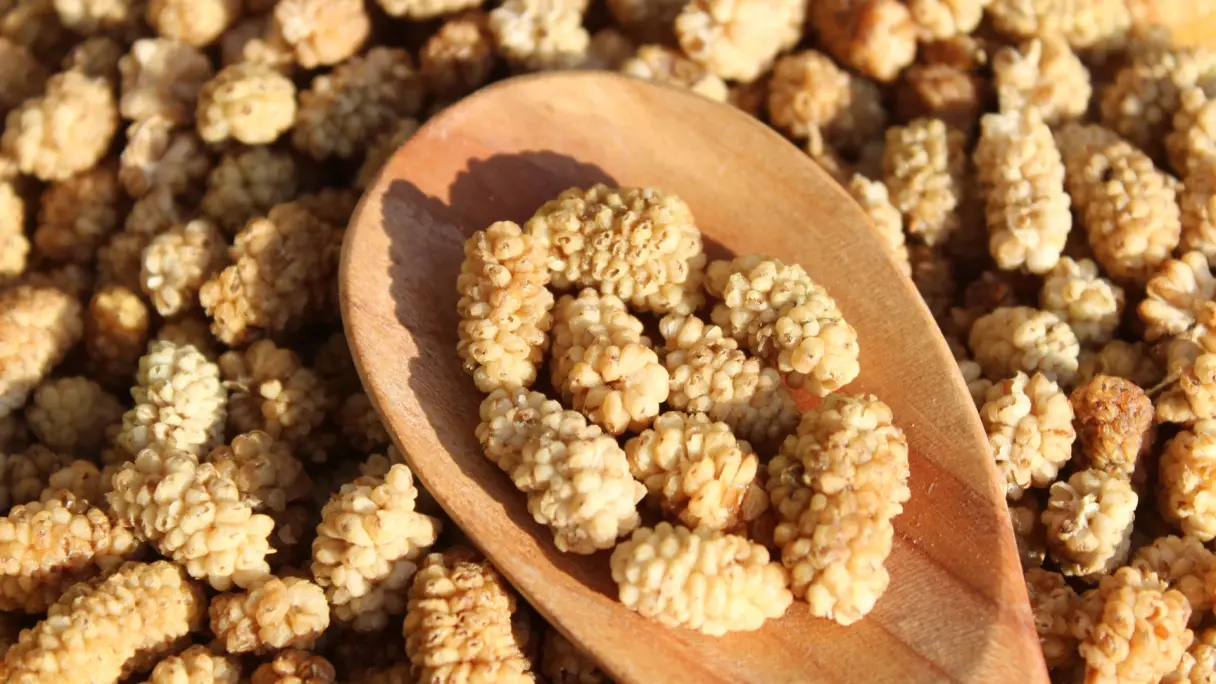
Mulberries belong to the Moraceae family (mulberry trees) and are related to figs, for example. However, the largest growing areas in Europe are increasingly found in the south. Mulberries come in different colours: white, black and red, similar to currants.
No matter what colour they are, mulberries are packed with nutrients: they contain plant protein and fibre as well as lots of vitamins and minerals. Particularly noteworthy is their vitamin C content, which contributes to the functioning of the immune system, and vitamin K, which plays an important role in blood clotting. Mulberries also contain vitamin E, which acts as an antioxidant, and a considerable amount of iron, potassium, magnesium and calcium. The dark varieties in particular are rich in anthocyanins – secondary plant compounds that have anti-inflammatory and cell-protecting properties. Fresh mulberries have only 43 calories per 100 g – a remarkably low-calorie snack.
How healthy are mulberries?
Due to their valuable nutrients, mulberries have health benefits. In times of traditional Chinese medicine, mulberry juice was used to regulate cholesterol and blood sugar levels and as a mucus loosener for colds. In any case, mulberries contain a lot of vitamin C, which can help strengthen the immune system. The potassium and sodium in mulberries can have a regulatory effect on fluid balance. However, how much mulberry you would need to consume to achieve health benefits has only been researched to a limited extent and also depends on the individual characteristics of your own body.
To get the most health benefits, mulberries should be eaten fresh or stored in the chest freezer. This is because the berries become overly soft and literally melt after just one or two days. However, things are different in the BioFresh Fruit and Vegetable safe of a Liebherr fridge, where mulberries can be kept for up to seven days. The BioFresh drawer maintains high humidity and a constant temperature of just above 0 °C. This allows you to enjoy the taste of your mulberries and their beneficial effects for longer.
*All specifications given are to be considered as guideline values, and depend in each case on the type of foodstuffs and on the proper storage without interruption of the cold chain from harvest/production through to the Liebherr appliance. Should food products have information about minimum shelf life, the date on the packaging always applies.