

Acai berries – the South American trend setter
A trendy food from South America has stolen the spotlight from currants and blueberries. Although we only find it in processed form, the acai berry has made a name for itself here in Europe. But how can this foreign berry justify being centre stage? And how can the positive features of the fruit be used and enjoyed? Find out more about the superfood, and hopefully be inspired to make a refreshing acai bowl.
The key points
- The acai berry grows exclusively in South America.
- The berry survives long transport routes in freeze-dried, pureed, pressed or powdered form.
- The fruit has a surprising, somewhat cocoa-like, slightly earthy taste, like beetroot.
- The acai berry impresses among other things with its high calcium content and considerable levels of anthocyanins with antioxidant properties.
- Use acai berries in smoothies, smoothie bowls, juices or in capsule form.
The origin of the acai berry
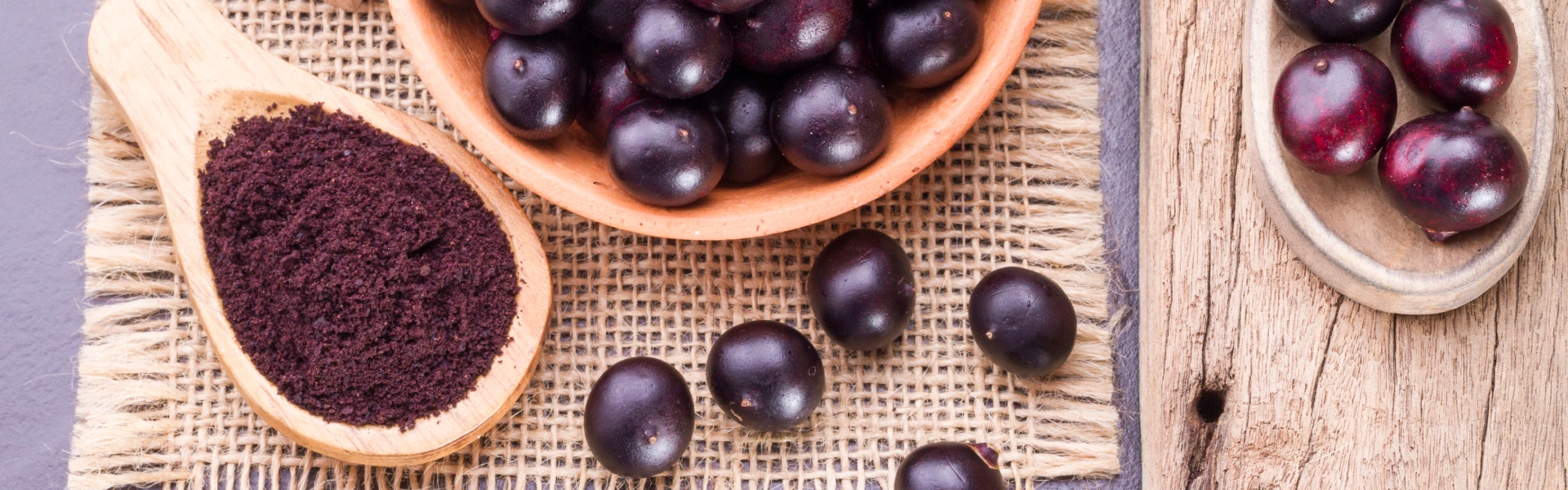
As the fruit of the acai palm tree, it grows exclusively in South America, in the northern Amazon basin. They measure 1–1.4 cm, are initially a reddish colour and very shiny. When it’s time to harvest, they have a fine, purple-red, almost black skin covered by a thin layer of wax.
While the locals love the freshly squeezed juice and whole berries, in Europe we can only enjoy the berries in processed form. Whether they are freeze-dried, puréed, pressed or powdered, these processed forms allow the berry to survive the long journey. A popular way to also ingest the berry's nutrients is in the form of capsules.
But how do you actually pronounce it? Akai or Assai? Let’s look at how it’s spelt in Portuguese: açaí. A glance at the cedilla under the c answers the question: in Portuguese, this c is pronounced like an s. In English, we can leave out the cedilla and just write “acai”.
Make your own acai bowl: a refreshing power breakfast
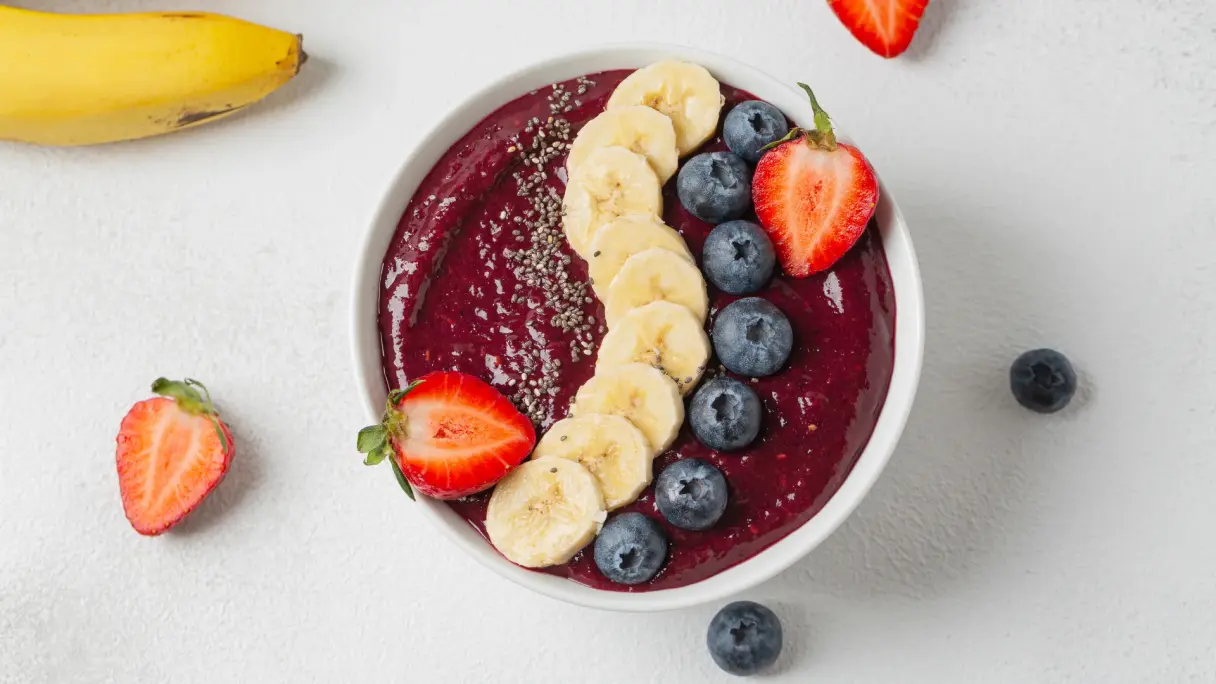
So, are you curious about how acai products can be consumed? A classic form of preparation is the so-called acai bowl. With frozen, local berries and bananas as a base, acai bowls make for the perfect refreshment or an ice-cold power breakfast on hot days. Preparation is very simple, and there are plenty of ways to add variation. A range of different toppings ensure further variety. So acai bowls are never boring!
Ingredients for one bowl:
- 75–100 g acai puree or 1 tbsp. acai powder
- 1 banana
- 100 g local varieties of berries (frozen)
- 75 g your choice of yoghurt
- Your choice of toppings
Blueberries, , blackberries or a mixture: frozen and puréed with a banana to form the base of the bowl. 75–100 g of acai berry puree or a tablespoon of acai berry powder is then added. Coconut, soy or ensure a creamy consistency and pep up the bowl with additional nutrients and probiotics. You can add for a runnier version. The bowl itself is then ready. Extra tip: after puréeing and mixing, place your bowl in your freezer compartment for an hour before adding the toppings. It gives the mixture an additional refreshing effect.
Last but not least, different toppings ensure an all-round pleasurable experience. There are no limits to creativity. Additional fruit such as local varieties of apples or fresh berries are a good, colourful option. Flaxseed, pumpkin seeds and other seeds are also a great complement to the bowl. Likewise, walnuts or mixed nuts are a tasty embellishment. You could also opt for chocolate chips, muesli or . With a mix of different toppings, each bowl can be lovingly and uniquely decorated.
It’s important to note, that there is a lot of fructose in every bowl. Pureeing the fruit makes this less noticeable than when you have to chew the portions of fruit. Treating yourself to an acai bowl every now and then is no big deal. But, you shouldn’t have a bowl every day for breakfast, because the amount of fructose you will eat in just one meal here shouldn’t be underestimated. It’s better to eat a portion of fruit for breakfast and then a second portion as an afternoon snack, for instance. Don’t treat yourself to a bowl every day, instead incorporate them into a balanced diet as part of a healthy lifestyle, which may even help with weight loss.
The taste of acai: unexpectedly earthy rather than berry sweet
Tasting the acai berry is a very unique experience. There’s a surprise in store if you’re expecting a fruity sweet, berry-like flavour. Instead, the fruit has a surprising, somewhat cocoa-like, slightly earthy taste, like beetroot. It’s certainly a taste that takes some getting used to. This berry is best enjoyed in combination with other, fruity berries, or (plant-based) yogurt in a bowl.
In summary: try the Acai berry if you are looking for interesting flavours and like to discover new tastes.
Acai powder: effects and qualities of the ‘superfood’
Does it make sense to consume a product that is only available in processed form in European latitudes? The acai berry impresses among other things with its high calcium content and considerable levels of anthocyanins. Anthocyanins are plant dyes with antioxidant effects that make them quite healthy. They are said to defend against various diseases, Though this has not yet been confirmed in any clinical trials. Therefore, health-related statements on anthocyanins or antioxidants are generally not permitted in advertising or product packaging.
It should also be noted that acai berries do not contain more antioxidants than other berries such as blackcurrants, blueberries or blackberries. It’s also important to note that the calcium content fluctuates greatly due to the high genetic diversity of the Acai berry. In addition, more minerals are lost during industrial processing.
So, our diet can be livened up using acai products. As a powder, juice or smoothie. Local, fresh and unprocessed products and fruit should still be your first port of call. An overall varied diet with lots of fresh food means we are also well provided for even without the exotic superfoods.