What is the difference between red wine and white wine?
The question sounds trivial and the answer seems obvious: white wine is made from white grapes and red wine is made from red grapes. But it’s not quite as simple as that.
The key points
- Grape varieties: red wine is made from blue grapes, white wine from white or red grapes.
- Production: white wine is pressed, red wine is crushed (mash).
- Colouring agents: red wine gets its colour from the skins.
- Champagne: the colourless juice from dark grapes is used in production.
- Rosé wine: produced by shortened mash fermentation of dark grapes.
Blue, white or red grapes: which grape for which wine?
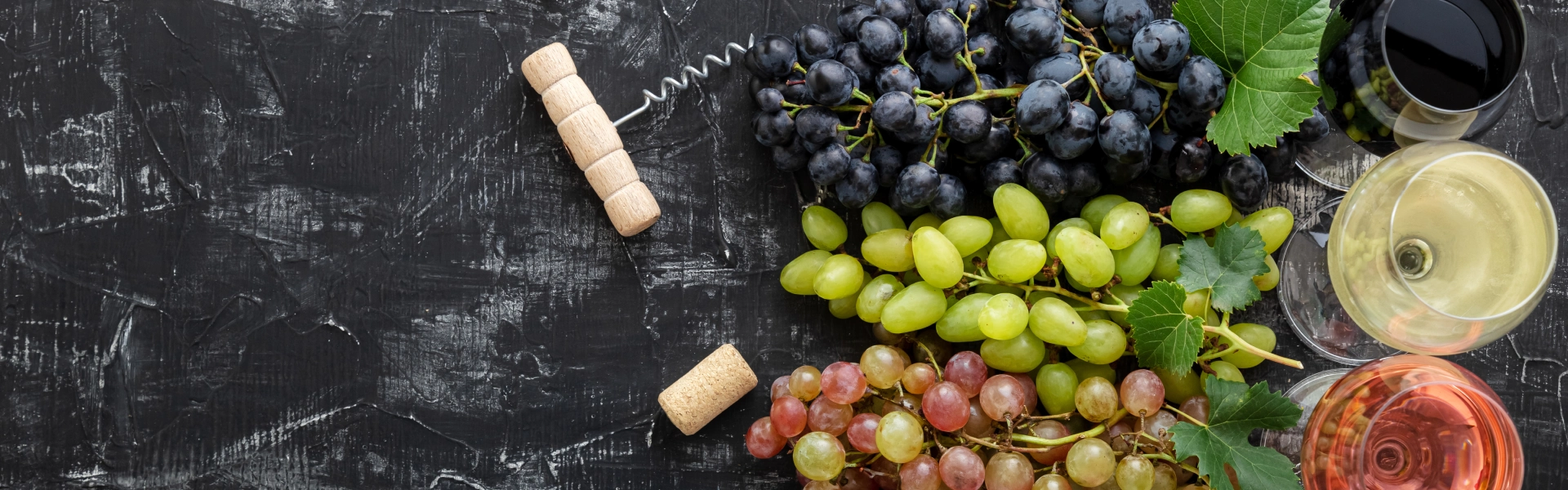
It is an obvious assumption that white wine is made from white grapes and red wine from red grapes, but this is not entirely correct. Contrary to common belief, red wine is not made from red grapes, but from blue grapes. In fact, almost all grape varieties used for making red wine have a more or less dark blue colour.
Although there are certainly red-skinned grapes, such as pinot gris and Gewürztraminer, these are usually used to press white wines. There is also a big difference between white and red wine in terms of the winemaking process, known as vinification.
What are the differences between the production of white wine and red wine?
With white wine, it’s pretty simple: the grapes are pressed and the must obtained is fermented into wine. If you did this with blue grapes, however, you would never end up with a red wine. This is because the juice of most dark grape varieties is also colourless; the colouring agents are mainly found in the skins. This is why, in red wine production, the grapes are first crushed or coarsely ground to produce a mash consisting of grape juice, pulp and skins. During fermentation of this mash, the colouring agents are released from the grape skins and pass into the liquid. Pressing therefore only takes place after fermentation. White wine is therefore produced by fermenting grape must, while red wine is produced by fermenting grape mash.
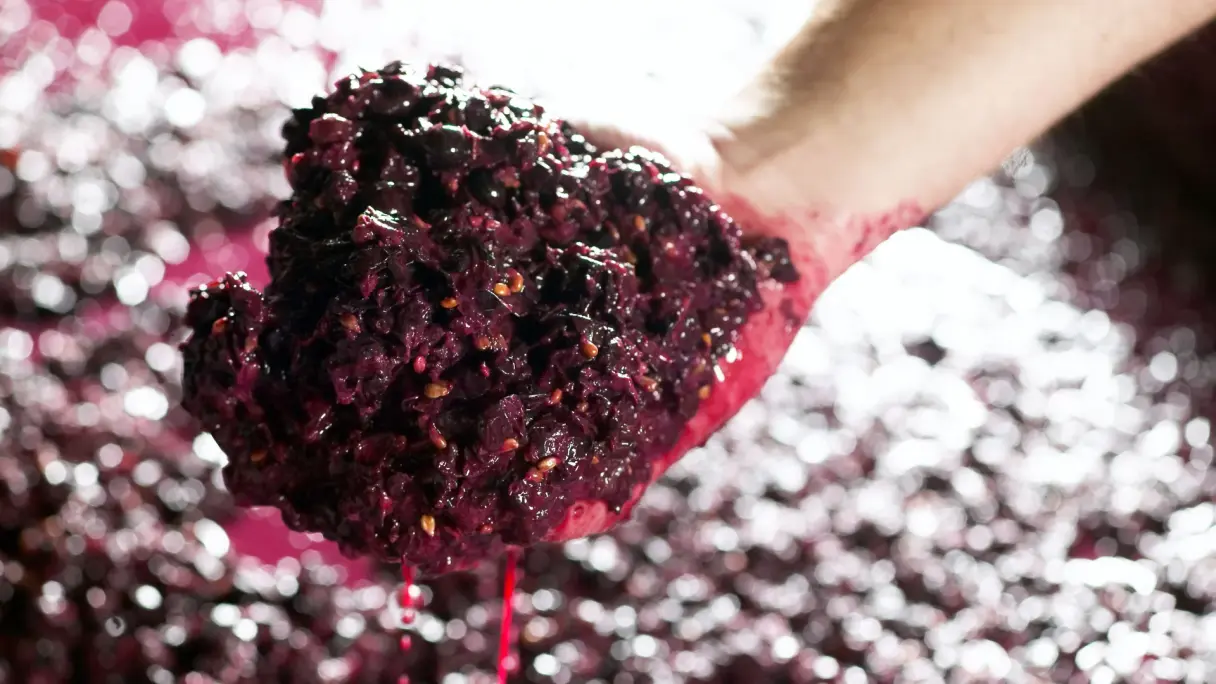
For white wine, the grapes are pressed, while for red wine they are crushed.
Dark grapes for white wine and champagne
But couldn’t you also produce white wine from dark grapes if you carried out pure must fermentation here too? In fact, this is exactly what is done. The best example of this is champagne, which, as is well known, is produced from three grape varieties, only one of which, Chardonnay, has white grapes, while Pinot Noir and Pinot Meunier are blue varieties.
After harvesting, only the colourless juice is pressed from the latter and fermented to produce a white wine. This process is known in France as “Blanc de Noirs”, meaning “white from black (grapes)”. But what about rosé? Contrary to popular belief, this is not a blend of white and red wine, but is produced by shortening the mash fermentation period of dark grapes.

Once the desired colour intensity has been achieved, the colour-producing skins are removed and the lightly coloured juice is left to ferment further. There are, on the other hand, also pink wines that are produced from a mixture of white wine and red wine. However, this type of wine cannot be called rosé, but has the somewhat strange name Rotling in Germany. This category includes, for example, Schillerwein in Württemberg and Rotgold in Baden.

The author
Frank Kämmer
I have worked for many years in high-end restaurants and during this time became one of the top sommeliers in Europe. In 1996, I achieved the title of Master Sommelier; the highest international qualification in my profession. Today, I work full-time as a consultant in the international wine and gastronomy industry. I have also published numerous books on wines and spirits and was the first German to be accepted into the British Circle of Wine Writers.