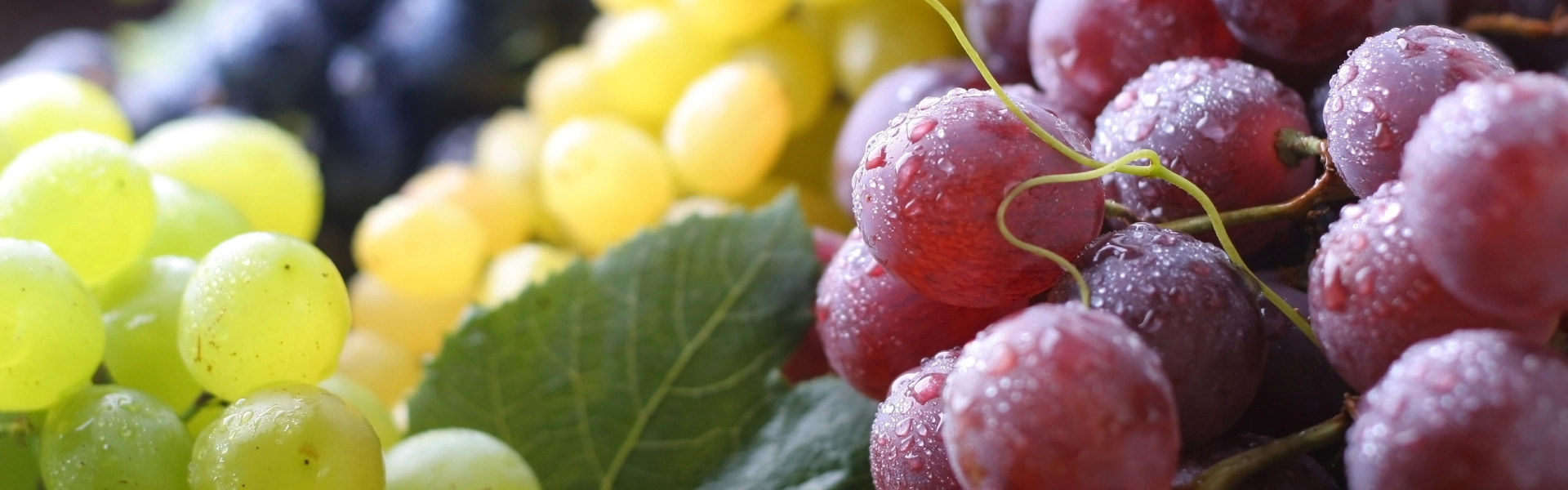
How healthy are grapes? Are dogs allowed to eat grapes?
How healthy are grapes? What nutrients and minerals do they provide? And are dogs allowed to eat grapes? Read on to find out more.
Storage time*
| BioFresh Fruit & Vegetable safe just above 0 °C with high humidity | 29 days |
| EasyFresh safe 7 °C with air regulation plate | 12 days |
| Fridge compartment 7 °C | 10 days |
| Freezer compartment -18 °C | 12 months |
The key points
- Table grapes are particularly high in calories and have a high sugar content.
- Red grapes in particular also have a higher content of antioxidants and secondary plant substances.
- Grapes contain lots of vitamins and fibre.
- Avoid letting your dog eat grapes or raisins. Not every dog reacts with poisoning symptoms, but consumption can be fatal.
- If your dog is unwell, consult a vet quickly.
How healthy are grapes?
Grapes are a good source of energy. Despite the characteristically high water content of fruit and vegetables, 100 g of fresh grapes contain around 72 kcal. This means that the calorie content is higher than that of most fruits. Only bananas have a higher energy density with 88 kcal per 100 g. The colour of the grapes makes little difference.
The energy in table grapes comes mainly from carbohydrates. At 15.2 g per 100 g, grapes are one of the fruits with the highest carbohydrate content. By comparison, mangoes have 13.7 g, apples around 11.6 g and honeydew melons 8 g of carbohydrates per 100 g.
They contain both glucose and fructose. This is relevant for people with fructose intolerance or a form of diabetes. Blood sugar levels can be influenced by eating grapes.
Dark grapes have a higher antioxidant content as well as individual secondary plant substances. The same applies to grape varieties with seeds, as the majority of antioxidants are contained in the seeds. Seedless grapes contain slightly fewer nutrients.
The flesh also contains valuable vitamins such as B1, B6, and niacin. Trace elements such as iron and the minerals potassium and calcium are also supplied by grapes.
Grapes also contain fibre, which is good for digestion. However, excessive consumption can lead to an unpleasant, bloated feeling, especially in people who consume little fibre.

Are dogs allowed to eat grapes?
No. Dogs are not allowed to eat grapes.
Grapes are poisonous to dogs and put a strain on their kidneys. The effect of raisins, dried grapes, is even more pronounced, as the concentration of nutrients is increased by the lack of water.
Typical reactions of dogs to grapes include weakness and tremors, as well as vomiting and increased saliva production. In this case, you should consult a vet immediately.
But there is not always a need for alarm. Many dogs do not react to grapes and are therefore not in danger. However, it is better not to risk the health of our four-legged friends.
In most cases, the dogs recover completely, even after acute symptoms. The decisive factor here is the quantity of grapes consumed, the weight of the dog in relation to this, and the time until treatment. It may be necessary to induce vomiting.
*All specifications given are to be considered as guideline values, and depend in each case on the type of food and on the proper storage without interruption of the cold chain from harvest/production through to the Liebherr appliance. Should food products have information about minimum shelf life, the date on the packaging always applies.