
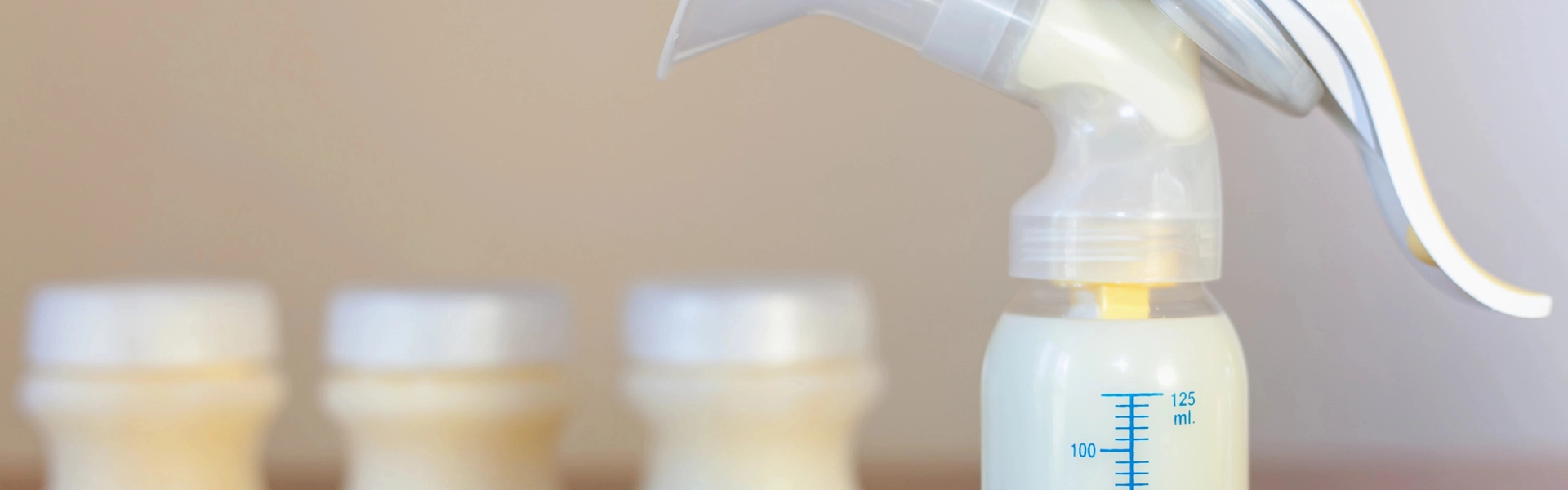
Here’s how to store your breast milk!
Storing breast milk adds flexibility to the lives of many families. Everyone who uses pumped breast milk has to ask themselves sooner or later what the right way to store it is. Returning to work, taking a break, or involving other people in taking care of the baby: with the right storage, breast milk stays safe and keeps for longer. Here you will learn what you should consider when storing, refrigerating, and freezing.
The key points
- Breast milk should be stored at room temperature (approx. 20 °C) for a maximum of four hours.
- Breast milk should be stored in the fridge compartment at about 7 °C for a maximum of 2 days.
- Breast milk should be stored frozen at -18 °C for a maximum of 3 months.
- Freshly pumped milk is better than milk that has been refrigerated or frozen for a while, as some antibacterial properties and nutrients are lost when breast milk is stored.
- Leftover milk after feeding should be disposed of after 1–2 hours.
- A changed smell of stored milk is not a sign of spoilage, but a natural process.
Storing breast milk
Breast milk is easy to digest, contains all the important nutrients and protects your baby against diseases. This is why many women breastfeed their children; in fact, the breastfeeding rate in Germany is 82 percent. Most of these health benefits are retained even with pumped milk. This also makes it more suitable than other infant foods. To ensure that everything is ready and prepared to feed your child after pumping, some hygiene aspects must be observed. Here is the best way to store breast milk.
Freshly expressed breast milk is better than breast milk that has already been stored in the fridge. However, the latter is more suitable than previously frozen breast milk. This is because when breast milk is kept refrigerated or frozen, some antibacterial properties and nutrients are lost. So you should always consider when you will need the next portion of milk and what type of storage is best to store the breast milk. In any case, you should always write the pumping date and the amount of milk on the bags to make sure that you can keep track of what you’ve got.
Why you should shake breast milk after storing it
Stored milk forms different layers over time, with the fat settling on top. Before feeding, everything should therefore be mixed well again by gently stirring. However, do not shake the breast milk too much, as this will cause excessive air to come into contact with the breast milk. This can lead to a change in the fat structure, which alters the taste of breast milk. Fat-soluble vitamins can also be affected in this way.
Why you should not keep breast milk left over from feeding
Since bacteria from the baby's mouth always gets into the milk via the bottle when drinking, milk that has not been used up should be poured away after one to two hours. To avoid wasting anything, when in doubt feed smaller amounts at a time. You can always simply get more if it’s not enough.
Which containers are suitable for storing breast milk?
It is up to you whether you use breast milk bottles or bags to store breast milk. The advantage of breast milk bottles is that they can be reused several times and can also be connected directly to the breast pump.
The advantage of bags, on the other hand, is that you can store them in a space-saving way. Bags also allow you to better portion the milk when storing it. However, these are not reusable and therefore produce a lot of waste. But as always: try it out for yourself and find the solution that suits you best.
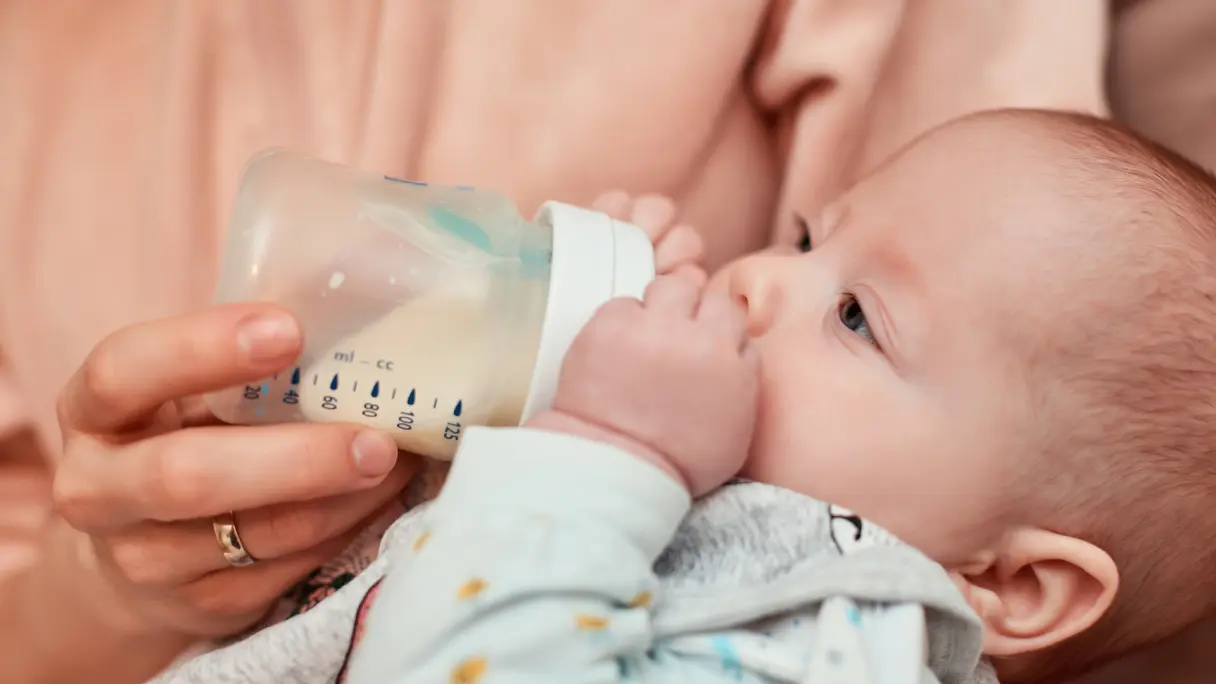
Breast milk in the fridge
Breast milk should be cooled as soon as possible after pumping. Clean BPA-free breast milk bottles or breast milk bags are suitable for storing breast milk in the fridge. BPA (bisphenol A) was used in plastic containers before many companies phased out the chemical due to the unknown long-term effects on humans.
It is best to store the bottles or bags in the coldest part of the fridge. Under no circumstances should it ever be stored in the fridge door. There, opening and closing the fridge causes temperature fluctuations that are not desirable with regard to breast milk.
FAQ – chilling breast milk
The colder the storage space in the fridge, the longer you can store breast milk without risk*
- Breast milk can be kept for a maximum of 2 days in the fridge compartment at approx. 7 °C.
- Breast milk can be stored for a maximum of 3 days in the fridge compartment at approx. 4 °C.
- In the BioFresh Meat & Dairy safe of your BioFresh fridge at approx. 1 °C, breast milk can be stored for up to four days.
- Breast milk can be stored for up to five days in the BioFresh Professional Fish & Seafood safe at under 0 °C.
If you want to take breast milk with you in bottles or pouches, you should use a cool bag with cold storage accumulator to keep it cool.
Long-term storage: freezing breast milk
If you want to store breast milk for longer than 5 days, you should freeze it. Small portions of about 60 ml best suited for this. The same applies to the chest freezer as to the fridge: store the breast milk where the temperature fluctuations and also the temperature itself are as low as possible.
FAQ – freezing breast milk
Breast milk can be stored for three months at -18 °C in the chest freezer.*
The container in which the milk is frozen does not matter when storing breast milk, as long as they are airtight. If you want to use glass containers, you just have to make sure that they are filled to a maximum of three quarters to prevent them from bursting. Equally, other containers such as milk bags should not be filled to the last drop, as the milk expands during the freezing process.
Defrosting breast milk
Previously frozen milk should be left open at room temperature for a maximum of two hours or in the fridge for one day. Breast milk that has already been thawed should not be frozen again.
A bottle warmer can be used to reheat the breast milk. Those who want to avoid this purchase have a few more options: On the one hand, it is possible to let the milk thaw in the fridge for around twelve hours, for example overnight. Warming up at room temperature should be avoided due to germ formation.
On the other hand, the milk can be warmed up in a bowl of lukewarm water until it reaches body temperature at 37 degrees.
Gentle reheating in the microwave is also unproblematic. However, the emergence of so-called "hot spots" should be avoided. The milk often heats up unevenly in the microwave, so some areas can get too hot and the baby can get burnt. So be sure to carefully distribute the heat by gently stirring and checking the outside of the bottle with your hand.
How can you tell if breast milk is still OK?
How can you tell if breast milk is still fresh after being stored for a long time? Milk that has been stored in the fridge or frozen often smells slightly different.
This is because the enzyme lipase breaks down fats and releases fatty acids to prevent bacteria from multiplying. This changes the composition of the milk somewhat. In this case, the smell you might notice from the stored breast milk is not a sign of spoilage but of a natural biochemical process.
If all the hygiene instructions for storing breast milk have been observed, this milk can be fed without hesitation despite the changed odour. However, some babies don't like the taste of thawed milk; just try out your child's individual preferences when storing breast milk.
*All specifications given are to be considered as guideline values, and depend in each case on proper storage, without interruption of the cold chain, all the way from pumping the milk through to the Liebherr appliance.
This might also interest you

Freezing and thawing baby food right
Freeze and thaw your own baby food to save time and retain as many nutrients as possible – find out how here!

Strengthening your immune system – 10 foods to improve your health
Can you strengthen your immune system by improving your diet? You sure can – and these 10 foods can help you. Read on to find out.
How healthy is coffee?
Is coffee healthy or unhealthy? How much coffee per day is healthy? Which type of coffee is healthy and how? Read on to find out how.