Types of steak – you should enjoy these cuts of meat
Dreaming of meat that melts in your mouth and ending up with something that is as tough as old boots. Not all beef is the same – different types of steak taste different. But what factors affect the value of a piece of beef and which cooking methods are the most fitting to make the most of the different cuts? Read on to find out more about meat quality and the versatility of beef dishes.
The key points
- Beef can be so different: the quality of the meat depends heavily on the breed of cattle, the husbandry and the cut – fine-fibred meat usually comes from young bulls.
- Focus on meat breeds: steaks from beef breeds such as Wagyu, Charolais or Pinzgauer are particularly tasty – the better the marbling, the more tender the flavour.
- The cut of meat determines how it is prepared: tender cuts such as fillet or roast beef are suitable for quickly searing, coarse-fibred cuts such as flank are more suited to longer cooking.
- Correct storage is important: bring steaks to room temperature before searing, store in an airtight container in the fridge or freeze immediately after purchase.
Different types of steak – list of contents
The cattle breeds for tasty steaks
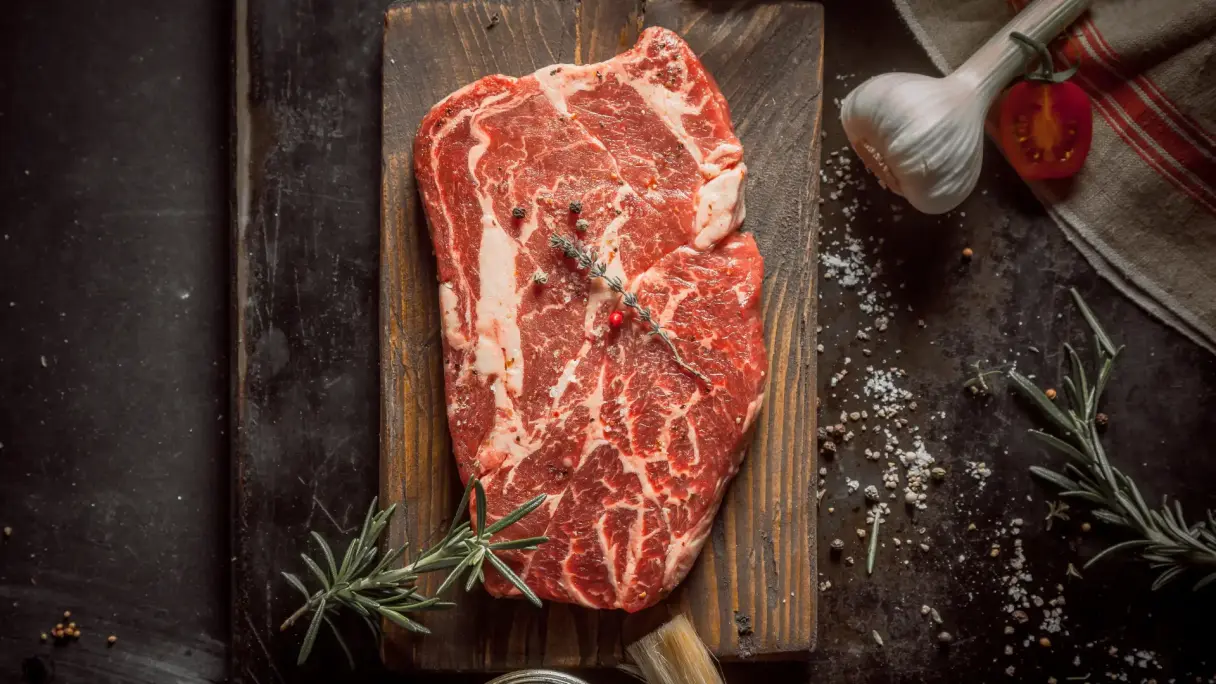
The different types of steak depend on the breed of cattle, rearing, age and many other factors. Which cut of beef is chosen for what purpose is also crucial. But before we go into more detail about the anatomical characteristics of beef and its peculiarities, here’s some basic background information: cattle can be classified by age and sex, so there are young bulls, steers, heifers or cows. The beef that is used for most types of steak comes mainly from fattening young bulls, which have a fine-grained, tender and juicy meat.
So which breeds of cattle are used for meat production? These are so-called meat breeds. They have a particularly high meat yield with a better structure – in contrast to dairy cows. Examples of meat breeds are the Pinzgauer breed of Austrian-Bavarian origin, the French Charolais or the Scottish Highland cattle. The Wagyu cattle is also particularly well known. This meat is considered an absolute delicacy due to its fine grain and fat marbling, which has an incomparable, slightly nutty taste and melts like butter in the mouth. The nutritional values of this type of meat and steak are also particularly good. Kobe beef also refers to cuts taken from Wagyu cattle, but these cattle are reared in the Kobe region of Japan. The animals are reared in a stress-free environment and with special care, which is why the meat is considered tender, but has a really high price. In addition to the breed, the anatomy of the animal also plays a major role in the different types of steak.
The best cut of beef for different types of steak
After all, beef offers numerous cuts from which delicious meat dishes can be conjured up using the right preparation method. As a general rule, meat from parts of the animal that is more often in use has coarser muscle fibres and is therefore more suitable for longer cooking methods. This includes poaching – such as boiling in salt water – or braising, in which the meat is first seared and then cooked over a long period of time in liquid. Tender cuts of meat tend to come from lower-stressed parts of the animal, such as the insides of the haunches or the back of the beef. These cuts of meat are also suitable for quick pan-searing.
Depending on the type of steak, different cuts of meat are ideal. Ribeye steaks, for example, come from the well marbled prime rib – juicy and flavoursome. Rump steaks come from roast beef and are somewhat leaner. Fillet steaks are particularly tender as they are cut from the loin, which is hardly strained at all. A little stronger: the flank steak from the belly loin – a real insider tip if prepared correctly. The entrecôte from the medium roast beef scores points for its flavour and structure. Important: steaks should be at room temperature before being cooked. If you store them in the fridge, it’s advisable to take them out at least one hour before cooking. The following applies to the storage itself: vacuum-packed in the Meat & Dairy safe at 0–4 °C in the fridge, they will stay fresh for several days. Alternatively, high-quality steak can also be frozen – ideally in airtight packaging immediately after purchase. The freezer will preserve the quality of the various types of steak until you fire up the barbeque again.
This might also interest you
Can you freeze barbecue meat and barbecue it again?
Want to have a barbecue but the meat is still frozen? Read on to find out why defrosting is better and about the ideal way to freeze barbecue meat in advance.

Which barbecue suits me and my taste?
Summer is just around the corner and you're asking yourself ‘Which barbecue is right for me?’. Read on to find out what the right barbecue for you is.