

Mikkel Karstad in interview: Danish chef, culinary consultant and author
Mikkel Karstad embraces a return to what truly matters: seasonal ingredients, local produce and the joy of cooking together. After years in Michelin-starred kitchens in Paris and London, the Danish chef and author chose a life closer to nature and family. In this interview, he reflects on how his childhood shaped his food philosophy, why vegetables remain his greatest source of inspiration, and why understanding ingredients is more important than ever. A conversation about flavour, sustainability and the art of making simplicity extraordinary.
The key points
- Career: From the hectic everyday life of a Michelin-starred chef in Paris and London to a more conscious, family-centred life
- Philosophy: The appreciation of fresh ingredients forms the basis of high-quality cookery
- Vegetables: A central source of inspiration and the focus of his cookbooks
- Seasonality: Regional products in harmony with the seasons as the key to quality and sustainability
- Community: Cooking and eating as a unifying experience across generations
"Your love for food, where did it come from?"

Mikkel Karstad: "My interest in food came really early. I was four or five years old, helping my grandmother out in her garden, harvesting and cleaning vegetables. That, and preparing fresh fish and game my uncle hunted."
"How did her mindset influence your own approach to food?"
Mikkel Karstad: "The way she handled ingredients was a big inspiration. When I started as a chef, I wanted to do fine dining and French cuisine. But after some years I found it more interesting to work with local ingredients – what’s close to you – and to follow the seasons. That came from my grandmother: use what you have in your garden or around you."
"Speaking of fine dining – you worked in high-end kitchens for many years. How did that experience shape you?"

Mikkel Karstad: "The first kitchens I worked in were high-end restaurants in Copenhagen. I started when I was 17, just after school. I wasn’t that good in school, but I was actually really good in a kitchen. In Copenhagen and London I worked in Michelin-star restaurants. With great products and high creativity, but also long hours and a lot of pressure. I loved the adrenaline and the people."
"What made you leave?"
Mikkel Karstad: "When my wife and I decided to have children, I knew it was difficult to combine family life with high-end restaurants. I love working with food, working with nice ingredients, making food for people, and seeing how much joy it gives. So I looked for places where I could work during the daytime and that were more compatible with family life. That led me to run the kitchen at the Danish Parliament, cooking for around 1,200 people. Very different, but still full of responsibility, learning and great ingredients."
"You speak a lot about ingredients, and your cookbooks also revolve around them. How would you describe your relationship to ingredients?"
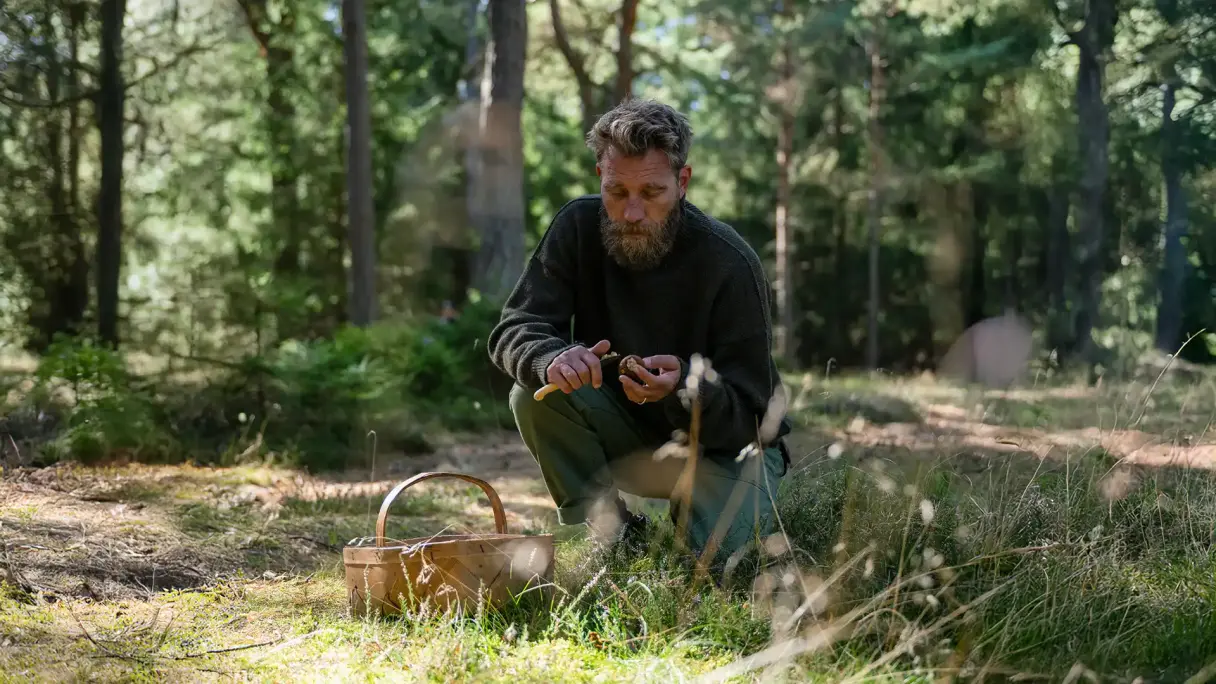
Mikkel Karstad: Ingredients are my biggest source of inspiration. When I see a carrot, a cabbage, or a mushroom, I immediately start imagining different ways to cook it. Often people buy a seasonal vegetable, like fennel, because it looks great and is affordable, but they only know one way to prepare it. My books aim to inspire people to cook the same vegetable in different ways, so you could eat the same ingredient for five days but in five different ways. It helps people use what they buy in season without waste.
"Why vegetables?"
Mikkel Karstad: "I love cooking with vegetables; I’ve written five cookbooks on them. They are fascinating because they change so much throughout the year. Take a carrot: in May, early spring, it’s tiny and light in flavour, very juicy. If you’d harvest the same carrot in November, it tastes completely different. Understanding when they taste best and how to use them fully is what keeps cooking inspiring for me."
"So, seasonality and regionality are important?"
Mikkel Karstad: "Absolutely. Cooking with ingredients that are in season and grown nearby just makes sense. They taste better, they’re fresher, and they last longer because they haven’t travelled across the world. And when something is at its best, you naturally want to use all of it – which makes it easier to avoid food waste."
"You cook a lot with your family. Why is that important to you?"
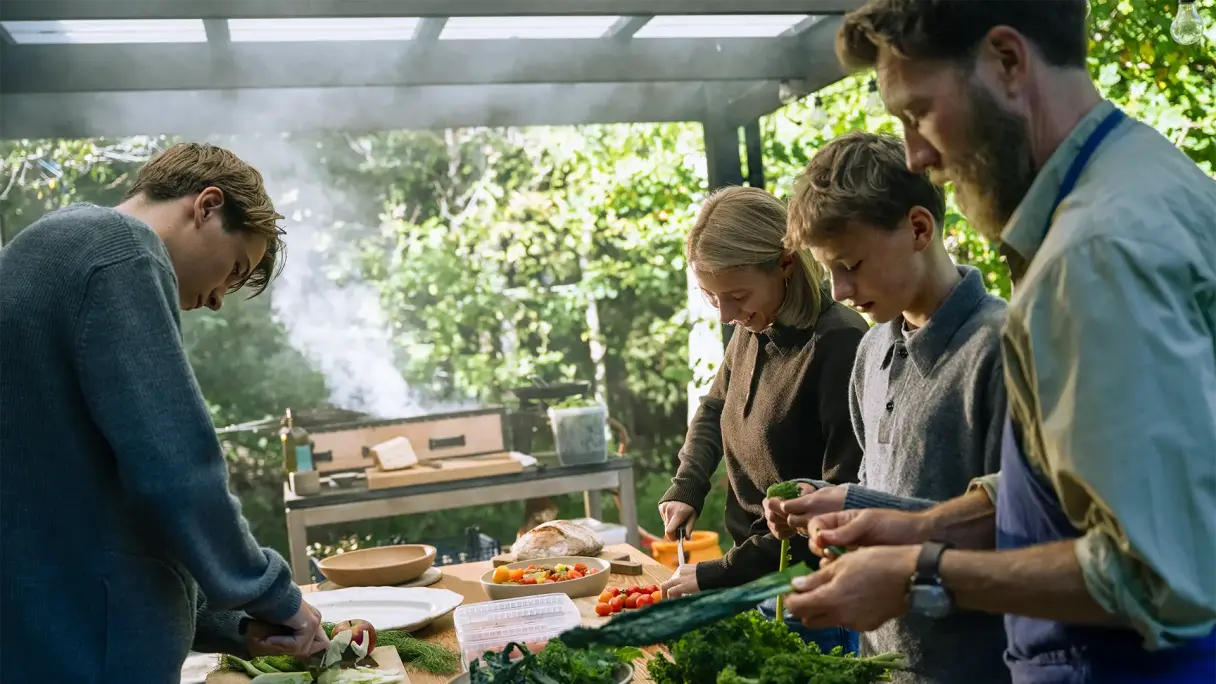
Mikkel Karstad: "Cooking together brings us closer. My children are bigger now, so it’s mostly on weekends or holidays at our summer house. For my children, it’s part of being here. On holidays, a big part is finding or harvesting things together and cooking them. They’re all pretty skilled in the kitchen, which I think is nice because not many young people can cook. It’s a gift to be able to make your own food."
"What do you hope the next generation learns about food?"
Mikkel Karstad: "Food is important for health. And almost everybody enjoys sitting down for a nice meal. It brings people together. It’s a good way to travel and meet other cultures – to sit at a table with people you don’t know. Food is a very nice way to get to know each other. And food is joy. I hope my children – and younger generations in general – stay curious about where ingredients come from and how to use them."
This interview was conducted at Mikkel’s summer house North of Copenhagen. His latest cookbook, „A Nordic Feast“, published by Penguin Random House in 2024, is available in bookstores.
This text has been machine translated from English.