Indoor herb garden – the best way to grow herbs!
You don’t have a garden but you’d still like to enjoy fresh herbs all year round? Then an indoor herb garden or growing herbs on the windowsill is the perfect solution for you! Read on to find out what to be aware of when growing herbs at home and which types are especially suitable as culinary herbs on the windowsill.
The key points
- Choosing the right location: a windowsill with lots of sunlight is the perfect place for growing culinary herbs
- Small containers with drainage holes to prevent waterlogging work best for growing herbs on the windowsill
- Selecting the right soil and fertiliser is also essential to be rewarded with a bountiful harvest
- Perennial herbs should be placed in a dark, cool place during the winter, ready to be repotted in the spring for a new lease of life
Indoor herb garden: guaranteed success
Maybe don’t have green fingers but you still want to grow your own herbs. Then an indoor herb garden is the perfect solution. This could be a small garden of plant containers or a complex system, which can be used to grow herbs or vegetables all year round, all within your own four walls.
Unlike conventional gardens outdoors, where the growth of plants depends on sunlight and the weather, a smart indoor herb garden offers a controlled environment, where the temperature, humidity, light, and soil conditions can be optimally aligned to the needs of the plants. So there is no need to worry about your beloved herbs, even if you go on a long trip or if the outdoor temperature drops dramatically.
Some herb gardens use hydroponic technology, where plants grow in a nutrient-rich water solution, while others use traditional soil plants. Most indoor herb gardens require an adequate light source to promote the growth of plants, since indoor spaces tend to offer insufficient natural light. LED lamps are a popular choice, as they offer the right spectrum of light for plant growth and use less energy than conventional incandescent lamps. The only disadvantage of these all-round care-free gardens is that, in most cases, you will need to dig deeper into your pocket!
Culinary herbs on the windowsill
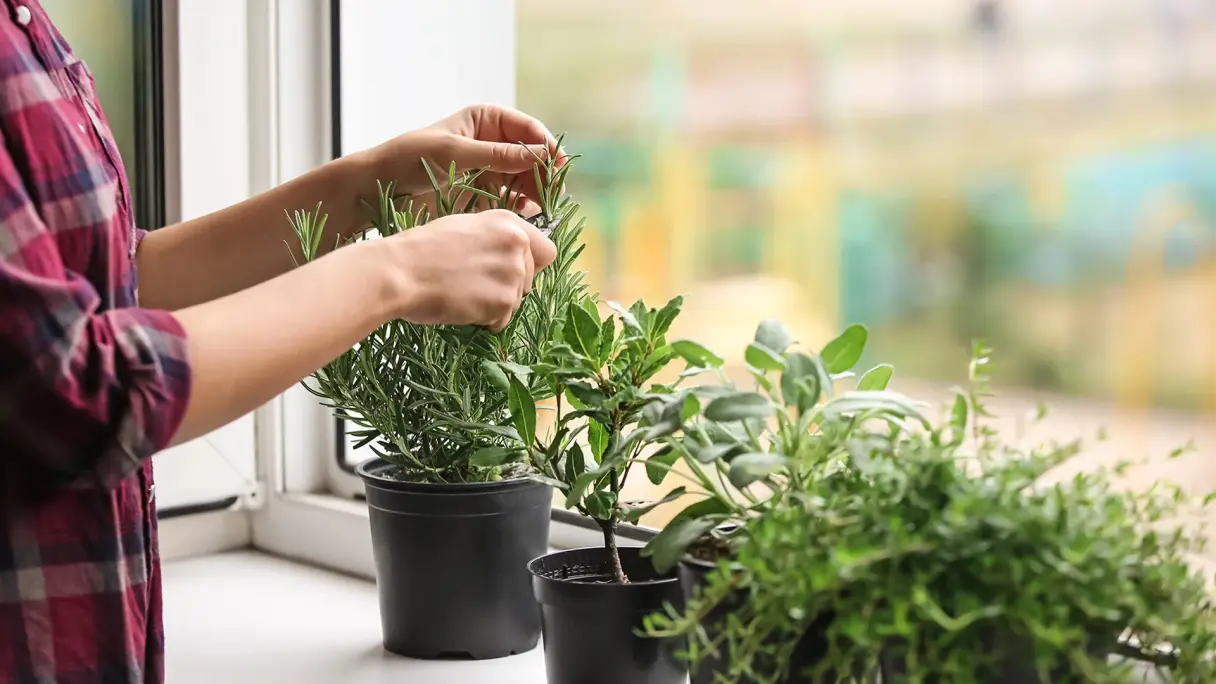
Tend to your herbs regularly so that you can enjoy them for a long time to come.
You may find indoor herb gardens too expensive, or would prefer to care for your herbs yourself. If this is the case, then we recommend growing herbs on your kitchen windowsill – as you can then use your home-grown herbs directly in your cooking. However, there are some aspects to consider in order to be rewarded with a bountiful harvest.
Choosing the right windowsill for growing herbs
First of all, selecting the right location is crucial. Many windows now have double glazing and coatings, meaning they no longer allow the entire light spectrum to pass through to the inside. Therefore, we recommend choosing a windowsill where herbs will receive as much sunlight as possible. If you would prefer to have your herbs in the kitchen ready for cooking but your kitchen windowsill is in the shade, then you could also use an artificial light source, such as a grow light.
Suitable containers for growing herbs on the windowsill
Another factor to be considered is the use of suitable plant containers. Since space on the windowsill for your herbs is generally limited, smaller containers tend to be the most suitable option. You can generally plant your herbs in almost any container, as long as it has drainage holes to release excess water. So pots, dishes, baskets, or even recycled items such as cans or bottles are all suitable options. Simple ways to creatively design your DIY herb garden are explained in more detail later on.
Soil, water, nutrients, and breaks over the winter for your windowsill herbs
The right soil and sufficient fertiliser are essential for your culinary herbs to thrive. Ideally, you should use soil specifically for herbs, as this retains water and important nutrients for the plants for as long as possible. Fertilise your herbs occasionally to ensure that they receive enough nutrients. During the winter, perennial herbs should be given a break and thus placed in a dark place with temperatures around 0 °C to allow them to overwinter. This enables the plants to grow even better the following year. Ideally, you should repot culinary herbs in the spring so that they can receive this new substrate.
Herbs in the home: which varieties are suitable?
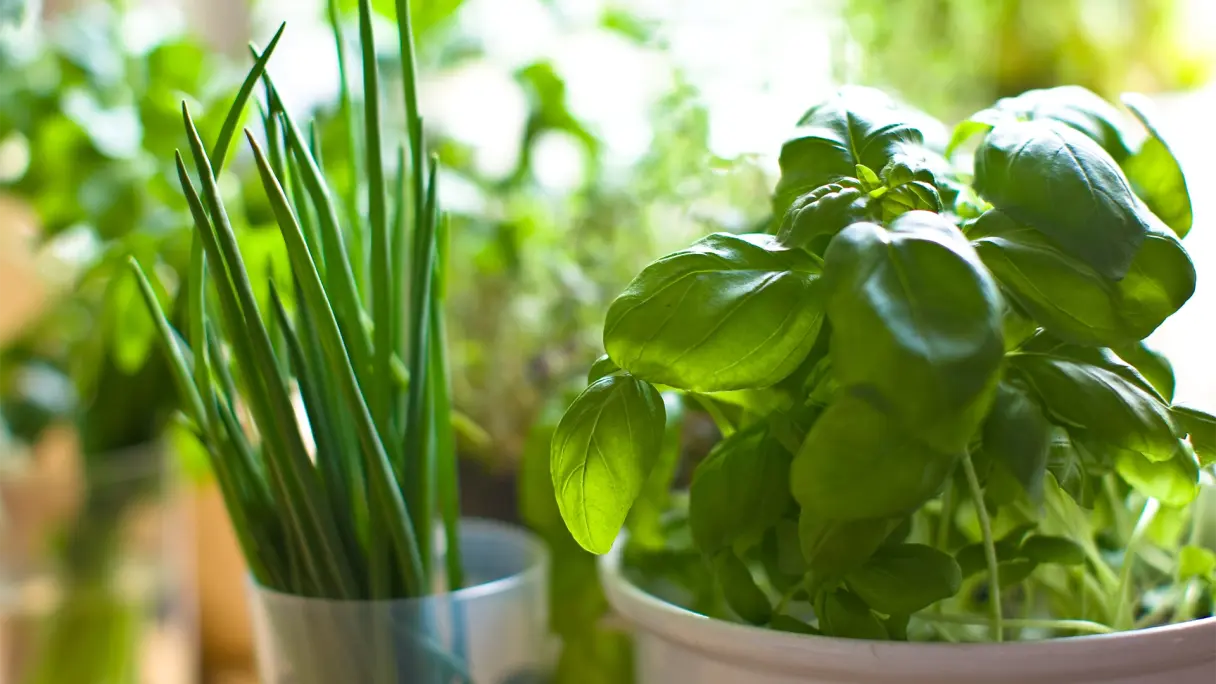
Basil can be easily grown in your home.
Once you have decided to grow your own herbs, you then need to decide which varieties to grow within your own four walls. First the good news: most herbs are suitable for growing in the home and are relatively undemanding. The four best-known and popular varieties are detailed below:
- Basil: basil is one of the most commonly used herbs for growing indoors, as it tastes so good when it is fresh! It requires lots of sunlight and regular watering. When harvesting basil leaves, you should always snip then stem above a new pair of leaves so that new leaves grow again in the same place.
- Chives: chives are a perennial herb and are undemanding in nature. You should have no problems with this herb as long as you make sure to regularly water and fertilise the plant. A well-lit location is also beneficial. When harvesting, cut the stems down as low as possible.
- Parsley: parsley prefers a warm place that is partly shaded without direct sunlight. Regular watering and fertilising is essential here too. It is a biennial herb, meaning you can enjoy it the following year too!
- Mint: none of the aforementioned herbs grow as quickly as mint. Regular pruning to keep the herb in shape is therefore also important, alongside regular watering. Since mint dries out quickly, it is recommended to choose a partly shaded location.
Of course, there are many other varieties of herb that also grow wonderfully on the windowsill, such as coriander, thyme, oregano, rosemary, or cress, so you can make your decision based on your taste preferences. You should always keep the needs of each plant in the back of your mind too, to ensure optimal conditions.