


Fruit flies – how to get rid of them
Fruit flies are exceptionally annoying. On the hunt for food, they float through our kitchens and land on our leftovers, but also on fresh fruit. Their constant hovering is irritating, And once they find our fruit, it all inevitably ends up in the bin. But we don’t have to be at the mercy of these uninvited visitors. These tips will help you say goodbye to the fly.
The key points
- Fruit flies can smell fruits, open cartons of juice and kitchen waste from a long distance away.
- They can make their way into the kitchen through egg deposits on fruit that you buy.
- Fruit flies spread yeast and putrefactive bacteria that make our food spoil faster.
- The fridge is an effective tool that helps in the battle against fruit flies.
- As a remedy to help with this issue, food should be kept in the fridge or covered up; cleanliness and regular ventilation is also important.
- Certain scents such as clove oil, basil or sandalwood will repel fruit flies and help keep them at bay.
Fruit flies – how to get rid of them – list of contents
Where do fruit flies come from anyway?

Fruit flies love fresh fruit. We’ll show you how you can quickly get rid of them so you can enjoy eating your fruit without worrying.
It seems like they’re born from the ether. Then they’re just there. But where do the fruit flies actually come from? There are two answers to this. One, they smell fruit, open juices or kitchen waste even from several metres away. Then all they need is an open window to end up at their destination. A second possibility is that we introduce their egg deposits into our kitchen via fruit, which we either bought in the shops or have brought from the garden. Fermenting, rotting fruit is the ideal place for their eggs. Hundreds of flies can quickly hatch there.
Even though the tiny flies pose virtually no health hazard, they spreadyeastsandputrefactive bacteria that make our fruit spoil faster. And fruit infested by flies is not very appealing. However, if your fruit is neither rotten nor spoiled, it is definitely still edible. The transmission of diseases is thought to be very unlikely. A bit of running water and a thorough washing is all it takes to prevent the ingestion of fly droppings.
Prevention is better than contention
To keep things from going that far, there are a few things you can do. Do not leave juices and wine open and dispose of rotten fruit. Ripe fruit can be kept in the fridge, where it’s much too cold for fruit flies. An additional advantage: the tiny insects have a hard time hatching from eggs at those temperatures. The colder the fruit, the slower the larvae develop. For example: the temperature from 25 °C to 20 °C doubles the flies' reproductive period from 15 to 30 days. With the significantly colder temperatures in a fridge, it is almost impossible for the eggs to hatch. Thus, the humble fridge is a perfect partner in the fight against the flies. You can find out which fruit likes to be in the fridge and other storage tips here.
You can protect fruit outside your fridge from these pesky pests with a cotton cloth or a close-meshed fly cap. If you have eliminated all other attractions, regularly airing out your home will remove fermenting gases that otherwise keep the flies inside. Other anti-fly hygiene measures include the timely emptying and thorough cleaning of waste containers and promptly washing any used dishes. We have further tips on the subject of hygiene in the kitchen for you here.
And it’s au revoir to our obnoxious guests
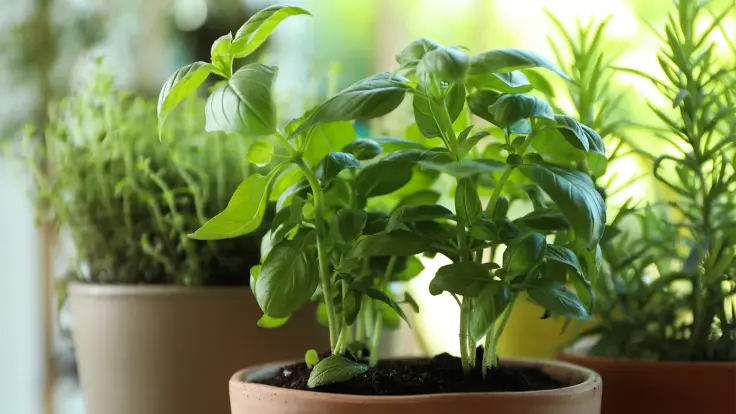
Fresh basil not only spices up any dish, but also helps to dispel fruit flies.
As luck would have it, we can usually get rid of the pests as quickly as they come. A popular but controversial possibility are so-called fruit fly traps, which anyone can easily make. However, critics note that the traps can lure new fruit flies into the kitchen. The traps consist of a mixture of juice, vinegar and a shot of washing-up liquid in a bowl. The detergent causes the attracted flies to drown in the mixture. Our tip: if the infestation is severe, this method is worth a shot, otherwise the following methods are the first choice.
The most effective way to get rid of fruit flies is to take away their bread and butter, so to speak. The same measures are recommended here as for preventing an infestation in the first place. Put fruit in the fridge or under a cover. Make sure it is clean and well ventilated. In addition, scents can help drive away fruit flies. Clove oil, basil or sandalwood are among the turn-offs for our uninvited visitors. Carnivorous plants can also help to keep the fly population in check.
This might also interest you

Tips to prevent food waste – too good for the bin!
Discover three tips to prevent food waste and save in the long run. Read how you can budget smart and conserve resources!

Five tips for reusing food waste
Food upcycling: we’ll show you how you can turn food that you would otherwise throw away or leftovers into delicious dishes.

Preserving food in the fridge for longer
Most foods can be preserved for longer if they’re stored in the fridge. This is why cool temperatures have an impact on the shelf life of food.