Schnitzel – more than just a classic dish
Wiener schnitzel and Viennese-style schnitzel – is there actually a difference between them? And what exactly is Berlin schnitzel? Read on to learn all about the different types of schnitzel, their nutritional values and calories, as well as tips on how to prepare and bread them. Find out whether schnitzel is healthy and how to store it properly.
Storage time*
| BioFresh Meat & Dairy safe just above 0 °C with low humidity | 6 days |
| Fridge compartment 7 °C | 1 days |
| Freezer compartment -18 °C | 8 months |
The key points
- Types of schnitzel: Wiener schnitzel, schnitzel Viennese style, Berlin schnitzel.
- Nutritional values: lean meat with about two percent fat, but high fat absorption due to the breading.
- Health: enjoy schnitzel in moderation, as it contains high-quality protein, but includes a lot of fat because of the breading.
- Preparation: pounding, breading and frying are the most important steps.
Types of schnitzel: from the Wiener to the Berliner schnitzel
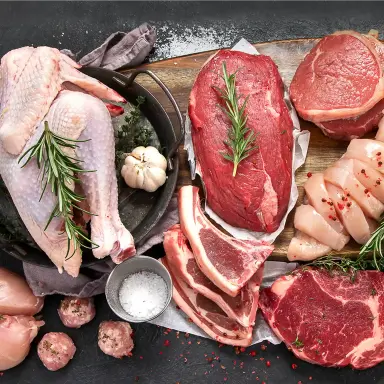
There are many variations of schnitzel, which differ in the type of meat used and how they are prepared. The most famous is the Wiener schnitzel, which is made from veal. If you have a veal schnitzel on your plate this is usually a topside cut of veal. This comes from the leg – an especially tender, high-quality and therefore also expensive piece of meat.
A cheaper variant is the schnitzel Viennese style, which is often made from pork or chicken. For pork, schnitzel is from a topside or silverside cut and for chicken from the breast.
The Berliner schnitzel, made from cow’s udder, deserves a special mention. This variant was regarded as a cheap alternative in the GDR and represented a practical use of udders, which are often discarded as leftover meat in many places.
Schnitzel: nutritional values and calories
Meat usually contains high-quality protein and generally has a fat content of only about two percent when prepared from lean meat for schnitzel. However, fat absorption increases due to the breadcrumb coating, which absorbs a lot of oil during frying. This is why it’s important to enjoy schnitzel in moderation. Combine healthy side dishes, such as salad or vegetables, with your schnitzel to make the meal more balanced.
Breading the schnitzel: here’s the perfect method
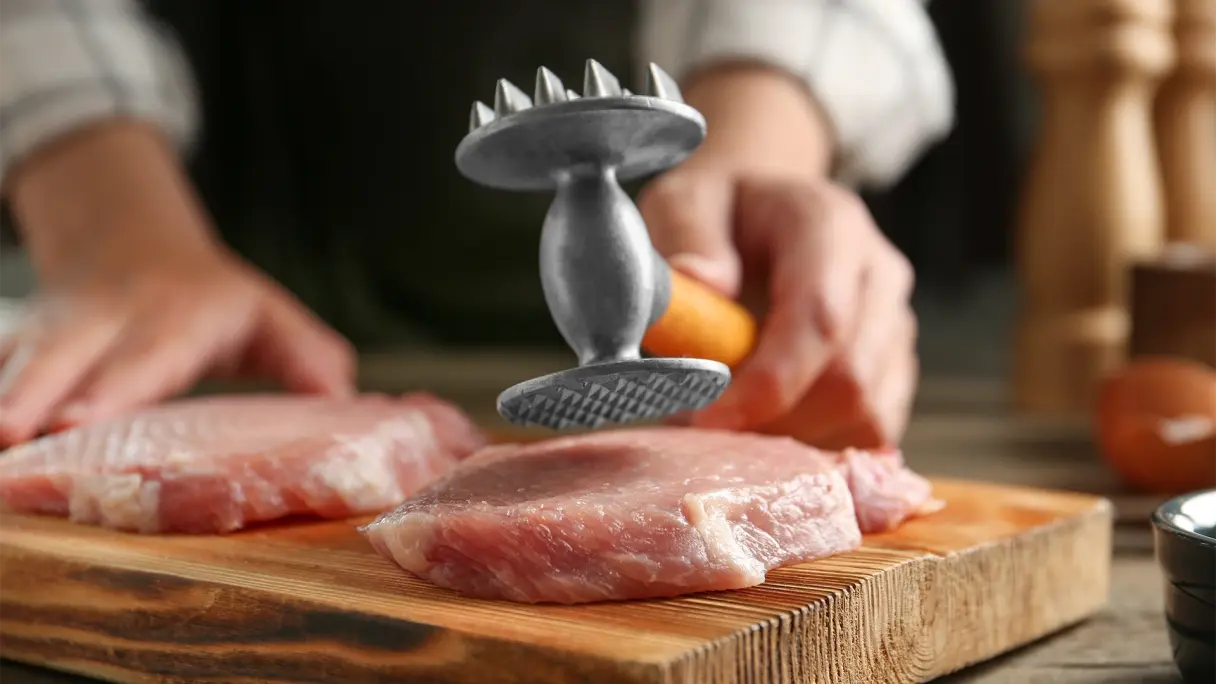
The breading of schnitzels is a crucial step in achieving a crispy crust. First, the meat is pounded to achieve an even thickness.
Then the schnitzel is coated in flour, dipped in beaten egg and finally coated with breadcrumbs. An interesting variation is to add grated hard cheese to the breadcrumb coating to give it extra flavour.
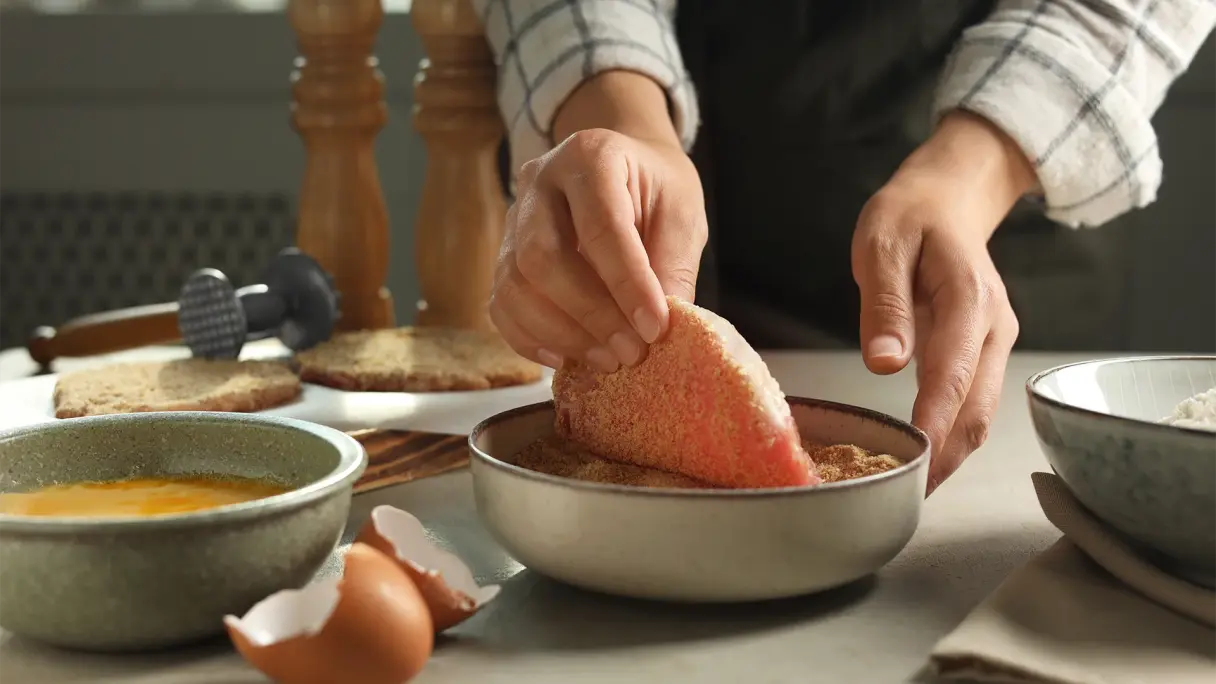
Preparing schnitzel
The preparation of a perfect schnitzel begins with frying. The pan should be hot to ensure that the crust is crispy. Clarified butter is ideal because it can be heated to high temperatures and goes well with schnitzel. Refined and neutral-tasting vegetable oils, such as sunflower or rapeseed oil, can also be used as an alternative.
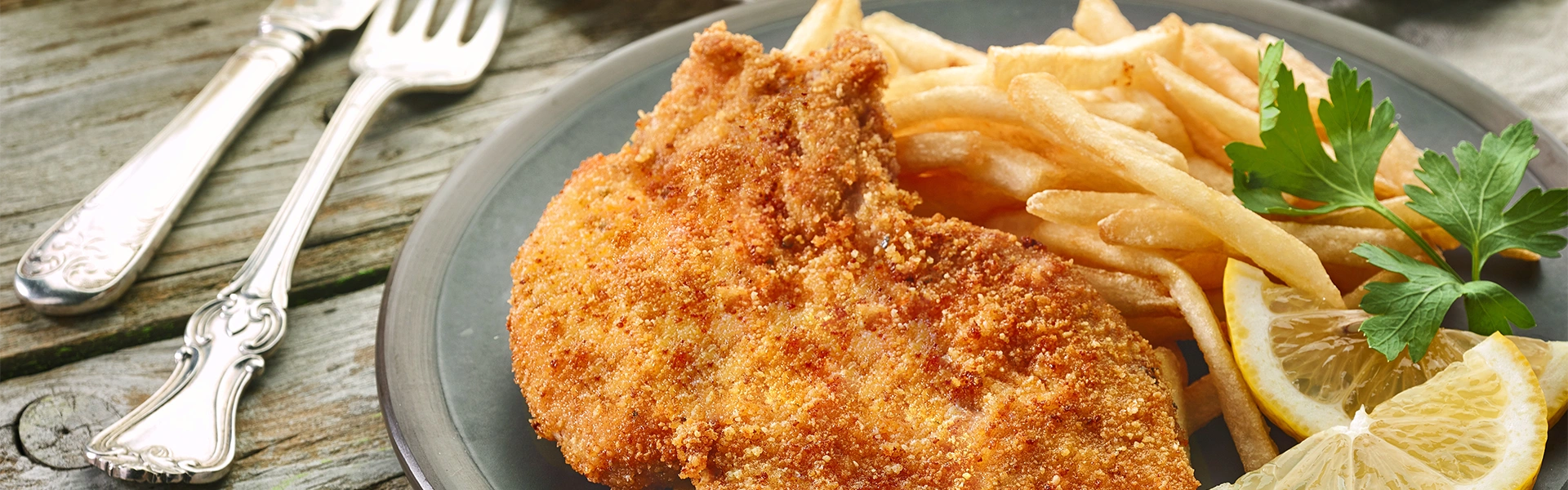
Cooked schnitzel is traditionally served with a slice of lemon. This is not necessary, but it is tradition: in the past, the intense lemon flavour distracted from the taste of poor-quality meat or rancid fat.
*All specifications given are to be considered as guideline values, and depend in each case on the type of foodstuffs and on the proper storage without interruption of the cold chain from harvest/production through to the Liebherr appliance. Should food products have information about minimum shelf life, the date on the packaging always applies.