Green salad – all about vitamins and storage
Whether classic garden salads such as iceberg lettuce and head lettuce or rocket, red endive, etc.: there is a wide selection of different types of lettuce. The varieties are as diverse as their nutritional content. Find out which vitamins are contained in green salad despite its high water content, how you can get the most out of the delicate leaves for as long as possible, and read lots more tips here.
The key points
- Green salad contains provitamin A, B vitamins, vitamin C, magnesium, potassium and sodium.
- Low in calories: With only approx. 11 calories per 100 g, it is ideal for a healthy diet.
- Firm lettuce varieties such as iceberg or romaine lettuce have a longer shelf life. Look for freshness, a light-coloured core and seasonal produce.
- Lettuce is best wrapped in a damp cloth with lemon juice/vinegar and stored in the fridge – away from ethylene-containing fruit.
- Homemade dressings are healthier than ready-made varieties, which often contain sugar and fat.
Green salad: these vitamins and minerals are hidden inside
For a long time, it was believed that lettuce was not very nutritious for human consumption due to its high water content of up to 95 %. However, the remaining five percent contains a lot of valuable vitamins, fibre and minerals, making lettuce a valuable addition to a balanced diet. In terms of vitamin content, lettuce is particularly rich in provitamin A, B vitamins and vitamin C. For example, just 100 g of field or head lettuce covers the daily requirement of vitamin A from the provitamin precursor and about half of the daily requirement of vitamin C. In terms of minerals, many types of lettuce are rich in magnesium, potassium and sodium.
Low-carb fans also enjoy healthy lettuce varieties, as they are extremely low in calories, with around 11 calories per 100 grams. But be careful: ready-made dressings from the supermarket often turn out to be real calorie bombs due to their high fat and sugar content. It is therefore best to prepare your own dressing, opting for a classic balsamic vinaigrette, a mild honey and mustard dressing or a light yoghurt dressing without cream.
Types of lettuce: what to look out for when shopping
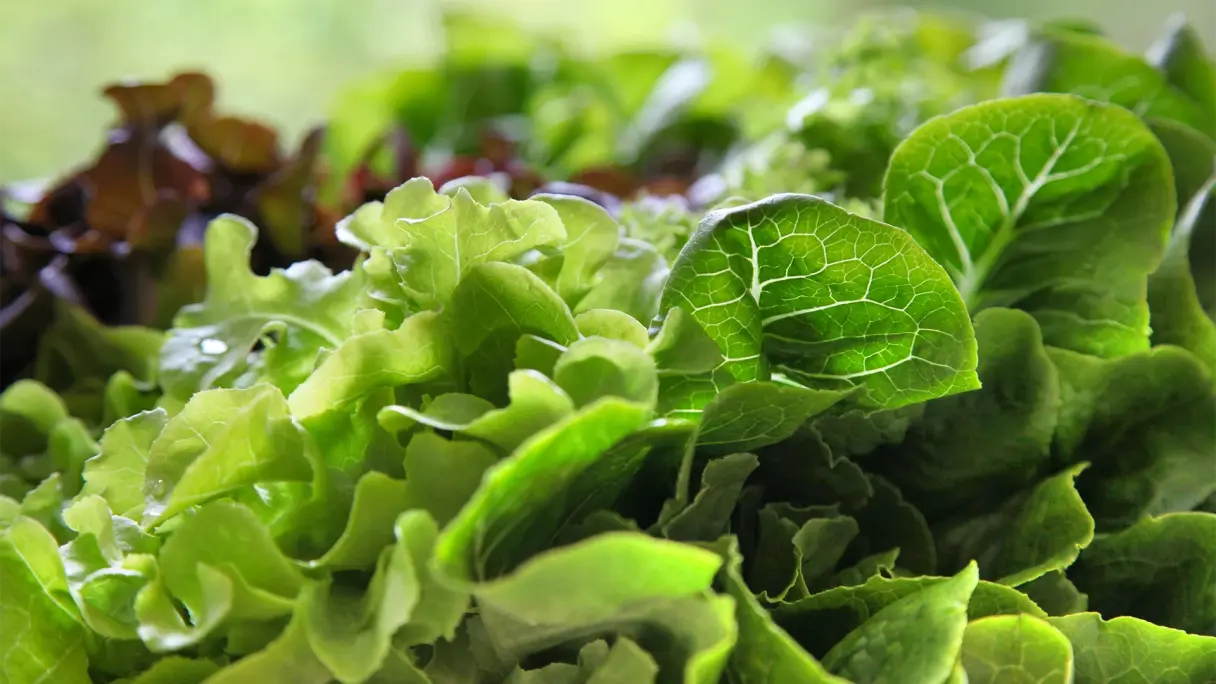
We've all been there – the lettuce has only been in the fridge for a few days, but it already looks pretty old. Due to the delicate structure of the lettuce leaves, it is unfortunately very sensitive and therefore quickly becomes limp and wilted. However, we have a few tips to help you delay this process.
Generally speaking, the firmer the leaves, the better the lettuce is for storing. The firmer varieties include iceberg lettuce, red endive and romaine lettuce.
When shopping, it is worth looking out for seasonal and regional lettuces, as these have shorter transport routes and are therefore fresher, contain even more nutrients and are also good for the environment! Another tip: when buying lettuce, take a close look at the core. It should be as light in colour as possible and free of brown or black spots. A whole head of lettuce also keeps longer than pre-cut mixed salads, as these offer much more surface area for bacteria to grow.
Preserving vitamins in green salad: storing properly is key!
Once you have selected the best-looking lettuce, how you store it will determine how long it stays fresh. Before storing the green leaves in your fridge, remove any brown spots and wilted leaves. If the lettuce is sealed in packaging, you do not need to remove it completely, but it is advisable to open the packaging, as the lettuce will otherwise spoil very quickly in its own moisture. To slow down the ripening process even further, it is also advisable to wrap the lettuce in a damp cloth with a few drops of lemon juice and vinegar. This will cause it to wilt more slowly and preserve the healthy nutrients and vitamins in the green salad for longer!
Afterwards, store your lettuce in the BioFresh Fruit & Vegetable safe. Your leaf lettuce and head lettuce will keep for up to 13 days, and the even more robust iceberg lettuce will keep for a whole 20 days! It is best to avoid storing lettuce near fruit and vegetables that release high levels of ethylene, such as tomatoes, avocados and apples. Lettuce is also not suitable for freezing, as the leaves become mushy after defrosting due to their high water content and are therefore no longer edible.