Gooseberries: nutritional values, calories and vitamins of the fruit
As well as the red soft fruit stars, such as strawberries, redcurrants and raspberries, a green berry can also conquer our hearts in summer – the gooseberry. With these nutritional values it may well become the star of your breakfast. But where does it actually come from? What vitamins does it contain? And what about the energy content of gooseberries? Answers to all these questions and much more can be found below.
Storage time*
| BioFresh Fruit & Vegetable safe just above 0 °C with high humidity | 13 days |
| Fridge compartment 7 °C | 5 days |
| Freezer compartment -18 °C | 12 months |
The key points
- Rich in vitamins and dietary fibre: Gooseberries contain a lot vitamin C, organic acids and dietary fibre – ideal for the immune system, digestion and metabolism.
- Low energy content: at around 40 kcal of energy per 100 g, they are a light addition to a balanced diet.
- Healthy for your heart and circulation: potassium and flavonoids are good for your blood vessels.
- Fresh is best: gooseberries lose a lot of their healthy properties in jams and cakes, so they’re best enjoyed in their raw state.
Where are gooseberries from?
Originally, the gooseberry comes from Eurasia and North Africa. The first cultivated forms were developed from the wild form at the end of the Middle Ages, and various other varieties were subsequently cultivated.
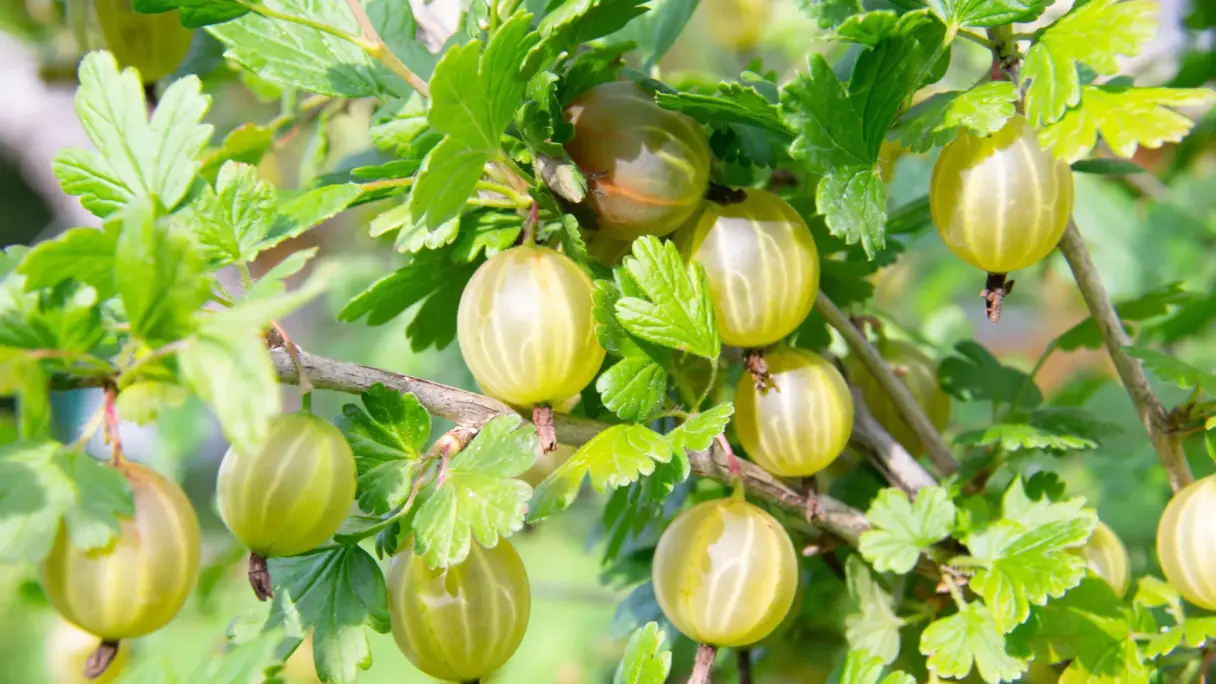
Gooseberries belong, as their name suggests, to the berry fruits. The one meter high, densely branched, thorny shrub is a plant from the saxifrage family. The tasty shrub-grown fruit is about the size of a cherry, with a partially hairy, translucent and firm skin. The colours vary between green, yellow and red.
What vitamins do gooseberries contain?
The berries are rich in organic acids (e.g. malic and citric acid), fibre and vitamin C. Gooseberries also contain relatively high levels of calcium and iron in comparison to other types of fruit. However, in addition to these nutrients, gooseberries do have a high sugar content. With regards to energy, gooseberries contain about 40 kcal per 100 g.
What benefits can gooseberries have for your health?
Gooseberries can be beneficial for your health if they are eaten raw and unprocessed. One strength of the fresh berries is a high vitamin C content that boosts the immune system and protects cells from oxidative stress. Their dietary fibre also improves digestive health and makes you feel full for longer.
Gooseberries also contain vital minerals such as potassium, which helps regulate blood pressure. The fruit acids in the berries can stimulate your metabolism and help the body detox. Their secondary plant substances – in particular flavonoids – can have anti-inflammatory properties and offer many health benefits.
However, if you put the berries into a sugary jam or fat-rich pastry, they lose a lot of their benefits and become useless energy. Therefore you should reach for the raw variants to ensure you are only getting the valuable nutrition from gooseberries.
Gooseberries are very perishable in a fully ripe state and must be processed immediately after harvesting. In the fridge at 7 °C, the berries will keep for five days. It is best to store your berries in a closed container. In the BioFresh Fruit & Vegetable safe in your Liebherr appliance, gooseberries will keep crunchy and fresh for as long as 13 days. This will let you enjoy the taste and nutrition of your gooseberries for as long as possible.
*All specifications given are to be considered as guideline values, and depend in each case on the type of foodstuffs and on the proper storage without interruption of the cold chain from harvest/production through to the Liebherr appliance. Should food products have information about minimum shelf life, the date on the packaging always applies.