Food Waste
Food is valuable – ecologically and economically
Food production has a major impact on the environment and climate. It is responsible for around one quarter of global greenhouse gas emissions — with methane playing a particularly significant role in accelerating climate change.
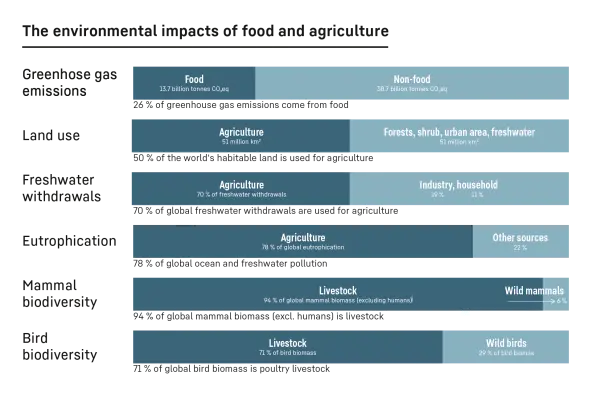
Data sources: Poore & Nemeck (2018): UN FAO; UN AQUASTAT; Bar-On et al. (2018). OurWorldinData.org – Research and data to make progress against the world‘s largest problems.
Food also occupies about half of the world’s habitable land and accounts for approximately 70 % of global freshwater withdrawals. Nutrient runoff from agricultural activity contributes to water pollution and eutrophication in both freshwater and marine ecosystems, driving habitat loss and broader ecological degradation.

Data sources: UNEP Food Waste Index Report (2024)
Why we need to rethink our relationship to food
According to an estimate by the United Nations Environment Programme (UNEP), in 2022 the world created an estimated 1.05 billion tonnes of food waste across retail, food service and households. This equates to 132 kg per person annually, with households alone accounting for 79 kg per capita — making them a major contributor to food waste.
What we do to reduce waste
Innovations that help store food better. We waste food. A lot of it. This has a significant environmental and economic impact and we need to rethink our consumption and the value of food. We celebrate food and have taken proactive measures to address this issue through innovative appliance design, customer education, and the promotion of energy-efficient appliances.
Our technologies to combat food waste
We have developed advanced freshness technologies to extend the shelf life of groceries, thereby reducing food waste.
Two separate cooling circuits prevent air exchange between fridge and freezer, maintaining optimal humidity and preventing food from drying out.
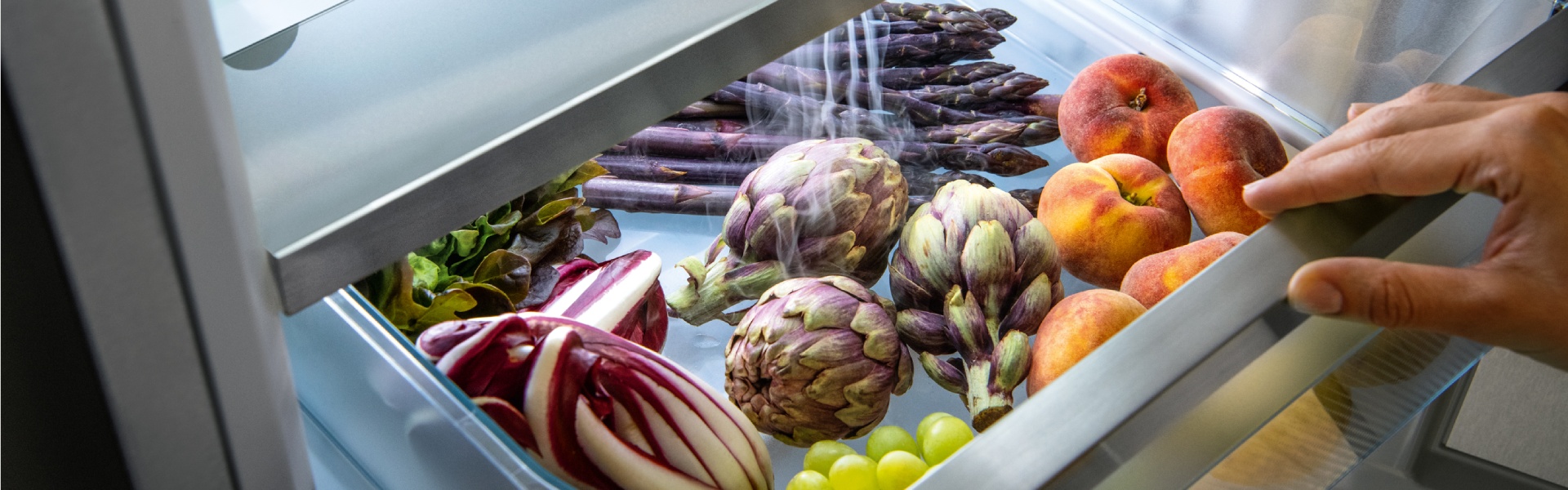
An airtight compartment keeps fruit and vegetables fresh for longer.
Near-freezing temperatures with controlled humidity extend the shelf life of fresh produce, meat, fish, and dairy.
Features like the Fish & Seafood Safe and BioFresh Professional safes double storage time for select food items.
Pictograms indicate the ideal storage zones, aligning with Ecodesign regulations to help reduce spoilage.
Making our voices heard
We believe in empowering our customers with the knowledge and tools to store food optimally, ensuring maximum freshness, taste, and nutritional value.
Comprehensive storage guide: Decades of research have led to storage recommendations for over 500 food items, ensuring optimal conditions to preserve nutrients, taste, and vitamins.
Collaboration with experts: Partnerships with universities and research institutions enhance our understanding of food storage, feeding directly into product development.
FreshMAG and Social Media: We share expert storage tips, food waste insights, and sustainability guidance across FreshMAG and Social Media, including Instagram, LinkedIn, and TikTok.
Corporate Responsibility documentation 2024
For more comprehensive insights, data and in-depth details, see our full Corporate Responsibility documentation.