



Capers: how healthy are they? What do capers go well with?
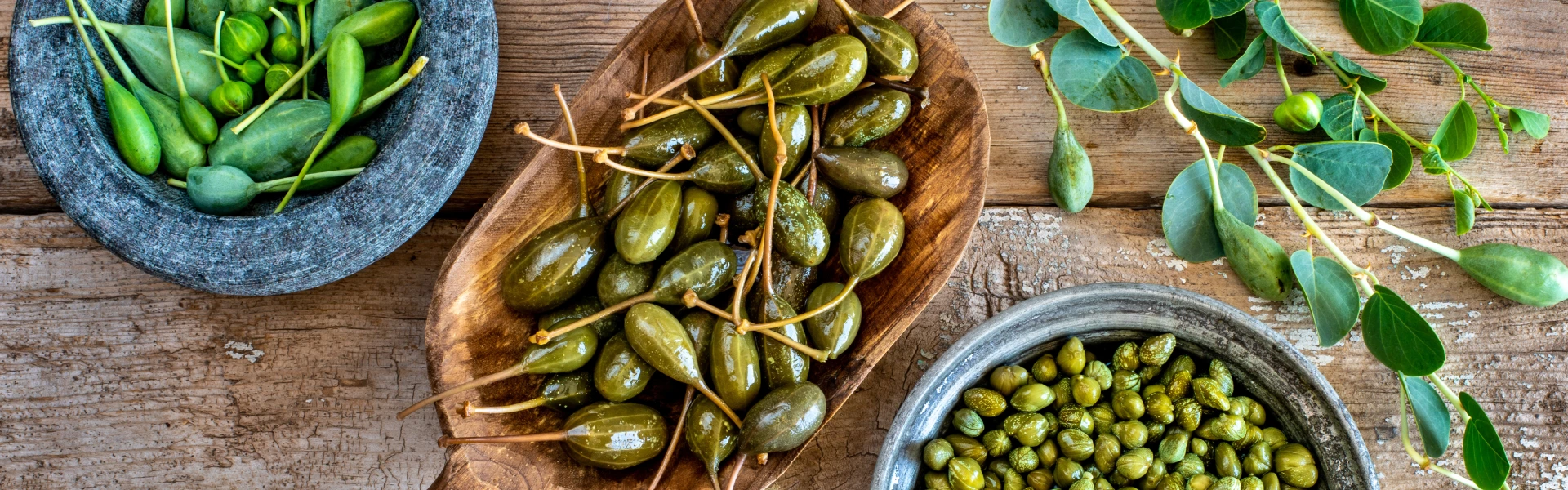
Capers are one of the most flavoursome ingredients in Mediterranean cuisine and give many dishes an unmistakeable seasoning. Around since ancient times, they originate from the Mediterranean region and are obtained from the unopened flower buds of the caper bush. Pickled in salt or vinegar, they develop an intense, slightly sour flavour with a bitter note that goes particularly well with pasta, fish dishes, or sauces. In this article, you’ll find out why capers are so healthy and get some tips on how to store them and use them.
Storage time*
| BioFresh Fruit & Vegetable safe just above 0 °C with high humidity | 60 days |
| EasyFresh safe 7 °C with air regulation plate | 60 days |
| Refrigerator compartment 7 °C | 60 days |
| Freezer compartment -18 °C | not recommended |
The key points
- Capers are antioxidant, anti-inflammatory, and boost your metabolism.
- Capers act as a fine seasoning to add a finishing touch to dishes, especially fish, pasta, and salad.
- Pickle them yourself: harvest the buds, leave them to wilt, then pickle them in salt or vinegar.
Why are capers so good for our health?
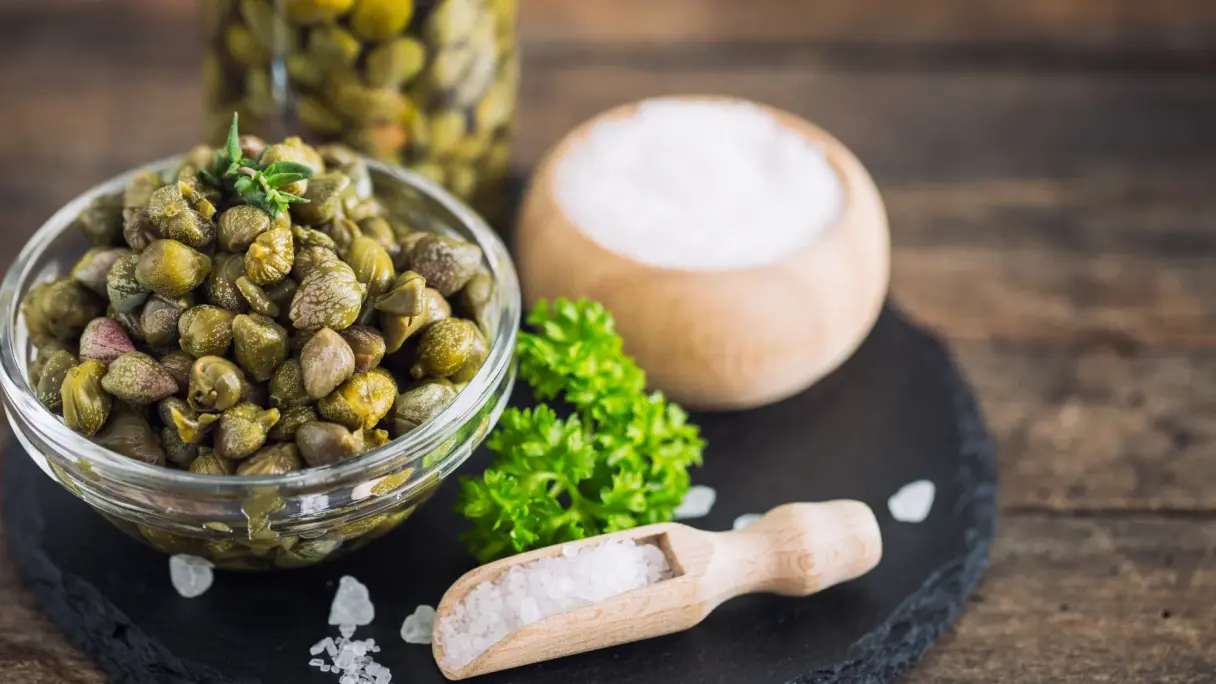
Capers contain plenty of natural plant substances, especially quercetin and rutin. These are two powerful antioxidants that can protect your cells from harmful influences. Studies show: if you regularly eat foods containing substances such as these, referred to as flavonoids, you can reduce inflammation in the body and make your blood vessels stronger.
Capers are also of interest for the metabolism: there are indications that they can help keep blood sugar and cholesterol levels better balanced. People who spend a lot of time sitting down or are frequently under stress in particular could benefit from eating them.
It is also exciting to note that capers have been used for centuries in traditional healing methods such as Ayurvedic medicine, including to strengthen the liver and treat digestive problems. Modern studies today confirm that many of these applications are effective.
Just one teaspoon of capers – sprinkled over pasta, salad, or fish, for example – is enough to provide the body with valuable organic substances. If you’re sensitive to salt, you should rinse them briefly or choose the unsalted varieties in vinegar. There is no set upper limit on how many capers you should consume each day. However, capers are extremely salty and should therefore be consumed in moderation.
Capers are a little luxury that not only taste great, but also help to keep you healthy. Perfect for anyone who wants to enjoy a health-conscious diet. 10–15 g of capers a day are enough to reap the benefits of quercetin and other substances. The quality of capers and how regularly you eat them are more important than the quantity.
What do capers go well with?
Capers give dishes that certain something extra, they go well with classic Mediterranean dishes as well as modern creations.
If you enjoy cooking, you’ll probably be aware that often all you need is one small ingredient to transform a good dish into an exceptional one. Capers are just such an ingredient. Their slightly sour-salty taste gives fish,pasta,salads, or sauces a fine, complex seasoning, almost like a natural flavour enhancer.
The small varieties such as Nonpareilles are particularly popular – they’re delicate, flavoursome, and perfect for fine dishes. When you are cooking, it’s best to add capers right at the end of the cooking process to preserve their aroma.
If you buy capers in salt, you should soak them briefly in water before you use them. This will remove their sharpness and bring out their delicate nuances better. Caper berries, the fruits of the caper bush, can also be enjoyed as finger food or in antipasti platters, for example.
Tips for enjoying at home:
- Capers in a lemon vinaigrette or a creamy yoghurt dip will create a fresh touch.
- They add depth to Mediterranean fish dishes (e.g. with sea bream or sea bass).
- Lightly seared as a topping on toasted bread – for a simple but refined snack.
Capers provide a fine flavour with real character. They bring a Mediterranean zest for life to your plate: elegant, versatile, and always a little bit special.
How do you pickle capers yourself?
With a little patience and the right buds, you can easily pickle capers yourself. Read on to find out how to create a handmade delicacy with a real Mediterranean vibe:
What we know as capers are the unopened flower buds of the caper bush (Capparis spinosa). If you have a sunny balcony or garden, you can even cultivate the undemanding bush yourself because it loves warmth, dry soil and doesn’t require much tending. Harvest the buds early in the morning, as soon as they’re plump but still closed.
Once the buds have been harvested, the capers are left to wilt at room temperature for 24 hours. This will cause them to lose bitter substances and go on to develop their full aroma. They are then pickled in high-quality sea salt or a mild vinegar brine, depending on your personal taste. The capers will ferment slightly and so develop their typical, pleasantly tangy note.
But you can also use young daisy or dandelion buds instead. They offer an exciting, regional alternative. Your own pickled capers aren’t just a culinary highlight, but also make a stylish gift, handmade, honest, and full of character.
Store the finished capers in a clean jar in the fridge. They can be stored there for several months.
*All specifications given are to be considered as guideline values, and depend in each case on the type of food and on the proper storage without interruption of the cold chain from harvest/production through to the Liebherr appliance. Should food products have information about minimum shelf life, the date on the packaging always applies.

This text has been machine translated from English.