


Storing cooked pasta: Shelf life in the fridge
Whether it’s after dinner or precooking food for the next day, storing cooked pasta in the fridge often throws up the question of how long it can be kept for. Pasta is one of the most popular staple foods and can be reused in many different ways. But to ensure food safety and preserve the taste and consistency of pasta that has already been cooked, it’s crucial to store it correctly. The following article tells you what is important when it comes to storage, how long cooked pasta can be kept for, and creative ways you can use pasta from the day before.
The key points
- Cooked pasta should be placed in the fridge very soon after it has cooled down
- Airtight containers will protect it from drying out and any foreign odours
- In the fridge, pasta can generally be kept for three to five days
- Pasta with a sauce will usually last for a shorter time than plain pasta stored on its own
- Leftovers can be reused in a variety of ways, for example in a bake or stir-fry dish
How long can cooked pasta be kept for?
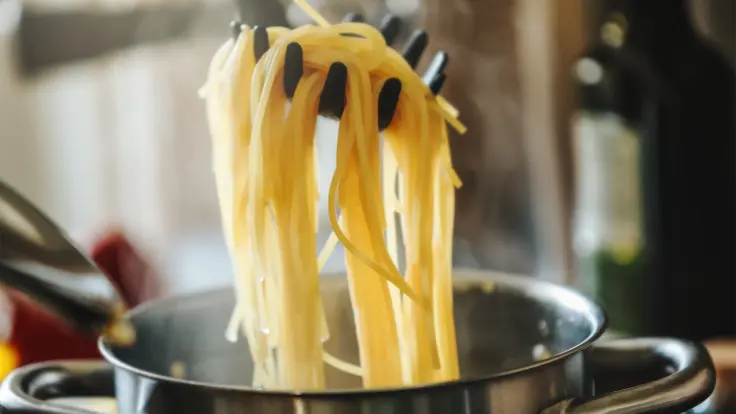
In the fridge, cooked pasta can be kept for around three to five days if it’s stored properly.
Cooked pasta is considered a highly perishable food as it contains a lot of moisture after cooking. At room temperature, bacteria will multiply very quickly, which is why, if possible, pasta should not be left unchilled for more than a few hours. The fridge is crucial for prolonging its shelf life. The low temperature inside the fridge will slow down the growth of microorganisms. The key is to let the pasta cool briefly after it’s cooked and then chill it quickly. If it’s stored in an airtight container, it can still be consumed for several days.
Any visible changes such as discolouration, pasta going slimy or a sour smell are indications that it’s gone off. Before eating the pasta again, it should always be fully heated through, ideally to at least 70 degrees, to kill off any potential germs.
What factors influence the shelf life of pasta?
The type of pasta, level of moisture, and any extra ingredients like a sauce will determine how long pasta can be kept for.
Not all pasta can be kept for the same length of time. Traditional durum wheat pasta performs best, while wholegrain pasta will go soft faster and can spoil sooner due to its higher water content. Homemade pasta will usually keep for only one to two days, and stuffed varieties such as ravioli or tortellini will keep for roughly three to four days – depending on what they’re filled with.
Sauces also have an impact: pasta with a creamy sauce will go off faster than pasta with a tomato-based sauce. Ideally, the pasta and sauce should be stored separately to increase the shelf life.
Hygiene also plays a role: clean utensils and containers will reduce the risk of any transfer of germs.
If these factors are taken into account, the shelf life can be estimated reliably and utilised in the best possible way.
What can you do with pasta from the day before?

Cooked pasta from the day before offers many options for reusing the leftovers creatively. One very popular option is to make a pasta stir-fry dish in which pasta is fried in a pan together with vegetables, herbs, and a source of protein.
Pasta bakes are also a really good option: pasta is mixed with sauce, other ingredients, and cheese and then baked in the oven. If you’re after a lighter dish, you can make pasta salads, combined with fresh vegetables and a simple dressing. You can even make crispy pasta chips or savoury muffins from leftovers.
What matters is that the pasta smells fresh before it’s reused and that there are no visible changes. This is how you can transform pasta from the day before into a varied, sustainable dish.


This text has been machine translated from English.