



Kimchi made simple: origin, taste and effect
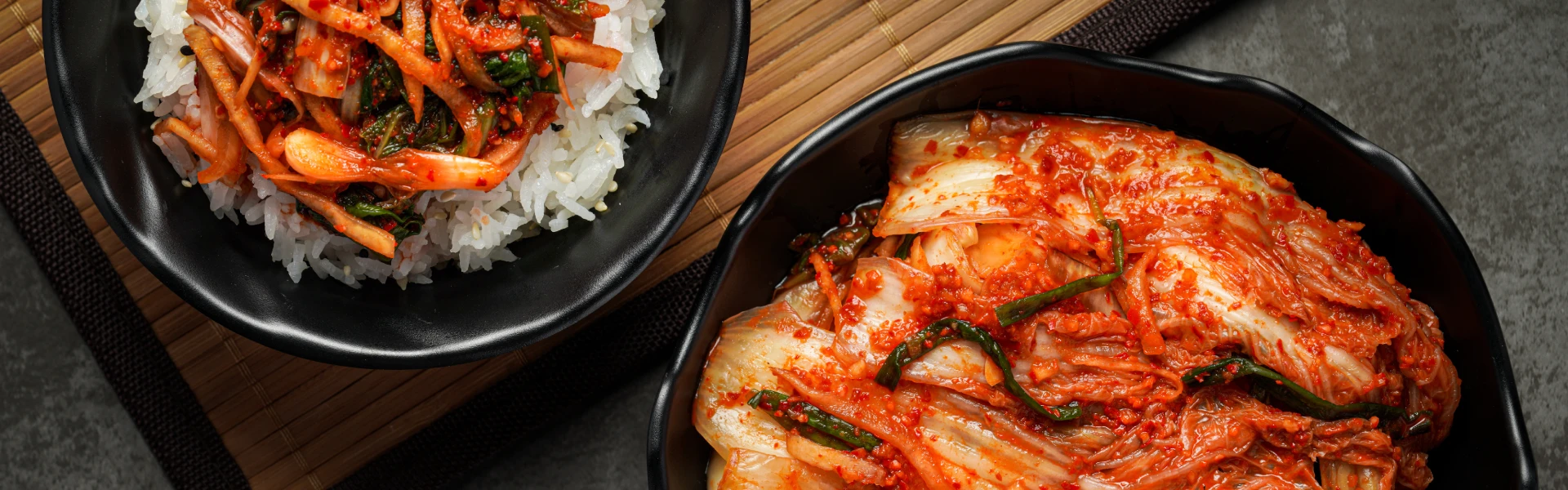
Kimchi is much more than just a spicy side dish. The traditional Korean dish made from fermented vegetables has cemented its place in modern cuisine worldwide. Originally, kimchi was used to preserve vegetables and enhance their taste. Today, it is a symbol of culinary variety, handcrafted fermentation, and intense flavour. At the same time, the dish raises questions: what is involved in the fermentation, why is kimchi so flavourful, and how is it different to similar foods, like sauerkraut? This article provides an overview of its origins, benefits, and ways to use it.
The key points
- Traditional Korean dish made from fermented vegetables
- Fermentation with natural lactic acid bacteria
- Taste is sour, spicy, and umami
- Great variety – there’s even a vegan variant
- Store airtight in a cool place to preserve quality and flavour
Kimchi – list of contents
- What is kimchi and where does it come from?
- Why is kimchi considered healthy?
- How do you ferment kimchi at home?
- How to pair and enjoy kimchi with a variety of dishes
- An overview of kimchi variants: traditional forms and differences
- Kimchi – vegan and modern variants
- Is kimchi the same as sauerkraut?
- This might also interest you
What is kimchi and where does it come from?
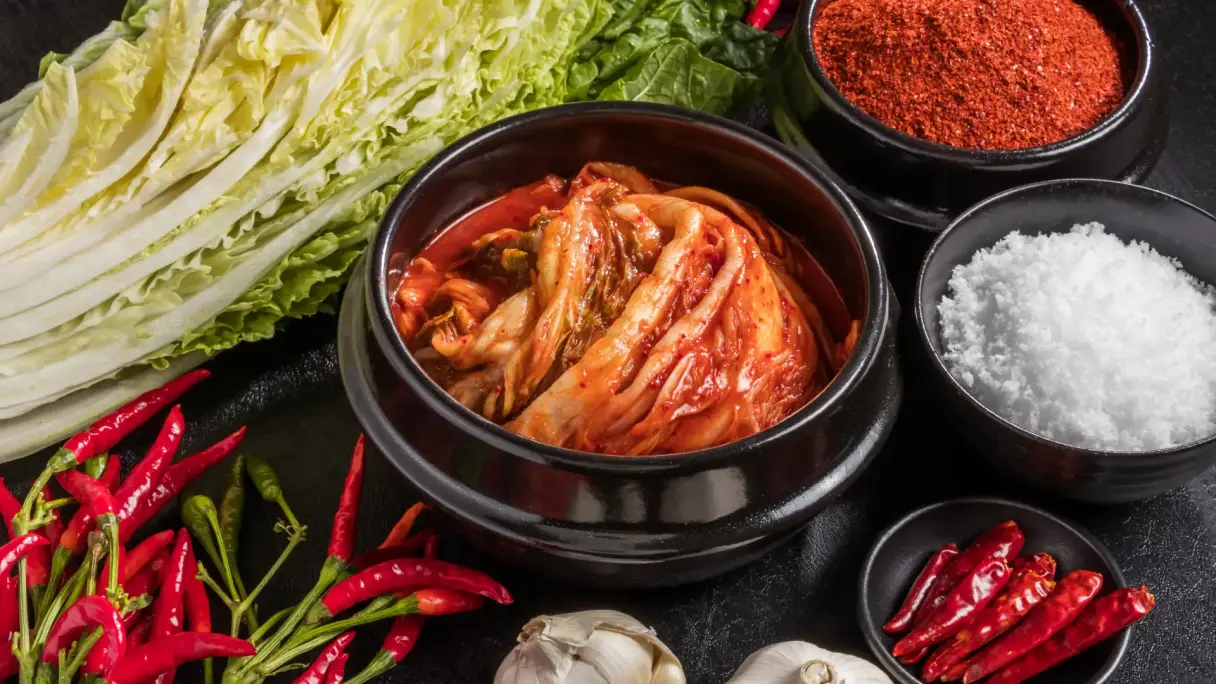
Kimchi is a Korean dish made from salted and fermented vegetables. The name literally means “salted vegetables”. Traditionally, Chinese cabbage is used, enhanced by radish, garlic,ginger, and chilli.Salt is used to extract water from the vegetables, creating ideal conditions for the lactic acid bacteria. These microorganisms transform sugar into lactic acid, which ensures a long shelf life and creates the flavour and the famous sourness.
Kimchi is an integral part of Korean cuisine and is served at almost every meal in Korea. The community-based production process, known as gimjang, has been UNESCO Intangible World Heritage since 2013. In contrast to sauerkraut, kimchi has a greater range of ingredients and shorter fermentation times. The result is a complex taste that ranges frommild and fresh to intensively spicy, depending on the recipe.
Why is kimchi considered healthy?
During the ripening process, lactic acid bacteria multiply. This can have a probiotic effect, which promotes gut flora. In addition kimchi contains fibre from the vegetables, which useful gut bacteria use as food. Vitamins including vitamin C and provitamin A are largely retained, as are minerals such as calcium and iron. In addition, there are secondary plant substances from garlic, chilli, and ginger, which may have antioxidant benefits.
Studies indicate that moderate, regular consumption is associated with a positive effect on cholesterol level and metabolism. At the same time, kimchi contains quite a lot of salt and is spicy. People with sensitive stomachs or high blood pressure should therefore have small portions. In balanced amounts kimchi can make a sensible addition to a varied diet.
How do you ferment kimchi at home?
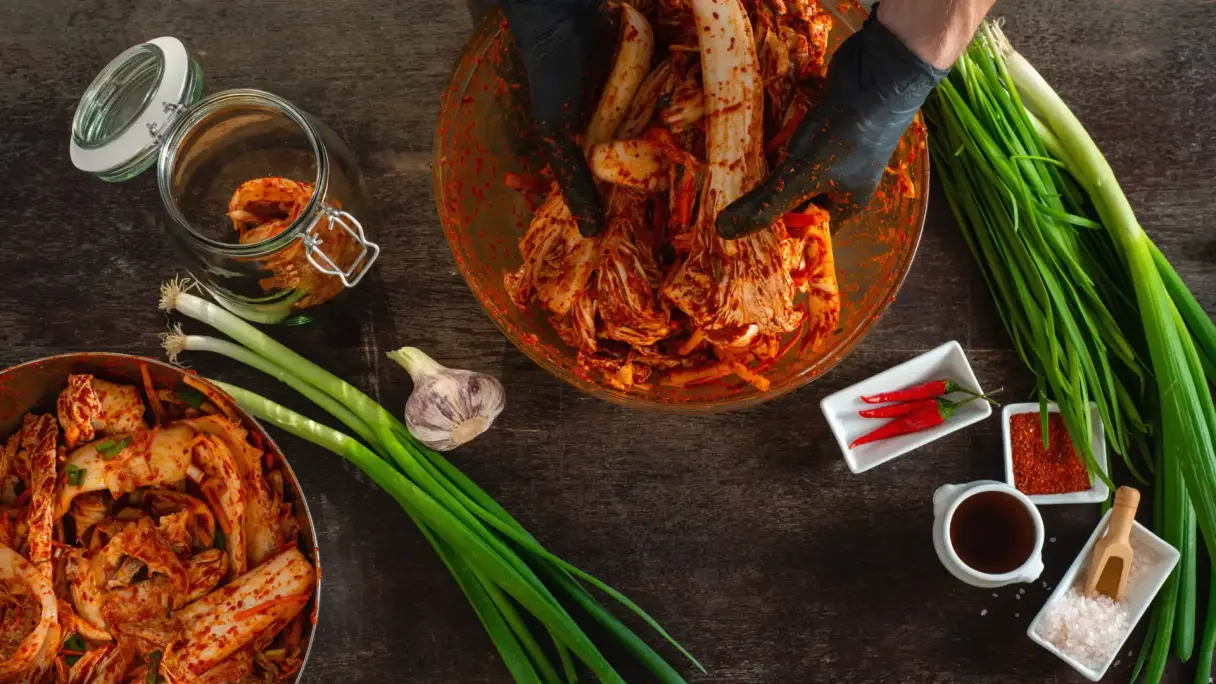
You too can ferment kimchi at home. Cleanliness is crucial, as fermentation occurs spontaneously with natural lactic acid bacteria. First, salt the vegetables to extract water and inhibit unwanted germs. Then mix the vegetables with a spice paste and press into a jar so that as little oxygen as possible is trapped. Fermentation starts at room temperature and usually takes one to two days.
Then store the kimchi in a cool place to slow down the maturation process. Airtight storage is important as intense smells can develop during fermentation. Kimchi matures further in the fridge and its flavour changes from mild and fresh to strong and sour. The cooler and more constant the temperature, the more stable the quality.
How to pair and enjoy kimchi with a variety of dishes
Kimchi can be served as a simple side dish, similar to a kimchi salad, or as a spicy component in bowls, rice, and stir-fry dishes. Finely chopped, it adds depth and sourness to soups, omelettes, and noodle dishes.
If you want to retain the probiotic cultures, it is vital, as far as possible, not to overheat the kimchi. Kimchi pairs very well with mild ingredients such as rice,potatoes, and tofu, as these create a balance of flavour. Kimchi accentuates a dish, without overpowering other flavours.
An overview of kimchi variants: traditional forms and differences
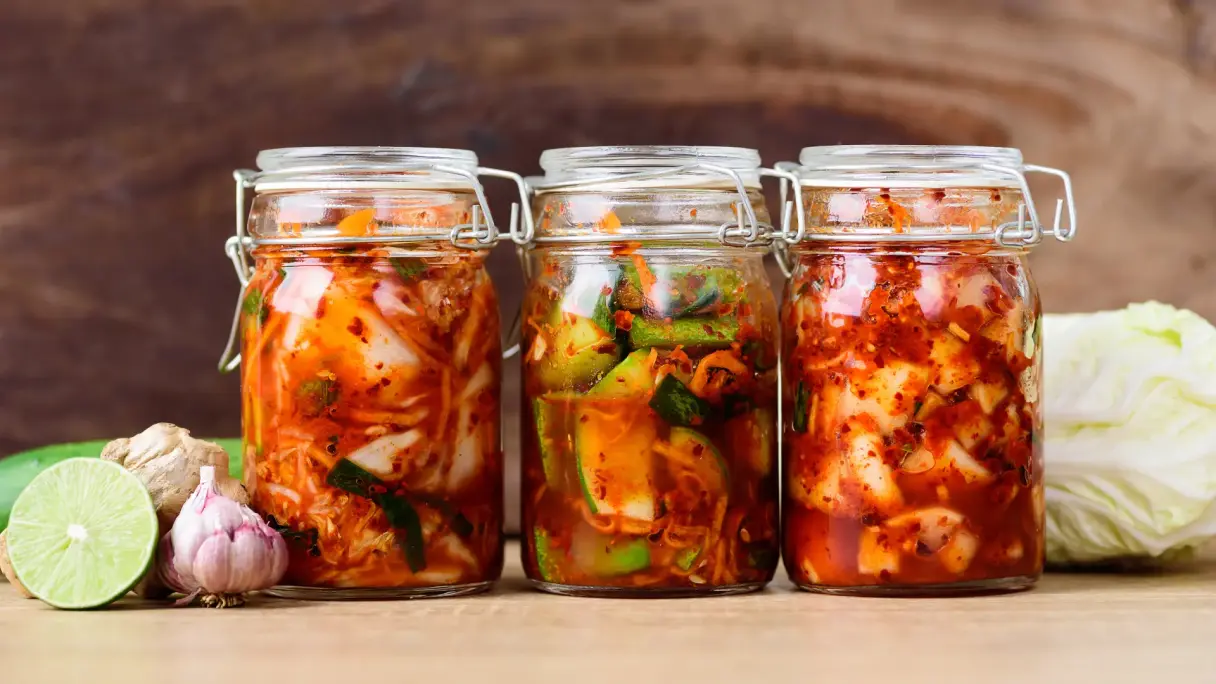
Kimchi is not a strictly defined dish; it covers a variety of regional and family variants. Very different flavour profiles are achieved depending on the vegetables, the cut, and the length of fermentation.
- Baechu kimchi: the best known and most widespread variant. Its base is Chinese cabbage, and it is fermented with radish, garlic, ginger, fish sauce, and a spicy chilli paste. Its flavour is a balance of sour, spicy, and umami.
- Kkakdugi kimchi: this variant is made from diced radish, and spiced with chilli, garlic, ginger, and fish sauce. It is stronger, crispier, and significantly spicier than baechu kimchi.
- Oi sobagi kimchi: the base is cucumber that has been filled with or marinaded in a paste of chilli, garlic, ginger, and fish sauce. The flavour is light, refreshing, and only slightly fermented.
- Jeorim kimchi: consists of young Chinese cabbage leaves and stems, marinaded in fish sauce, chilli, and spices. This variant is more strongly fermented and has a particularly intense flavour.
There is no traditional “original recipe”. In Korea almost every family has their own Kimchi recipe, often handed down from generation to generation.
Kimchi – vegan and modern variants
Traditionally, kimchi often contains fish sauce and fermented seafood. For vegan kimchi these ingredients are substituted with soy sauce, miso, or special algae products. Fermentation isn’t impacted, as the probiotic cultures come from plants. There are also modern interpretations with other vegetables, including carrots,beetroot, and pumpkin. These variants have a different flavour but follow the same fermentation principles.The right ratio of salt, vegetables, and temperature is still crucial. That is how you create an individual kimchi that can be adapted to your personal tastes.
Is kimchi the same as sauerkraut?
Kimchi and sauerkraut are similar in principle but are by no means the same. Both are vegetables fermented by lactic acid bacteria, and were originally invented to preserve fresh vegetables for the winter. In spite of these similarities, kimchi and sauerkraut have very different ingredients, take very different times to make, and taste very different.
Kimchi has more complex spices, usually has a shorter fermentation time, and has a greater variety of flavours. Sauerkraut is less complex, milder, and more stable.
| Feature | Kimchi | Sauerkraut |
| Main ingredient | Chinese cabbage (Brassica rapa subsp. pekinensis) | White cabbage (Brassica oleracea var. capitata) |
| Ingredients | Garlic, ginger, chilli, fish sauce, spring onions, salt | Usually just salt |
| Salt content | Approx. 1.5–2.5 % | Approx. 0.8–1.5 % |
| Fermentation time | Short to medium (3–14 days, often matured further) | Medium to long (2–8 weeks) |

This text has been machine translated from English.