
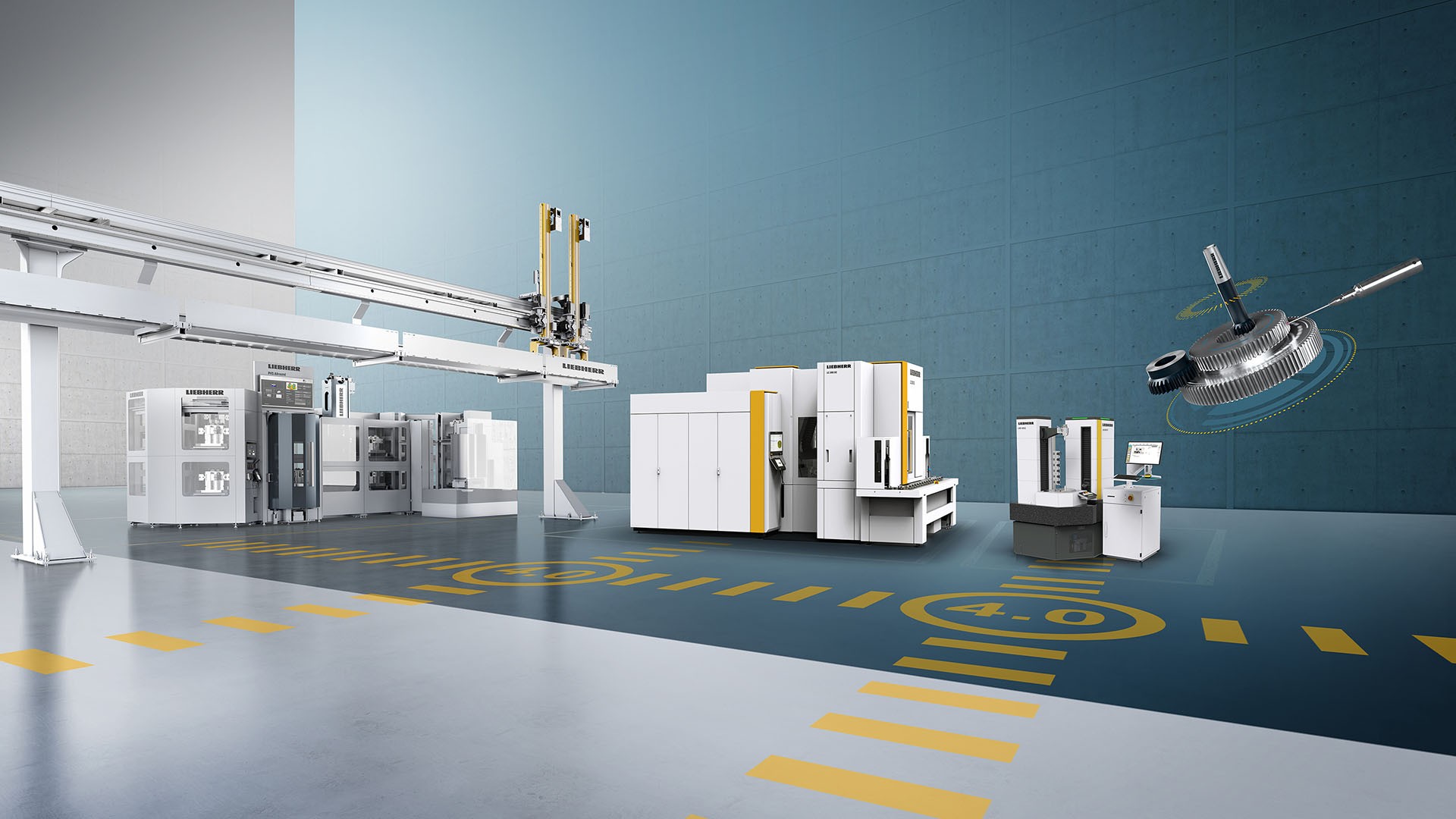
AMB and IMTS 2026
Come visit us at AMB and IMTS 2026!
At AMB and IMTS, we’ll showcase innovations in gear cutting machines, gear cutting tools, gear measuring technology, and automation systems. See for yourself how you can optimize processes, boost productivity, and solve challenges more intelligently. Stop by and experience our solutions firsthand.
AMB - September 15–19, 2026
IMTS - September 14–19, 2026
Here's where you can find us:
AMB: Hall 5 | Booth C51
IMTS: North Building, Level 3 | Booth 237044
Gear Technology
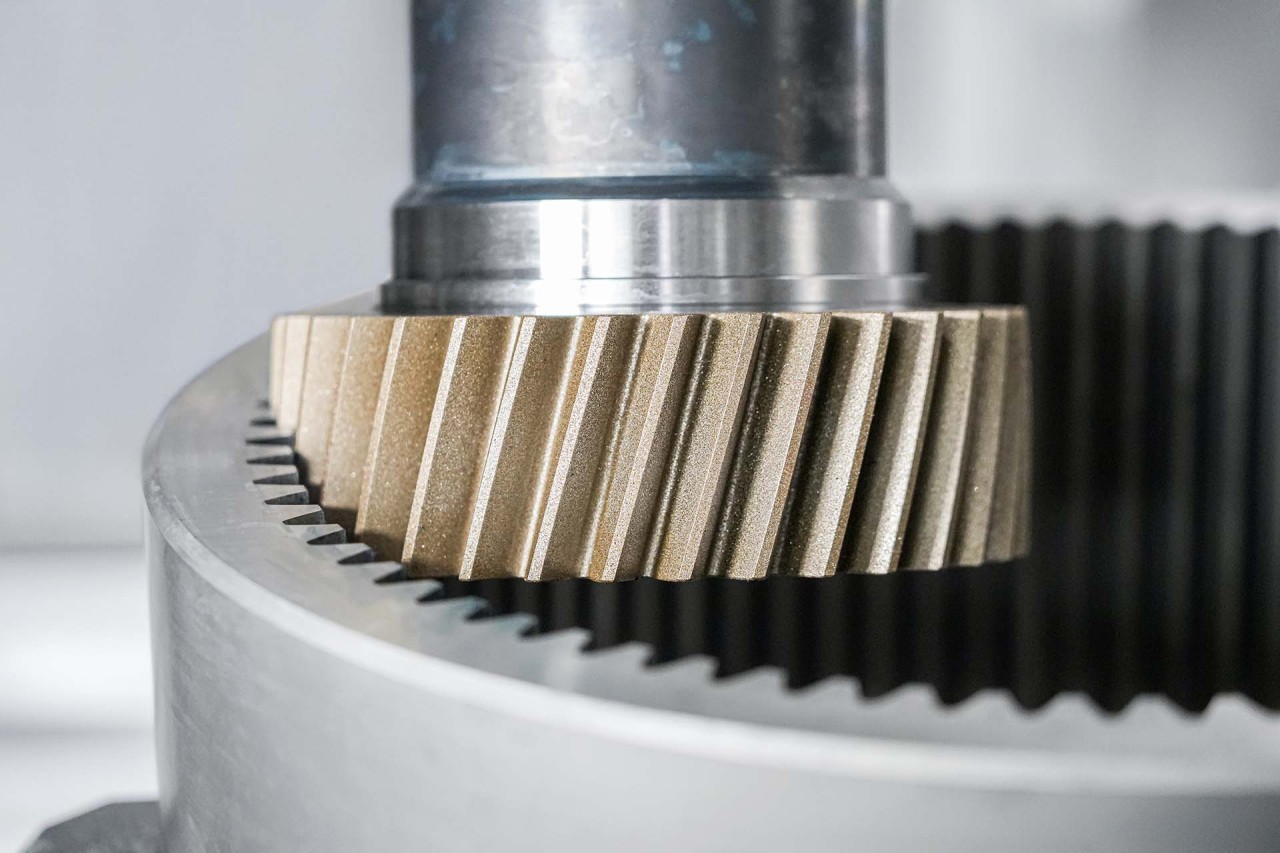
SkiveFinishing® – Precision Redefined
Economical hard machining of internal gears
With SkiveFinishing®, Liebherr presents an innovative manufacturing process for the highly precise and, at the same time, economical hard fine machining of internal gears. The process combines the proven kinematics of skiving with the technological advantages of modern CBN tools – setting new standards in quality and productivity.
At the heart of SkiveFinishing® is a specially developed CBN tool with crowned geometry and several usable shift positions. Wear is efficiently compensated by successively repositioning the tool – without any additional dressing process.
The result
- High quality with economical production
- High process stability and reproducible results
- Reduced non-productive times thanks to dressing-free operation
SkiveFinishing® was developed specifically for industries with the highest requirements.
Aerospace: maximum precision under increasing cost pressure
E-mobility: reduced noise generation and increased efficiency
Commercial vehicles and tractors: higher power density thanks to reduced hardening distortion
Your competitive advantage
- Reduced process chain and lower manufacturing costs
- Maximum workpiece quality combined with high productivity
- Sustainable manufacturing thanks to long tool life
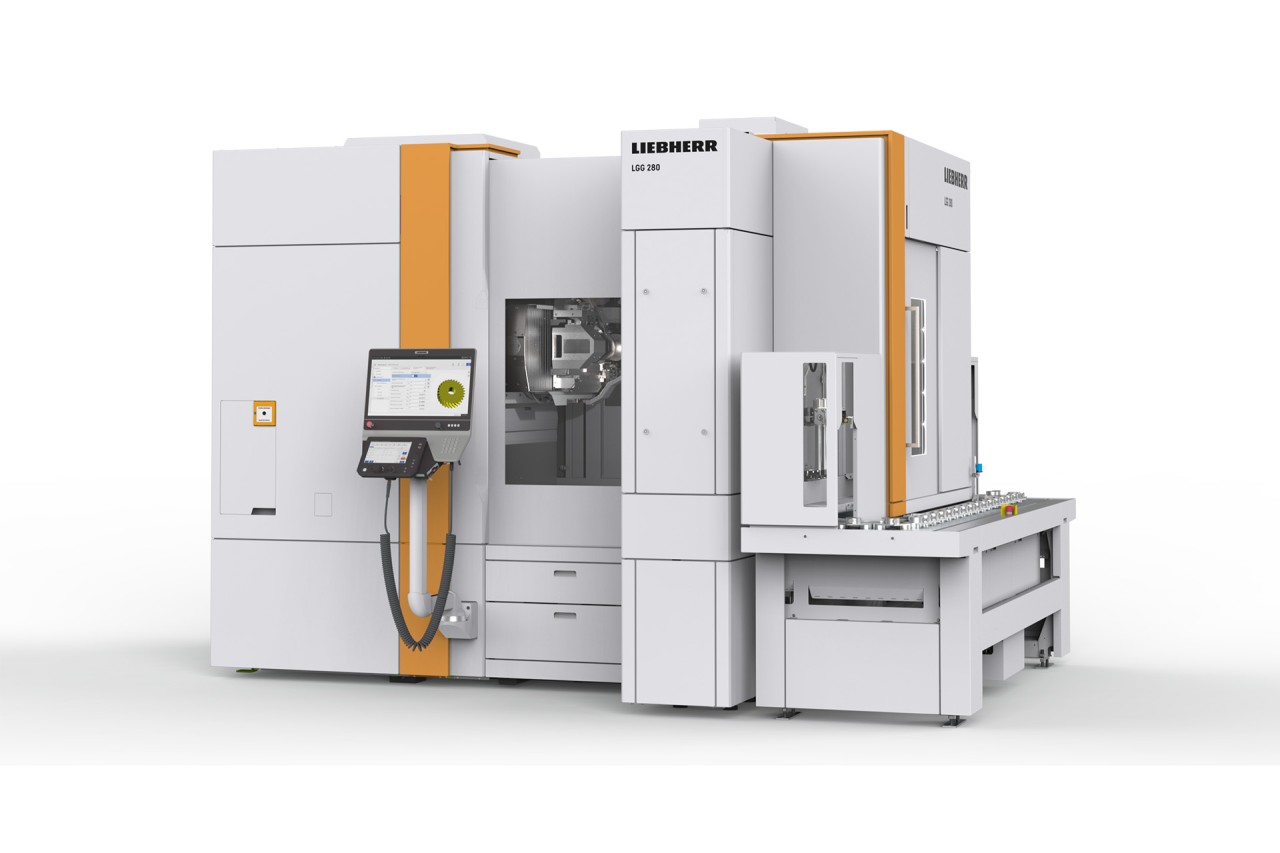
LGG 280 – Top Quality with Minimal Cycle Times
The benchmarks in hard fine machining of gears are continuously evolving: excellent quality and short cycle times form the basis for economical series production. With the LGG 280, Liebherr provides a highly productive platform for generating and profile grinding of gear components – up to 280 mm in diameter in an automated process, or up to 400 mm with manual
loading. The machine concept combines short grinding cycles with consistently high precision and is designed both for high-volume series production and for flexible universal production. By quickly adapting an internal grinding arm on the grinding head, the machine can also machine internal gears using the profile grinding process; changeover from external to internal gears is completed within approximately half an hour.
The integrated ring loader accelerates loading and consistently reduces non-productive times to a minimum. Modern grinding heads, high drive power and optimized tool clamping provide the basis for efficiently using new grinding technologies.
Highlights
- Generating grinding, profile grinding and internal grinding in one machine concept
- Short grinding cycles with consistently high series quality
- Integrated ring loader for accelerated loading processes
- Flexible machining variants for individual requirements
- Extended software functions for efficient processes
New Software Features for Generating Grinding
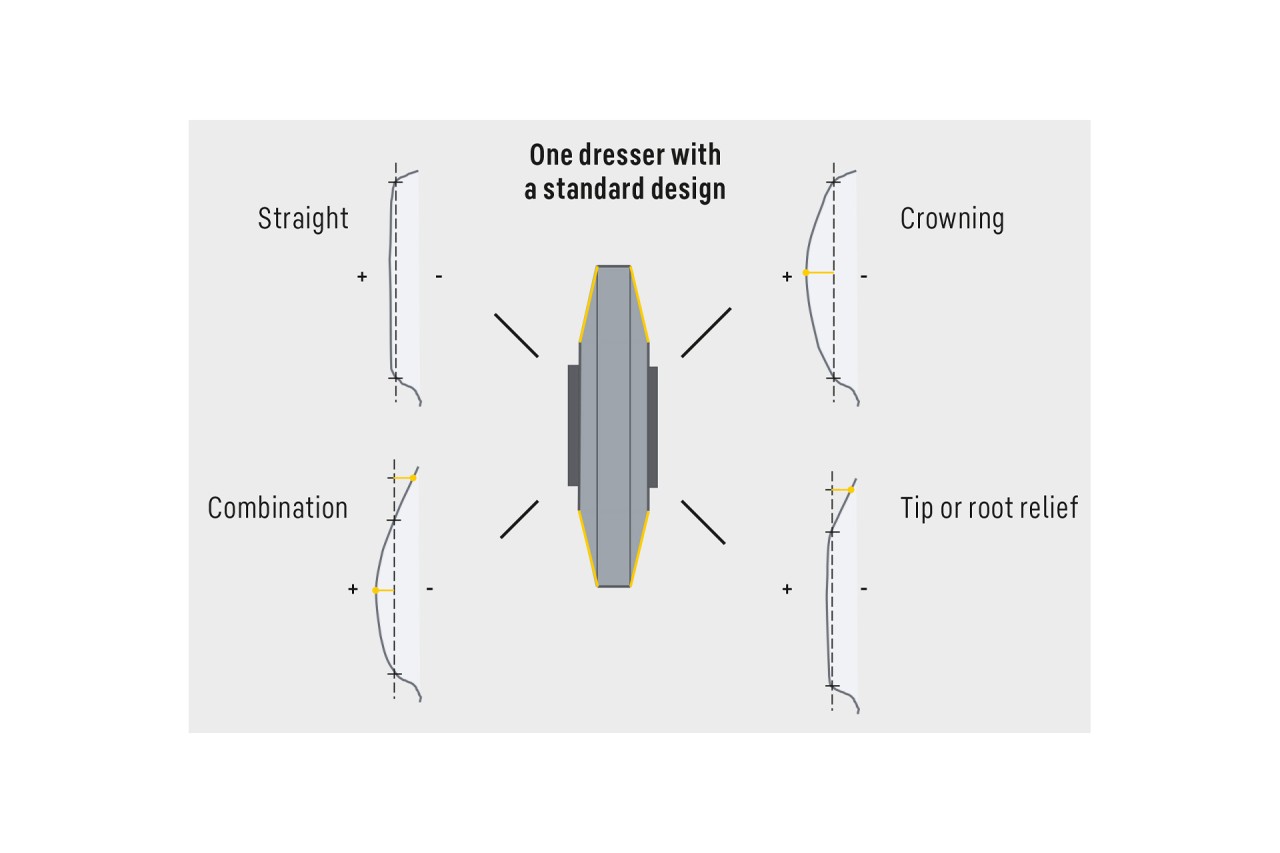
1. DIP Flexible, fast and reproducible.
Profile modifications in generating grinding without additional dressing tools
In practice, profile modifications often require additional dressing tools – with corresponding costs, delivery times and limited flexibility. With DIP (Dresser Independent Profile Modifications), Liebherr enables, for the first time, the targeted adjustment of profile modifications during generating grinding without using additional tools.
The modification is implemented by software directly via the machine control system, combining high flexibility with short dressing times. Profile angle modifications, profile crowning, as well as tip and root reliefs can be set reproducibly and integrated efficiently into the process. At the same time, conventional profile dressers can still be used, ensuring stable and economical processes.
DIP closes the gap between flexibility and process-reliable series production.
Highlights
- Profile modification via software instead of additional dressing tools
- High flexibility combined with short dressing times
- Reproducible results through stable process control – Use of conventional profile dressers – proven series production process
- Production-oriented parameters for direct transfer to production
- Reduced tool costs and lower procurement effort
- Ideal for frequently changing requirements
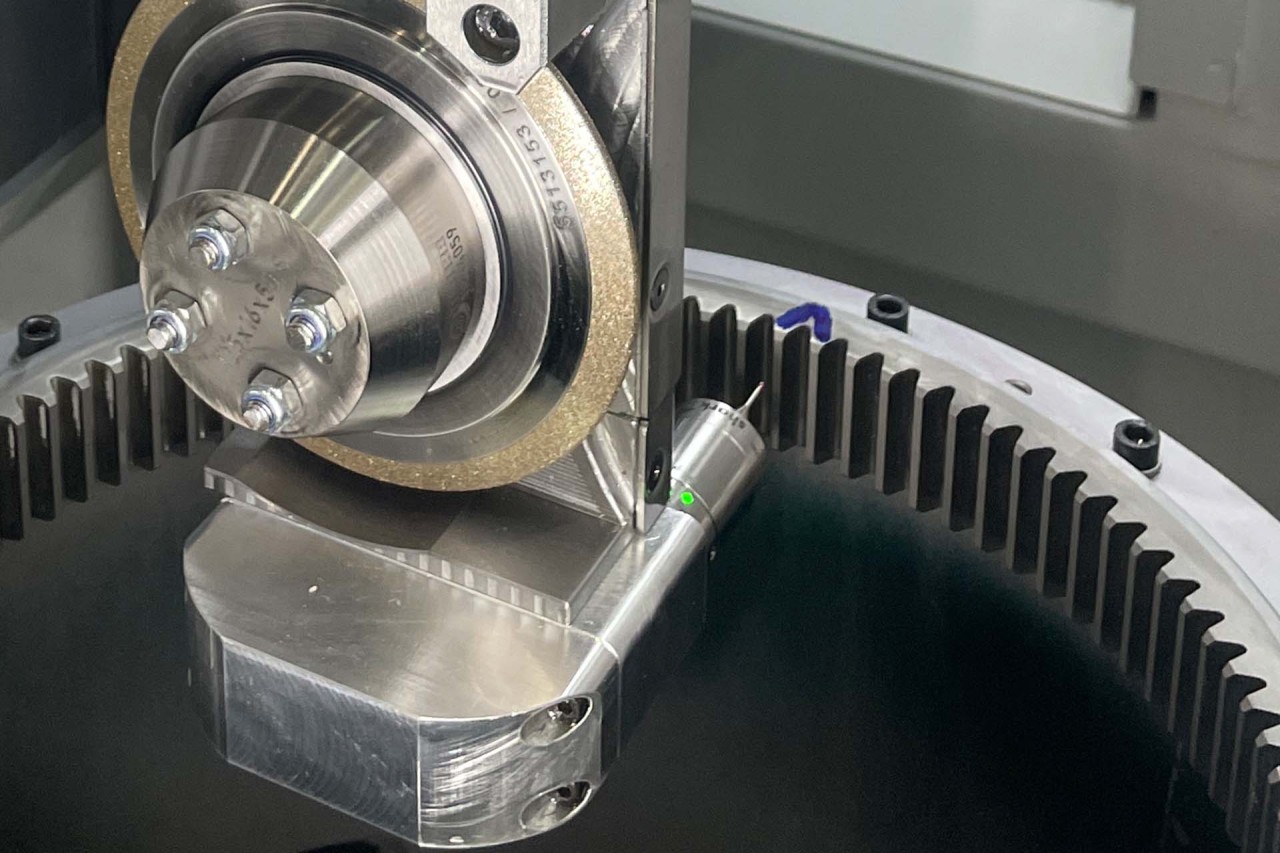
2. Stock and Material Removal Inspection (AAP) – Process reliability directly in the machine
Reliably checking and evaluating stock allowance and removal
The inspection of stock allowance and material removal is decisive for stable grinding processes and minimal scrap rates. With AAP (Stock and Material Removal Inspection), Liebherr integrates the measurement directly into the machining process.
The stock allowance is measured before generating, profile or internal grinding; the removal is evaluated after machining – automatically and reproducibly. The results are immediately compared with the tolerances and enable a clear assessment of the workpiece.
In the event of deviations, targeted regrinding can be performed, thereby securing quality and optimizing processes. In addition, the automatic creation of inspection reports ensures transparency and traceability in production.
Highlights
- Measurement of stock allowance and material removal before and after grinding
- Automatic tolerance evaluation in the machine
- Reduction of scrap through targeted regrinding
- Flexible measurement strategies for different components
- Transparency through automatic inspection reports
- Integration into the existing grinding process
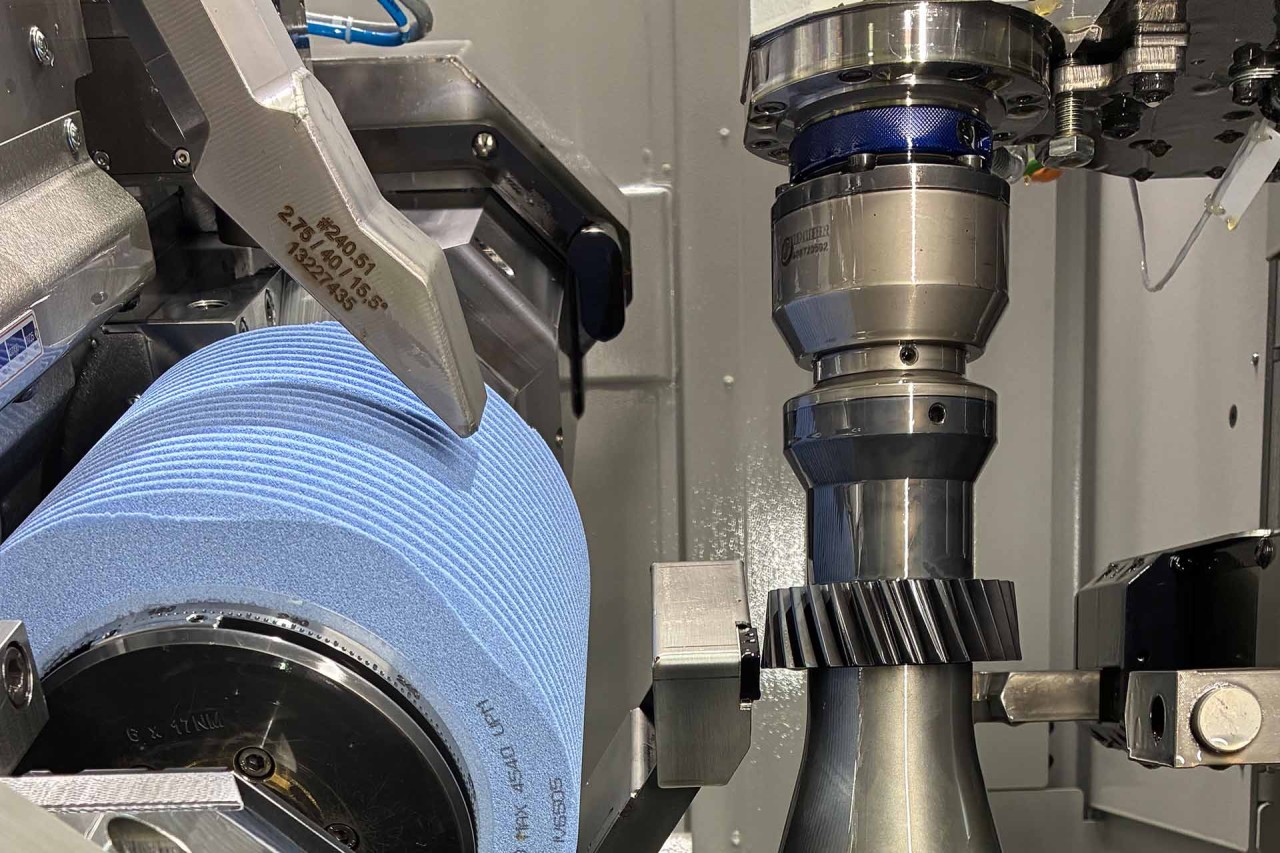
3. Beveloid Generating Grinding – New Software for LHGearTec
Efficient and precise machining of conical involute gears
Beveloid gears enable compact gearbox solutions with flexible shaft arrangements, but they place high demands on manufacturing. With the generating grinding of Beveloid gears, Liebherr expands the established grinding process to include the machining of conical geometries.
Different cone angles of a Beveloid gear can be set. Thanks to internal calculations, these settings are kept constant and process-reliable via the dressing cycles.
This creates new opportunities for innovative gearbox designs while maintaining high process stability and efficiency.
Highlights
- Input concept integrated into the LHGearTec user interface
- Software-based implementation without additional hardware
- Integration into existing generating grinding processes
- New degrees of freedom for innovative gearbox concepts
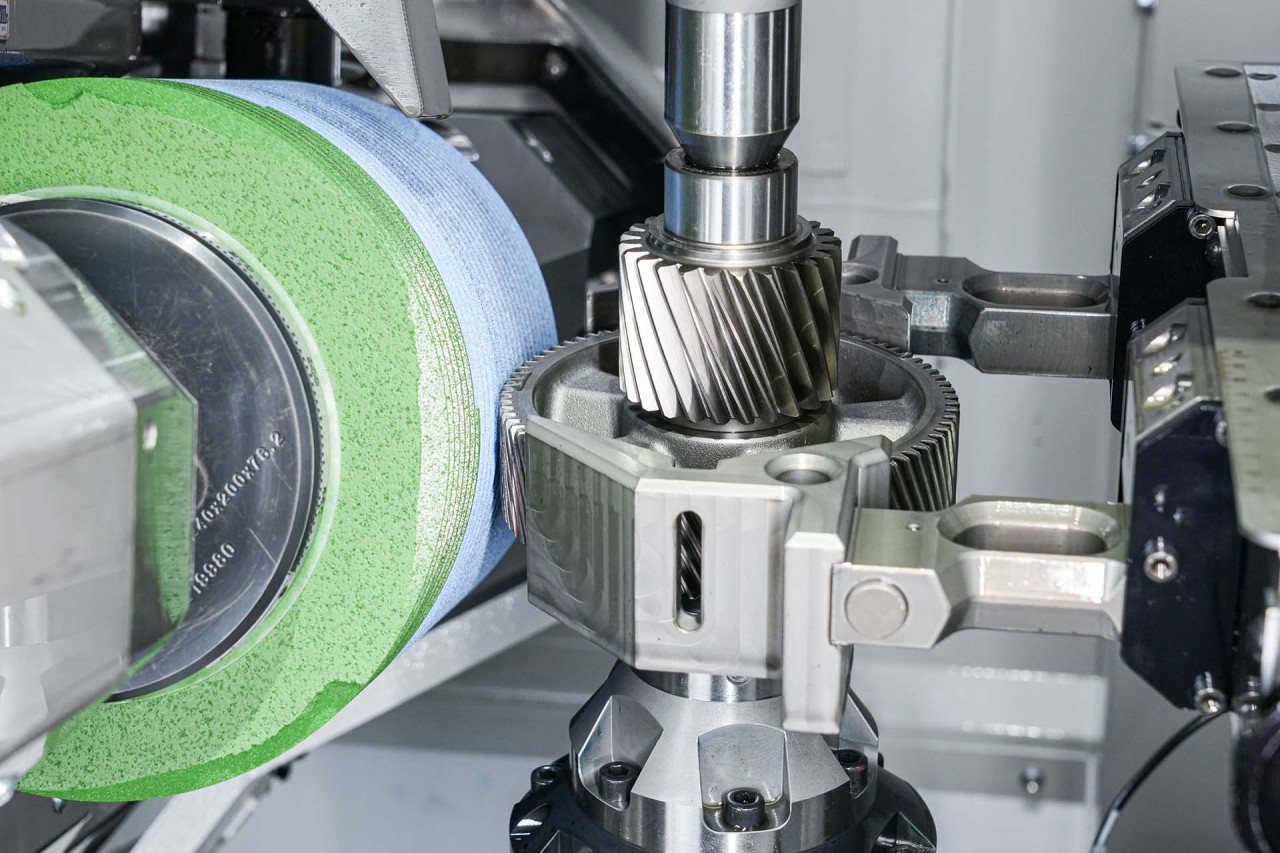
4. Position-Dependent Generating Grinding – Maximum precision through comparative measurement
The exact positional relationship between several gears is essential for the function and quality of modern gearboxes. With position-dependent generating grinding based on comparative measurement, Liebherr aligns machining specifically to a reference gear.Both gears are measured directly in the machine, the common tooth gap is determined and the positional deviation is automatically taken into account.
Machining is then performed position-dependently and reproducibly, reducing setup effort and increasing process reliability.
Highlights
- Machining relative to a reference gear
- Comparative measurement of two gears in the machine
- Automatic position correction based on measurement data
- Inductive or tactile measurement possible
- Higher process reliability through tolerance checking
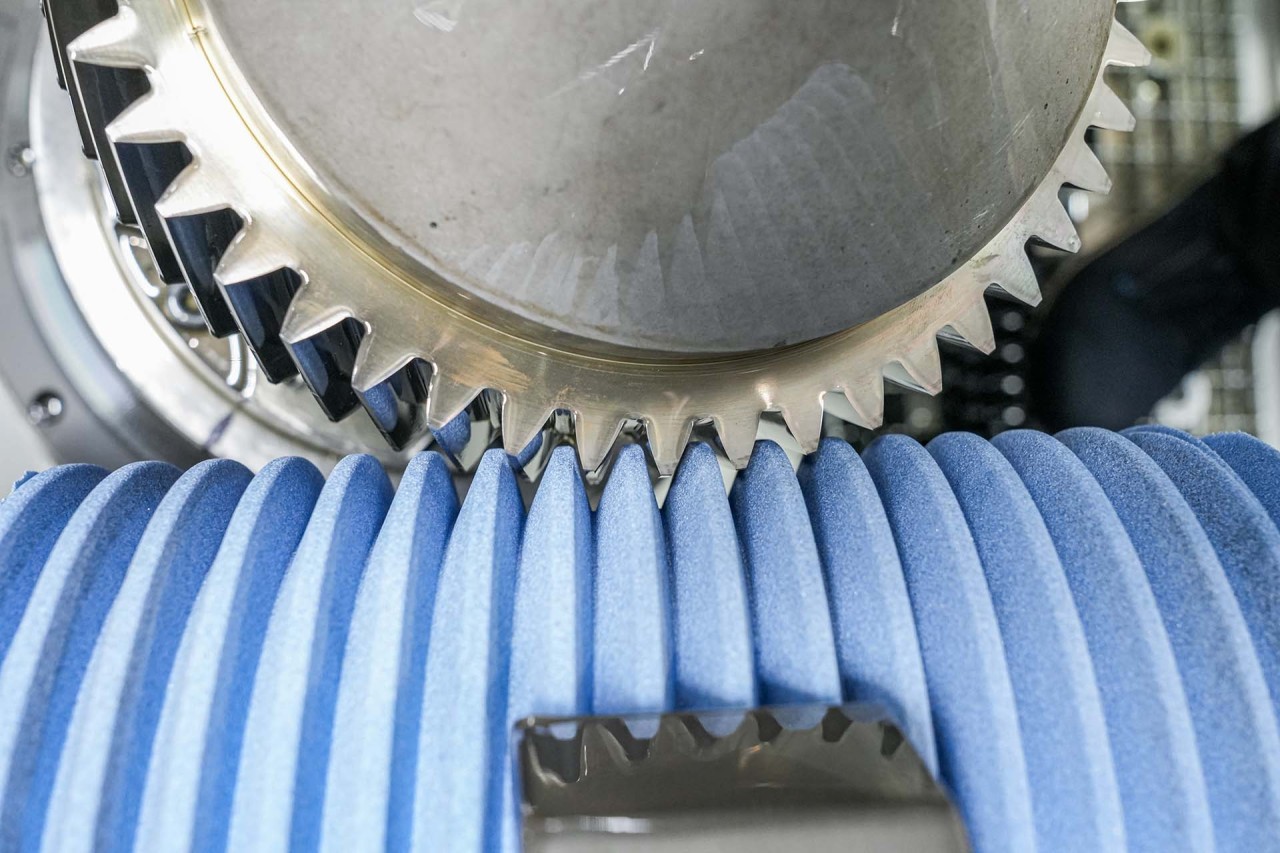
5. Asymmetric Generating Grinding – Maximum freedom in profile design
Efficient and reliable implementation of custom profile geometries
Asymmetric profile geometries are becoming increasingly important for performance-optimized gearboxes. At the same time, requirements for flexibility and process reliability in production are rising. With generating grinding of asymmetric profiles (dressable), Liebherr enables the economical machining of complex profile shapes within the established grinding process. Different profile angles for the left and right flank can be implemented flexibly. The combination of dressable tools and optimized process control ensures uniform material removal and high component quality. At the same time, operation remains intuitive and safe thanks to integration into the existing software.
Highlights
- Generating grinding of asymmetric profiles with variable profile angles
- Generating grinding and polishing possible
- Flexible dressing strategies for maximum adaptability
- Uniform material removal on both flanks
- Integration into the existing machine and software environment
Double-Helical Gears – New Software for Hobbing, Form Milling and Gear Shaping
Double-helical gears stand for maximum power density, smooth running and the greatest possible load capacity. Due to the symmetrical arrangement of two opposing helical gears, axial forces are fully compensated – a decisive advantage for highly stressed gearbox applications.
However, precisely this complex geometry places the highest demands on manufacturing technology. Conventional machining processes are increasingly reaching their limits. In addition, collisioncritical tool movements, restricted accessibility and increasing requirements for surface quality and gear accuracy lead to a complex interaction between component design, machine and process.
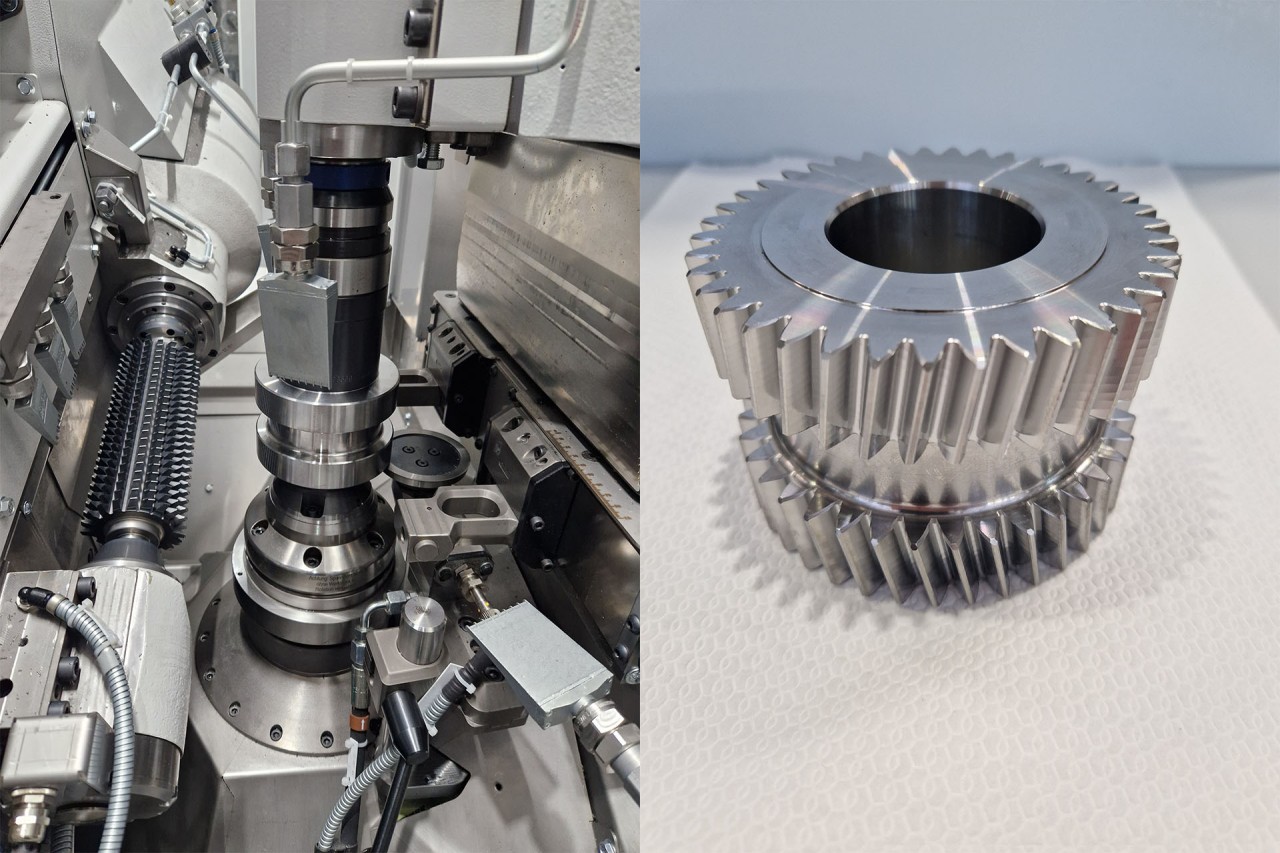
Gear hobbing/profile milling of double-helical gears
The gears can be manufactured with the same tools or with different tools. If these cannot be clamped on one arbor, a tool change between the machining of the two gears is possible.
Highlights
- Rotational and axial position corrections
- Define the position via the apex point
- Check double-helical gearing for collision between tool and gear contour without step milling
- Shift in the event of a collision where shift positions are possible
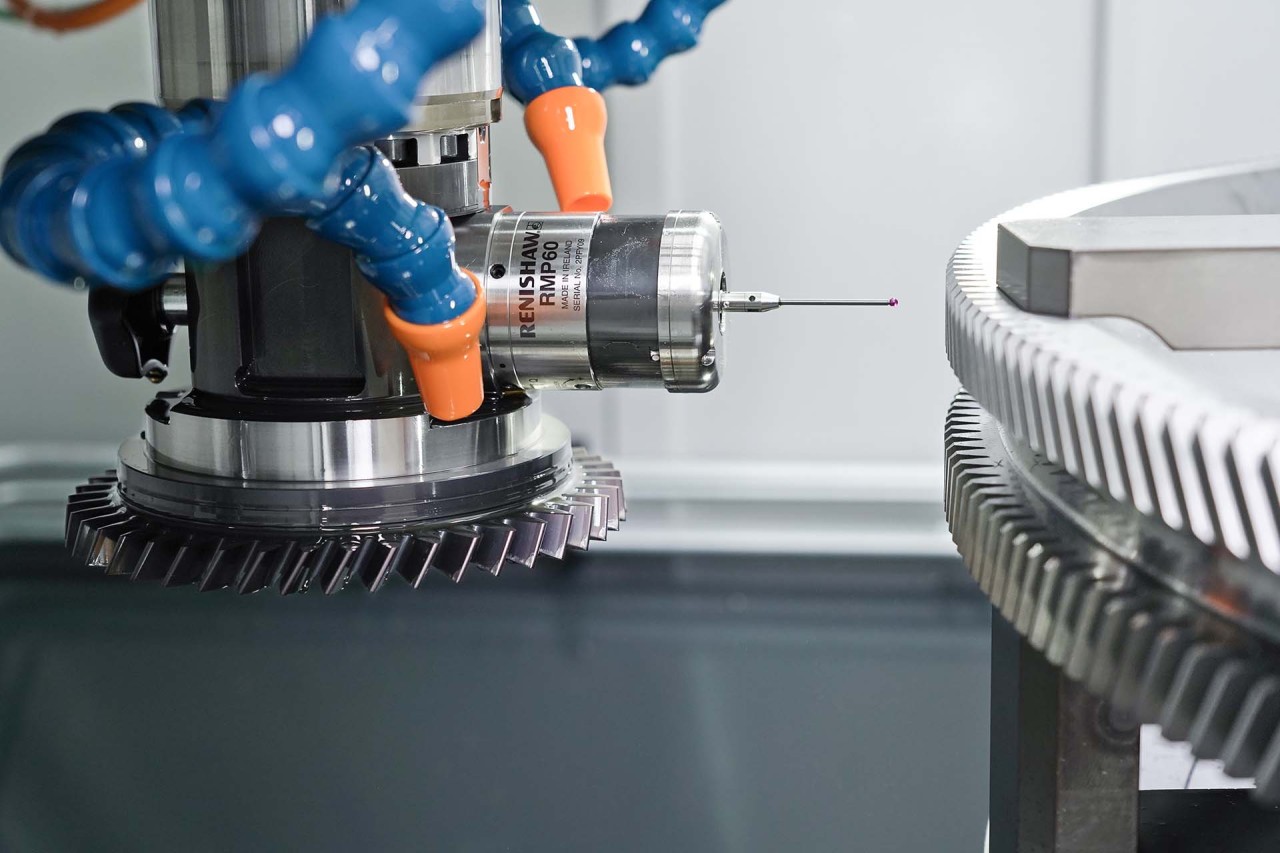
Gear shaping of double-helical gears
The developed solution for gear shaping enables position-dependent machining of two non-prefabricated external or internal spur gears in one clamping setup.
- Work with different tools
- Perform a tool change if required
- Ensure process reliability through reference and comparative measurements with a measuring probe
- Rotational and axial position corrections
- Calculate the minimum plunge depth for reference and comparative measurement
- Check the possibility of two-flank machining after correction
- Take the workpiece contour into account in the measurement strategy
LGP 2000 and LC 2000 – An Overview of the New Machines
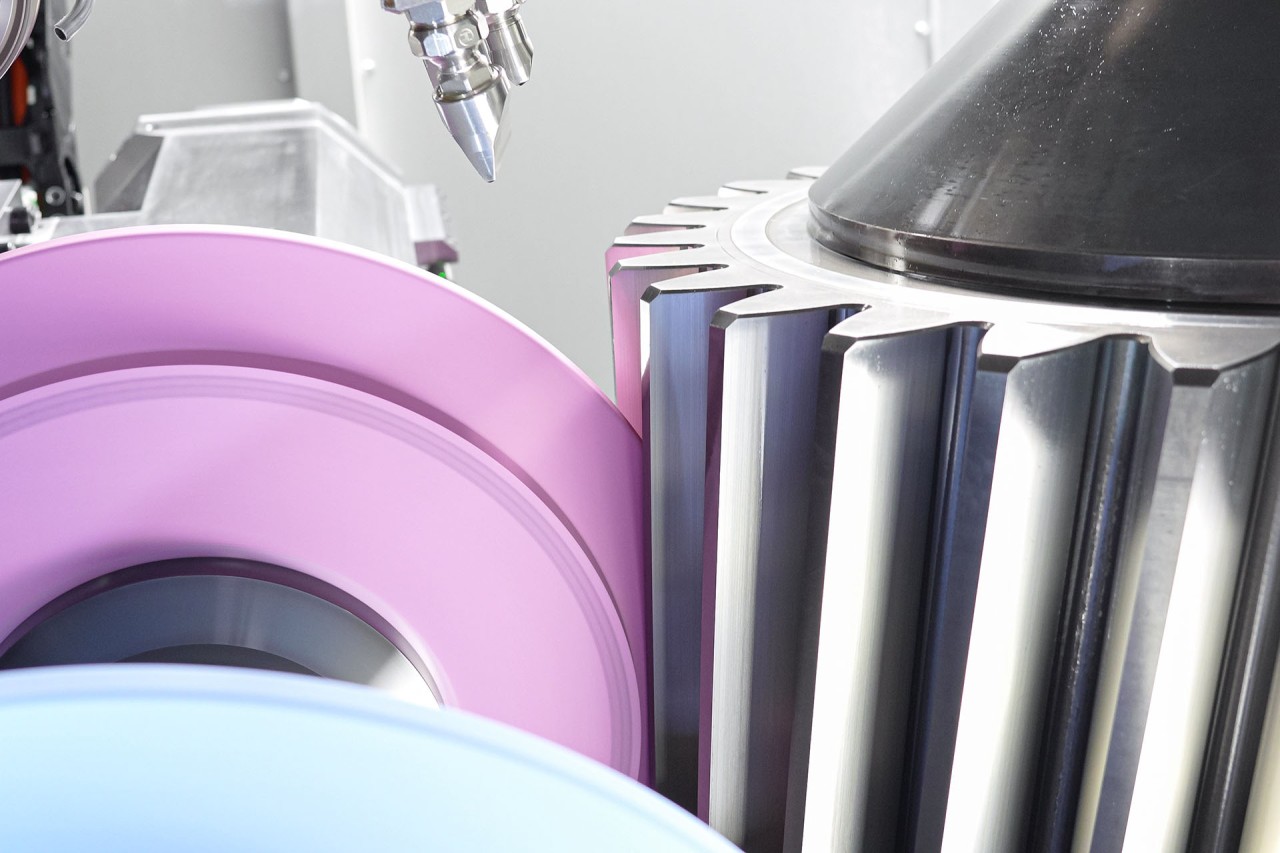
New LGP 2000 Profile Grinding Machine
With the LGP 2000, we present a new machine generation in the field of profile grinding. The modular machine platform enables efficient machining of workpieces up to 2,000 mm in diameter and sets new standards for component precision, component flexibility and machine productivity. The thermo-symmetrical machine bed with integrated coolant circulation ensures the highest thermal stability. A hydrostatically supported table with direct drive guarantees wear-free precision over a long service life.
Unique feature: two grinding wheels can be used sequentially without a tool change. This allows either shorter cycle times, higher surface quality or an optimized combination of both advantages.
The LGP handles high-speed grinding, creep-feed grinding and one- or two-flank topological grinding. An optional grinding arm is available for high-precision machining of internal gears.
Highlights
- Profile grinding up to 2,000 mm diameter – ideal for large gears
- Modular machine concept – flexible, economical and future-proof
- Two grinding wheels without tool change – shorter cycle times and higher productivity
- Thermo-symmetrical machine bed – maximum thermal stability
- Prepared for automation with pallet changer or ring loader
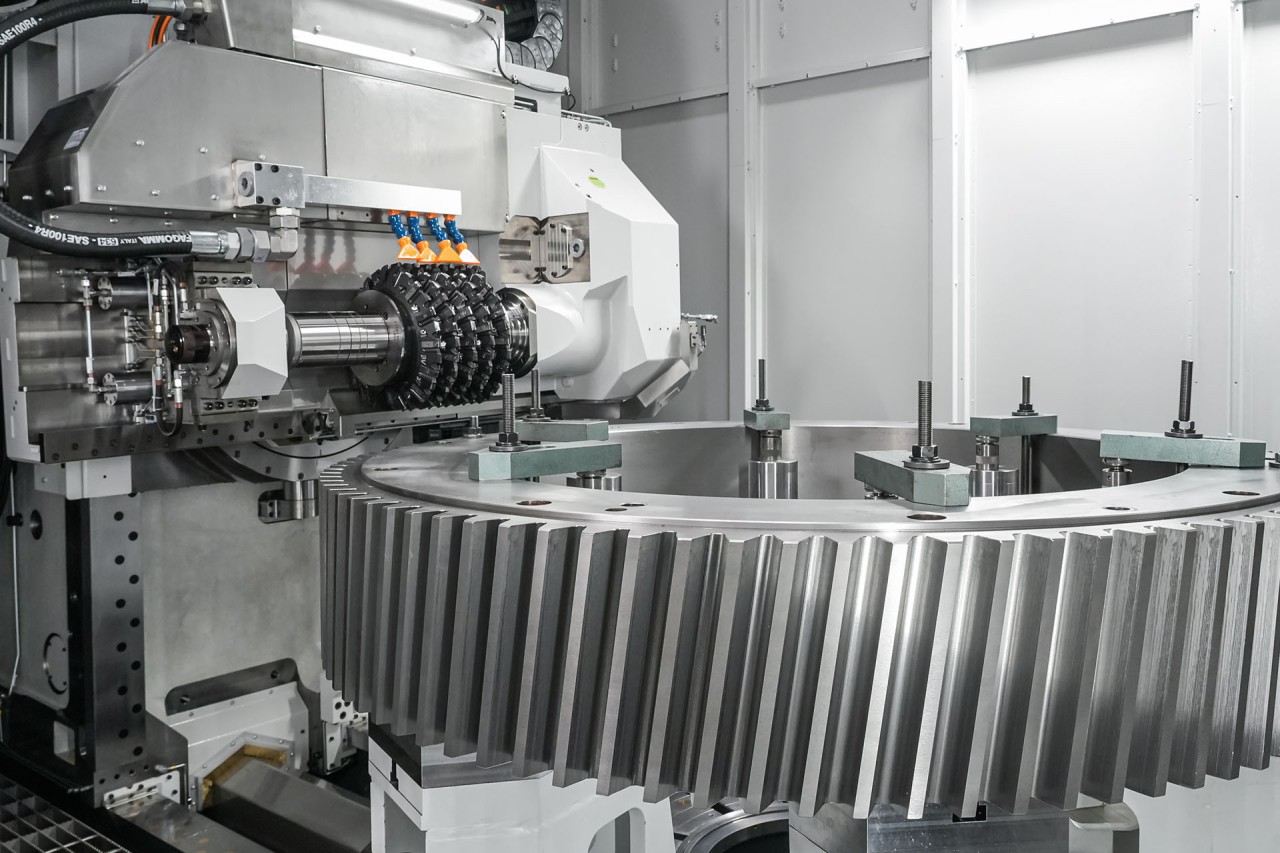
New LC 2000 Gear Hobbing Machine
The new LC 2000 gear hobbing machine is built on the same platform as the LGP 2000 profile grinding machine. The new series covers all relevant gear machining technologies and is aimed at manufacturers of large gears, especially in the mechanical engineering, marine propulsion, construction machinery and wind power sectors.
The platform enables the machining of workpieces up to 2,000 mm in diameter and sets new standards in precision, flexibility and productivity. The thermo-symmetrical machine bed with integrated coolant circulation ensures maximum thermal stability. A hydrostatically supported table with direct drive guarantees wear-free precision for a long service life. The machine can optionally be equipped with an integratable FlexChamfer unit for deburring and/or chamfering.
The optimized chip removal is ideal for wet and dry machining. Chip removal has also been optimized for milling internal gears, so that no complex separate chip removal channel is required in the hall foundation.
Highlights
- Gear hobbing up to 2,000 mm diameter – ideal for large gears
- Modular machine concept – flexible, economical and future-proof
- Thermo-symmetrical machine bed – maximum thermal stability
- FlexChamfer chamfering unit – economical even for small batch sizes
- Prepared automation for pallet changer or ring loader
Gear Cutting Tools
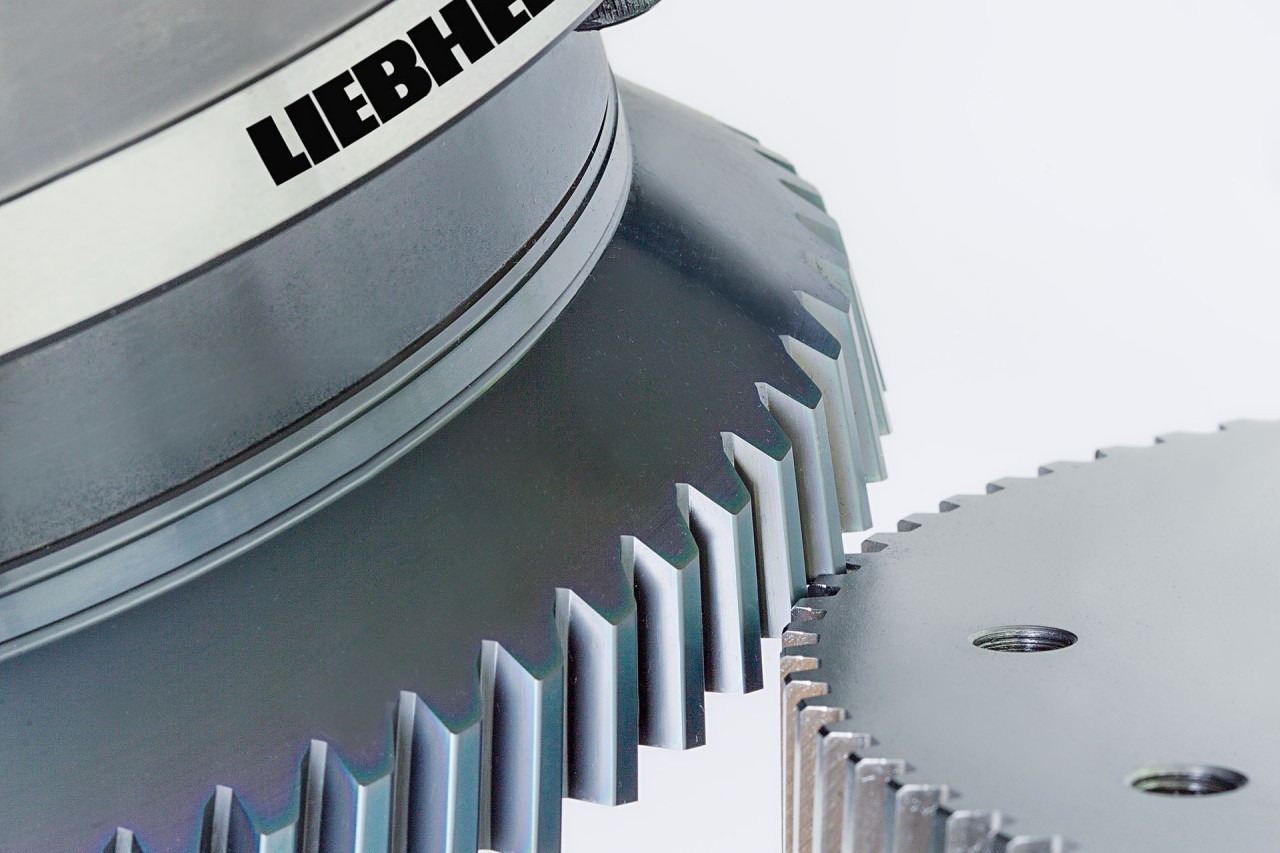
Holistic technological competence with Skiving³
The success of gear skiving lies in the significantly higher efficiency and productivity of this process compared with shaping and the considerably higher flexibility and lower investment compared with broaching.
Liebherr knows the entire process of gear skiving profoundly. We have combined all of our expertise concerning tool design, machines, and technology of gear skiving in the Skiving³ technology package. Very high accuracy in tool production, coupled with optimal tool design, guarantees an excellent gear quality and long tool life. Liebherr guarantees the reliability of its manufacturing process at the highest quality level.
The gear skiving tools are available in tapered and cylindrical form and can be optionally manufactured from powder-metallurgical high-speed steel (PM-HSS) or full carbide.
The combination of axial crossing angle, cutting speed, feeding, and other kinematic parameters make the method very flexible: Particularly for internal gears in medium batch sizes and external gears with an interfering contour, gear skiving is an additional “ace up your sleeve” in the gear cutting range.
Highlights
- Optimal tool design
- Best quality: High level of accuracy and long tool life
- Short delivery times and process support
Measuring Machines LMC
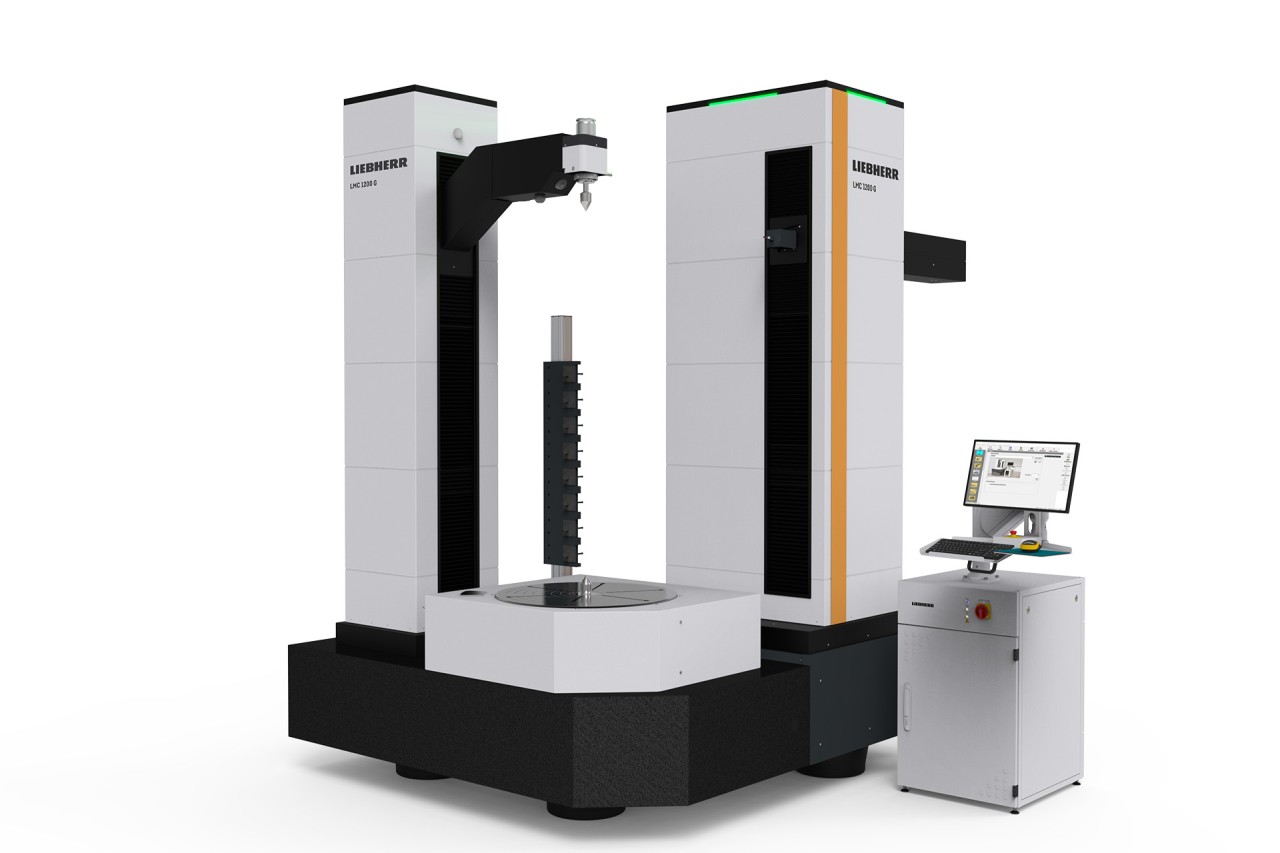
Are you looking for a solution to ensure quality and increase productivity in gear manufacturing?
The four-axis measuring instruments of the LMC series have high-precision mechanics and electronics, which are controlled by smart and user-friendly software. They meet all accuracy requirements regarding gear measurement and comply with VDI guideline VDI/VDE 2613, group 1.
In addition to the gear inspection machine options available as standard, customer-specific solutions are also available, such as adjusting the travel range on the Z-axis, longer tailstocks to accommodate long shafts, and rotary tables adapted to the payload. An automatic sensor changing system ensures uninterrupted measurement of the workpieces and also offers the highest levels of convenience for the user.
The extensive software features make the machines suitable for measuring all types of gears, such as spur gears, bevel gears, worms, worm gears, shafts, gear cutting tools, and other rotationally symmetrical parts.
Highlights
- Waviness analysis 2.0 for more precise gear noise analysis
- Highest precision provided by granite guides and air cushioning
- Low operating costs due to contactless guides and reliable probes as well as inexpensive spare parts
- Flexible for all types of gears
- User-friendly interface and ergonomic design
- Manufacturer-neutral GDE interface for data transmission to production machines
- Highest precision provided by the new roughness sensor
Digitization
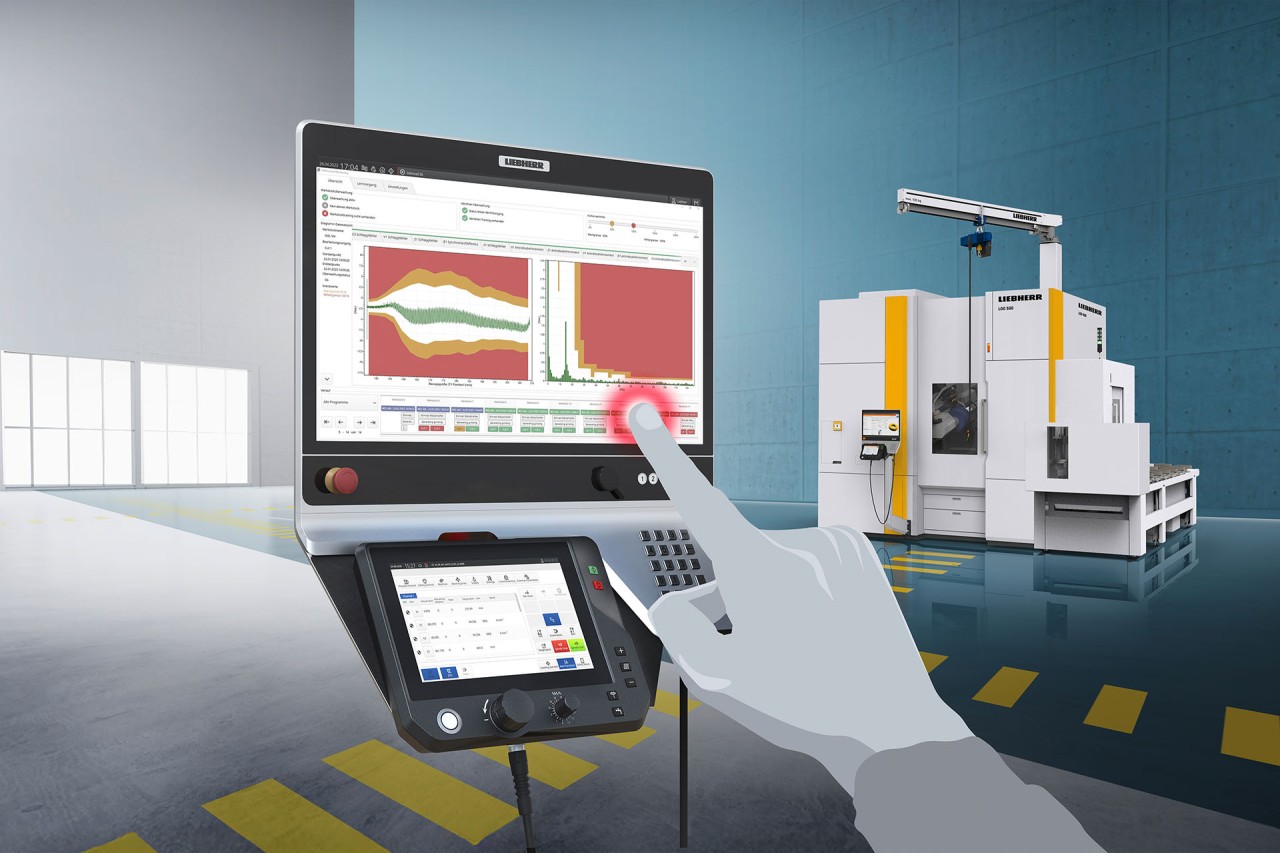
LHProcessMonitoring – Detecting Process Deviations Early
Inline process monitoring with high-frequency sensor technology
Unwanted noises in the drivetrain often originate in the manufac-turing process. Particularly in e-mobility, even the smallest devia-tions on the gear surface directly affect later NVH behavior. Classic inspection methods often detect these deviations only at the end of the process chain – with correspondingly high effort for rework or scrap.
With LHProcessMonitoring, Liebherr specifically expands inline process monitoring with powerful high-frequency sensor technology. This allows even the smallest deviations to be detected directly during machining – long before they affect component quality or noise emissions.
By connecting external acceleration sensors, the analyzable frequency range is significantly expanded. Vibrations up to 13 kHz can be recorded and precisely evaluated. The sensors are installed at critical positions in the machine, allowing high-frequency signals to be captured in a targeted manner and interpreted meaningfully.
Continuous analysis of process data enables immediate detection of abnormalities. Deviations become visible directly during the running process and can be assessed immediately. This reduces scrap, prevents unnecessary rework and supports stable series production – particularly for NVH-critical applications.
LHProcessMonitoring automatically monitors relevant process parameters and reliably detects limit violations. This ensures that faulty components are identified at an early stage and are not processed further.
In addition to grinding applications, the solution is now also used in hobbing and skiving. By expanding the system with high-frequency sensor technology, Liebherr creates a powerful basis for precise, data-based process monitoring and sustainable improvement of component quality.
Highlights:
- High-frequency sensor technology for detecting the smallest process deviations
- Inline monitoring directly during machining
- Recording of vibrations up to 13 kHz for detailed analysis
- Early detection of NVH-relevant quality deviations
- Reduction of scrap and rework
- Automatic limit monitoring and process evaluation
- Use across multiple technologies, such as grinding, hobbing, and skiving
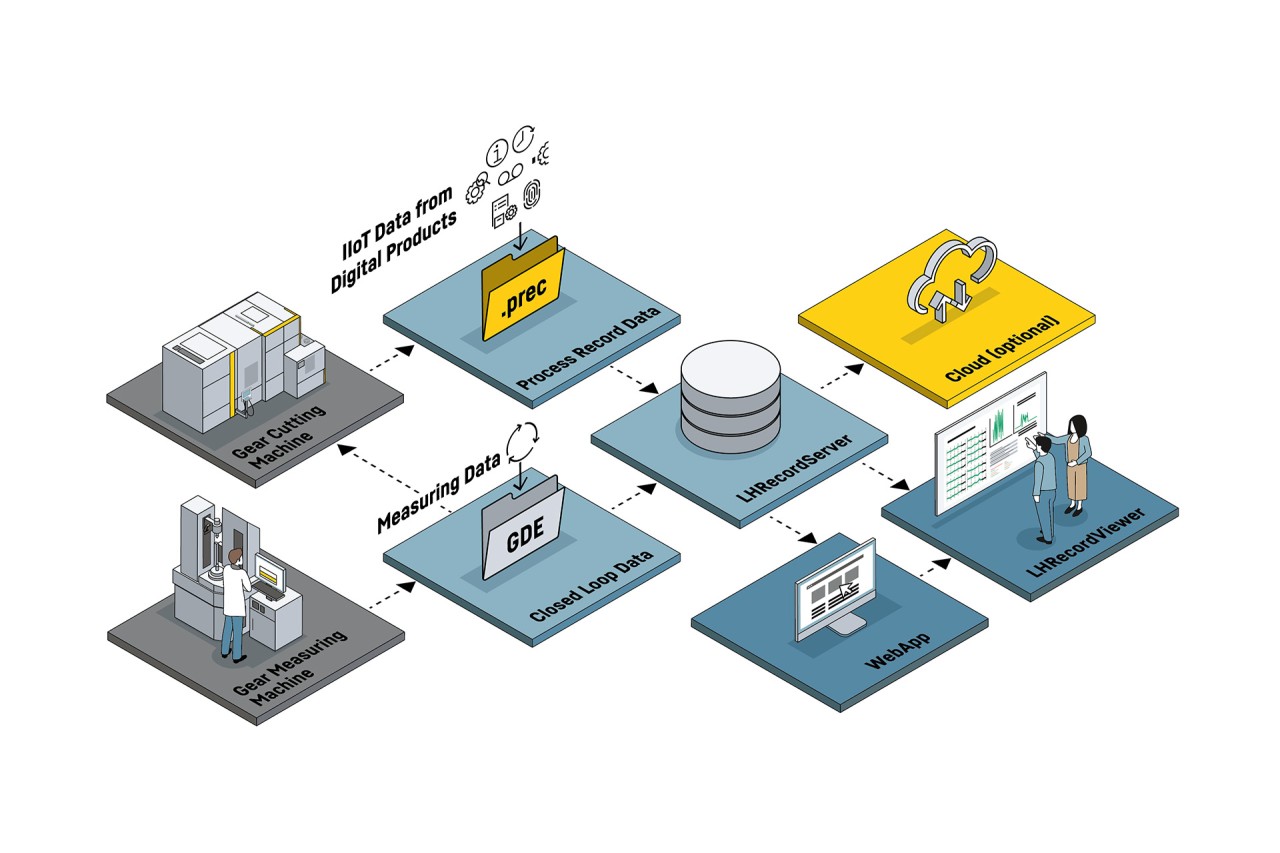
Liebherr Data Suite – Using Data Holistically
Modern gear cutting machines generate enormous quantities of valuable data. This data offers great potential for a better understanding of processes, higher quality and targeted optimizations. In practice, however, this potential often remains unused: data is distributed, difficult to access and often not linked.
With the Liebherr Data Suite, Liebherr-Verzahntechnik GmbH bundles coordinated software solutions into an integrated system for the structured and efficient use of machine data. The aim is to bring together all relevant information from process monitoring, measurement technology and control systems in a central data pool and evaluate it in a targeted manner.
The basis is a uniform container format in which all data – from process parameters and measured values to metadata – can be stored. With LHProcessRecorder, workpiece data is continuously recorded directly on the machine. Additional data sources, such as LHProcessMonitoring or LHFingerprint, can be seamlessly integrated.
The stored data is managed in a structured database and can be efficiently searched and analyzed. Versioning ensures that data remains usable and compatible over the long term. Visualization is performed via LHRecordViewer or a web app, enabling users to evaluate and interpret their data independently.
A particular focus is placed on data security and data sovereignty: by default, all information remains within the customer’s local network. At the same time, users themselves decide whether and to what extent data is used for further analyses or cloud applications.
The Liebherr Data Suite therefore creates the basis for end-to-end data use – from the machine level through to higher-level optimization of production processes.
Highlights:
- Central consolidation of all relevant machine data in an integrated system
- Uniform data format for process data, measurement data and metadata
- Continuous data acquisition directly on the machine with LHProcessRecorder
- Integration of additional data sources such as LHProcessMonitoring and LHFingerprint
- Efficient storage and analysis through a structured database
- Visualization and evaluation via web app and LHRecordViewer
- Full data sovereignty for the customer through local storage
- Optional data exchange with Liebherr to enable joint analyses
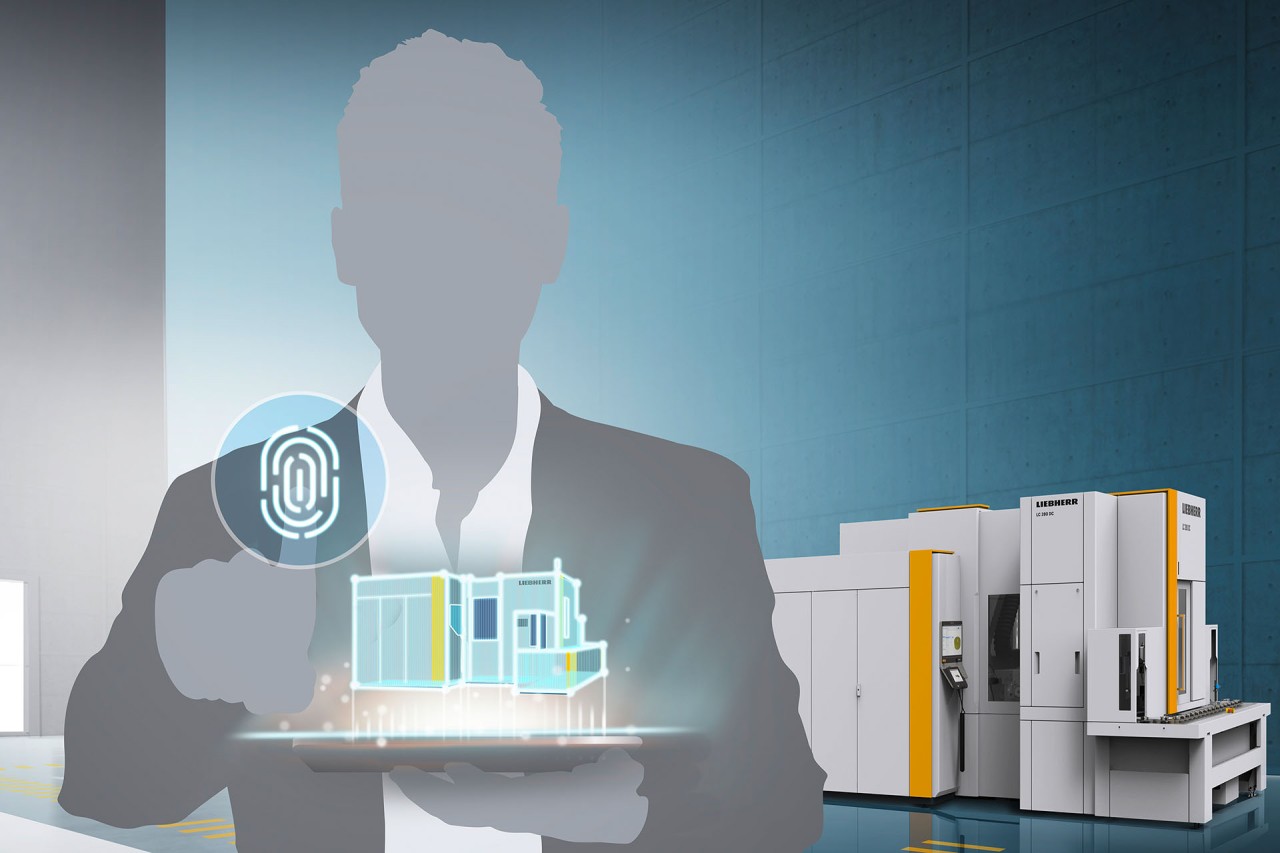
LHFingerprint – Capturing Machine Condition Transparently and Reproducibly
Easy entry into data-based condition analysis
Unplanned machine downtime causes high costs and makes reliable production planning more difficult. An objective assessment of machine condition also requires time, experience and reproducible data.
LHFingerprint creates the basis for detecting changes in machine behavior at an early stage, better avoiding unplanned downtime and preparing service assignments more effectively.
With LHFingerprint, Liebherr provides a tool for the automated recording of relevant machine and drive data. Data acquisition can be carried out by the customer. This creates a standardized data basis for assessing machine condition.
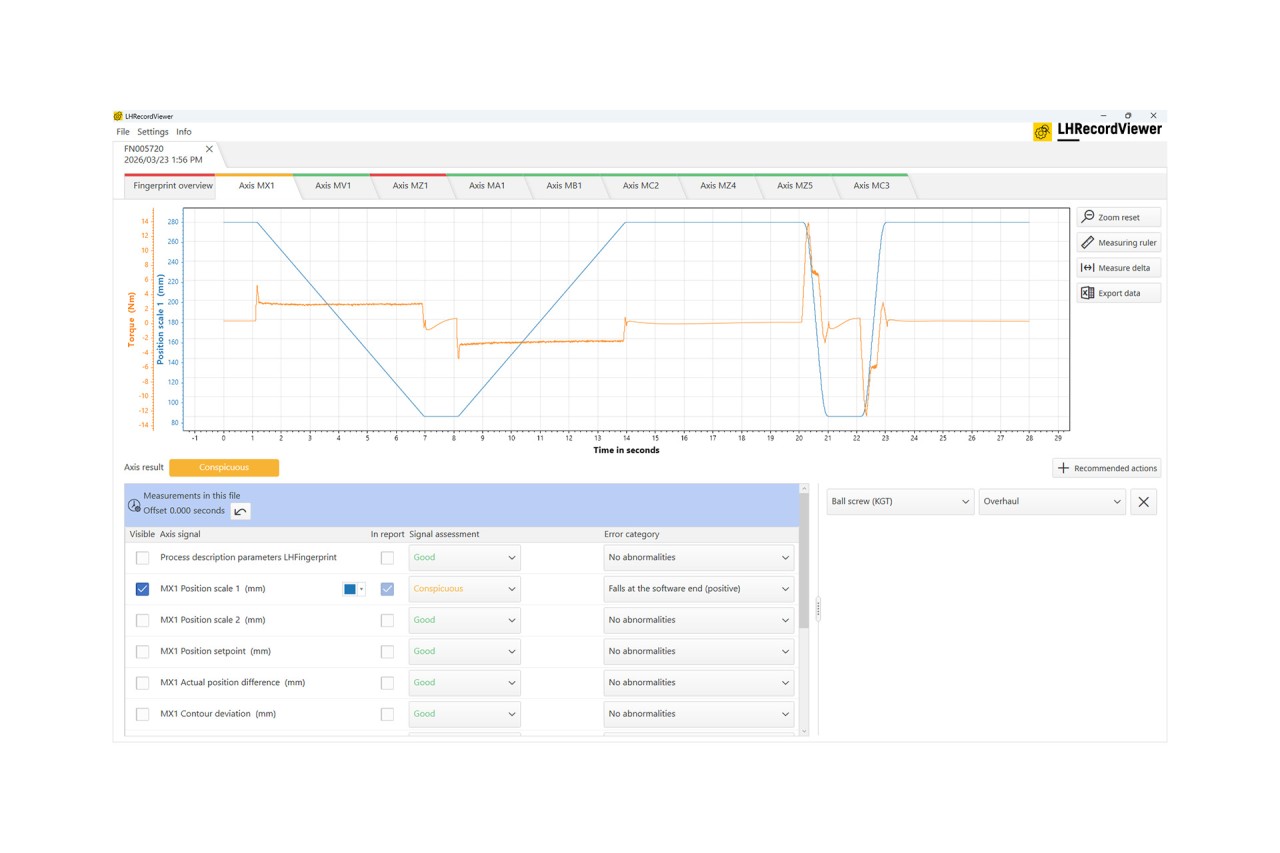
For further analyses, complex questions or the derivation of specific optimization measures, Liebherr After Sales experts are available to provide support at any time.
A guided workflow supports operating personnel during execution. The user guidance leads through the measurement process; integrated notes and warnings promote uniform execution and help reduce sources of error. This results in comparable measurement results with less manual effort.
The recorded data is visualized in LHRecordViewer and evaluated by Liebherr After Sales. The analysis supports technical condition assessment and can make changes visible compared with earlier measurements or the delivery condition.
This can reduce diagnostic effort and allow service assignments to be prepared more specifically. Regular fingerprints create transparency regarding the development of machine condition. Changes can be documented traceably and technical causes can be narrowed down in a targeted manner.
This supports predictive maintenance, well-founded service decisions and higher system availability. As part of the Liebherr Data Suite, LHFingerprint integrates into existing digital service processes and forms the basis for data-based maintenance and digital services throughout the entire machine lifecycle.
Highlights
- Automated recording of relevant machine, axis and drive data – Guided workflow with integrated notes and warnings
- Comparable measurement results through standardized data acquisition
- Visualization of recorded data in LHRecordViewer
- Early detection of changes in machine behavior
- Support for diagnostics, service planning and maintenance
- Contribution to improving machine and system availability
MyLiebherr: One Portal, Many Services
Customer portal for machines, documents, spare parts and digital services
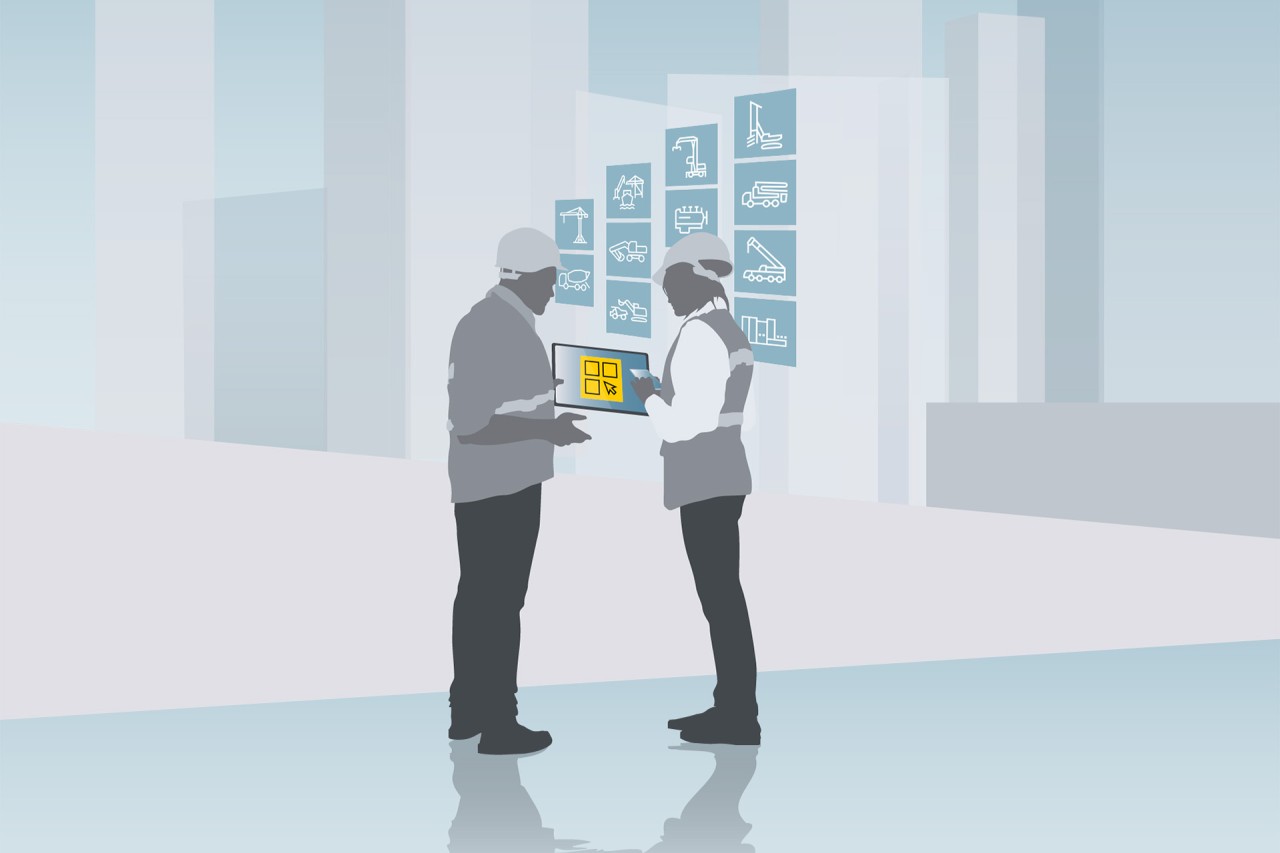
MyLiebherr simplifies access to information, spare parts and digital services and thereby supports fast service processes and high machine availability. Users can find information about their machines and systems, retrieve documents, order spare parts, purchase licenses and use available digital services.
After registration, machines and systems can be stored and managed in the portal. MyLiebherr provides access to available documents such as spare parts and service documentation or manuals.
In addition, prices and availability of spare parts can be checked, order status can be queried and machines, users and access rights can be centrally managed. Centralized access reduces search effort and accelerates service and procurement processes.
For quick access on site, Product QuickView supplements the customer portal. Via a QR code, users reach a machine-specific landing page where selected machine documents and relevant information are directly available. A MyLiebherr login is not required for this.
In this way, MyLiebherr combines central portal services with direct access to information at the machine. Information is available more quickly, service processes are simplified and spare parts orders are accelerated. This supports efficient maintenance and helps secure machine availability throughout the entire lifecycle.
Highlights
- Register and manage machines
- Access spare parts and service documentation as well as manuals
- Identify spare parts and order them in the online shop
- Keep track of prices, availability, order status and licenses
- Reduced search effort through central provision of information – Faster service and spare parts processes
- Centrally manage machines, users and access rights
- Product QuickView with QR code access to machine-specific information
- Selected machine documents available on mobile devices without MyLiebherr login
- Support for efficient maintenance and high machine availability
Reman / Retrofit – A Second Service Life for Gear Cutting Machines
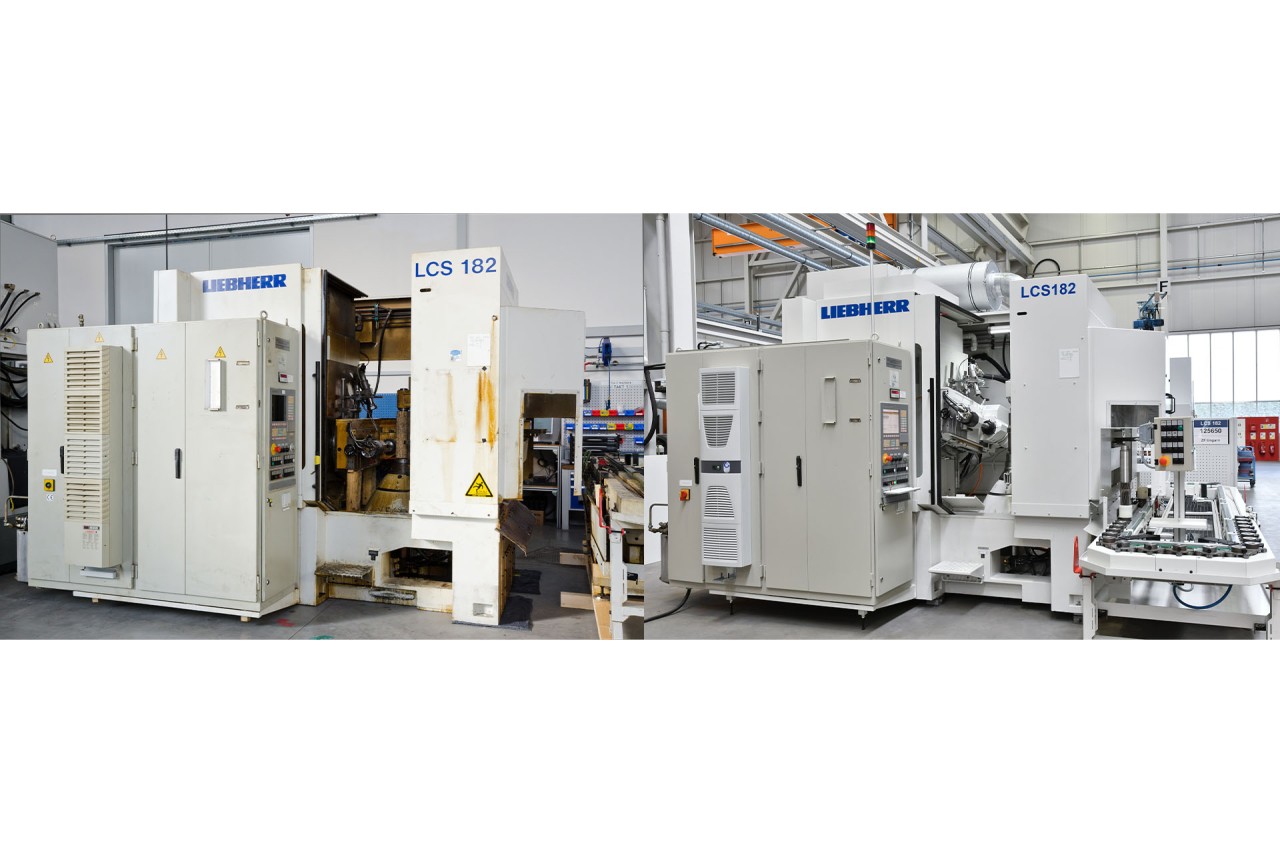
General overhaul, modernization and OEM service as an alternative to purchasing new machines
Remanufacturing and retrofit extend the service life of existing gear cutting machines, protect existing investments, support machine availability and offer an economical alternative to purchasing new machines.
Depending on technology, age and residual value, Liebherr offers reconditioned used machines, general overhauls and repairs in original manufacturer quality. Machines from the Reman program are technically inspected, selectively reconditioned and receive a new warranty.
As part of the general overhaul, required components are replaced; upgrades to machine performance, control system and interfaces are optionally available. The modular offering includes general overhaul, assembly repair, repair service, OEM spare parts and a global service network.
Highlights
- Protection of existing investments
- Economical alternative to new purchase
- Extension of the service life of existing machines
- OEM quality, inspection and new warranty
- Retrofit of control system and interfaces
- Assembly repair and on-site service by qualified personnel
- OEM spare parts for current and older machine models
- Contribution to securing machine availability
- Resource-saving continued use of the existing machine base
After Sales – Service Excellence Throughout the Entire Lifecycle
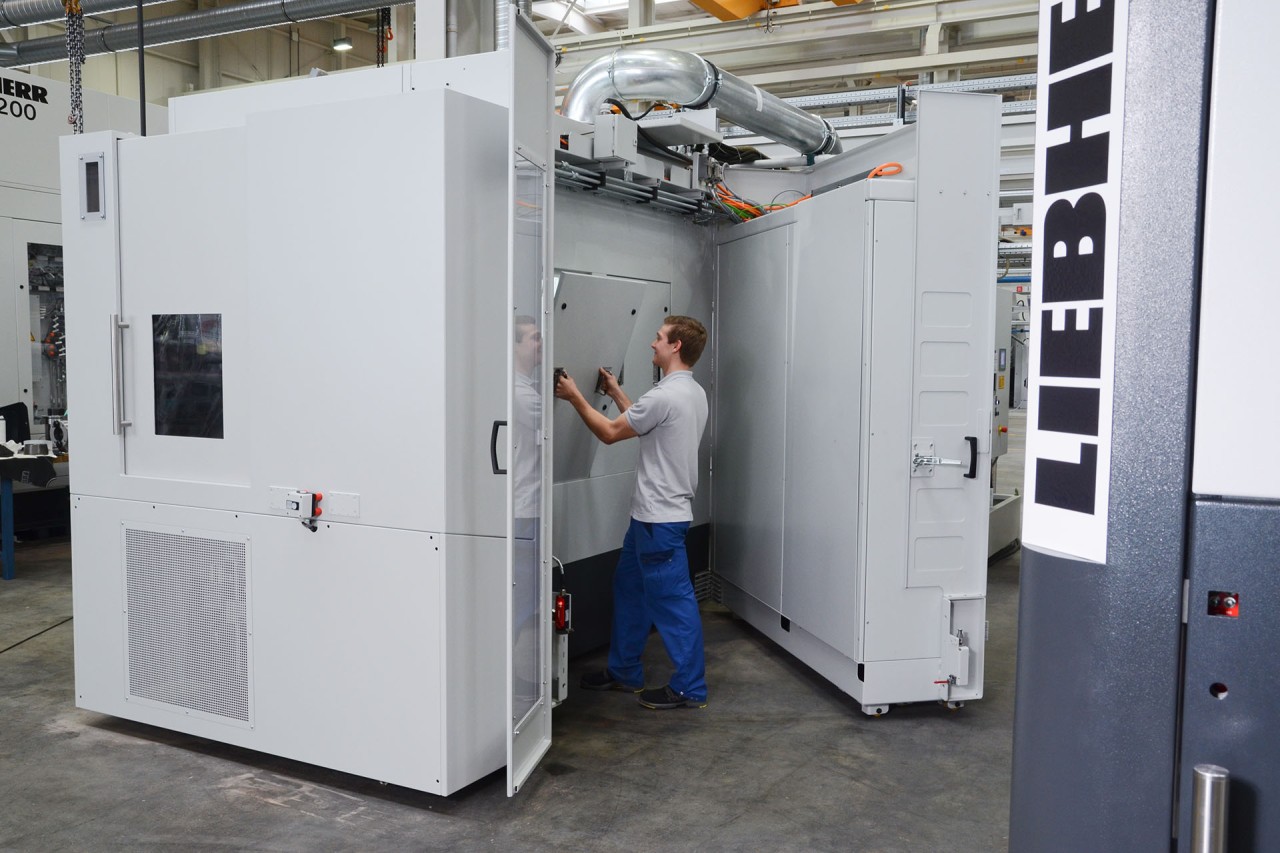
Remote service, genuine spare parts and preventive maintenance from a single source
Liebherr After Sales combines OEM know-how, genuine spare parts and digital services to secure machine availability, reduce downtime and operate machines economically throughout their lifecycle.
Remote service enables fast and secure analysis of the control system, error messages and relevant machine data. Remote service enables rapid diagnosis via a protected connection with server location in Germany.
Genuine spare parts are matched to the machine and technology. A central warehouse and regional service network support parts availability and contribute to reliable repair.
Preventive maintenance complements the service offering. Inspections, maintenance and documented recommendations for action help identify risks early, implement measures in a plannable way and reduce unplanned downtime.
Highlights
- Remote service for fast analysis and targeted support
- Access to control system, error messages and machine data
- Protected connection with server location in Germany
- Genuine spare parts for current and older machine models
- Central warehouse and regional service network for parts availability – Inspection, maintenance and recommendations for action
- Plannable downtime windows and better controllable maintenance costs
- Reduction of downtime risks through OEM service
- Digital services up to LHFingerprint
Automation Systems
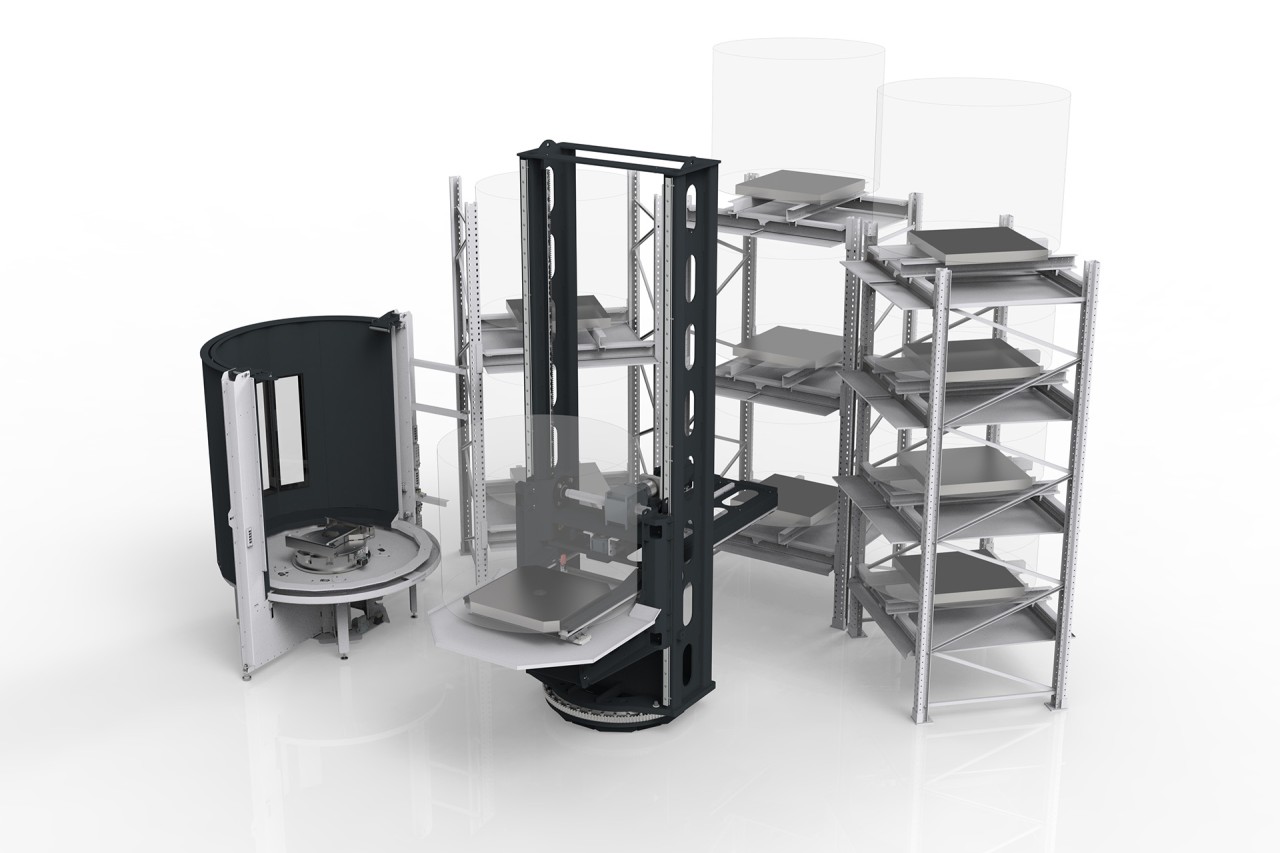
Liebherr Automation Systems – Rotational Loading System for Even Higher Weights
More performance in a proven system concept
High load capacity with increased storage density – for workpieces up to 2,000 kg and 1,400 mm interference diameter.
Maximum value creation per part
Increase of spindle running time to up to 90 percent – while simultaneously reducing unit costs.
Automation that advances your production
Automates up to two machine tools – ideal for single-part and small-batch production.
Efficiency for manufacturing
Setup parallel to main time for higher productivity – optimum utilization through forward-looking resource and order planning.
Modularity that creates freedom
Flexibly adaptable to any application – configure machines, racks and setup stations as required.
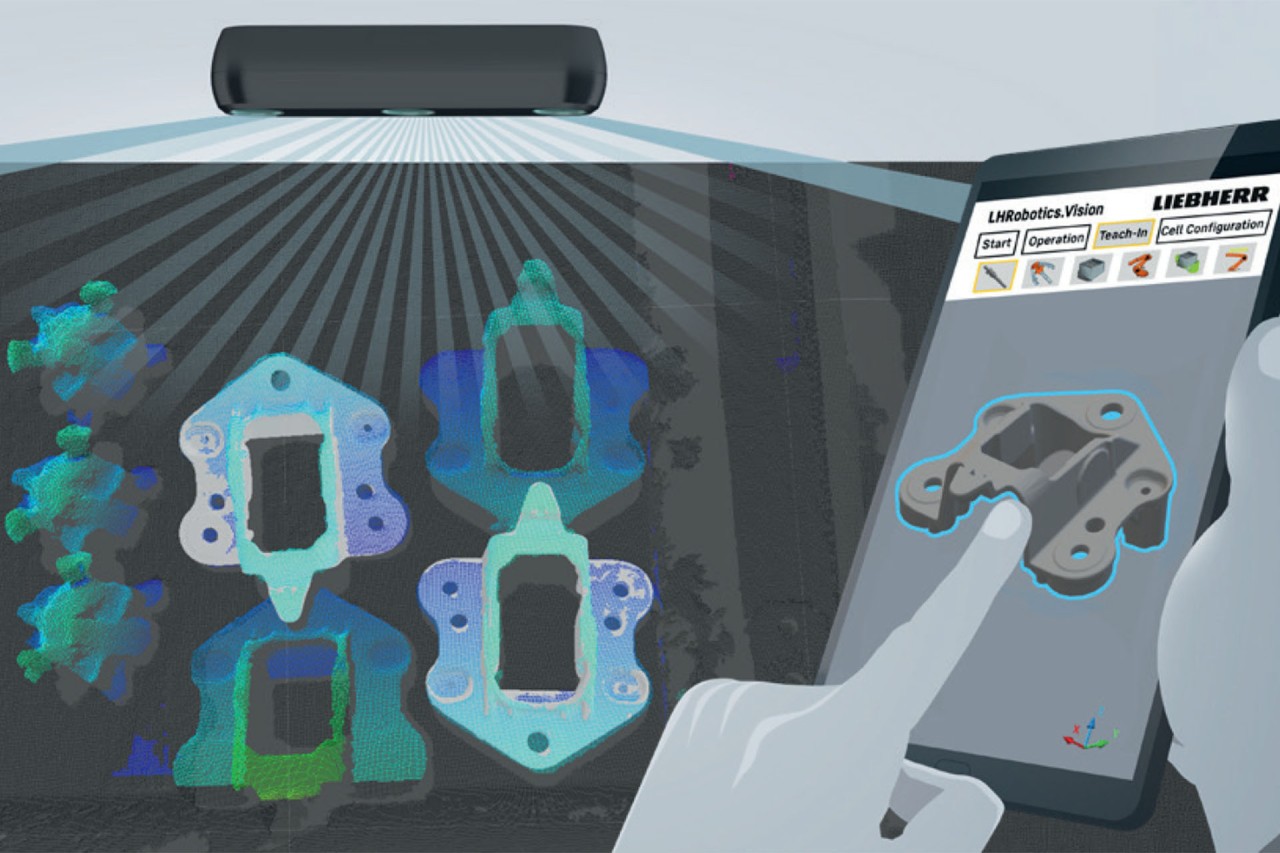
LHRobotics.Vision – Bin Picking Made Even Easier, Smarter and More Stable
DETECT – focus on the essentials
Precise workpiece recognition – position determination of workpieces.
From bulk material to oriented placement
Complete path planning for the robot – perfectly planned for every situation.
Vision technology that gets more out of the process
Unlimited expansion possibilities – AI segmentation, overlapping, contour fitting, closed-loop parametrization and empty space check.
Open interfaces
Accept no restrictions – we support all common manufacturers of 3D camera systems and robots.
Digital twin for planning certainty
Find optimization potential overnight – safely test and validate gripper concept, cell layout and gripping points.
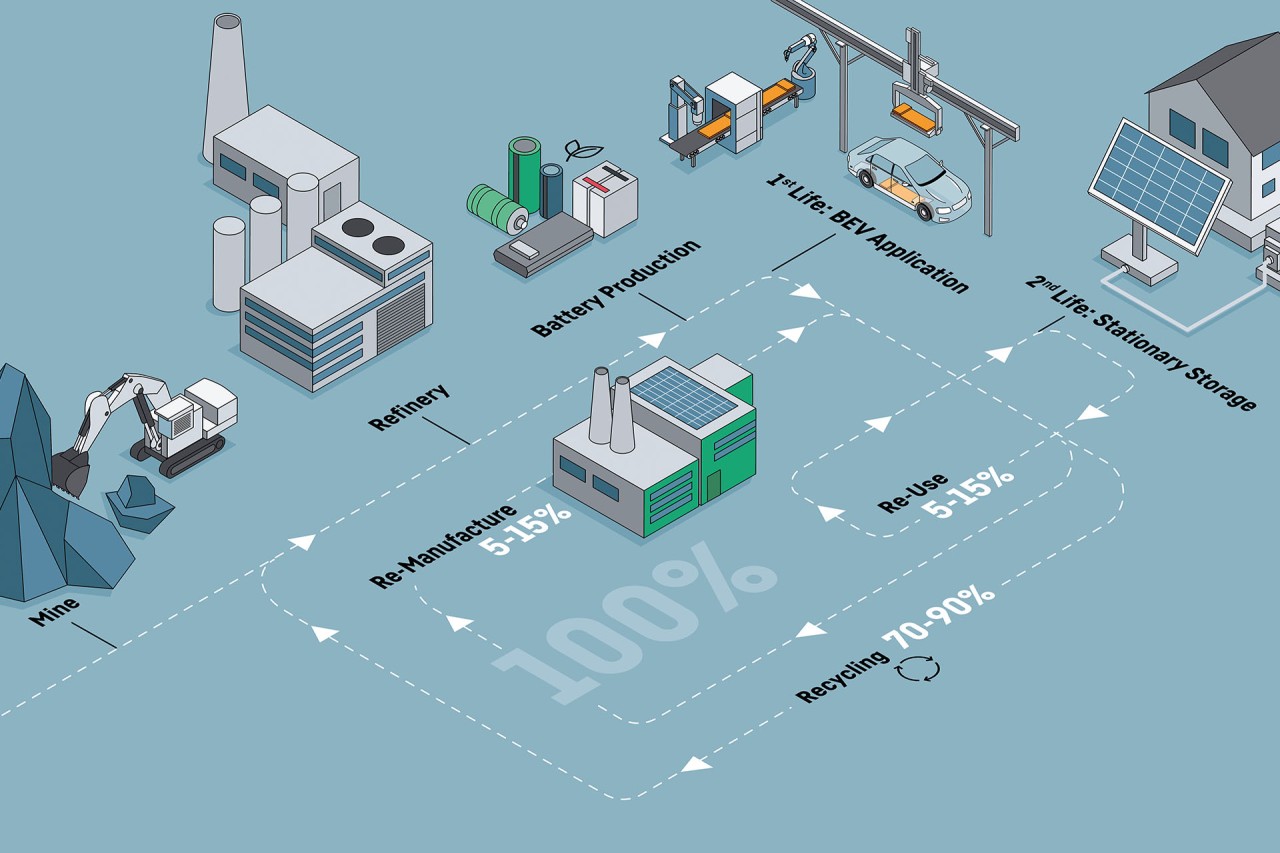
Circular Economy in Electromobility: High-Voltage Battery Disassembly
Automated disassembly of high-voltage batteries
Liebherr develops automated disassembly solutions for high-voltage battery systems. The increasing spread of battery-electric vehicles raises questions about the ecological footprint of vehicle batteries, but also about raw material security and availability and therefore the competitiveness of German and European industry. Regardless of whether battery components are to be reused or recycled, disassembly of the battery systems is the first necessary step in all common process routes. The unscrewing process is a central part of disassembly.
With LHDismantle, Liebherr offers a patented solution that sets new standards in speed and process stability.
Highlights
- Tactile fine positioning without vision system
- Robust against dirt, corrosion and light
- Short cycle time, 9-11 seconds per screw
- Flexible position corrections through intelligent sensor technology