




Southeast Asian iced coffees: Enjoyment from Vietnam and Thailand
Southeast Asian iced coffees combine strong aromas, traditional preparations, and a refreshing lightness. Vietnamese iced coffee (Cà phê sữa đá) impresses with its combination of strong Robusta, sweetened condensed milk and the characteristic Phin filter method. Thai iced coffee (Oliang) is noted for its aromatic, earthy notes that are created by blending with soybeans, corn, or sesame seeds. Both beverages are deeply rooted in the local coffee culture and are traditionally served on ice because of the warm climate. This article will give you an insight into the special characteristics, preparation, and flavour of these two variants of iced coffee.
The key points
- Vietnamese iced coffee combines Robusta, a Phin filter, and sweetened condensed milk
- Thai Oliang consists of coffee and roasted ingredients like soybeans, corn, or sesame seeds
- In terms of flavour, Vietnamese coffee has a stronger, caramel-like taste, whereas Thai coffee is more aromatic and complex
- They are both very easy to make yourself at home
What is Vietnamese iced coffee?
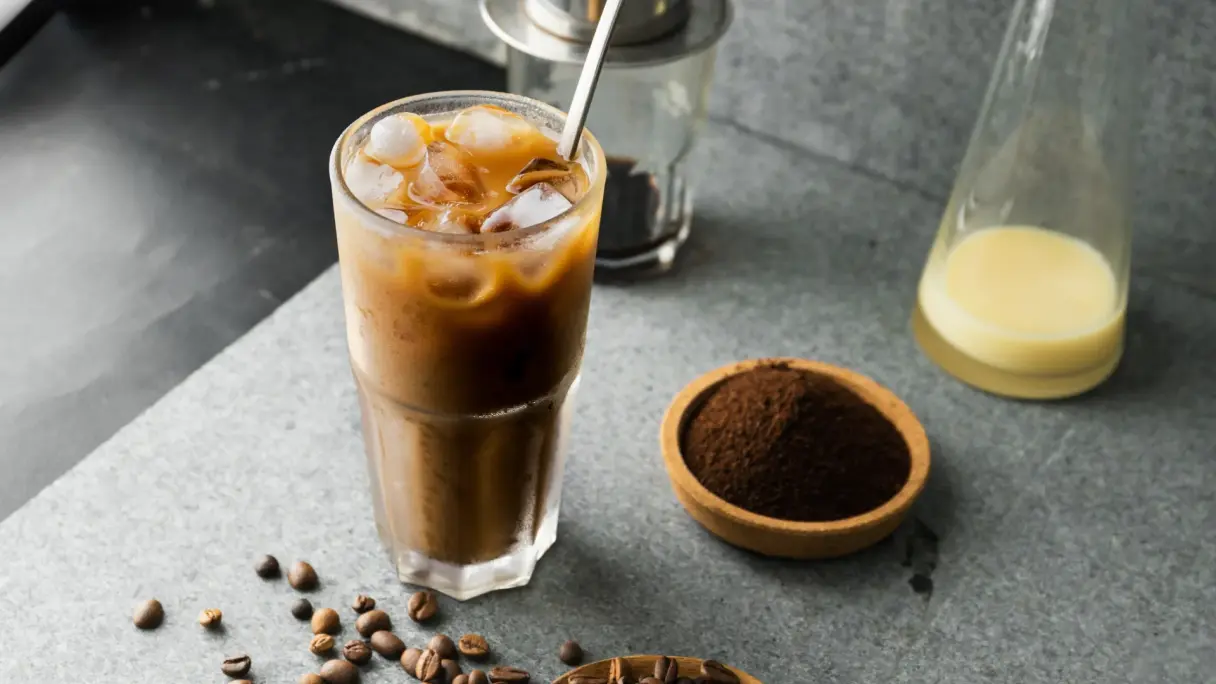
Cà phê sữa đá is one of the best-known beverages in Vietnam. It’s almost always based on dark roasted Robusta, which delivers intense, nutty and chocolatey aromas.
The coffee is prepared in a Phin filter, a metal or ceramic filter that allows the water to drip slowly through the powder, producing a concentrated extraction.
The coffee trickles directly over ice cubes, which cools it down immediately and makes it refreshing. Sweetened condensed milk creates a creamy, caramel-like balance to the strong Robusta notes.
This method of preparation is closely linked to the tropical climate of Vietnam, where cold coffee has long been an established part of daily life. Vietnamese iced coffee combines tradition, intensity and refreshment, making it a characteristic example of Vietnamese coffee culture.
Vietnamese iced coffee recipe: How do you make Cà phê sữa đá at home?
To prepare it, you’ll need to use around 20 g of Robusta powder and hot water at a temperature of 95 °C.
First of all, you place ice cubes and one to three teaspoons of sweetened condensed milk in a glass. The Phin filter is filled with coffee powder and moistened slightly.
Then the rest of the water is poured on and the coffee drips slowly into the glass for three to five minutes.
The direct extraction on ice cools the coffee quickly, giving it its refreshing note.
After the filter is removed, everything is stirred around thoroughly to ensure the creamy sweetness is distributed evenly. The result is an intense iced coffee with a caramel flavour and a full-bodied texture that is easy to prepare authentically at home.
What is Thai iced coffee Oliang?

Thai iced coffee Oliang has clear differences from its Vietnamese counterpart. The coffee powder that’s used is a blend of coffee and roasted ingredients such as soybeans, corn, sesame seeds, or cardamom.
This is what gives Oliang its characteristically aromatic, earthy flavour. It’s brewed with a fabric filter, known as a tungdtom, which allows for clear extraction.
The coffee is mixed with sweetened or unsweetened condensed milk, coconut milk, or syrup and served over ice. Extra toppings like whipped cream or syrup may be added, depending on the region. Oliang impresses with its variety of aromas and is an integral part of Thai street cuisine.
Difference between Vietnamese and Thai iced coffee
Both beverages use dark roasts and milk ingredients, but differ significantly in their taste and preparation.
Vietnamese iced coffee is based almost exclusively on Robusta, which is extracted in a particularly strong way in the Phin filter. The combination with condensed milk creates a creamy, sweet depth.
By contrast, Thai Oliang uses special blends of coffee, soybeans, corn, or sesame seeds, which gives it an earthy, aromatic flavour. The method of filtering – metal filter in Vietnam, fabric filter in Thailand – also creates different textures. While Cà phê sữa đá provides an intense, sweet coffee experience, Oliang impresses with its aromatic notes and complexity.
Both drinks are refreshing, but cater for different taste preferences.



This text has been machine translated from English.