

Tonka bean – flavour and uses for the spice.
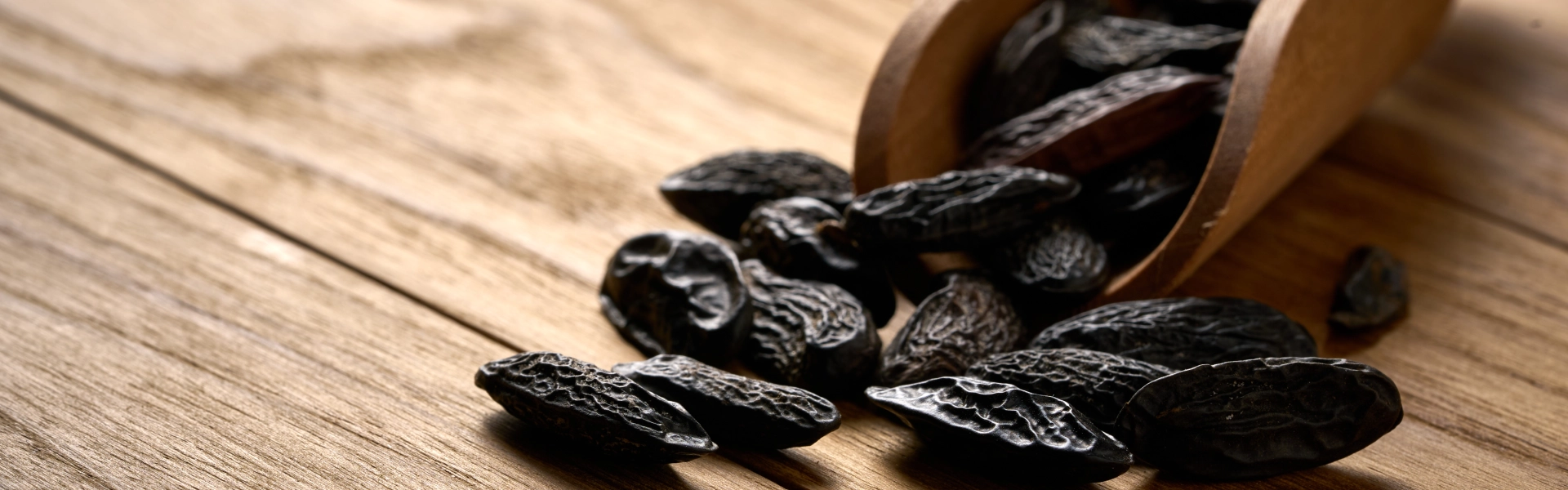
The tonka bean was mentioned for the first time officially by French botanist and pharmacist Jean Baptiste Aublet. He collected them in the year 1755 for his herbarium on a trip to Mauritius. The small, dark, slightly shrivelled-looking beans did not appear promising at first glance. But there’s quite a lot going on beyond that rather unassuming exterior – find out for yourself.
The key points
- Tonka beans have a complex flavour that can be perceived as vanilla, almond or caramel, for example.
- You can use tonka beans to add a special touch to crème brûlée, panna cotta, tonka bean parfait, semolina pudding, rice pudding or tiramisu, as well as coffee and cocoa.
- The beans are soaked in rum in order to trigger a fermentation process.
- The fermentation process lowers the coumarin content of the tonka beans. Used in moderation, tonka beans don’t pose a threat to your health,
- but because of their intense flavour, you don’t really need large quantities to flavour your food.
So what do they taste like?
If you asked ten people this question, you’d probably get ten different answers. For many people, the flavour is reminiscent of vanilla, but there are also hints of caramel, almonds, marzipan, rum and even sweet woodruff. The coumarin part of the tonka bean is probably responsible for the woodruff scents. Coumarin is a naturally occurring herbal substance but should not be ingested in large quantities, as it can be harmful to your health. More on that later.
The rum notes in the tonka bean are there for a completely different reason: After they’re harvested, the seeds of the fruit are soaked in rum for one day. This spurs a fermentation process which lowers the coumarin content in the tonka bean. It’s only after they’ve been fermented that the coumarin content is low enough for the beans to be sold in the EU. Whether the tonka beans taste like vanilla, almond or caramel, in the end, probably has more to do with individual associations.
And where do tonka beans come from?
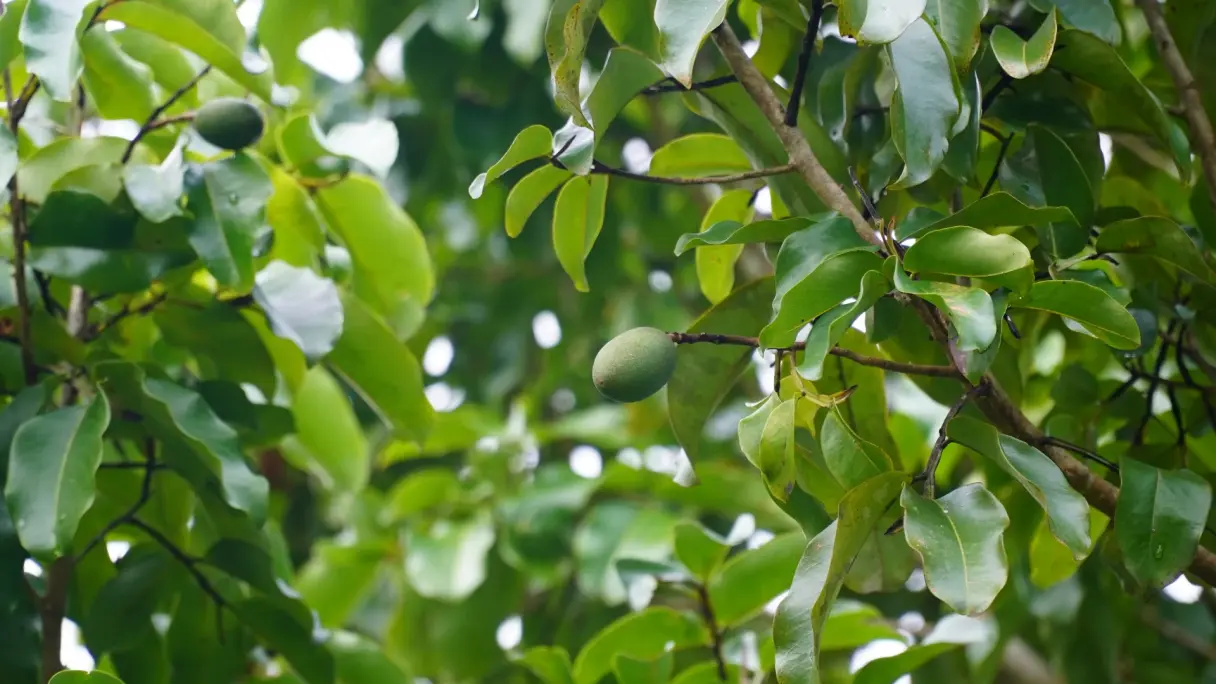
Botanically speaking, tonka beans are not really beans at all. The tonka bean, also called dipteryx odorata, belongs to the family of Papilionoideae. The “beans” are the seemingly mango-like seeds of the tonka fruit. They grow on the tonka tree in the tropical rain forests of South America and in parts of Africa. The tree can grow to a height of up to 30 m and can produce up to 15 kg of tonka beans.
For the native inhabitants of Venezuela, tonka beans were once used as a form of currency and were also known to have medicinal properties. Therefore, the seeds of the tonka fruit were often strung onto necklaces and worn as a lucky charm and as a protection against diseases. Even today, the tonka bean not only finds its way into various dishes but, because of its intense scent, it is also used for cosmetics and perfumes.
Uses of the tonka bean
Because of the high coumarin content, tonka beans shouldn’t be consumed in large quantities, which is also not really necessary because the flavour is so intense. A nutmeg grater is sufficient to provide just the right amount. But tonka beans can also be used chopped or whole to flavour dishes, for example, cooked into cream or left overnight in milk. You can then re-dry the tonka beans and use them again later – up to ten times.
One tonka bean weighs between 1–2 g on average and contains 2–3 % coumarin. European agencies have declared that consuming up to 0.1 mg of coumarin is completely harmless. So tonka beans can be used in all sorts of dishes without causing any concern.
Preparing tonka beans
There are many possible uses for tonka beans. They’re often added to sweet desserts. From crème brûlée, panna cotta and tonka bean mousse or tonka bean parfait, to flavoured pudding, rice pudding or tiramisu, these little beans don’t know any limits. Coffee and hot cocoa can also be refined with tonka beans. But tonka beans are also great in savoury recipes, like hearty meat or tender fish dishes.
This might also interest you
Storing spices correctly: seven simple tips for the home!
Cinnamon tree and cinnamon: origin, taste and preparation