




Sugar: calories, need and origin of the sweetener
Sugar is one of the foods we consume every day – whether for baking, in coffee or in jam. In fact, today, it can be found almost everywhere. But what about the calories contained in sugar? Learn how sugar has become a consumer product over the course of history and what the recommended daily amount of sugar is in terms of calories.
The key points
- Recommendation: the WHO recommends a maximum of 25-50 g of sugar per day (equivalent to 6-12 teaspoons).
- Hidden sugar: sugar is often found in foods such as bread, sauces or ready meals – under a variety of different names.
- Health: sugar provides energy, but no nutrients – too much can cause obesity and tooth decay.
- Storage: sugar has a long shelf life, but should be kept dry and separate from foods that have a strong smell.
Sugar in food – list of contents
Foods with sugar and its history
It was only in the early 19th century that it was discovered that the common sugar beet contained the sugar that is used so widely today. As trivial as sugar seems today, it was a significant discovery at the time. Until then, the only sugar available in Europe apart from honey and sweet fruit was imported, and therefore particularly expensive, sugar from sugar cane. Nowadays, sugar is a widely used food and ubiquitous throughout society. Researchers and society as a whole are now asking themselves how much sugar is still healthy given the high calorie content.
Once you start consciously paying attention to it, it soon becomes clear that sugar is present in almost all foods. But sugar has many names and is often hidden in foods on your shelf or in your fridge where you wouldn’t expect to find it. Sucrose, glucose and fructose are just three names for sugar and the associated calories, but the list goes on and on. Sugar is an excellent flavour enhancer and rounds off the taste – so that many food manufacturers take advantage of this. If you want to escape it, you have to study the list of ingredients on the packaging carefully or cook at home yourself. Despite its high calorie content, sugar plays an important role in the kitchen and is an important seasoning in savoury dishes.

Sugar and calories: how much should you eat?
Since our household sugar consists entirely of glucose and fructose, it primarily provides us with one thing – energy! But what amount of sugar is necessary and good? The white substance provides us with none of the vitamins and minerals, and fats and proteins which are important for life. What’s more, our body is able to obtain the energy-rich glucose with very little effort from other carbohydrates such as starch. The need to consume foods containing sugar and lots of calories is therefore all but non-existent. If you eat too much of it however, then after a while your body weight is likely to rise. The same applies of course to too much fat or alcohol. Because if the body is supplied with more energy than it needs, excess weight is inevitable. If you are concerned about sugar and its calories, the following applies: indulging in moderation does no harm (but don’t forget to brush your teeth or there is a risk of tooth decay!) The World Health Organisation (WHO) recommends limiting free sugar consumption to less than 10 percent of daily energy intake – preferably less than 5 percent. For an adult, this corresponds to about 25–50 grams of sugar per day, i.e. about 6–12 teaspoons. This amount of sugar has about 100–200 calories.
You may have noticed that there is no best-before date on sugar packaging. The EU's Food Information Regulation stipulates, in fact, that sugar - in addition to some other foods - is exempt from the obligation of having to show a best-before date. In other words, unlike the food in your fridge-freezer, you don’t have to worry about sugar spoiling. Just make sure that you protect your sugar supplies from moisture. It is also advisable to keep it separate from other foods because it quickly absorbs odours.
Always enjoy your sugar in moderation so that you don’t consume too many calories from sugar and be aware of the risks of high consumption.
This might also interest you

Snackification
Are you keen to embrace snackification to make your meals flexible and healthy? Find out how you can snack flexibly, healthily and really enjoy what you eat.
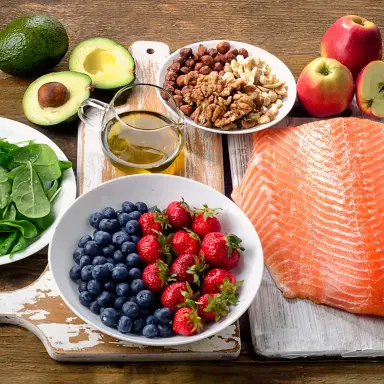
The top 10 foods for healthy skin
From avocados and sweet potatoes to salmon, find out which foods and their nutrients protect and regenerate your skin. Read on to find out.

Vegan fridge cake – no-bake joy
A vegan fridge cake is the perfect opportunity for a new flavour experience that you can conjure up without the need for an oven.