



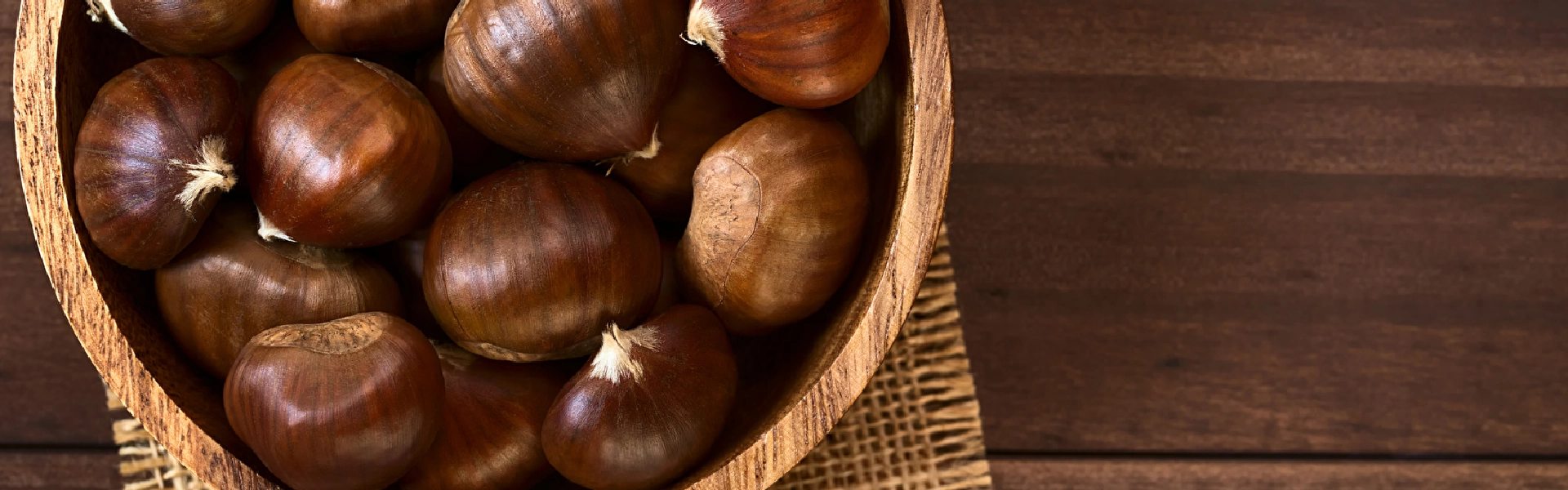
Sweet chestnut: a hearty nut
As the weather begins to turn in autumn and winter, it’s warming and hearty food that we want. Sweet chestnuts – sometimes also called marrons – are just the thing. But are all chestnuts the same? And what’s the best way to prepare sweet chestnuts? We reveal all!
The key points
- Sweet chestnuts are also known as marrons – they’re different from inedible horse chestnuts.
- They are rich in nutrients, low in fat and contain lots of complex carbohydrates.
- Sweet chestnuts should be stored in a cool, dry place – ideally in a BioFresh safe from Liebherr.
- If you want to eat them, they need to be heated, for example by roasting or boiling them.
- Their flavour is mildly sweet, and their flesh is floury and aromatic.
What’s the difference between sweet chestnuts and other chestnuts?
You’ll have already realised That sometimes the term marrons is used, and sometimes chestnuts. But is there a difference between sweet chestnuts and regular chestnuts? A distinction can be made between the three terms: chestnuts, marrons and late chestnuts. Sweet chestnuts have a dark skin, their flesh is difficult to remove from the skin and they have a really short shelf life. Marrons have a particularly aromatic flavour, their flesh is easier to remove from the lighter skin and they also have a longer shelf life than chestnuts. The late chestnuts differ mainly in the fact that they do not fall from the tree themselves but have to be picked.
Storing chestnuts
If you are lucky enough to get hold of fresh sweet chestnuts, they can be kept in the fridge for a few weeks. Fresh sweet chestnuts will stay particularly fresh in the fridge thanks to the innovative refrigeration technologies from Liebherr. A BioFresh safe provides the ideal temperature and moisture conditions to slow down the natural ripening process. This allows sweet chestnuts to retain their aroma, consistency and valuable nutrients for much longer.
When you buy chestnuts, the skins should be smooth and glossy and not have any holes. If you shake a single nut, it should not rattle. Make a cross-shaped incision into the chestnut and roast the nut in the oven or boil it in water until the peel opens - this takes about 20 minutes. The velvety, leathery skin surrounding the fruit flesh is usually quite difficult to remove. It’s easier if you place the peeled sweet chestnuts in hot water for a few minutes.
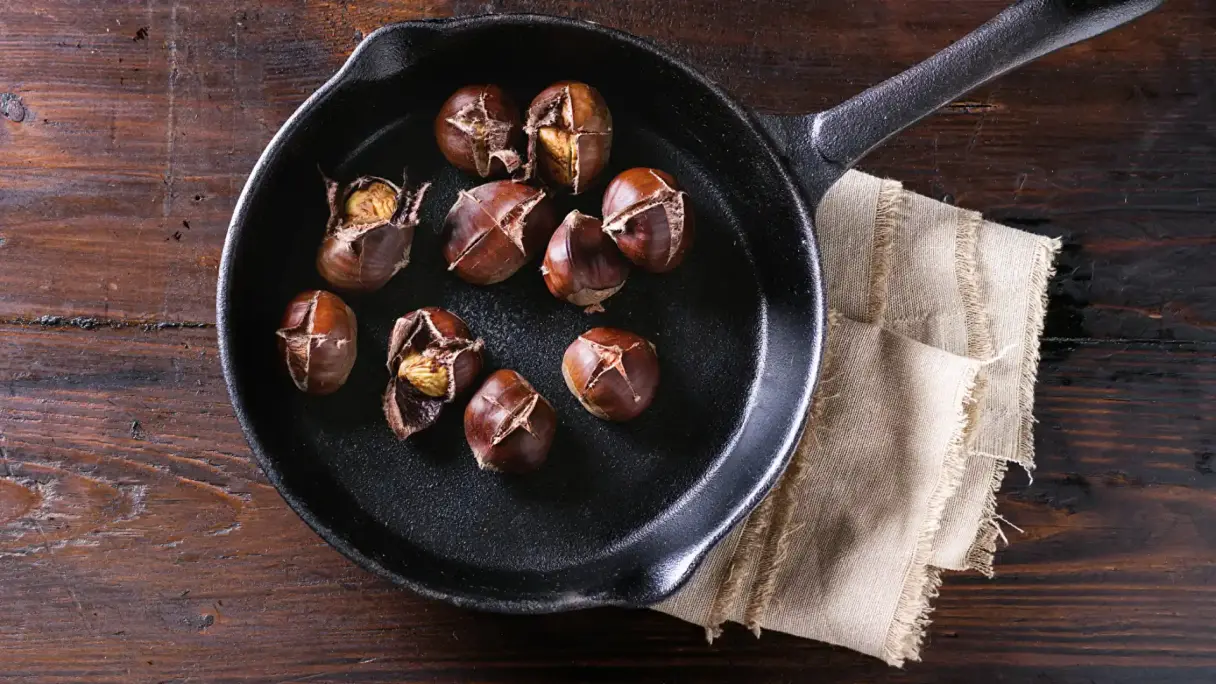
Sweet chestnuts and marrons – healthy and delicious
To start off with, sweet chestnuts are not suitable for consuming raw because they contain very large quantities of tannins. These tannins are the reason for the tart taste. But cooking makes their flavour wonderfully sweet. Half of the nut is made up of water. The other half consists mainly of carbohydrates and also two grams of fat and protein (per 100 grams). The carbohydrates are predominantly starch - this gives the chestnuts their characteristic floury texture.
When compared to other nut representatives (e.g. walnuts or hazelnuts), a feature of the chestnut is their low-fat content of only 2 percent - other nuts usually contain over 50 percent fat.
Marrons are said to strengthen the heart and kidneys because of their nutrients and deliver positive health benefits. Chestnut leaves are also useful as a household remedy. A steamy bath with the leaves is said to help with an irritable cough. First and foremost, however, we love sweet chestnuts for their tasty and versatile fruits.
This might also interest you
Buying and storing unpackaged food
Would you like to shop more sustainably in future? With unpackaged food, you are taking a step towards greater sustainability. We’ll show you.
Eating when you’ve got flu – speed up your recovery with these nutrients
Is there a full-blown flu outbreak and are you grappling with yet another annoying infection? We’ll tell you what food you should eat to combat flu.
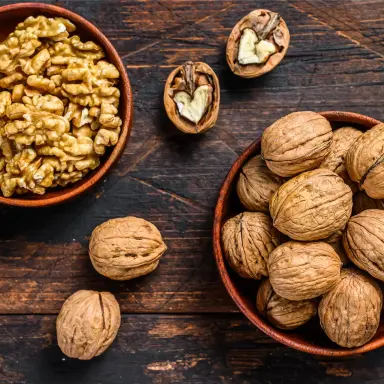
Storing walnuts so they stay fresh
How can you store walnuts to keep them fresh? We have the answer and will show you how to freeze walnuts