



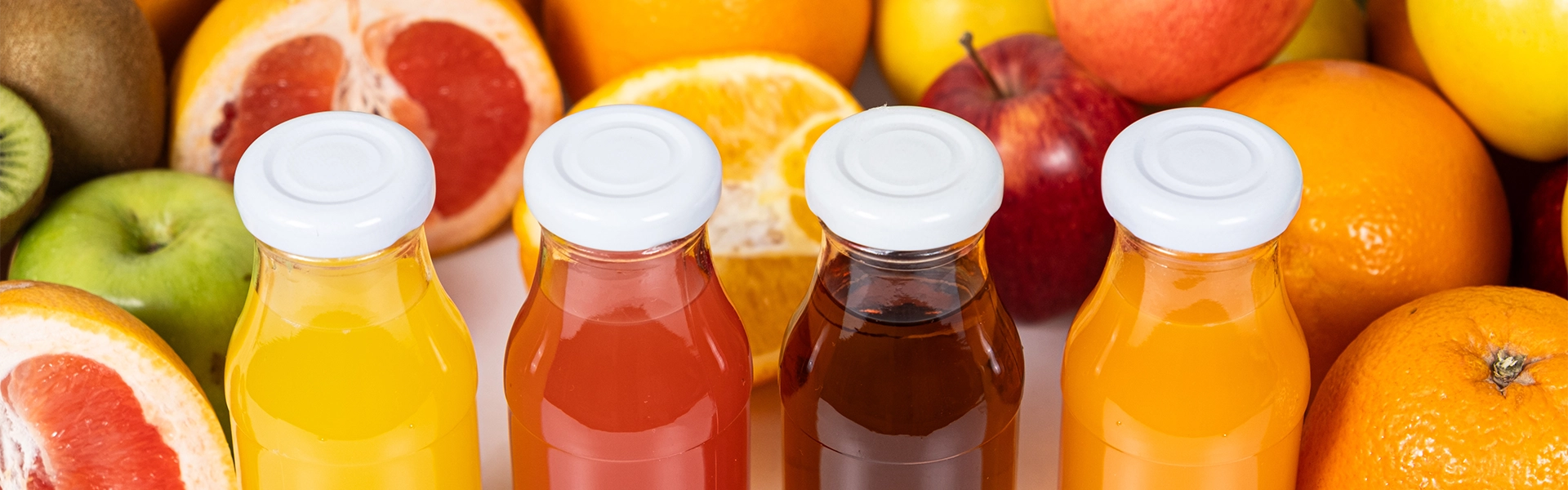
Fruit juice: how healthy is it really? Nutritional values, tips and facts
For many people, fruit juice is a staple part of a balanced diet, but how healthy is it really? Does fruit juice contain too much sugar, or do the benefits of vitamins and minerals outweigh this? In this article, you’ll find out exactly what fruit juice is, how healthy it really is and how to store it correctly to preserve its nutrients for as long as possible. In addition, we’ll clarify whether freshly squeezed juice is the better alternative and which fruit juice gives you the biggest health benefit.
Storage time*
| BioFresh Fruit & Vegetable safe just above 0 °C with high humidity | Not recommended |
| BioFresh Meat & Dairy safe just above 0 °C with low humidity | 5 Days |
| BioFresh Fish & Seafood safe -2 °C with low humidity | 5 Days |
| Fridge compartment 7 °C | 3 Days |
| Freezer compartment -18 °C | 6 Months |
The key points
- Fruit juice: 100% fruit content, no added sugar, no preservatives
- Advantages and disadvantages: rich in vitamins and minerals, but high fructose content
- Juicer: high nutrient content, but loss of fibre
- Shelf life: up to 36 months when sealed, a few days once opened, 1-2 days when freshly squeezed
What is fruit juice?
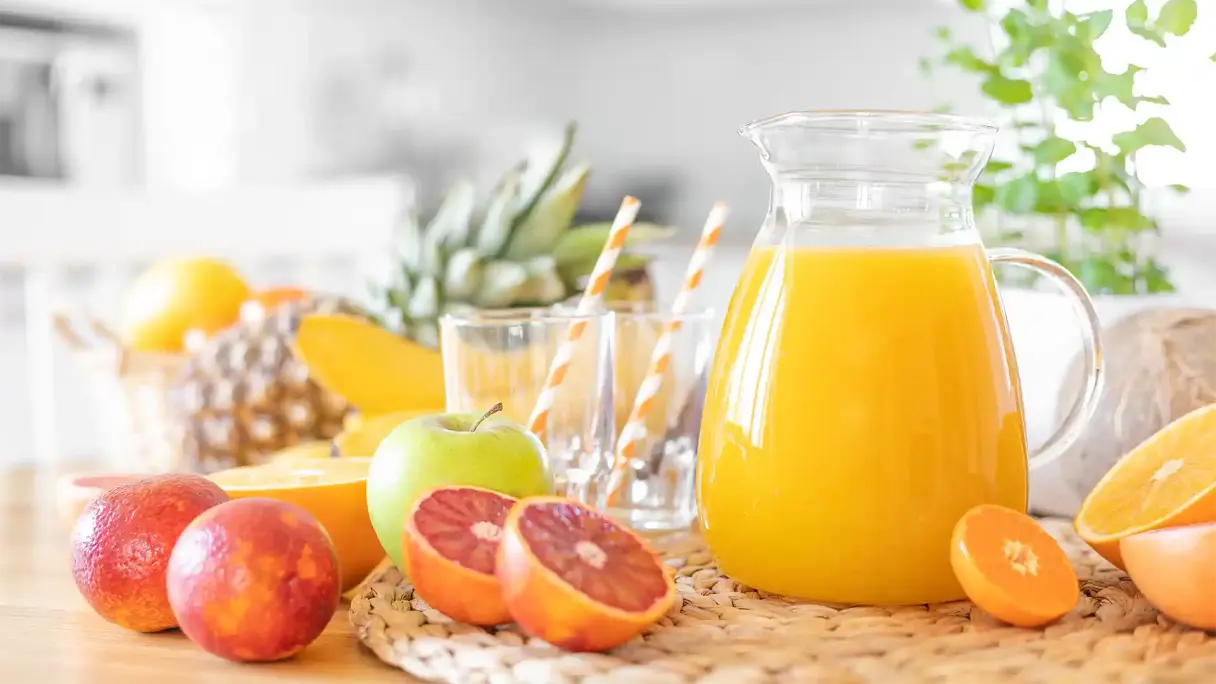
Fruit juice is a drink that is made exclusively from fresh or preserved fruit and, according to the law, must have a fruit content of 100%.
It does not contain any artificial additives like sugar, preservatives, colourings or flavours and always retains the typical taste, colour and aroma of the fruits that are used. The term “fruit juice” includes both direct juices and juices that are reproduced from fruit concentrate.
How is fruit juice different to fruit nectar and fruit juice concentrate?
A key difference between these variants is their fruit content. Pure fruit juice is always made 100% from fruit, as is stipulated by the European Fruit Juice Directive. In contrast, fruit nectar has both water and sugar or other sweeteners added to it. The fruit content is much lower here and fluctuates, depending on the type of fruit, between 25 and 50%.
What makes fruit juice concentrate different is the fact that here the water that is naturally contained in the fruit juice is partially removed. This concentrate is often used to make the fruit juice easy to store and transport because it takes up less space. When the concentrate is subsequently processed to make “fruit juice from fruit juice concentrate”, only the amount of water that was removed is added back to the concentrate.
What varieties are there?
Fruit juices come in a range of different varieties. Classic varieties include apple juice,orange juice,grape juice and pineapple juice. Not all types of fruit are suitable for making fruit juice. Acidic fruits like currants often contain too much acid, while other fruits like bananas have too thick a consistency.
What does “fruit juice with no added sugar” mean?
The phrase “no added sugar” indicates that no industrially produced sugar or sweetener has been added to the product. Nevertheless, the juice may naturally contain fructose as it originates from the juice itself. This means that the natural sugar content will vary with the type of fruit.
How healthy is fruit juice?

Fruit juice provides important vitamins and minerals such as vitamin C and potassium, but also contains lots of natural fructose and is high in energy. This is why it should only be consumed in moderation to reap the nutritional benefits without excessive intake of sugar. A glass of orange juice (200 ml) provides almost half a person’s daily vitamin C requirement, but contains a similar amount of sugar to a soft drink.
Fruit juices and how healthy they are
Fruit juices will contain different levels of energy and nutrients depending on the type of fruit. For example, apple juice and orange juice contain about 45 kilocalories and around 10 grams of sugar per 100 ml, while grape juice is richer in energy with 53 kilocalories and 14.8 grams of sugar. Pineapple juice likewise contains 53 kilocalories per 100 ml, but only around 10 g of sugar.
When it comes to health, choice of juice depends on nutrient requirements.Orange juice is renowned for its high vitamin C content, apple juice contains valuable antioxidants, and pineapple juice provides anti-inflammatory bromelain. Although grape juice provides lots of antioxidants, it is very rich in sugar.
Fruit juice can be a substitute for a portion of fruit in exceptional cases, but it contains very little fibre, which is vital for making you feel full and for stable digestion. Instead, the high sugar content quickly drives up energy and blood sugar levels. Whole fruits are therefore a better choice as a snack or as part of a meal.
The German Nutrition Society recommends no more than one small glass of fruit juice (200 ml) per day, ideally diluted as a juice spritzer with three parts water to one part juice.
How healthy is juice from a juicer?
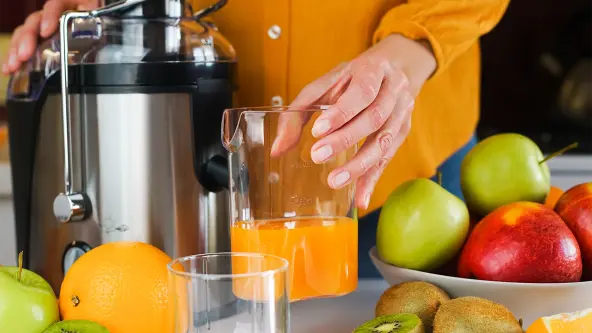
Freshly squeezed juice from a juicer is rich in vitamins and nutrients. However, when it goes through a juicer, the juice loses vital fibre, which is essential for good digestion. What’s more, the effect of oxygen also causes freshly squeezed juice to lose nutrients quickly, which is why it should be consumed as soon as it is prepared if possible.
What advantages does freshly squeezed juice offer over purchased juice?
Freshly squeezed juice impresses with its high vitamins and minerals content because it is produced more gently and contains no artificial additives. In addition, the blend can be adapted individually, for example by adding vegetables for a lower-energy and lower-sugar alternative.
How long does fruit juice last for?
Sealed fruit juice that has been processed industrially has a shelf life of between 12 and 36 months, depending on its packaging and storage conditions. Opened juice should be stored in the fridge and consumed within around 3 to 14 days. Freshly squeezed juice is more delicate and should ideally be drunk immediately after it is prepared or be kept refrigerated for just a short time.
How can I keep fruit juice fresh for a long time?Unopened juice from a Tetra Pak or glass bottles often has a long shelf life due to pasteurisation, as long as it is stored in a cool, dark place. As soon as it is opened, the pack should be properly closed again, stored in the fridge and you should not drink the juice directly from the bottle to prevent germs.
*All specifications given are to be considered as guideline values, and depend in each case on the type of food and on the proper storage without interruption of the cold chain from harvest/production through to the Liebherr appliance. Should food products have information about minimum shelf life, the date on the packaging always applies.
This might also interest you
Apples – how many calories do they contain and how are they beneficial to health?
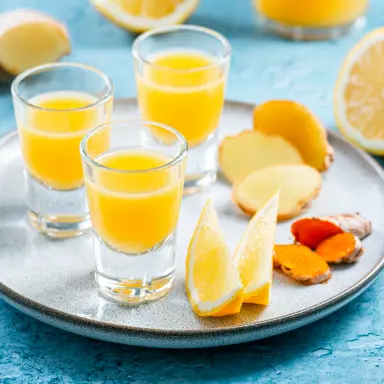
Ginger shot – effects and tips for making your own
Ginger shot – the trendy drink: its effect on the immune system, how it is made and tips for making your own. Find out now!
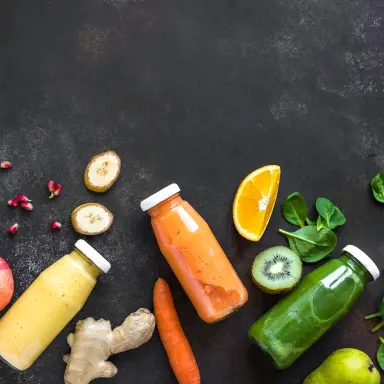
Lose weight with smoothies: healthy and slim
The many variations of smoothies have been in fashion for a long time. We will reveal whether they can be beneficial to a healthy diet here.
This text has been machine translated from English.