


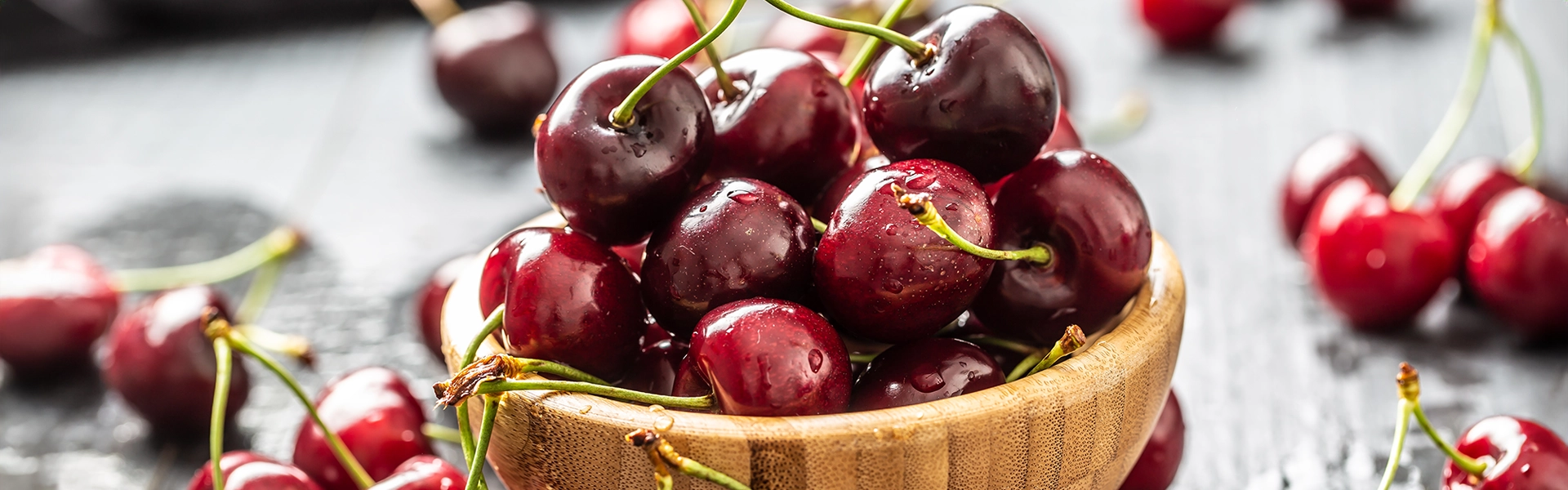
Cherries – all their nutritional values in detail
Cherries are not only a delicious summer treat, but also a real powerhouse when it comes to nutrients. The red fruits, which are particularly popular for their sweetness and juicy bite, are packed with vitamins, minerals and secondary plant substances. We reveal everything you need to know about the nutritional value of cherries and how they can benefit your health.
Storage time*
| BioFresh Fruit & Vegetable safe just above 0 °C with low humidity | Sweet cherries: 14 days Sour cherries: 7 days |
| EasyFresh safe 7 °C with air regulation plate | Sweet cherries: 7 days Sour cherries: 4 days |
| Fridge compartment 7 °C | Sweet cherries: 6 days Sour cherries: 3 days |
| Freezer compartment -18 °C | 12 months |
The key points
- Full of fructose: 100 g of cherries contain around 50 calories and provide valuable fructose.
- Rich in vitamins: cherries are an excellent source of vitamin C and vitamin A.
- Rich in minerals: cherries contain important minerals such as potassium and iron.
- Antioxidant effect: the anthocyanins in cherries have anti-inflammatory properties and protect cells from oxidative stress.
Are cherries healthy?

Cherries are not only very tasty, but also contain a lot of minerals. They have a particularly high potassium, calcium and iron content. Furthermore, the red, crisp and juicy fruit also contains a lot of vitamin C and almost all vitamins of the B group.
Anthocyanins are another special nutritional value of cherries. These are secondary plant substances which are responsible for the red skin colour of cherries. You therefore find them particularly in dark varieties. Anthocyanins are said to have various beneficial effects in the human body, such as their anti-inflammatory and antioxidant properties.
It should not be forgotten, however, that cherries also contain high levels of fructose. But don’t worry – they are still healthier than an ice cream on a hot summer day.

How can you best benefit from the effects of cherries?
Cherries are versatile and can be used in many different ways. Sweet cherries are ideal for eating straightaway, either as a snack or as a refreshing ingredient in fruit salads. They can also be used in desserts such as cakes, tarts or yoghurt. If you like experimenting, you can also use sweet cherries in cocktails or smoothies to give them a fruity sweetness. Sour cherries, on the other hand, are ideal for jams, compotes, juices or preserving due to their tart taste. They also work well in savoury dishes, such as with game or lamb.
Proper storage is crucial to maintaining the freshness and nutritional value of cherries. Sweet cherries usually stay fresh for up to six daysin a normal fridge at around 7 °C. However, you can store them better in the BioFresh Fruit & Vegetable safe. Thanks to BioFresh technology, the humidity and temperature are kept at around 0 °C, which is ideal for keeping sweet cherries fresh for up to 14 days.
Sour cherries are somewhat more delicate and will remain fresh for a maximum of three days in a standard appliance. Here too, the BioFresh Fruit & Vegetable safe from Liebherr offers better conditions, as the cherries can stay fresh for up to seven days.
To prevent the loss of fruit juice and nutrients, you should also wash the cherries just before eating and remove the stems.
*All specifications given are to be considered as guideline values, and depend in each case on the type of food and on the proper storage without interruption of the cold chain from harvest/production through to the Liebherr appliance. Should food products have information about minimum shelf life, the date on the packaging always applies.