

Bulgur: nutritional values and nutrients of durum wheat
Bulgur was originally a traditional dish from the Orient, but bulgur and its valuable nutritional values have now become a trendy ingredient. Crushed durum wheat is a staple food in the Orient and is therefore an integral part of both savoury and sweet dishes. But how many calories does bulgur have and what nutrients does it contain? And is bulgur even healthy? We reveal the answers.
The key points
- Nutrient-rich and plant-based: bulgur provides many B vitamins, vitamin E and minerals such as magnesium, calcium, phosphorus and iron – ideal for a balanced diet.
- Low in calories and filling: with only 83 kcal per 100 g (cooked), bulgur is a really filling food with a high fibre content.
- Simple preparation: pre-cooked and quick to prepare – hot water is enough to soak bulgur in 20 minutes until it’s fluffy and ready to eat.
- Better choice in organic quality: organic bulgur does not contain any bleaching agents such as caustic soda and is therefore the more natural alternative.
Bulgur and its nutritional values
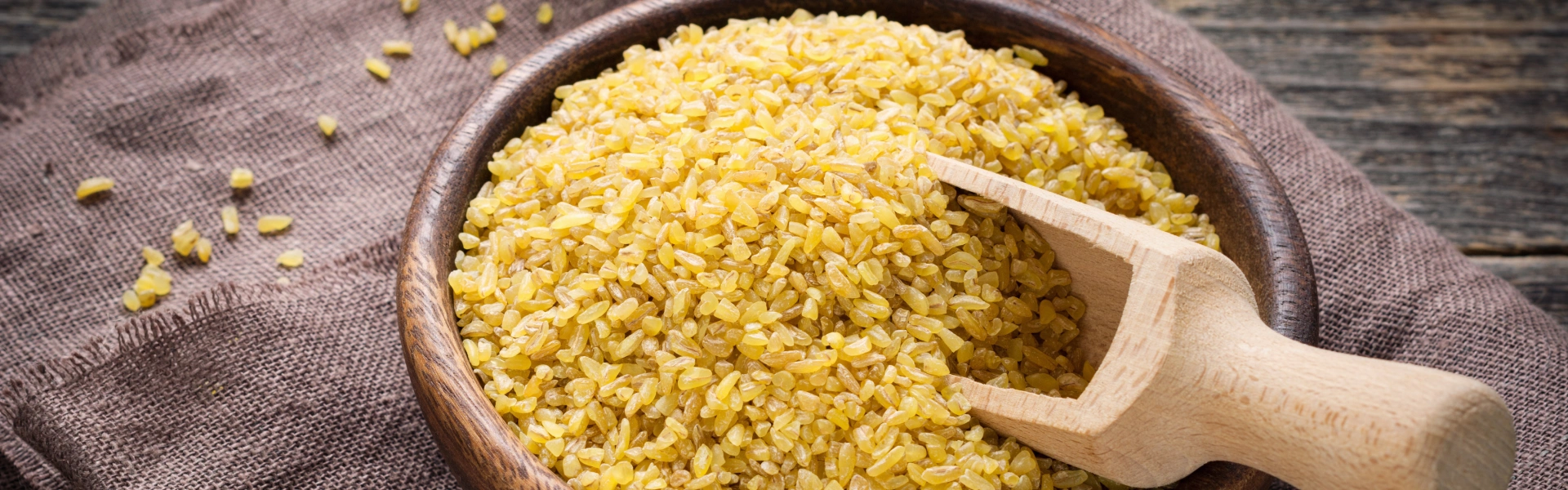
Bulgur is usually made from durum wheat. To do this, it is gently soaked for several hours, steam-cooked and dried. The vitamins and minerals migrate from the outer layers of the grain to the inside. This is important as the outer nutrient-rich shells are usually removed afterwards, thus minimising nutrient loss. The last step is to grind the wheat into different sizes. A distinction is usually made between fine, medium and coarse. Depending on the degree of grinding, bulgur is suitable for different dishes. In most cases, coarse bulgur is used as a stand-alone side dish, medium bulgur for bulking up various dishes and fine bulgur for making salads.
Thanks to the gentle preparation of bulgur, the valuable nutrients are retained. Among other things, it boasts various B vitamins, vitamin E and minerals such as magnesium, calcium and phosphorus. Lots of fibre, plenty of protein and a low fat content make this oriental favourite a healthy addition to our weekly menu. The numerous proteins in bulgur and the equally considerable amount of iron make it a particular favourite among vegetarians and vegans. To ensure that the iron can be absorbed well by the body, we recommend combining it with foods containing vitamin C, such as peppers or oranges. With 83 calories per 100 grams when cooked, bulgur, like most grains, is a really satisfying food.
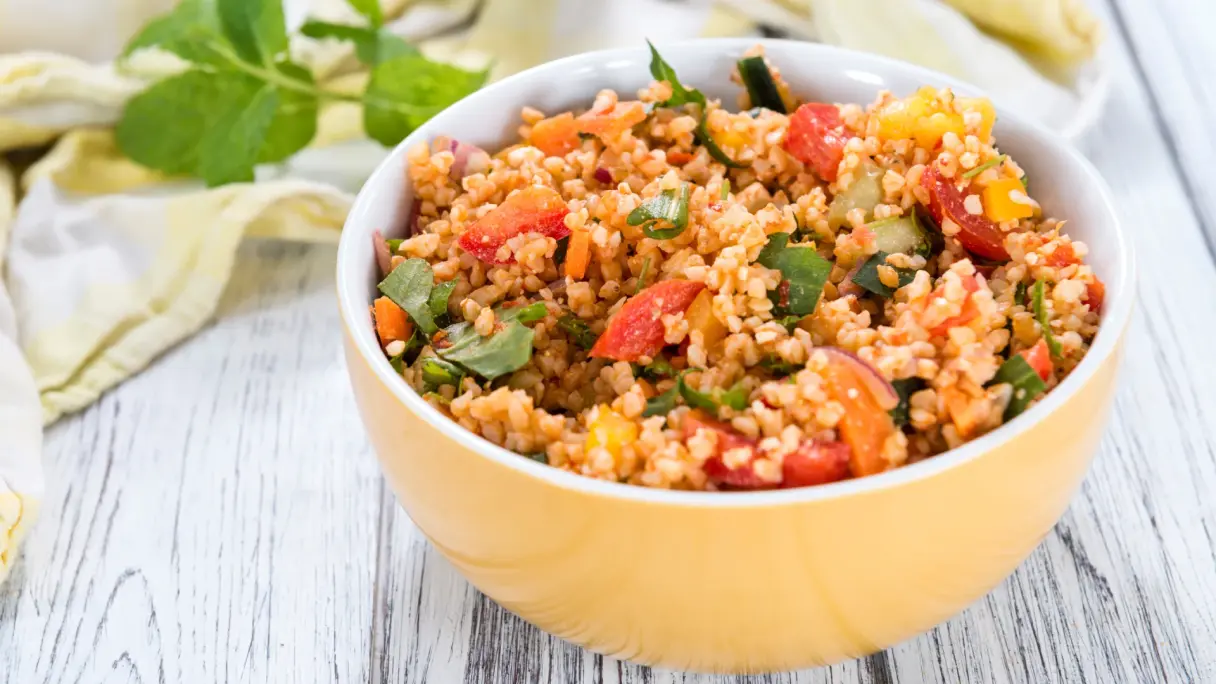
How to prepare bulgur so as to preserve its nutrient content
As bulgur from the supermarket is usually pre-cooked, it’s very simple to prepare. Before you start, you should definitely wash the grains to remove any dirt and flour residues that are produced during the grinding process. This also makes it nice and fluffy. In most cases, you only need to pour hot water over the bulgur and cover and leave to soak for around 20 minutes. The ratio of bulgur to water is one to two. As a rule of thumb: about three tablespoons of dry bulgur per person should be enough. However, if you prepare too much bulgur, you can easily store it in your fridge until the next day.
Bulgur is now available in almost every well-stocked supermarket. It is available in both conventional and organic quality. Keep in mind that conventional bulgur is often bleached with caustic soda so that the grains appear as light in colour as possible. If you would rather avoid that, it is better to go for an organic product! The bulgur grains themselves are usually packed in sealed bags. Similar to rice or pasta, bulgur often lasts beyond the best-before date if stored properly. You can therefore enjoy your bulgur and its nutritional values for a very long time.