

Couscous with good calories and nutritional values
Small, round and incredibly versatile – couscous is a popular dish from the Middle East, Where it is one of the most important staples and a must at every meal. But couscous is now also becoming increasingly popular in European countries. You can prepare it in the blink of an eye, combine it with a wide variety of dishes and the few calories that couscous contains as well as its nutritious ingredients and taste really are first-rate.
The key points
- Couscous is a traditional dish from the Middle East and is made from grated, steamed semolina – usually based on wheat, barley or millet.
- It’s quick and easy to prepare: instant couscous just requires you to add hot water and let it soak for a short time.
- With around 147 kcal per 100 g (cooked), couscous, despite being low in calories, is a really satisfying food, rich in long-chain carbohydrates, fibre, B vitamins and vegetable protein.
- For a longer shelf life, uncooked couscous should be stored in an air-tight way in a cool, dry place – ideally in sealable jars.
What does couscous consist of?
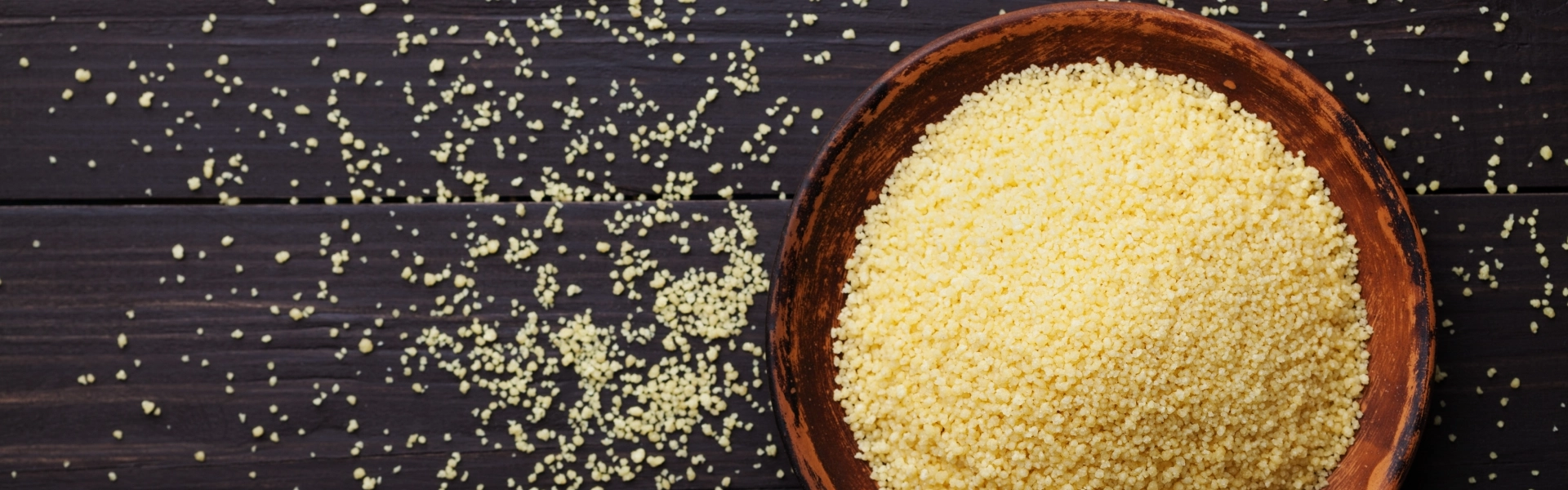
The term couscous derives from the Arabic word kuskusu, which means something like “ground” or “crushed”. This reveals something about how this popular dish – considered the national dish of Morocco – is prepared. Because tiny, roughly millimetre-sized balls of ground semolina are moistened and then dried in the sun. Couscous is therefore not a type of grain, but rather semolina prepared in a specific way. Depending on the country, the base for the semolina is different. It is possible to have couscous made of wheat, barley or millet.
Couscous is first mentioned in a Muslim cookbook, dating from the 13th century. The dish was brought to Europe by Jewish immigrants, or in the case of France, by Algerian immigrants.
The traditional preparation method is anything but quick. Middle East, a special double-chambered pot or “couscoussier” is used. Various vegetables are prepared in the lower chamber of the pot, while the couscous remains protected in the upper chamber and is cooked slowly by the rising steam. However, it’s now common to find “instant couscous” which is pre-steamed and thus quick and easy. This form of couscous is even quicker to prepare than pasta and therefore makes a wonderful side dish when time is of the essence. All you have to do is pour a little hot water over these golden granules, let them soak for about five minutes and then they’re done.
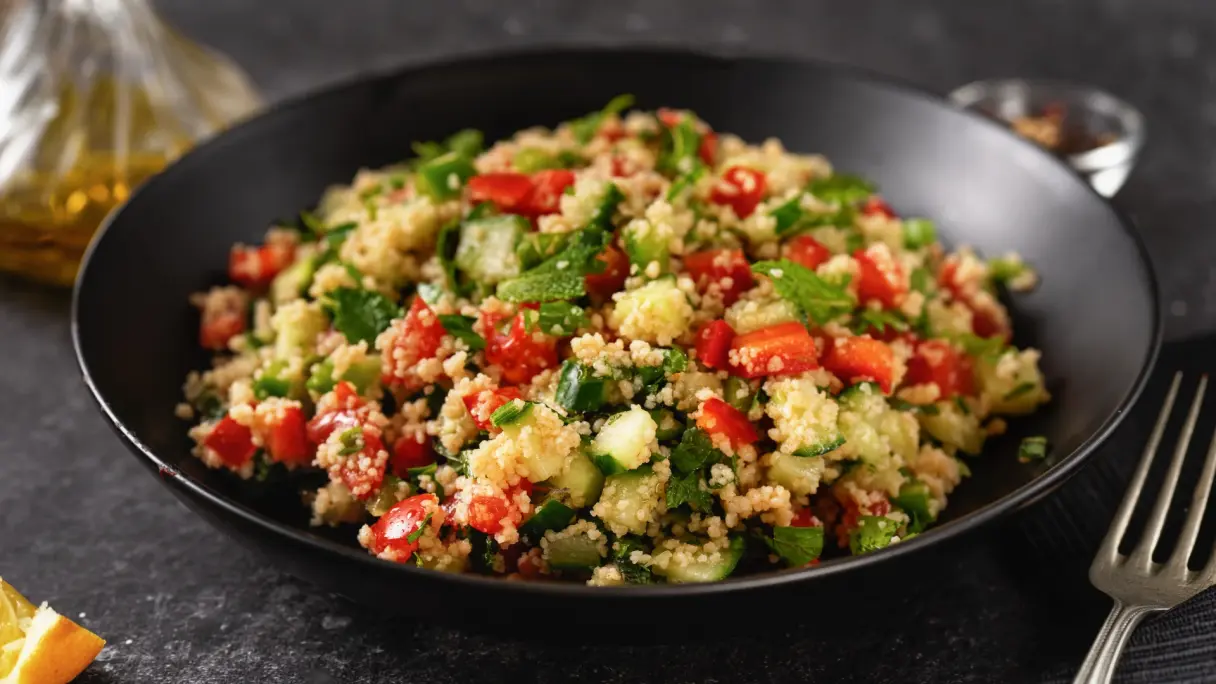
Couscous and its calories and nutritional values: low-fat and yet so filling
Couscous – like all other cereals – contains a lot of carbohydrates. To be precise, when cooked it contains 28 grams of carbohydrates, which means that cooked couscous contains 147 calories per 100 grams. The good news: for the most part, they’re complex carbohydrates, which means they make you feel full for a long time. Beyond, that, there is relatively little fat and quite a lot of fibre, minerals and B vitamins in this North African semolina. Couscous also has five times as much protein when compared with the nutritional values of a potato and, like the European variety, it is vegan, which means people who follow a vegan diet can also enjoy eating healthy couscous. Anyone looking to trim down a bit should look no further than couscous without needing to worry about calories. However, do think twice about some of the fatty sauces and accompaniments it is often enjoyed with.
How to store couscous before and after preparation
Couscous is now available in almost any supermarket. If you’ve found the couscous variety that’s best for you, you can store large quantities of it without worrying – so you always have a ready supply on hand to rustle up delicious dishes at any time. However, once you’ve opened the packaging, you should reseal it so it’s air-tight, or better yet, put your couscous into sealable containers. Store your couscous in a cool and dry location and use it as soon as possible, as the vegetable fats contained in couscous can quickly go rancid.
Couscous that’s already been cooked should be stored in the fridge in a container that seals shut properly.