How to preserve and store red cabbage
Have you ever heard that you can’t reheat red cabbage? This old and enduring belief is just a myth! This colourful cabbage is in fact even more aromatic when it’s cooked or reheated. Read on to find out how you can squeeze every ounce of flavour out of this beloved cabbage, and how to both store it raw and keep it fresh for a long time.
The key points
- Preparing boiled red cabbage takes around 1 to 1.5 hours (can be reheated or frozen)
- A raw red cabbage salad is a quick and nutritional method of preparation.
- Fermenting raw red cabbage enriches it by adding lactic acid bacteria which is great for your health, and the cabbage can be kept for up to six months in the fridge.
- Sweet and sour preserved red cabbage, with its sweet pickling solution (3 parts water, 2 parts vinegar, 1 part sugar) can be whipped up in no time.
- Red cabbage can be stored in the fridge, freezer, cellar or outside on the balcony or in the garden
- Your red cabbage can be kept particularly fresh by wrapping it in moist kitchen paper.
List of contents
- Preserving red cabbage – culinary wizardry for both winter and the warmer seasons of the year
- Preparing spiced red cabbage
- The pleasure of raw red cabbage
- Preserving red cabbage by fermenting it
- Preserved sweet and sour red cabbage
- Storing red cabbage – this is how you do it
- You might find this interesting…
Preserving red cabbage – culinary wizardry for both winter and the warmer seasons of the year
Wouldn’t you like to conjure up a little colour on your plate? Then red cabbage is the best magician’s assistant you can have! Boiled classically or freshly sliced into red cabbage salad, pickled, or fermented into sauerkraut – the possibilities for its preparation are truly endless.
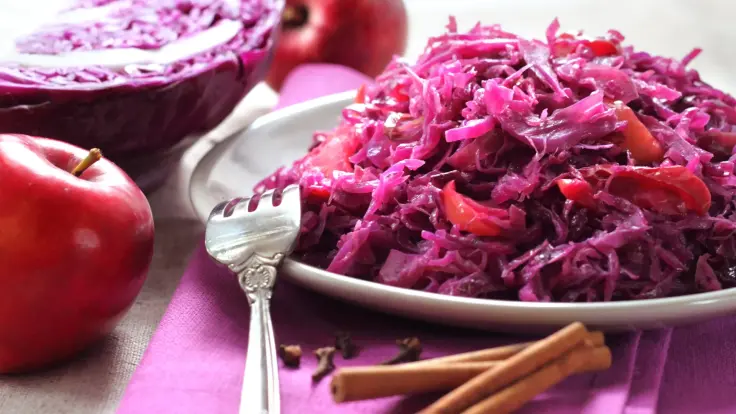
Preparing spiced red cabbage:
classically boiled, spiced red cabbage is a culinary delight, especially in the colder seasons. Cut the cabbage into fine strips and boil it in a large pot on the stove. Salt, pepper, and onions form the spice base. Finely chopped apple can give it a slightly tart note, while cinnamon sticks can provide a hint of Christmas. Bay leaves and allspice or cloves can also bring out some tempting flavours. For a bit of a kick, add a little red wine. Apple juice accentuates the sweeter notes, and for a tangy treat, add apple vinegar or a splash of orange juice. If you’re using a whole head of cabbage, the cooking process can take between 1 and 1.5 hours. An old kitchen tale has it that red cabbage actually tastes better reheated than when it is freshly cooked!

The pleasure of raw red cabbage:
raw red cabbage is both crunchy and juicy and makes an ideal salad – and not just in the summer! Paired with fresh apples, filleted orange slices and a mustard dressing, you can create a nutrient-rich raw food salad. Soak the red cabbage in salted water for around one hour before preparing it so the leaves become a little more tender and thus easier to chew.

Preserving red cabbage by fermenting it:
fermenting raw vegetables helps preserve them. Many nutrients are also preserved in the process of fermentation and, thanks to the active lactic acid bacteria, the enzyme adds a slightly acidic taste! To ferment freshly cut red cabbage, place it in a preserving jar and fill the jar with a brine (20 g of salt for every litre of water) until the jar is three quarters full. Put a lid on it and you’re almost done. After three to four weeks, the red cabbage has fermented fully and can be kept for up to 6 months in your Liebherr fridge.
You can find more tips about the art of fermenting here.
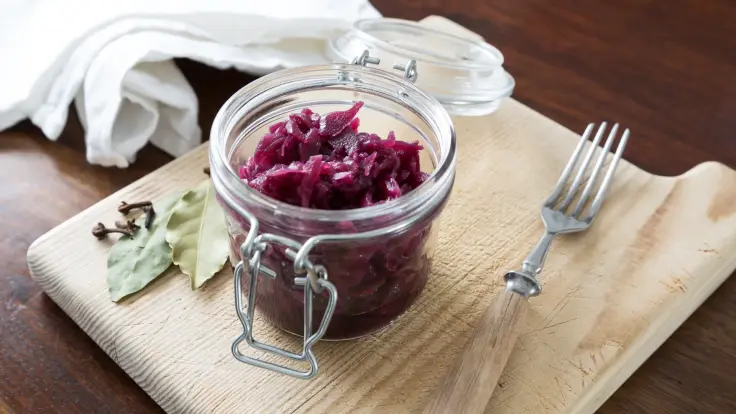
Preserved sweet and sour red cabbage:
sweet and sour isn’t just an Asian phenomenon! Red cabbage is very well suited to preserving in a sweet pickling solution. This method of preparation also provides a remarkable consistency. That’s because the red cabbage doesn’t need to be boiled as long and therefore retains an exquisite crunchiness. Prepare your preserving jar by rinsing it out with hot water. Place finely chopped red cabbage along with the sweet pickling solution (water, vinegar and sugar at a ratio of 3:2:1) in a pot. Bay leaves and juniper berries give the mixture a bit of spice. Simmer the red cabbage until the desired consistency is achieved and place the hot red cabbage along with the pickling solution into the preserving jars. This delicious little number serves as an excellent side dish and is also a wonderful gift idea for your loved ones!
Storing red cabbage – this is how you do it
The following tips can help you find out how fresh your red cabbage really is. You can judge the age of your red cabbage both by the look of its leaves and how it slices. If the outer leaves are still crispy and vibrant, without spots, and if it’s juicy and bright when you cut it open, then what you’ve got is a fresh head of cabbage. But even older cabbages are worthy of your love and attention. Older red cabbage is just as great for cooking, particularly in the ever-popular boiled/spiced variety.
Red cabbage can be stored in many different ways – in the fridge, in the freezer, but also in the cellar, or outside on the balcony or even in the garden. Wilted or damaged outer leaves should be removed before preserving in order to avoid mould.
Your colourful cabbage can be stored longest in your Liebherr freezer compartment – here it can be preserved for up to nine months. Optionally, you can pre-slice your red cabbage into smaller sections – that way, you can toss it into a meal later with little effort. The advantage to this type of storage is that the nutrients are preserved almost perfectly. Only the colour will change somewhat. If you’d like to prevent that, just a quick blanch in salted water with a splash of lemon before freezing will do wonders for your veg. Even in the cellar or outside – you can keep your red cabbage for up to six months. Just make sure that the storage area is dry. Wrapped in moist kitchen paper, your cabbage can be kept in your BioFresh Fruit & Vegetable safe for up to 40 days.