


Freezing meat correctly
Succulent steaks, marinated chicken thighs and meat stews. There are thousands of tasty dishes with different types of meat. You need to be careful, working with raw and cooked meat. Find out here how to correctly freeze meat, whether you can refreeze defrosted meat, how to store meat in the fridge and everything you need to know about meat’s shelf life.
The key points
- Don’t waste any time – freeze your meat immediately after purchase while it is fresh.
- Make sure the cold chain is not interrupted.
- Do not go past the use-by date on packaged meat.
- Freeze meat airtight in suitable containers.
- Remove bone fragments and fat on the outside of the meat before freezing.
- Small portions of meat are easier to freeze, thaw and work with.
How to freeze different types of meat at -18 degrees
- BBQ meat up to 6 months
- Veal up to 12 months
- Lamb up to 10 months
- Beef mince up to 3 months
- Beef up to 12 months
- Pork up to 6 months
- Pork mince up to 3 months
- Venison up to 9 months
Freezing meat
Pick up an offer at the deli counter in the supermarket or butcher's shop her and then freeze the meat at home. We’ll show you how it works: in a Liebherr freezer you can store leftovers from your last barbecue and keep them for longer.
Freezing meat correctly is the best way to preserve its flavour and quality. The juices in the meat freeze while the tasty muscle tissue preserves its structure. This does not affect flavour or nutrients.
1. Freeze meat when it is still fresh, preferably straight after purchase. Make sure that you have not exceeded the use-by date on the package of your meat and that the cold chain has been maintained throughout. If the cold chain is interrupted for longer than 30 minutes, check the pieces of meat yourself.
2. First, remove the plastic wrapping, as this can become porous and brittle when exposed to cold temperatures. Instead, pack the goods in freezer bags or even better in suitable reusable containers. Vacuum-packed meat can however be placed in the freezer immediately, provided that it is wrapped in thick plastic and not thin foil.
3. Prepare the meat by removing any external fat and remaining bones. When frozen, the fat can turn rancid and bone fragments can damage delicate freezer bags.
4. Wash the pieces of meat in salt water and pat them dry to prevent a layer of ice from forming. It’s a good idea to portion up the meat as small quantities freeze faster, thaw better and are easier to cook with.
5. Before putting the meat in the chest freezer, remove as much air as possible from the freezer bag and close it airtight. This prevents unwelcome bacteria from multiplying and accelerating the meat’s decomposition process; and you avoid freezer burn.
6. Label the bag with the date of freezing to help you keep track of your stored food. If possible, use the SuperFrost function on your appliance. This shock-freezes the meat in a very short time, which is a particularly protective way of freezing.
7. Temperatures of at least -18 °C are good for freezing meat. Constant temperatures are essential for avoiding freezer burn. This can discolour the meat and make it leathery.
Before freezing meat, you can also cook it thoroughly to kill off unwanted germs. Factor in enough time to let the meat cool before putting it in the chest freezer.
You can also freeze raw, marinated meat. The cold chain and correct storage are also particularly important here. You should also bear in mind that the marinade and herbs may change flavour in the cold. It may be better to remove the meat from the marinade and, if necessary, dab it off. The meat can then be portioned up and packaged.
Refreezing defrosted meat
Everyone knows the warning message found on frozen products: “Don't refreeze after defrosting.” This is a precautionary measure that is mandatory under a regulation for frozen foods.
The focus here is on the safe consumption of the prepared food, as manufacturers and authorities cannot guarantee that the end users adhere to important rules when storing and preparing food. Here are some examples of how to safely refreeze meat:
- Freezing food multiple times is possible when the food is correctly defrosted and refrozen. Generally speaking, only foods that have been stored in perfect conditions should be refrozen and it’s better when they have been cooked well in between.
- The meat should be defrosted safely overnight in the fridge or in ice-cold water. This ensures that the surface of the meat is always cooled during defrosting, which significantly slows down the reproduction of unwanted bacteria.
- Do not refreeze meat that has been defrosted in the microwave, at room temperature or in warm water. Freezing does not kill microorganisms; it only temporarily prevents them from multiplying.
Incorrect preparation increases the risk of pathogenic germs settling and multiplying. In any case, the number of bacteria in the meat after it’s been defrosted a second time will be higher than the first time.
Each time the frozen meat is defrosted, the frozen meat loses some of its juices, which impairs its quality. And impacts its flavour. Loss of quality in tender pieces of meat such as steak are more significant than for meat that is cooked into a dish such as stew or a large stir-fry. Defrosted meat should always be cooked all the way through before it’s put on anyone’s plate.

This means different types of meat can be stored in the fridge
In the normal compartment of the fridge:
- for a maximum of one day
- Minced meatshouldn’t be stored in the fridge compartment at all.
In the BioFresh Meat & Diary safe:
- Lamb stays fresh for 8 days.
- BBQ meat, veal, beef, pork, and venison stay fresh for 6 days.
- Beef mince and pork mince stay fresh for 2 days.
Storing meat in the fridge
Meat stays fresh for the longest time at low temperature and low humidity. This is why the BioFresh Meat & Dairy safe, which runs at just over 0 degrees, is much better suited for storing meat than the normal fridge compartment, where it is 4 or more degrees.
You should store meat from the deli counter in the normal fridge compartment of your fridge for a maximum of 24 hours. Be especially careful when storing minced meat in the fridge.
In the case of meat packaged in a protective atmosphere, the use-by date should always be taken into account. You can store leftover meat that has been fully cooked in the Meat & Dairy safe for up to two days.
Microorganisms are usually what causes meat to go bad. To prevent things going off too soon, it is important that the meat doesn’t go above 4 °C so that germs on the meat surface can only multiply slowly. Perishable food should therefore always be stored in a cool place and transported in a cool bag.
How do you know that meat is still fresh and good?
Fresh meat has a mild, neutral odour. It can sometimes smell a little sour, but never sweet or unpleasant. It is dry in the packaging and not floating in its own juices. High-quality, fresh meat generally does not lose much water.
The colour of the meat depends on the type and animal: beef is characteristically dark red in colour, while minced pork is typically light pink and venison is red to reddish-brown.
You can easily tell when meat has gone off by the way it smells and looks. It must then definitely be disposed of in the organic waste. Clear signs your meat is going off are a strong smell, greasy surface or spongy pressure marks and dark discolouration. On the other hand, grey patches are not a clear sign. This discolouration can arise quickly due to too little oxygen, even though the meat is still edible.
This might also interest you
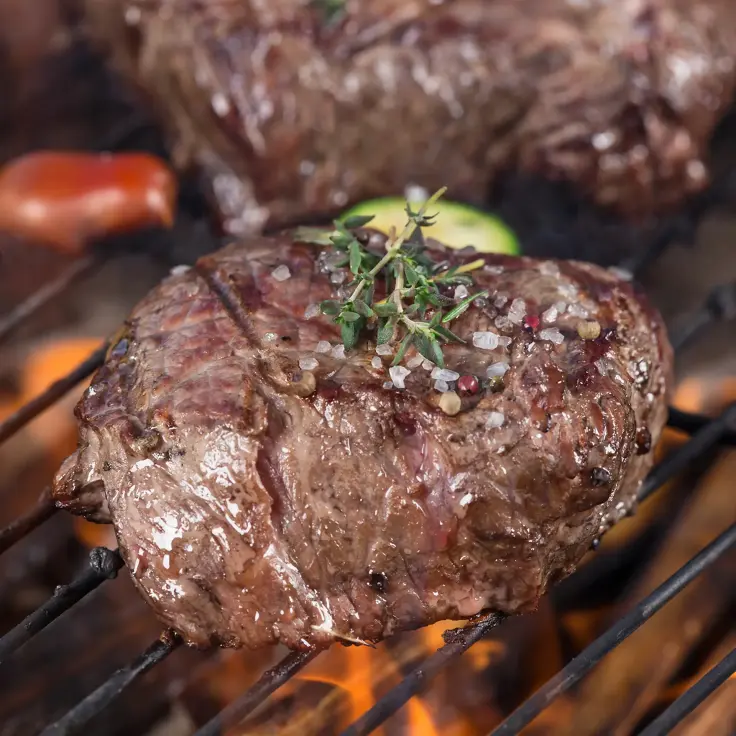
Can you freeze barbecue meat and barbecue it again?
Want to have a barbecue but the meat is still frozen? Read on to find out why defrosting is better and about the ideal way to freeze barbecue meat in advance.

Freezing minced meat and hygienic storage
Freeze and store minced meat hygienically to keep it safe, fresh and full of flavour. Practical tips for cooling, freezing and defrosting.
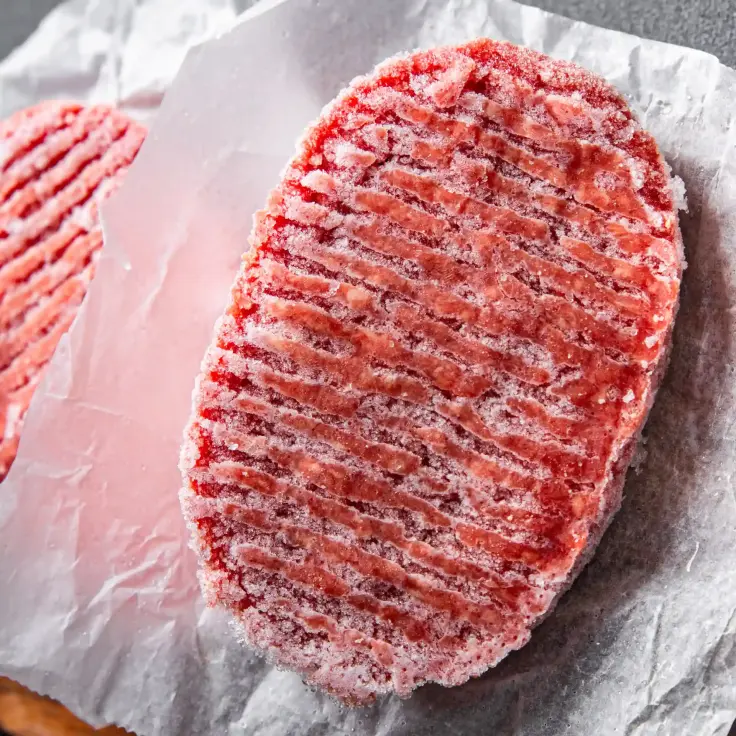
Tips for freezing burger patties
Burgers are a much-loved party food for meat-eaters and vegetarians alike. Find out how to hygienically freeze and defrost burger patties.